Table of Contents >> Show >> Hide
- 1. Assign a Real Water Watcher
- 2. Swim with a Buddy and Choose Lifeguarded Areas
- 3. Learn to Swim and Build Real Water Competency
- 4. Wear the Right Life Jacket, Especially in Open Water
- 5. Secure Home Pools with Layers of Protection
- 6. Respect Open Water, Weather, and Beach Hazards
- 7. Enter Feet First and Never Dive into Unknown Water
- 8. Stay Away from Broken Drains and Unsafe Pool Equipment
- 9. Skip Alcohol and Know Your Limits
- 10. Learn CPR and How to Help Without Becoming the Second Victim
- Quick Summer Swimming Safety Checklist
- Final Thoughts
- Real-Life Experiences: What Swimming Safety Looks Like in Practice
Summer has a way of making every body of water look like a great idea. The neighborhood pool sparkles, the lake looks cinematic, and the beach practically whispers, “Cancel your plans and bring snacks.” But water is one of those places where fun and risk can show up to the same party wearing the same sunglasses.
That is exactly why swimming safety matters. In the United States, drowning remains a serious preventable injury risk, and the safest swimmers are not always the strongest ones. They are usually the people who plan ahead, pay attention, and avoid acting like the main character in a disaster movie. Whether you are heading to a backyard pool, a hotel resort, a river, a lake, or the ocean, these summer swimming safety tips can help you enjoy the water with more confidence and a lot less chaos.
This guide breaks down ten smart, practical habits that can protect children, teens, adults, and even the relative who still believes a pool noodle is advanced rescue equipment. Let’s get into it.
1. Assign a Real Water Watcher
The number one rule is beautifully simple: someone must be actively watching the water. Not casually. Not while checking texts. Not while trying to plate burgers and locate the sunscreen at the same time. If children or weaker swimmers are in or near the water, one adult should be fully responsible for watching them.
At busy pool parties, this works best when you make it official. Choose a “water watcher” for a set time, then rotate. A bright card, a hat, or even a very dramatic declaration helps. The point is clarity. When everyone thinks someone else is watching, no one really is.
For toddlers and inexperienced swimmers, close means close. Think arm’s reach, not “I can see them from the patio chair while scrolling.” Drowning is often quick and quiet, which is one reason active supervision matters so much.
2. Swim with a Buddy and Choose Lifeguarded Areas
Even strong swimmers should not swim alone. Water conditions can change fast, and cramps, fatigue, panic, or a hidden hazard can turn a fun swim into an emergency. A buddy gives you immediate backup, and at beaches, lakes, and public pools, a lifeguard adds another important layer of protection.
If you have a choice, pick swimming areas with lifeguards on duty. That is especially important in open water, where currents, waves, murky conditions, and drop-offs can surprise people who feel perfectly confident in a calm pool. A lifeguard is not a permission slip to stop paying attention, but it is still one of the smartest decisions you can make before getting wet.
And yes, “I’ll just swim out a little farther and come right back” has launched many regrettable stories. Stick with your buddy. Stay in designated swim zones. Save the solo heroics for karaoke.
3. Learn to Swim and Build Real Water Competency
Swimming lessons are not just for little kids wearing cartoon goggles. They matter for adults too. Formal swim instruction helps people build water competence, which means more than paddling from one side of the pool to the other. It includes being able to enter water safely, surface, float or tread water, turn around, move to an exit, and get out.
That skill set can make a major difference when something unexpected happens. A strong swimmer is not simply someone who moves fast; it is someone who stays calm, knows what their body can do, and understands how to recover if they wind up in deeper water than expected.
If you have kids, enroll them in age-appropriate lessons. If you are an adult who never really learned, this summer is a perfectly respectable time to change that. There is nothing embarrassing about learning a life-saving skill. The only embarrassing thing is pretending you know what you are doing and then dog-paddling with great panic.
4. Wear the Right Life Jacket, Especially in Open Water
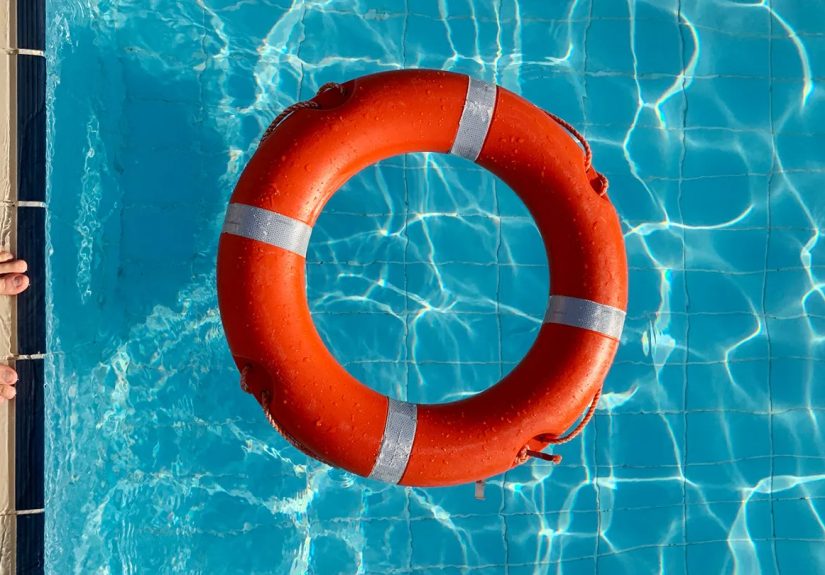
Life jackets are not only for boats. They are also a smart choice around lakes, rivers, and other natural water, especially for children, weaker swimmers, and anyone doing water recreation beyond casual pool swimming. The key word here is right: use a properly fitted, U.S. Coast Guard-approved life jacket.
Inflatable rings, arm floaties, pool noodles, and foam toys are fun. They are not safety devices. They can slip, deflate, drift, or create a false sense of security. If a child needs real support in or around water, use a proper life jacket and keep supervising anyway.
Open water can be colder, deeper, darker, and stronger than it looks from shore. A life jacket gives you extra time and extra flotation when conditions are working against you. That is not overreacting. That is just smart summer energy.
5. Secure Home Pools with Layers of Protection
If you have access to a home pool, safety starts long before anyone puts on a swimsuit. One of the most important swimming safety tips for families is to block unsupervised access to the water. A four-sided fence that completely separates the pool from the house and yard is a strong safety measure, especially when paired with self-closing, self-latching gates.
Door alarms, pool alarms, and covers can add more protection, but they should never replace supervision. Think of pool safety like airport security, only with more flip-flops: layers are better than luck.
It is also wise to keep toys away from the pool when swim time is over, so children are not tempted to reach for them. And if a child goes missing, check the water first. That single habit can save precious time in an emergency.
6. Respect Open Water, Weather, and Beach Hazards
A calm-looking lake can hide a sudden drop-off. A river can move faster than it appears. The ocean can serve up rip currents with absolutely no interest in your confidence level. Open water is different from pool water, and treating it like the same experience is a classic summer mistake.
Before swimming, check local conditions. Look for flags, posted warnings, weather updates, and lifeguard guidance. At the beach, know what rip currents are and what to do if you get caught in one: stay calm, do not fight the current head-on, move along the shoreline to get out of it, and signal for help if needed.
Weather matters too. If you hear thunder or see lightning, get out of the water and move to safe shelter immediately. Water and lightning are a terrible pairing, and no cannonball is worth trying to beat a thunderstorm by five minutes.
7. Enter Feet First and Never Dive into Unknown Water
One of the easiest ways to prevent serious injury is to enter unfamiliar water feet first. Shallow water, submerged rocks, hidden debris, pool ledges, and changing water levels can all turn a reckless dive into a catastrophic injury.
This rule matters in lakes, rivers, quarries, hotel pools, rental homes, and anywhere else you did not personally measure depth with magical precision. Diving should only happen in clearly marked, appropriate areas where depth and conditions are known to be safe.
Feet first may not look as dramatic as a dive, but spinal injuries are even less glamorous. Your future self would strongly prefer a slightly less cinematic entrance.
8. Stay Away from Broken Drains and Unsafe Pool Equipment
Most people think about drowning risk, but mechanical hazards matter too. Pools and spas should have proper drain covers in place and in good condition. Broken, loose, or missing drain covers can create dangerous suction and entrapment hazards.
If you notice a damaged drain, exposed opening, or something that seems off about a pool or spa, do not use it. Report it right away. This is especially important in older facilities, vacation rentals, or private pools where safety checks may not be as visible as they are at major public sites.
Also watch for slippery decks, broken ladders, cloudy water that makes it hard to see the bottom, and overcrowded conditions. Safe swimming is not just about the swimmer. It is also about the environment.
9. Skip Alcohol and Know Your Limits
Swimming and alcohol are a bad mix. So are diving and alcohol. So is supervising children near water after drinking. Alcohol can affect judgment, balance, coordination, and reaction time, which are all things you really want functioning properly when there is water involved.
Even experienced swimmers can overestimate their ability when they are tired, overheated, or under the influence. Add waves, sun exposure, distance from shore, or peer pressure, and the risk goes up fast.
Be honest about your limits. If the water is colder than expected, if the current feels stronger than it looked, if you are exhausted, or if your body is telling you it has had enough, listen. The goal is to leave the water with good memories, not a dramatic story that begins with, “In hindsight, that was a terrible idea.”
10. Learn CPR and How to Help Without Becoming the Second Victim
One of the most valuable summer safety steps happens on dry land: learn CPR and basic water emergency response. In a drowning emergency, those first moments matter. Knowing how to respond can make you far more useful than the person yelling unhelpful motivational phrases from the deck.
It is also important to know how to help safely. If someone is struggling in the water, use the basic idea of “reach or throw, don’t go.” Reach with a pole, towel, or shepherd’s crook. Throw a flotation device. Call 911. Unless you are trained for an in-water rescue, jumping in can put you at risk too.
Have an emergency plan before anyone swims. Know where rescue gear is kept, who calls for help, and what address to give emergency responders. Prepared families and groups react faster because they do not waste time deciding what to do after something has already gone wrong.
Quick Summer Swimming Safety Checklist
- Assign one undistracted water watcher.
- Never swim alone.
- Choose lifeguarded and designated swim areas.
- Make sure everyone has basic swim skills.
- Use Coast Guard-approved life jackets when needed.
- Fence pools and secure gates, doors, and access points.
- Check weather, currents, and beach warnings.
- Enter unknown water feet first.
- Avoid alcohol while swimming or supervising.
- Learn CPR and safe rescue basics.
Final Thoughts
The best swimming safety tips do not ruin summer. They protect it. They let kids splash, adults relax, and families make happy memories without ignoring the real risks that come with water. Safety is not about fear. It is about building habits that make fun more durable.
If you remember only one thing, make it this: most water emergencies do not happen because people planned to be reckless. They happen because someone assumed things would be fine. This summer, trade assumptions for preparation. Watch closely, swim smart, and treat the water with the respect it deserves.
Real-Life Experiences: What Swimming Safety Looks Like in Practice
Safety advice can sound obvious when you read it indoors with air conditioning and a full battery. Real life is messier. At an actual pool party, someone is asking where the ice went, two kids are arguing over goggles, a teenager is claiming they are “basically a lifeguard” because they once watched half a rescue video, and an uncle is trying to flip burgers while also monitoring the deep end. That is exactly why practical habits matter so much.
Consider a common backyard scene. A family gathers for a holiday cookout, and the pool becomes the center of gravity for everyone under age fifteen. The adults are nearby, but they are also chatting, serving food, and taking photos. Then one adult decides to become the official water watcher for fifteen minutes. They put their phone away, sit where they can see the whole pool, and do nothing except watch the swimmers. It sounds small, but that one choice changes everything. Instead of five distracted adults, the group now has one focused one. That is how accidents get interrupted before they become emergencies.
Open water tells an even stronger story. Plenty of confident pool swimmers are surprised the first time they enter a lake or ocean. The bottom disappears sooner. The temperature drops. The water is darker. Waves push differently than expected. A person who feels smooth and powerful in a lane pool may suddenly realize that visibility, footing, and direction are all harder to manage. Families who pause to read posted signs, ask lifeguards about conditions, and keep younger swimmers close usually have better days than the ones who sprint into the surf with maximum enthusiasm and minimum planning.
Then there is the life jacket lesson, which many people learn later than they should. A child may insist they do not need one. A parent may think shallow water is enough protection. But on a boat dock, in a river, or during a long lake day, a properly fitted life jacket removes a huge amount of risk. It does not replace supervision, but it buys time and support when a person slips, tires out, or panics. In real life, that extra margin matters.
Another experience many families remember is the weather turn. The day begins sunny, the playlist is great, and then thunder shows up in the distance like an uninvited guest with very bad timing. The safest groups do not debate it for twenty minutes. They get out, head to shelter, and wait. The less safe groups try to squeeze in “one last swim,” which is a phrase that rarely deserves trust.
In the end, swimming safety is not a single heroic act. It is a collection of ordinary decisions made early and made consistently. A gate that latches. A buddy who stays nearby. A parent who checks the water first. A swimmer who chooses feet first instead of showing off. A friend who says, “Nope, not after drinking.” These choices are not dramatic, but they are powerful. And that is usually what keeps a summer day fun all the way to sunset.