Table of Contents >> Show >> Hide
- 1) One room, one teacher, many ages
- 2) “School year” meant “when the community could spare you”
- 3) “Grades” weren’t always the organizing system
- 4) Memorization and recitation weren’t “a technique”they were the backbone
- 5) Reading books did double-duty as moral training
- 6) Paper was precious; slates were everywhere
- 7) The classroom “technology” was physicaland sometimes uncomfortable
- 8) Drinking water could involve a bucket…and a shared cup
- 9) Discipline was stricterand corporal punishment was common
- 10) Teachers were deeply controlled by community expectations
- 11) Access to education was unequaland sometimes deliberately restricted
- So…was it better or worse?
- Experience: Imagine a Day at an 1800s One-Room Schoolhouse
If you think your morning commute to school is rough, imagine trudging down a muddy road in stiff boots,
carrying your lunch in a tin pail, knowing your classroom is heated by a stove that’s either “surface of the sun”
or “arctic tundra,” depending on where you sit. Welcome to school in the 1800san era when “school supplies”
meant slate, chalk, and whatever courage you could scrape together before reciting in front of everyone.
Of course, “the 1800s” covers a whole century and a whole countrybig-city schools didn’t look like frontier
schoolhouses, and late-century reforms didn’t exist in 1801. Still, certain patterns show up again and again in
historical accounts of American education. Here are 11 of the biggest ways school life back then differed from
what most students expect todayplus a vivid, boots-on-the-floorboards experience at the end.
1) One room, one teacher, many ages
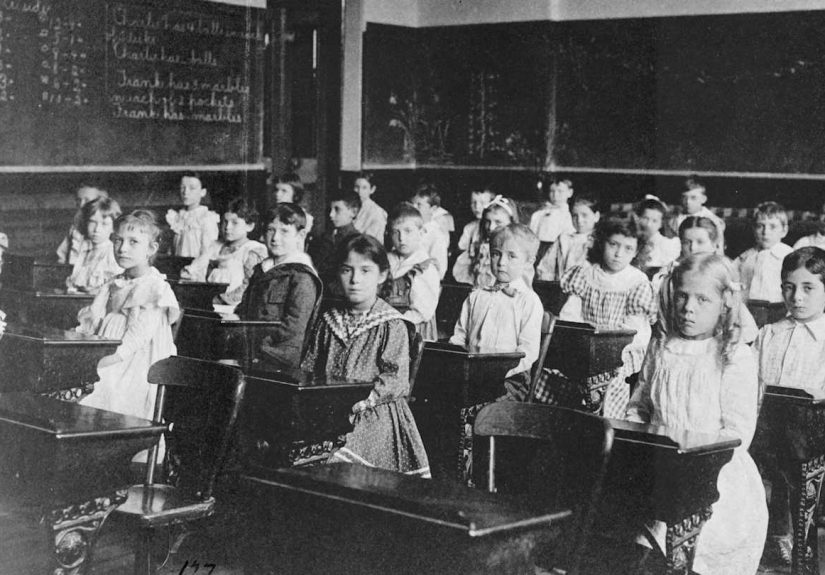
In many rural communities, “school” wasn’t a campusit was a single-room building where one teacher taught
children at multiple levels all at once. You might have five-year-olds sounding out letters while teenagers
tackled advanced reading, arithmetic, or writing nearby. Nobody asked if this was “optimal differentiation.”
The building existed, the community needed it, and the teacher made it work.
What that changed
- Peer learning was baked in: older students often helped younger ones because the teacher was juggling everyone.
- Progress wasn’t locked to a birthday: students were often grouped by skill level, not a strict grade label.
- Class could include young adults: it wasn’t unusual to see older teens (and sometimes even older) still attending.
The result was a classroom that functioned like a tiny learning ecosystemno hall passes required because there
weren’t any halls.
2) “School year” meant “when the community could spare you”
Today, many families plan life around the school calendar. In the 1800s, many communities planned the school
calendar around life. Especially in rural areas, school schedules often flexed with local labor needs, weather,
and travel conditions. That meant shorter terms in some places and more schooling in otherscities could run
longer school years while rural districts often ran fewer months.
Some rural districts divided the year into a winter term and a summer term. That split wasn’t random: winter
could be a more workable time for older children (especially boys) to attend because farm work patterns shifted,
while summer terms often skewed toward younger children and girls.
What that changed
- Attendance could be seasonal: you might be a “winter scholar” one year and barely show up the next.
- Continuity was fragile: long breaks plus inconsistent attendance made “pick up where we left off” a real challenge.
- Education competed with survival: family needs often won.
3) “Grades” weren’t always the organizing system
Modern schooling leans heavily on clearly defined grade levels. In many 1800s one-room schools, students weren’t
neatly sorted into “third grade” and “fourth grade” the way we’d expect now. Teachers commonly formed groups by
reading level or subject progress, and students moved up as they mastered content.
This meant two students the same age might be in completely different groups for reading or arithmeticand that
could change mid-term if one student took off and the other struggled (or got pulled out for harvest season).
In practice
The teacher might call up one group for spelling while the rest worked silently at desks. Then the teacher rotated:
reading group up, arithmetic group up, penmanship practice, and so onlike a one-person air-traffic controller
for education.
4) Memorization and recitation weren’t “a technique”they were the backbone
If you went to school in the 1800s, you probably spent a lot of time memorizing and then proving you memorized.
Students were frequently called to the front (or a recitation bench) to recite lessons aloudspelling, reading,
arithmetic rules, moral passages, you name it.
In some early-1800s classrooms, older students even served as “monitors,” helping run instruction by listening
to recitations and supervising work. This could keep a large group moving with limited adult staffbut it also
meant your “assistant teacher” might be a kid who still thought frogs were a food group.
Why it made sense then
- Limited textbooks: when books were scarce, repetition helped share knowledge.
- Public performance mattered: speaking clearly and reading aloud were prized skills.
- Assessment was immediate: you recited; you were corrected; you sat downno Scantron required.
5) Reading books did double-duty as moral training
Many popular school readers in the 19th century weren’t just about decoding wordsthey were about shaping character.
A famous example is the McGuffey Readers, which were widely used starting in the 1830s and helped standardize
English usage while reflecting (and reinforcing) the moral values many communities wanted schools to teach.
Stories and excerpts weren’t always chosen because they were “fun.” They were chosen because they taught lessons:
honesty, hard work, respect, self-control, patriotism, and the kind of virtue that could survive a harsh winter
and a harder arithmetic drill.
The vibe
Imagine being assigned a reading passage that basically says, “Don’t lie, don’t loaf, don’t sass adults,” and then
being graded on how well you read it aloudwhile trying not to lie, loaf, or sass adults in real time.
6) Paper was precious; slates were everywhere
In the 1800s, a lot of student work happened on slate boardsreusable writing surfaces used for handwriting practice,
arithmetic, and quick drills. Slate pencils (often made from softer slate or soapstone) scratched letters and numbers
onto the board, and then the student wiped it clean to start again.
This wasn’t a quirky aesthetic choice. Paper cost money, and many communities were operating with tight resources.
Slates were the practical, reusable solutionbasically the dry-erase boards of the 19th century, except louder,
dustier, and capable of producing a sound that can haunt you across generations.
What you might find in a school kit
- Slate board and slate pencil
- Chalk and a rag or sponge
- Ink and pen (in some settings), handled with the caution you’d reserve for open paint near carpet
- A well-worn reader or spellerif your family had one
7) The classroom “technology” was physicaland sometimes uncomfortable
Forget smartboards. Many one-room schoolhouses relied on a blackboard, a globe, wall maps, and charts. But the
most important piece of “technology” might have been the stove. A pot-bellied stove (or similar) often provided
heat, fueled by wood or coal. Your comfort depended heavily on where you sat: too close and you roasted; too far
and you learned fractions while shivering.
Lighting also wasn’t guaranteed to be bright or even. Schools used windows, and in some places lampsmeaning
winter afternoons could feel like doing homework inside a dim painting.
And then there were the bathrooms
Many schools didn’t have indoor plumbing. “Facilities” could mean an outhouse outside. If you forgot your coat,
the walk could feel like an educational unit on regret.
8) Drinking water could involve a bucket…and a shared cup
A modern water fountain is so normal we don’t even think about it. In many 1800s school settings, water might
be kept in a bucket with a dipper or “common cup.” Yesshared. One cup. Many mouths. The germs were basically
having a community meeting.
This practice persisted well into later periods in some places, and public health reformers eventually pushed hard
against it. But in the 1800s, especially in rural schools, it was an everyday reality: drink quickly, try not to
think about it, and go back to spelling “neighbor” with the correct vowel arrangement (good luck).
Why it happened
- Infrastructure was limited: wells and pumps, not plumbed systems.
- Cost mattered: a bucket and dipper were cheap compared to building a modern system.
- Germ theory wasn’t universal: many communities hadn’t yet embraced how disease spread.
9) Discipline was stricterand corporal punishment was common
“Classroom management” in the 1800s often leaned heavily on strict rules and swift consequences. In many schools,
corporal punishment was considered an acceptable (even expected) way to maintain order. Teachers might use a ruler,
a switch, or other tools to punish misbehavior, and families often supported the teacher’s authority.
That doesn’t mean every classroom was a punishment factory, and practices varied by region and teacher. But compared
with today’s norms, the disciplinary climate could be far less negotiable: you followed rules, you sat properly,
you stayed quiet during opening exercises, and you definitely didn’t treat “inside voice” as optional.
What students learned (besides math)
Self-control, obedience, and “public behavior” were often treated as core outcomessometimes as important as reading.
10) Teachers were deeply controlled by community expectations
In many places, teachers were not treated like independent professionals with a stable career ladder. They were
often hired locally, paid modestly, and supervised by community leaders. A teacher’s “job description” could include
not only teaching but also keeping the schoolhouse clean, maintaining supplies, and meeting strict behavioral standards.
Teacher demographics also varied by season and setting. Some rural districts employed male teachers for winter terms
when older boys attended more regularly, and female teachers for summer terms when younger children and girls were
more present. Teaching could be one of the few paid professions available to young womenbut it came with heavy social
scrutiny.
Translation: the community had opinions
A lot of opinions. About how you taught, what you believed, how you dressed, and whether your moral character matched
the values parents wanted passed on to their children.
11) Access to education was unequaland sometimes deliberately restricted
This part is uncomfortable, but it’s real history: school in the 1800s wasn’t equally available to everyone. Race,
location, gender expectations, and disability shaped who was welcomed, who was funded, and who was excluded.
Enslaved people were often prohibitedby law and by violencefrom learning to read and write in many places. After
the Civil War, formerly enslaved people and their allies worked urgently to build schools. Federal efforts like the
Freedmen’s Bureau supported education initiatives during Reconstruction. Yet segregation and chronic underfunding
meant that “school” for Black children in many areas was not the same school offered to white children.
Why it matters in a “differences” list
When we talk about “school in the 1800s,” we have to be honest: there wasn’t one universal experience. For some,
school was a community-centered chance at literacy and social mobility. For others, it was restricted, inferior,
or actively deniedand the fight for equal education shaped American history long after the century ended.
So…was it better or worse?
It was different. Some parts sound charmingsmall community ties, older kids mentoring younger kids, the kind of
focus you get when nobody’s phone is buzzing. Other parts sound genuinely hard: inconsistent attendance, harsh
discipline, limited materials, and deep inequities in who got access to learning at all.
If nothing else, school in the 1800s reminds us that education is never just about lessons. It’s about a society’s
priorities, resources, fears, hopes, and the daily realities that shape whether children can show up and learn.
experiences section (kept at the end, before SEO JSON)
Experience: Imagine a Day at an 1800s One-Room Schoolhouse
Picture this: it’s a winter morning in the late 1800s. The sky is the color of pewter, and the road is a mix of
packed snow and mud that has decided to become a single, unified substance called “slush.” You’re wearing a coat
that does its best, but the wind is clearly winning. Your lunchsomething like cold potatoes, bread, or whatever
your family hadis tucked into a pail or wrapped in cloth. You walk because that’s what you do. The journey is
part transportation, part character-building exercise, part audition for the role of “Future Person Who Will Not
Complain About a Light Drizzle Ever Again.”
When you arrive, the schoolhouse is small, simple, and already alive with movement. Someone got there early to
deal with the stovebecause if nobody feeds that beast, the room stays frozen. The stove is the classroom’s
heartbeat. Kids gravitate toward it, palms held out like they’re warming up for a piano recital. You take your
seat, and you immediately understand the seating chart’s hidden curriculum: near the stove is hot, far from the
stove is cold, and the middle is a confusing compromise where you can’t decide whether to remove your coat or
keep it on and sweat politely.
The teacher begins the day. You sit straighter than you do at home, because this room is not your living room and
the rules are not “suggestions.” The opening might include a reading and a quiet seriousness that makes the place
feel like a mixture of school, meeting hall, and moral training center. Then the real rhythm starts: the teacher
calls groups up one at a time. While one group recites spelling words, the rest of you work. Quietly. On slates.
The scratch-scratch sound of slate pencils fills the air like a swarm of determined insects.
Your turn comes. You walk to the front with the special blend of confidence and terror that only public recitation
can create. You read. Maybe you stumble on a word. The teacher corrects you immediatelyno private “we’ll talk
later,” just a swift adjustment and a look that says, “Yes, you will master this, because the entire century has
decided you will.” You return to your seat and try to focus while the younger kids practice letters and the older
students tackle more advanced work. It’s a strange ecosystem: you’re all doing different things, but you’re all
doing them together.
At some point you’re thirsty. The water bucket is there with a dipper or cup. You drink quickly and try not to
imagine how many other mouths have been there before yoursbecause you have geography to learn and fear is not on
the syllabus. Lunch comes with a longer recess. Kids run outside, stomp around, and burn off energy like little
steam engines. Someone might play a simple game. Someone else might do a chore. The schoolhouse isn’t just a place
where learning happens; it’s where community life happens too.
By afternoon, your brain feels fullfull of sums, passages, spelling rules, and the pressure of doing it correctly.
When the day ends, you pack up your slate and whatever book you’re lucky enough to have. You head back into the
cold. The classroom fades behind you, but the day’s lessons don’t. You’ll be expected to remember them tomorrow,
next week, and possibly for the rest of your lifebecause in a world with fewer formal opportunities, education
isn’t treated like a “phase.” It’s treated like a tool. And tools, as anyone in the 1800s could tell you, are not
optional.