Table of Contents >> Show >> Hide
- First, a quick “Frontline” reality check (so you buy the right thing)
- Before you apply anything: a 2-minute prep that saves you 20 minutes of chaos
- Way #1: Administer Frontline Plus for Cats (Spot-On Tube)
- Way #2: Administer Frontline Gold for Cats (Spot-On, Triple-Action Flea Control)
- Way #3: Administer Frontline Spray (Full-Body Spray Application)
- “I applied Frontline… so why am I still seeing fleas?”
- Side effects and safety: what’s normal vs. what’s not
- Make Frontline work harder: the “whole-house” flea plan
- Conclusion: pick the method your cat will tolerate (and you can repeat)
- Real-life experience: 3 Ways to Administer Frontline (what it’s actually like)
If you’ve ever tried to put anything on a cat (medication, a harness, your hopes and dreams), you already know:
cats have strong opinions and sharp little ways of expressing them. The good news is that Frontline for cats
is designed to be a quick process. The even better news? You’ve got options.
In the U.S., “Frontline” for cats typically shows up in three practical forms:
Frontline Plus (classic spot-on), Frontline Gold (spot-on with triple-action flea control),
and Frontline Spray (a full-body spray application). Each one can work well when you use it correctly
and each one can flop if you accidentally paint your cat’s fur like it’s arts-and-crafts time.
This guide breaks down three ways to administer Frontline for cats, with simple steps, real-world tips,
and the kind of “learn from my mistakes” advice you only get after chasing a cat with an applicator while whispering,
“Please don’t hate me.”
First, a quick “Frontline” reality check (so you buy the right thing)
Before we get into the three methods, let’s make sure we’re talking about the same “Frontline.”
Frontline is a brand name that includes multiple flea-and-tick products. For cats, the most common U.S. options are:
- Frontline Plus for Cats (spot-on topical): monthly application; targets adult fleas plus flea eggs/larvae.
-
Frontline Gold for Cats (spot-on topical): monthly application; includes an additional ingredient to help block
the flea life cycle more broadly. - Frontline Spray (spray topical): applied over the coat (with technique) until the hair is damp; typically used monthly.
All three methods are topicalmeaning they go on the skin/coat, not in the mouth. And all three require the same
golden rule: follow the label directions exactly. (Yes, even if your cat tells you they have read the label
and disagree with it.)
Before you apply anything: a 2-minute prep that saves you 20 minutes of chaos
1) Confirm age, weight, and species
Most Frontline cat products have minimum age and weight requirements. If your cat is very young, very small,
elderly, pregnant, nursing, or has ongoing health conditions, talk with your veterinarian before you apply any flea medication.
Also: never use a dog flea product on a cat. Some dog products contain ingredients (like certain permethrins) that are
dangerous for cats.
2) Pick the right room
Choose a small room with a door (bathroom, laundry room). Your cat can’t vanish into a parallel universe if the only exits
are closed. Put a towel on the floor for traction and dignity (mostly yours).
3) Plan for “dry time”
Most topical products need time to dry. During that window, you want to minimize petting, cuddling, and contact with other pets
that might lick the application site. If you have multiple pets, plan to separate them for a bit.
4) Remember: fleas are a household problem, not just a cat problem
Even the best flea and tick prevention for cats can feel “not working” if fleas are thriving in carpets, bedding,
or furniture. A successful plan often includes washing bedding, vacuuming thoroughly, and treating every pet in the home
with an appropriate productnot just the one who looks the most offended.
Way #1: Administer Frontline Plus for Cats (Spot-On Tube)
This is the classic “spot-on” method: a small applicator tube, applied in a single spot on the skin at the base of the neck.
It’s popular because it’s fastif you do it right, the whole operation can take under a minute.
Step-by-step: how to apply Frontline Plus correctly
-
Hold the applicator upright and open it as the package directs.
(Do this before you approach the cat. Opening plastic while wrestling a cat is a sport with no medals.) -
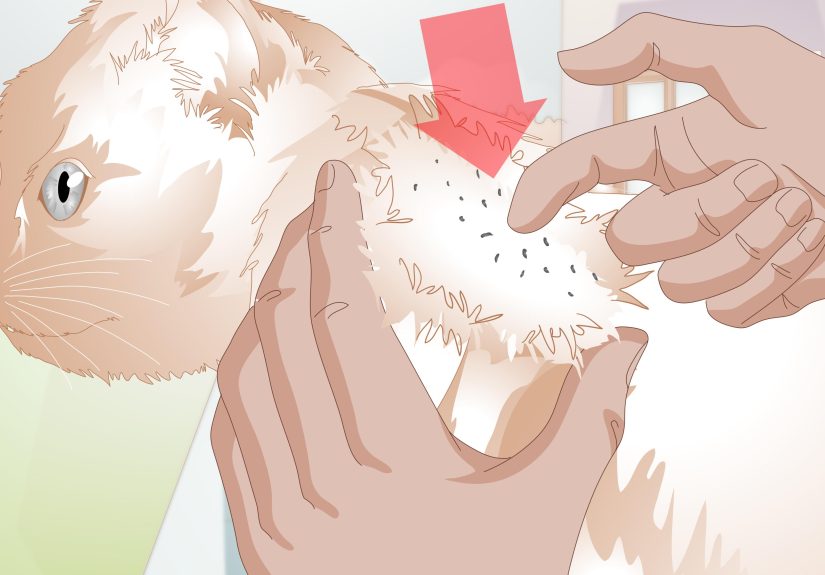
Part the fur above the shoulder blades, at the base of the neck, until you can see skin.
This placement helps reduce the chance your cat can lick it. -
Place the applicator tip just above the skin and squeeze out the entire contents
in one spot. - Apply to skin, not fur. If the product sits on fur instead of skin, you risk reduced effectiveness and a greasy “spot-on mohawk.”
- Let it dry and avoid touching that area until it’s dry.
Best use cases for Frontline Plus
- Routine monthly prevention when fleas/ticks are a known local issue.
- Households that want a quick application (one spot, done).
- Cats that tolerate brief handling but hate sprays or baths.
Common mistakes (and how to avoid them)
-
Mistake: You squeeze it onto fur.
Fix: Part the hair until you see skin. If you can’t see skin, you’re basically moisturizing your cat. -
Mistake: You apply multiple small dots “just in case.”
Fix: Use the full dose exactly as directed. More is not bettermore is just “more chemical on cat.” -
Mistake: You pet the spot immediately because your cat looks betrayed.
Fix: Give it time to dry. Offer a treat apology from the safe zone (not the application zone).
Way #2: Administer Frontline Gold for Cats (Spot-On, Triple-Action Flea Control)
Frontline Gold for cats is also a spot-on topical, but it’s formulated with three active ingredients aimed at killing adult fleas
and interfering with the flea life cycle more comprehensively. The application style is still “part fur, apply to skin,”
so this option is great if you like the simplicity of spot-ons but want a different formulation.
Step-by-step: how to apply Frontline Gold
- Remove one applicator from the package and hold it upright.
- Open the tip as directed (typically a twist-to-break seal design).
- Part the fur at the base of the neck / between the shoulder blades until skin is visible.
- Place the tip on the exposed skin and squeeze out the entire contents in a single spot.
- Let it dry fully before heavy cuddling or letting pets groom each other.
Best use cases for Frontline Gold
- Cats with recurring flea issues where breaking the flea life cycle is a priority.
- Homes with multiple pets (where fleas can pass the baton like it’s a relay race).
- People who prefer spot-on convenience but want a triple-action formula.
Pro tips to make spot-ons easier (Plus or Gold)
-
Use “treat timing.” Give a high-value treat right after application so your cat associates “neck squeeze”
with “delicious bribery.” -
Try the “chin scratch decoy.” Scratch under the chin with one hand while you part fur with the other. Many cats forget
they are plotting revenge when chin scratches happen. - Do it when they’re sleepy. A drowsy cat is still judgmentaljust slower.
Way #3: Administer Frontline Spray (Full-Body Spray Application)
Frontline Spray is a different style of topical flea and tick control: you apply it across the body by spraying the coat properly
(with technique) until the hair is damp. This can be useful if you want broader coat coverage or if a spot-on is difficult in a specific situation.
It also requires a bit more cooperationor at least a bit more managementthan the one-spot method.
Step-by-step: how to apply Frontline Spray safely
- Wear household latex gloves (the label commonly specifies gloves for application).
- Hold the bottle upright and adjust the nozzle to the spray setting.
-
Ruffle the coat with one hand while spraying with the other, targeting the back, sides, abdomen, legs, shoulders, and neck.
The goal is skin-level contact through the coatnot a light mist that evaporates into the air like expensive perfume. - For the head/face area: spray onto your gloved hand and gently rub into the hair. Do not spray directly into the face.
- Avoid eyes and mouth and don’t let your cat inhale the spray.
-
Apply until the hair is dampthorough coverage matters. The label guidance often describes approximate pumps per pound
of body weight; long or dense coats may require the higher end. - Let it dry naturally and keep your cat away from open flames/heat sources while it’s drying, since sprays can be flammable.
Best use cases for Frontline Spray
- When you need coat-wide application and your cat tolerates it.
- When spot-ons are difficult (for example, if the cat’s neck area is hard to access due to mattingthough matting itself needs safe grooming help).
- Situations where you want flexible coverage while still using a Frontline product.
Common spray mistakes (and how to avoid them)
-
Mistake: Spraying “near” the cat and hoping it counts.
Fix: You need thorough dampening of the coat per label directionthink “even coverage,” not “drive-by misting.” -
Mistake: Spraying the face directly.
Fix: Spray onto a gloved hand, then apply to the head area carefully. -
Mistake: Letting pets groom each other immediately afterward.
Fix: Separate pets until dry so nobody gets a chemical “snack.”
“I applied Frontline… so why am I still seeing fleas?”
This is the part where people assume the product failed, when it’s often the flea life cycle doing what it does best:
being annoyingly persistent. Here are common reasons fleas still show up after you start treatment:
1) The environment is still loaded
Fleas don’t live only on your cat. Eggs, larvae, and pupae can be in carpet fibers, couch seams, pet bedding, and baseboards.
You may see “new” fleas hopping on your cat even while the product is workingbecause they’re emerging from the home environment.
2) Not every pet is treated
If you treat the cat but not the dog (or the other cat, or the visiting pet, or the furry roommate who denies responsibility),
fleas can keep circulating.
3) Application technique was off
With spot-ons, the big failure mode is applying onto fur instead of skin. With sprays, it’s applying too lightly or missing large sections.
Technique matters more than people expect.
4) You re-dosed too soon (or too late)
Reapplying early can increase side effect risk and still won’t magically “speed-run” flea control. Reapplying late can create gaps in coverage.
A consistent schedule is your best friend.
Side effects and safety: what’s normal vs. what’s not
Many cats have no noticeable side effects. Some cats may develop mild irritation at the application site, temporary itchiness, or small patches
of hair loss where the product was applied. That said, any flea product can cause unexpected reactions in sensitive pets.
- Call your veterinarian if your cat seems unusually lethargic, drools excessively, vomits, tremors, or shows persistent skin irritation.
- Keep products out of reach of children and follow label precautions about handling and contact.
- Use cat-labeled products onlyand if you’re ever unsure, ask your vet before applying.
Make Frontline work harder: the “whole-house” flea plan
If you want faster relief and fewer “surprise fleas,” pair Frontline with basic environmental control:
- Vacuum carpets, rugs, and furniture thoroughly and frequently (yes, under cushions too).
- Wash pet bedding in hot water when possible.
- Comb your cat with a flea comb to physically remove adult fleas and flea dirt.
- Treat all pets in the household with veterinarian-appropriate flea prevention.
Think of it like this: Frontline handles the parasites on your cat. Cleaning handles the parasites auditioning in your home.
Together, they stop the cycle.
Conclusion: pick the method your cat will tolerate (and you can repeat)
The best flea medicine is the one you can apply correctly and consistently. If you want the simplest method,
Frontline Plus and Frontline Gold are straightforward spot-ons: part the fur, apply to the skin, let it dry.
If you need a coat-wide approach and your cat can handle it, Frontline Spray is another legitimate way to administer Frontline.
No matter which option you choose, the key is the same: apply to the right place, in the right way, on the right schedule.
Then back it up with home cleaning so fleas don’t keep respawning like they’re in a video game.
Real-life experience: 3 Ways to Administer Frontline (what it’s actually like)
Let’s talk about the part no label includes: the emotional journey. The first time I used a spot-on flea treatment on a cat,
I thought, “This will be easyjust one little squeeze.” My cat thought, “You have chosen violence.” If you’ve never applied Frontline before,
here’s what tends to happen in real homes, and how you can make it smoother.
Experience #1: The Spot-On Success Story (Frontline Plus)
The smoothest application I ever had was with a sleepy cat on a couch. I pre-opened the applicator, sat next to her like I was just casually
existing, and started with a few seconds of calm chin scratches. Then I parted the fur above the shoulders, found skin, and applied the dose
in one spot. The entire thing took maybe 15 seconds. The secret wasn’t speedit was preparation. The applicator was ready, my hands weren’t shaking,
and the cat was in “I might nap” mode instead of “I might sprint.”
The one mistake I almost made? Petting the application area right away out of guilt. Instead, I gave her a treat, praised her like she’d solved
world peace, and kept my hands away from the treated spot until it dried. That single decision avoided a greasy hand, a stressed cat,
and the awkward realization that I’d basically rubbed the medicine off.
Experience #2: The “This Cat Has Trust Issues” Method (Frontline Gold)
Another cat in the household treated the applicator like it was a suspicious new roommate. For her, I used the “small room” strategy:
bathroom door closed, towel on the floor, everything ready. I also learned that her tolerance window was exactly eight secondsso I didn’t waste
time reading instructions mid-wrestle. I had already read the label, opened the applicator, and planned the placement.
This time, the biggest win was parting the fur properly. The first time I tried a topical years ago (different cat, same mistake),
I didn’t get to the skin and ended up with a slick patch on the coat. It looked gross, and I worried it didn’t work. With the Gold spot-on,
I deliberately parted until I could see skinthen applied in one spot and released the cat immediately. She bolted like a tiny furry comet,
but the medication was where it needed to be. Later, I kept pets separated until dry, which mattered because the other cat would absolutely
have tried to “help” by grooming.
Experience #3: The Spray Adventure (Frontline Spray)
Sprays are a different vibe. They’re not “one-and-done”; they’re “coat coverage with technique.” The first time I tried a spray product,
I underestimated how much ruffling matters. A light mist on top of the fur feels like you did something, but it’s not the same as thorough application.
The second time, I wore gloves, ruffled the coat as directed, and worked methodically over the back, sides, and shouldersthen used the “spray on glove,
apply gently” approach for the head area. It took longer, but it felt controlled.
The key lesson with spray: your cat’s tolerance sets the pace. Some cats will tolerate a calm, steady application.
Others will treat the spray sound like a villain monologue. If your cat is noise-sensitive, you can test the sound away from them first, use short bursts,
and keep the environment quiet. And once you finish, you want a safe, warm place for your cat to dry naturallywithout other pets licking them
and without kids rushing in for hugs like it’s a reunion episode.
Across all three methods, the most consistent “success factor” wasn’t bravery or speedit was a simple routine:
read the label ahead of time, prep the room, apply correctly to skin/coat as directed, then give the cat space and a reward.
That routine turns Frontline application from a monthly wrestling match into a mildly annoying chorewhich, in cat terms, is basically a miracle.