Table of Contents >> Show >> Hide
- What You’ll Learn
- Way 1: Build the Right Pot + Soil System (Acidic, Airy, Never Swampy)
- Way 2: Control the “Microclimate” (Light, Water, Humidity, Temperature)
- Way 3: Feed, Prune, and Troubleshoot Like a Calm Gardenia Whisperer
- Fertilizer: choose “acid-loving” and time it right
- Iron chlorosis: the “yellow leaves, green veins” classic
- Bud drop (aka bud blast): why it happens and how to stop it
- Pruning: do it after flowering, not right before
- Pests and diseases: catch them early
- Overwintering potted gardenias (without turning your house into a greenhouse)
- Quick troubleshooting table
- FAQ: Potted Gardenias, Answered Fast
- Bonus: Real-World Experiences Growing Gardenias in Pots (500+ Words)
- Conclusion
Gardenias are the kind of plant that makes you feel like a gardening genius… right up until it drops every bud
because you sneezed too loudly near the air vent. If you’ve ever tried to grow a potted gardenia, you already
know the truth: gardenias are glorious, fragrant, glossy-leaved divasand they’re worth it.
The trick is not “more effort.” It’s the right effort, focused on the three things potted gardenias
care about most: (1) a pot and soil setup that stays acidic and drains well, (2) stable moisture + humidity + light,
and (3) feeding and troubleshooting that prevents the classic container-grown disasters (yellow leaves, bud drop,
and the mysterious “why are you mad at me?” sulk).
Below are three proven ways to raise gardenias in potswritten for real life (where you sometimes forget to water,
and your plant sometimes takes that personally).
Way 1: Build the Right Pot + Soil System (Acidic, Airy, Never Swampy)
Most potted gardenia failures aren’t about “black thumbs.” They’re about physics. Container soil behaves
differently than ground soil: water drains, oxygen moves, and salts build up in a smaller space. So your
#1 job is to create a container setup that keeps roots healthy while staying acidic enough for
gardenias to absorb nutrients.
Choose a pot that drains like it’s got places to be
- Drainage holes are non-negotiable. If the pot doesn’t have them, it’s not a pot. It’s décor.
-
Size matters. Pick a container that fits the root ball with a little room to growtoo small dries
out fast, too big stays wet too long. For many nursery gardenias, a 12–16 inch pot is a common “just right” range. -
Material matters. Terracotta breathes (good for over-waterers, bad for forgetful-waterers). Plastic
holds moisture longer (helpful in hot climates, risky if your soil mix drains poorly).
Use an acidic potting mix that drains well (and stays that way)
Gardenias prefer acidic conditionsgenerally around pH 5.0–6.0 (sometimes listed up to 6.5). In containers,
you’re aiming for a mix that is:
- Acidic (to keep iron and other nutrients available)
- Moisture-retentive (gardenias don’t like drying out)
- Well-drained and airy (gardenias also don’t like wet feet)
A simple DIY container mix idea (use what’s available locally):
- 2 parts high-quality potting mix labeled for acid-loving plants or a peat/coir-based potting mix
- 1 part fine pine bark (or orchid bark fines)
- 1 part perlite (or pumice) for drainage
Why the bark + perlite? Because potting mixes can compact over time, especially with frequent watering.
Bark keeps structure; perlite keeps air pockets. Gardenia roots want oxygen as much as they want water.
Skip the “rocks at the bottom” mythdo this instead
Putting rocks in the bottom doesn’t improve drainage in the way most people think. It reduces the soil volume
and can create a perched water layer higher in the pot. The better move:
- Use a fast-draining potting mix (bark/perlite helps).
- Make sure holes are open (a mesh screen can keep soil in and let water out).
- Empty saucers after wateringdon’t let the pot sit in water.
Repot at the right time (and be gentlegardenias hate drama)
Many gardenias resent root disturbance, so repot strategically:
- Best timing: often after blooming or during active growth (spring/early summer), depending on your climate.
- How often: typically every 2–3 years, or when roots circle the pot and water runs straight through.
- How to do it: size up one pot size, loosen the outer roots gently, and avoid tearing the root ball apart.
If you’re repotting a stressed gardenia (yellowing, dropping buds), keep the changes minimal: better soil, slightly bigger
pot, and stable conditions afterward. Think “spa day,” not “moving day with three flights of stairs.”
Way 2: Control the “Microclimate” (Light, Water, Humidity, Temperature)
In the ground, gardenias can buffer a bit of heat, dryness, and inconsistency. In pots, they can’t.
Your second way to succeed is to manage the microclimate: light that’s bright but not scorching,
water that’s consistent but not soggy, and humidity that doesn’t feel like a desert.
Light: bright, with protection from harsh afternoon sun
Most gardenias bloom best with strong light, but container plants can overheat faster. A great “default” setup is:
- Outdoors: morning sun + afternoon shade, or dappled light.
- Indoors: bright light near a sunny window, avoiding intense summer afternoon rays that can scorch leaves.
If your gardenia is leafy but stingy with flowers, it often wants more light. If leaves look scorched or the plant
dries out daily, it might want a little more shade (especially in hotter regions).
Water: “consistently damp” is different from “constantly wet”
Gardenias want steady moistureespecially in potsyet they also dislike soggy roots. Here’s a reliable routine:
- Check the top 1–2 inches of soil. When it feels dry at that depth, water thoroughly.
- Water deeply. Soak until water drains from the holes; then discard drainage from saucers.
- Adjust with seasons. Hot weather may mean watering every 1–3 days. Cool seasons mean less.
Pro tip: If your water is very “hard” (high minerals), it can push pH upward over time. That can
contribute to yellowing leaves (iron chlorosis) even when you fertilize. Using rainwater occasionally or checking
soil pH can help prevent the slow, sneaky drift toward alkalinity.
Humidity: the secret sauce for fewer bud tantrums
Gardenias like humidityoften around the “comfortable for humans with good skin” range (think ~50–60% or higher).
Indoors, winter heating can dry air dramatically, and gardenias often respond with bud drop or crispy leaf edges.
Easy humidity boosters for potted gardenias:
- Use a pebble tray with water (pot sits on pebbles, not in the water).
- Run a small humidifier nearby during dry months.
- Group plants together (plants “share” humidity through transpiration).
Light misting can help some growers, but avoid soaking flowers and keep airflow decenttoo much constant leaf-wetness can
invite disease. Humidity is the goal, not a permanently damp plant.
Temperature and drafts: stability beats perfection
Gardenias strongly dislike sudden changescold drafts, heat blasts, and dramatic temperature swings. Common draft culprits:
- Air conditioning vents blowing directly on the plant
- Exterior doors opened frequently in winter
- Space heaters nearby (the plant equivalent of a hair dryer)
If you move your gardenia, do it gradually when possible. A sudden shift from outdoor shade to indoor heated air is the kind
of plot twist that triggers bud blast.
Way 3: Feed, Prune, and Troubleshoot Like a Calm Gardenia Whisperer
This is the part where most people panic-fertilize, panic-prune, and panic-move the plant three times in a week
which is exactly what a gardenia wants you to do if it’s trying to win the argument.
Instead, keep a steady plan: feed for acidity, prune at the right time, and troubleshoot based on symptoms
(not vibes).
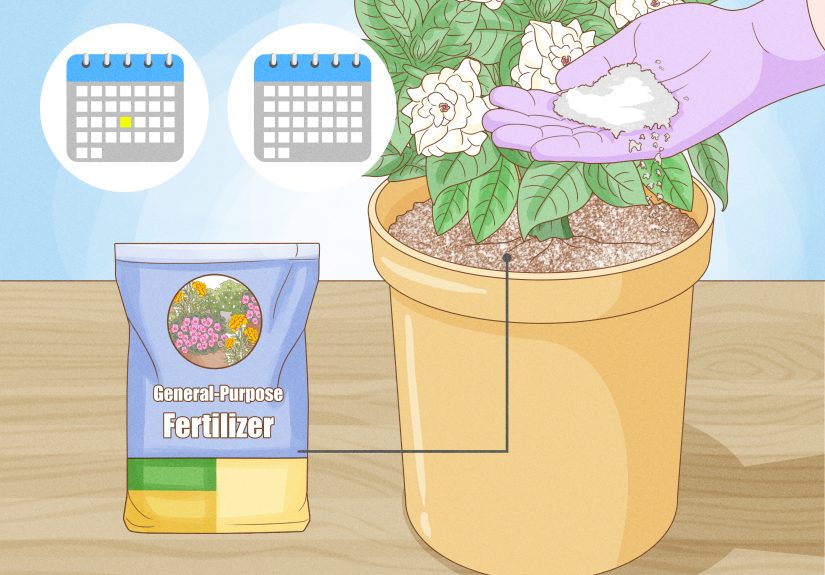
Fertilizer: choose “acid-loving” and time it right
Gardenias typically do best with fertilizers formulated for acid-loving plants (often the same type used for azaleas/camellias).
Many gardeners feed during active growth and ease off when the plant slows down.
- When: spring through summer (and sometimes early fall depending on climate)
- How often: follow label directions; light, consistent feeding is usually safer than heavy doses
- What to watch: too much fertilizer can contribute to stress and bud drop
If your plant is green but not blooming, it may need more lightor a fertilizer balance that supports flowering.
If it’s yellowing, it may need pH correction or iron support (more on that next).
Iron chlorosis: the “yellow leaves, green veins” classic
When gardenia leaves turn yellow while veins stay greener, especially on newer growth, the issue is often iron availability.
The punchline: iron can exist in the soil, but if the pH is too high, the plant can’t access it.
What helps:
- Confirm soil pH if possible (a simple test kit is fine).
- Use an acid-loving plant fertilizer.
- Use chelated iron if recommended and follow directions carefully.
- Consider water quality and salt buildup (flush the pot occasionally with thorough watering).
Don’t treat chlorosis with random extra fertilizer. More salts in the pot can make root stress worse.
In containers, correcting pH and nutrient availability is often more effective than “feeding harder.”
Bud drop (aka bud blast): why it happens and how to stop it
Bud drop is gardenia’s signature move. It can be caused by several stressorsoften more than one at once:
- Soil too dry or too wet
- Low humidity
- Insufficient light
- Temperature swings or drafts
- Pest pressure (thrips, aphids, etc.)
- Over-fertilization
- Root disturbance
The solution is usually boring (which is great news): stabilize watering, raise humidity, improve light, and stop moving the pot around.
If buds are dropping and you also see tiny insects or distorted buds, inspect for pests and treat appropriately.
Pruning: do it after flowering, not right before
Most gardenias bloom on growth that forms ahead of bloom time. Heavy pruning at the wrong time can remove future flowers.
A safer strategy:
- Prune right after the main bloom flush to shape the plant.
- Remove dead, damaged, or crossing branches anytime.
- Pinch tips lightly for a bushier plant (if needed), but avoid constant cutting.
Pests and diseases: catch them early
In potsespecially indoorscommon pests include whiteflies, scale, mealybugs, aphids, and spider mites. Many problems start as a sticky leaf,
speckling, or “why does this leaf look dusty?” moment.
Container-friendly prevention:
- Inspect weekly (especially under leaves and at stem joints).
- Rinse foliage occasionally (outdoors) to knock pests back.
- Isolate new plants for a week or two before placing near your gardenia.
Overwintering potted gardenias (without turning your house into a greenhouse)
If you live where winters are cold, containers make gardenias portablewhich is a huge advantage. The goal is to help the plant survive winter
without major stress:
- Bring plants inside before frost (or move to a protected garage/porch when temperatures drop).
- Provide bright light indoors.
- Water less than in summer, but don’t let the root ball fully dry out.
- Boost humidity during heated months.
- Check pests before bringing the plant inside (you don’t want to overwinter the insects, too).
When spring returns, reintroduce the plant outdoors gradually (a few days in shade first, then slowly more sun). That “hardening off” step prevents
leaf scorch and reduces shock.
Quick troubleshooting table
| Symptom | Most Likely Causes | Smart Next Step |
|---|---|---|
| Buds drop before opening | Low humidity, inconsistent watering, drafts, light changes, pests, overfeeding | Stabilize moisture + humidity; stop moving pot; inspect buds for pests |
| Yellow leaves with greener veins | Iron chlorosis from high pH / hard water | Check pH; use acid fertilizer; consider chelated iron as directed |
| Leaves turn brown/crispy at edges | Dry air, underwatering, salt buildup | Increase humidity; water deeply; flush pot occasionally |
| Sticky leaves | Scale, aphids, mealybugs, whiteflies (honeydew) | Inspect undersides; wash leaves; treat pest appropriately |
| Plant looks limp even when soil is wet | Root rot from poor drainage/overwatering | Improve drainage; let soil dry slightly; consider repotting if severe |
FAQ: Potted Gardenias, Answered Fast
Do gardenias do well in pots?
Yesoften very wellbecause pots let you control soil acidity and move the plant away from heat, cold snaps, or harsh sun.
The main challenge is consistency: containers dry out faster and show stress sooner.
How often should I water a gardenia in a pot?
There’s no one schedule. In hot weather, you might water every 1–3 days; in cooler seasons, maybe weekly or less.
Use the “top 1–2 inches dry” test and water thoroughly when needed.
Can I grow gardenias indoors year-round?
You can, but indoors is harder because gardenias want high light and humidity. If you can provide bright light, stable temperatures,
and humidity support, indoor gardenias can thrivejust avoid drafts and keep watering consistent.
Why are my gardenia leaves turning yellow?
The common reasons are nutrient availability (often iron chlorosis due to high pH), inconsistent watering, or root stress.
Look for the pattern: yellow leaves with green veins often points to pH/iron issues.
What’s the easiest gardenia variety for pots?
Compact varieties are great for containers because they stay manageable and often bloom well with good light.
If you live in a colder region, look for cold-hardy selections that handle chill betterespecially if you’ll be moving the pot in and out.
Bonus: Real-World Experiences Growing Gardenias in Pots (500+ Words)
If you talk to gardeners who successfully grow gardenias in pots, the stories sound strangely similar. Not because everyone’s copying each other,
but because gardenias “communicate” with the same handful of reactions. The first shared experience is the moment people realize the plant is
basically a living mood ring: it looks amazing when conditions are stable, and it starts protesting when conditions swing.
One of the most common container-gardenia “aha” moments happens with watering. Many people start with a simple planwater every Saturday, done.
Then summer hits, the pot dries faster than expected, and suddenly buds drop. The lesson most gardeners report learning is this:
gardenias don’t want a schedule as much as they want consistency. When growers switch to checking soil moisture (especially that
top couple of inches) and watering based on what the plant actually needs, bud drop often decreases. It’s less romantic than a calendar reminder,
but it works.
Another frequent experience is the humidity battle indoors. A gardenia that behaves beautifully outside can turn dramatic the moment it’s brought
into winter heating. Gardeners describe buds that look perfect for daysthen fall like tiny green microphones after a bad stand-up set.
The fix that people tend to stick with isn’t fancy: pebble trays, humidifiers, grouping plants, and moving the gardenia away from vents.
The funny part is that once humidity improves, growers often notice two bonuses: fewer bud issues and fewer spider mites (which love dry air).
Container growers also learn the “don’t move me” rule. New gardenia owners often rotate the pot daily “for even light,” carry it around the patio
chasing sunbeams, or shift it indoors and outdoors like it’s auditioning for a better location. Many experienced gardeners do the opposite:
they find a strong spot (morning sun, afternoon shade), then leave the plant there unless weather forces a change. When they must move it (for a
cold snap, for example), they try to do it once, not five times in a week. The common takeaway is that gardenias tolerate imperfections better
than they tolerate chaos.
Yellow leaves are another shared chapter. People often assume yellowing means “feed me,” and they add more fertilizeronly to make the pot’s salt
level higher and the roots more stressed. More seasoned growers tend to pause and ask: Is the soil too alkaline? Is my water hard? Is iron
locked up? Once gardeners start thinking in terms of pH and nutrient availability, the problem becomes less mysterious. Many describe using
an acid-loving fertilizer consistently, occasionally flushing the pot with deep watering, and, when needed, using chelated iron as directed.
The results aren’t instant, but new growth often comes in greener when the underlying issue is corrected.
Finally, container gardenia success stories often include a winter strategy. Growers in cooler regions describe the “shuffle” as normal life:
outside during warm months for strong growth and better bloom potential, then inside (or protected) during cold months. The gardeners who enjoy
repeat success tend to treat that transition like easing into a pool rather than jumping off a diving boardgradual light changes, a quick pest
check, slightly reduced watering indoors, and added humidity support. Over time, many gardeners find a rhythm that makes gardenias feel less like
a fragile luxury and more like a repeatable, reliable win.
The big theme in all these experiences is surprisingly simple: gardenias in pots thrive when you make their world steady.
You don’t need perfection. You need a good soil setup, consistent moisture, enough light, and a calm response when the plant gets dramatic.
Do that, and your reward is one of the best fragrances a porch (or sunny window) can possibly deliver.
Conclusion
Raising gardenias in pots boils down to three smart moves: build an acidic, well-draining container setup; manage the microclimate with stable
watering, bright light, and higher humidity; and feed/troubleshoot based on what the plant is actually telling you. Once you stop trying to
“out-muscle” gardenias and start giving them consistency, they usually repay you with glossy leaves, fewer dropped buds, and blooms that make your
whole patio smell like a fancy wedding (minus the awkward small talk).