Table of Contents >> Show >> Hide
- 1. Collaborative Note-Taking: Turn “Copy Mode” into “Thinking Mode”
- 2. Movement Breaks: Wake Up the Brain, Not Just the Body
- 3. Pop Quizzes as Retrieval Practice, Not Punishment
- 4. Rapid Reviews: Build a “Velcro Strip” for New Knowledge
- 5. Drawing to Learn: Sketching for Stronger Memory
- 6. Peer-to-Peer Teaching: Let Students Do the Explaining
- Putting It All Together: Designing a “Chunked” Lecture
- Real Classroom Experiences with Breaking Up Lectures (500+ Words)
- Conclusion: Small Breaks, Big Gains
You know that moment when you’re ten minutes into a lecture, on a roll, and you look up to see
three students staring out the window, two doodling dragons, and one slowly sinking into their hoodie?
That’s not just teen dramait’s cognitive science at work.
Research suggests that even highly focused learners have a limited window of deep attentionoften
around 10–15 minutesbefore their mental energy starts to dip. When that happens, students aren’t
necessarily misbehaving; their brains are simply overloaded and need a reset.
Lectures themselves aren’t the enemy. In fact, large reviews of instructional methods show that
explicit teachingclear explanations, worked examples, and direct modelingoften helps students build
the core knowledge they need before they can benefit fully from open-ended, hands-on tasks.
The problem is long, uninterrupted monologues. The solution? Short, purposeful “micro-breaks” that
transform students from passive note-takers into active learners.
Below are six research-backed ways to break up your lectures without sacrificing content. Each
approach takes only a few minutes, but together they can dramatically improve focus, retention,
and class climate.
1. Collaborative Note-Taking: Turn “Copy Mode” into “Thinking Mode”
In many classrooms, note-taking looks like this: the teacher talks, the students write, and nobody
is completely sure what actually made it onto the page. Studies show that students’ notes often
capture less than half of the key ideas from a lecture, and important details are frequently missing.
Why it works
When students pause to compare and improve their notes with a partner or small group, several
things happen:
- They notice gaps and misconceptions before they become permanent.
- They hear how peers understood the same explanation, which deepens conceptual understanding.
- They move from mindless transcription to active processing of information.
Research on “pause procedures” in lectures shows that short breaks for reviewing and revising notes
can significantly boost both factual recall and higher-order learning.
How to do it tomorrow
-
Every 8–10 minutes, stop and say: “Take two minutes. Compare notes with a neighbor. Circle anything
you’re unsure about and star the three most important ideas.” - Ask a few pairs to share one “missing piece” they added or one idea they clarified.
-
Use a shared digital document, interactive whiteboard, or “learning parking lot” on the board to
build a class set of key points and visuals.
Variations
- Upper elementary: Provide a partially filled-in guided note sheet.
- Middle and high school: Let small groups co-create a one-page visual summary.
- College: Use a shared document where each row is a big idea and students add examples or questions.
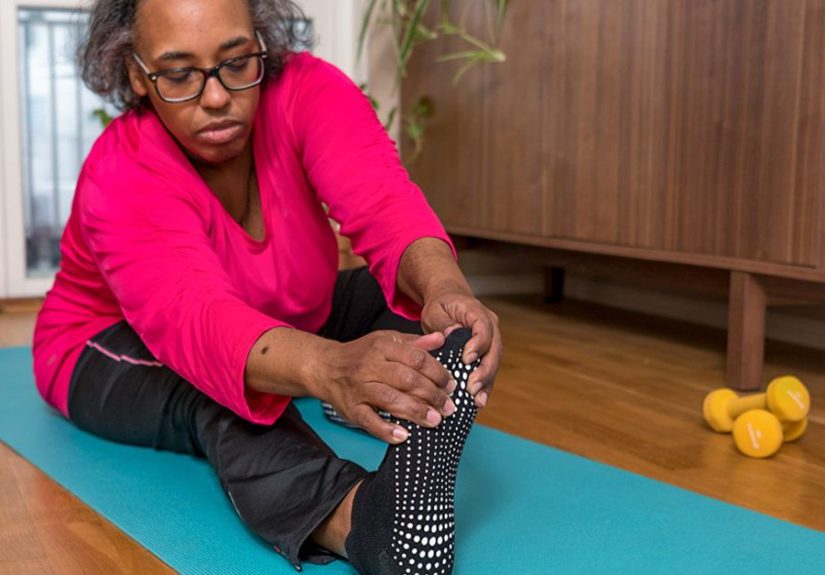
2. Movement Breaks: Wake Up the Brain, Not Just the Body
You don’t need a full PE class in the middle of your lecture, but you do need movement. Short bouts
of physical activity are linked to better attention, behavior, and cognitive performance in students
of all ages.
Why it works
Light movement increases blood flow and oxygen to the brain and can reduce restlessness and stress.
In studies, brief activity breaksthink squats, stretches, or marching in placemake students more
likely to stay on task, follow directions, and inhibit impulsive behavior for the rest of the lesson.
How to do it tomorrow
- After 10–12 minutes of lecture, say, “Stand up! You’ve got 60 seconds for a stretch-and-reset.”
- Lead a quick pattern: reach up, touch your toes, twist side to side, roll your shoulders.
-
For older students, try a “walk and talk”: students stand, move to a different spot, and answer
a quick question with a partner.
Variations
- Elementary: Turn it into a mini game (“Jump once if the answer is true, twice if it’s false”).
- Secondary: Use low-key stretches that feel less childish but still get bodies moving.
- Lecture halls: Even simply standing next to desks or doing chair stretches makes a difference.
3. Pop Quizzes as Retrieval Practice, Not Punishment
The words “pop quiz” may sound like a threat, but when used as low-stakes retrieval practice,
they’re one of the most powerful ways to strengthen memory. Instead of being a surprise grade,
think of them as quick “brain workouts” that help students pull information out instead of just
staring at it.
Why it works
Cognitive scientists have consistently found that retrieving informationthrough short answer
questions, quick quizzes, or even flashcard promptsboosts long-term retention more than simply
re-reading notes. This effect, known as the testing effect or retrieval practice, is especially
strong when quizzes are brief, frequent, and woven naturally into instruction.
How to do it tomorrow
-
After a short lecture segment, project three quick questions and give students one minute to
answer without notes. - Have them compare answers with a partner, then reveal and discuss the correct responses.
- Clarify misunderstandings on the spot and connect each answer back to your main idea.
Variations
- Use different formats: mini whiteboards, clickers, a digital quiz tool, or simply folded index cards.
- Mix in “near miss” questions that require students to distinguish similar concepts.
- Occasionally ask students to write one quiz question of their own and swap with a classmate.
4. Rapid Reviews: Build a “Velcro Strip” for New Knowledge
Rapid reviews are short, energetic check-ins that help students connect new content to what they
already know. Think of them as Velcro: they give new ideas something to stick to.
Why it works
When students repeatedly revisit core concepts in quick, spaced bursts, they’re more likely to
remember them later and to see how individual facts form a bigger picture. Brief review activities
also give you real-time insight into what “stuck” and what needs another pass.
How to do it tomorrow
-
Before moving to a new section, ask one high-leverage question:
“In 15 seconds, explain yesterday’s concept to an 8-year-old,” or
“What are two things this idea is similar to and one thing it is different from?” - Have students answer in pairs, then cold-call a few volunteers to share.
- Capture key phrases on the board as an evolving “concept map” for the unit.
Variations
- Lightning lists: “Write down five key terms from yesterdaygo!”
- One-minute summary: Students summarize the last 10 minutes of lecture in three sentences.
- Misconception check: Present a common error and ask students to fix it together.
5. Drawing to Learn: Sketching for Stronger Memory
Even the students who claim they “can’t draw” can benefit from turning ideas into visuals. When
learners sketch, label, or diagram what they’re hearing, they’re doing more than decorating notes;
they’re encoding information in multiple waysverbal, visual, and spatial.
Why it works
Research shows that students who draw what they are learning often remember material significantly
better than those who only write it down. Even rough stick-figure diagrams can outperform neat lists
of bullet points when it comes to long-term recall, because generating a picture forces students to
decide what’s essential and how ideas relate to each other.
How to do it tomorrow
-
After a concept-heavy explanation, say: “Take three minutes to sketch this idea. Use arrows, boxes,
symbolsno artistic talent required.” - Ask students to trade notebooks and see if they can “read” a partner’s drawing like a mini comic.
- Invite a few students to redraw their concept maps or diagrams on the board while they explain.
Variations
- Science and social studies: Timelines, process cycles, cause-and-effect chains.
- Math: Visual models, number lines, area models, or “before/after” diagrams.
- Language arts: Character maps, theme webs, or “story mountains.”
6. Peer-to-Peer Teaching: Let Students Do the Explaining
If you’ve ever had to teach a topic to someone else, you know how quickly it reveals what you do
and don’t understand. A similar effect shows up in classrooms when students are given structured
chances to explain new ideas to peers.
Why it works
When students talk through a problem together, they co-construct a shared understanding, identify
gaps in their thinking, and refine their explanations. Studies on peer discussion and
think-pair-share show that students who first think individually, then discuss in pairs, and finally
share with the group demonstrate higher engagement and improved accuracy on conceptual questions.
How to do it tomorrow
- Pause your lecture and pose a rich, non-trivial question.
- Give students 30–60 seconds to think silently and jot notes.
-
Have them pair up and explain their reasoning to each other, then invite several pairs to share
with the whole group. - Finish by briefly re-framing or extending the best explanations and continuing your lecture.
Variations
- Turn and talk: Short, focused explanation with the person next to them.
- Three-step interview: Student A explains, student B paraphrases, then they switch.
- Quiet share: Students write their explanation, then silently swap and annotate.
Putting It All Together: Designing a “Chunked” Lecture
These strategies are powerful on their own, but they’re even more effective when combined into a
rhythm. Instead of a 40-minute block of talking, imagine your class as a series of 8–10 minute
“mini-lectures,” each followed by a brief engagement activity.
A sample 40-minute structure might look like this:
- Minutes 0–8: Introduce a core concept with clear explanations and examples.
- Minutes 8–11: Collaborative note-check and quick questions.
- Minutes 11–19: Extend the concept with another example or demonstration.
- Minutes 19–22: Pop quiz or rapid review.
- Minutes 22–30: New piece of content or worked example.
- Minutes 30–33: Sketch-to-learn or quick movement + think-pair-share.
- Minutes 33–40: Synthesize and preview what’s coming next.
This kind of structure respects both the realities of curriculum pacing and what we know about how
brains actually learn. You still get to cover the materialbut with fewer glazed eyes and more
“Oh, I get it now” moments.
Real Classroom Experiences with Breaking Up Lectures (500+ Words)
It’s one thing to read about these strategies and another to see how they play out with real
students, in real rooms, with real fire drills, missing pencils, and surprise announcements.
Here are some classroom-tested experiences that show what happens when teachers actually break up
their lectures.
In a 9th-grade world history class, a teacher noticed that students were bombing unit tests
even though they were “taking notes.” When she collected a sample, she saw the problem:
pages of half-finished sentences, random dates, and arrows pointing to nowhere. She decided to try
collaborative note-taking. Every 10 minutes, she built in a two-minute “note huddle.” Students
compared what they wrote, highlighted key terms, and used a different color to fill in missing
information.
At first, it was chaoticlots of “Wait, what did you get for that?” and “I missed that part.”
But after two weeks, something shifted. Students began arriving with highlighters and sticky notes.
They started asking more clarifying questions during the lecture because they knew they
would be sharing notes soon. On the next unit assessment, the teacher noticed not just higher
scores, but stronger written responses. Students were using vocabulary accurately and connecting
events across time, not just regurgitating dates.
In a large university lecture hall, a biology professor faced a different challenge: 200 students,
stadium seating, and the gravitational pull of the back row. He used to push through 80 minutes of
content with only a couple of “Any questions?” pausesusually met with silence. After learning more
about active learning and retrieval practice, he redesigned his slide deck so that every 10–12
minutes, a “pause slide” appeared with two questions and a small timer icon.
When the timer slide appeared, students had to answer one question individually and then compare
with a neighbor. The professor walked the aisles, listening. He quickly discovered that some
misconceptions were far more common than he realized. Instead of discovering those issues on the
exam, he could address them on the spot, often with a quick sketch or analogy. By mid-semester, his
attendance had improved, and end-of-course feedback showed that students felt the class was “faster
but somehow easier to follow.”
An elementary teacher saw the power of movement breaks in perhaps the simplest way. Her 4th-graders
were fabulous for the first 15 minutes of math, then descended into pencil tapping and chair
wiggling. Instead of fighting it, she scheduled a 90-second “math shuffle” halfway through her
explanation of new concepts: a short routine of stretching, stepping in place, and answering a
silly review question like, “If you’re excited about fractions, do two star jumps.”
The moves themselves were goofy, but the effect was serious. Students returned to their seats
more settled, and the teacher reported needing fewer behavior reminders during practice time.
Over time, she noticed that students who usually stayed quiet during whole-group explanations were
more willing to volunteer answers after a movement breakthey seemed more relaxed and willing to
take a risk.
In a middle school science classroom, drawing to learn became a game-changer for multilingual
learners. Instead of asking them to copy long definitions, the teacher would introduce a concept
like erosion or the water cycle through a short mini-lecture, then say, “Now draw this process as
a comic strip.” Students labeled their diagrams using both English and their first language.
During peer-to-peer teaching, they used the drawings to explain concepts back to classmates.
What surprised the teacher most was not just that test scores improved, but that students referred
to their drawings weeks later. When reviewing for a unit test, they flipped to pages full of
arrows, waves, and stick-figure mountains and could recall details that weren’t even written down.
The visuals had become powerful anchors for their memory.
Across these experiences, a common pattern appears: breaking up lectures doesn’t mean breaking your
curriculum. Instead, it means designing intentional moments when students think, move, talk, draw,
and teach. Those small shiftstwo minutes here, three minutes theredon’t just keep students awake;
they turn lectures into launch pads for deeper learning.
Conclusion: Small Breaks, Big Gains
Long, uninterrupted lectures ask students to fight against how their brains naturally work.
By weaving in collaborative note-taking, movement, pop quizzes, rapid reviews, drawing, and
peer-to-peer teaching, you’re not “watering down” your courseyou’re aligning it with what research
says about attention, memory, and engagement.
Start small. Choose one of these six strategies and insert it into tomorrow’s lesson. Then add
another next week. Over time, you’ll build a lecture rhythm that feels more like a conversation
than a monologue, and you’ll likely see what matters most: students who are not just present,
but truly learning.