Table of Contents >> Show >> Hide
- Start With the Room, Not the TV
- OLED vs QLED vs Mini-LED: What Actually Matters?
- Should You Buy 4K or 8K?
- How Big Should Your TV Be?
- HDR: The Feature That Makes 4K Feel Like 4K
- Refresh Rate, Motion, and Sports
- Gaming Features: What PS5, Xbox, and PC Players Should Look For
- Smart TV Platforms: Useful, Annoying, or Both?
- Sound Quality: The Forgotten Half of the Experience
- Energy Use and Long-Term Costs
- Best TV Recommendations by Buyer Type
- Common TV Buying Mistakes to Avoid
- 500-Word Experience Section: What Buying a TV in 2025 Feels Like in Real Life
- Conclusion: The Best TV in 2025 Is the One That Fits Your Life
Buying a TV in 2025 should be easy. Walk into a store, point at the biggest rectangle, pay money, go home, watch movies. Simple, right? Sadly, modern TV shopping has become a jungle of glowing acronyms: OLED, QLED, Mini-LED, QD-OLED, HDR10+, Dolby Vision, 120Hz, HDMI 2.1, VRR, ALLM, eARC, and several other things that sound like robot license plates.
The good news is that you do not need to memorize every technical term to buy the best TV for your home. You only need to understand what matters for your room, your habits, your budget, and your eyeballs. A great TV for a dark movie room may not be the best TV for a sunny living room. A perfect gaming TV may be overkill for someone who mainly watches cooking shows and baseball. And yes, a huge TV can be wonderful, unless it turns your small bedroom into the front row of an IMAX theater.
This Best TV Buying Guide for 2025 breaks everything down in plain American English. We will cover screen size, display technology, picture quality, refresh rate, gaming features, smart TV platforms, sound, energy use, and real-world buying advice. Think of it as your friendly shopping map, minus the salesperson trying to convince you that “quantum” automatically means “take my wallet.”
Start With the Room, Not the TV
The biggest mistake many shoppers make is starting with a model number instead of the room. Your room decides more than you think. Before choosing a brand or panel type, ask three practical questions: How far do you sit from the screen? How bright is the room during the day? What do you watch most?
If your couch is 6 to 8 feet from the TV, a 55-inch or 65-inch 4K TV usually feels comfortable. If you sit 9 to 11 feet away, a 65-inch or 75-inch model often makes more sense. For larger home theaters, 85 inches and above can be fantastic. With 4K resolution, you can sit closer than you could with older 1080p TVs because the pixels are smaller and harder to see.
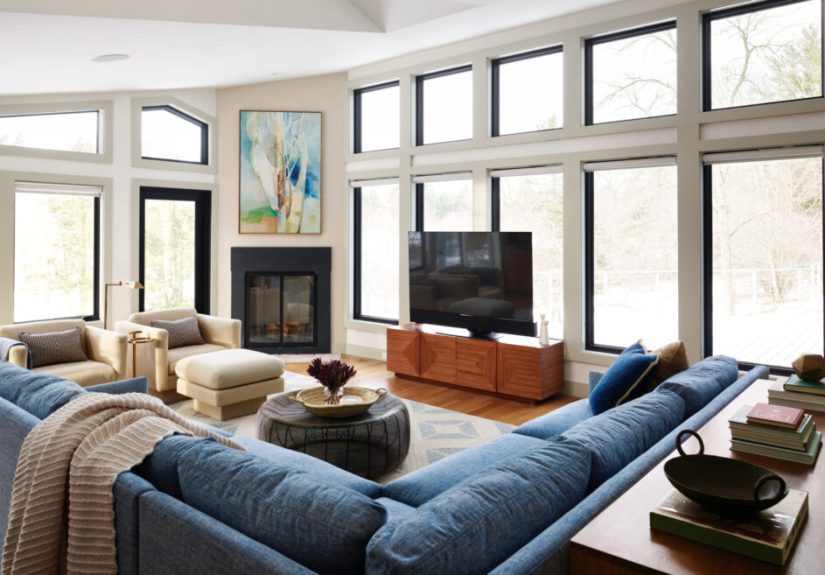
Room brightness is just as important. A dark room rewards OLED because OLED pixels can shut off individually, creating deep black levels and gorgeous contrast. A bright living room often favors Mini-LED or high-end QLED because those TVs can get extremely bright and fight reflections better. In other words, OLED is the candlelit steakhouse; Mini-LED is the sunny brunch patio. Both are delicious, but they are not the same environment.
OLED vs QLED vs Mini-LED: What Actually Matters?
TV marketing makes display technology sound more mysterious than it needs to be. Here is the useful version.
OLED: Best for Movie Lovers and Dark Rooms
OLED TVs use self-lit pixels. Each pixel can turn on, dim, or completely shut off by itself. That means OLED TVs can create perfect black levels, excellent contrast, wide viewing angles, and a cinematic image that looks especially impressive at night. If you watch movies, premium streaming shows, prestige dramas, 4K Blu-rays, or anything with moody lighting and dramatic shadows, OLED is hard to beat.
In 2025, OLED TVs also became brighter than older models, especially premium WOLED and QD-OLED sets. Popular examples in the market included models such as the LG C5, LG G5, Samsung S90F, Samsung S95F, and Sony Bravia OLED models. These TVs are strong choices for people who want high-end picture quality without needing stadium-level brightness.
The main downside is that OLED is usually more expensive, especially in large sizes. There is also a small risk of image retention or burn-in if you watch the same static content for very long periods, such as news channels, sports tickers, or games with fixed HUDs. Most modern OLED TVs include protection features, but if your TV stays on one channel all day, Mini-LED may be the safer choice.
QLED: Bright, Colorful, and Usually More Affordable
QLED TVs are LCD TVs that use quantum dots to improve color and brightness. Despite the similar name, QLED is not the same as OLED. A QLED TV still uses a backlight. That means it usually cannot match OLED’s perfect black levels, but it can deliver punchy brightness, vivid colors, and better pricing in many screen sizes.
QLED is a solid option for families, bright rooms, casual streaming, sports, and buyers who want a large screen without paying premium OLED money. It is also common in mid-range and budget-friendly TVs, which makes it a practical sweet spot for many households.
Mini-LED: The Bright-Room Champion
Mini-LED is an advanced form of LCD backlighting that uses many tiny LEDs behind the screen. More dimming zones allow better control over bright and dark areas. A good Mini-LED TV can get very bright while still producing strong contrast. It will not always match OLED in pixel-level precision, but the best Mini-LED TVs can look spectacular, especially with HDR content.
If your living room has lots of windows, lamps, or daytime viewing, Mini-LED should be high on your list. Models from TCL, Hisense, Samsung, and Sony pushed Mini-LED hard in 2025, with examples such as TCL QM7K/QM8K, Hisense U8QG, Samsung QN90F, and Sony Bravia Mini-LED models showing why this category became so competitive.
Should You Buy 4K or 8K?
For almost everyone in 2025, buy a 4K TV. It is the best balance of price, content availability, performance, and long-term usefulness. Streaming services, game consoles, Blu-rays, YouTube, and sports broadcasts are far better aligned with 4K than 8K.
8K TVs can look impressive, especially in giant sizes, but native 8K content is still rare. The extra money is usually better spent on a higher-quality 4K OLED or Mini-LED TV. A great 4K TV will almost always beat a mediocre 8K TV in real-world viewing. Resolution is only one ingredient; contrast, brightness, color accuracy, motion handling, and processing matter more than a bigger number on the box.
How Big Should Your TV Be?
The classic advice still holds: buy the biggest good TV that comfortably fits your room and budget. Notice the word “good.” A giant cheap TV with poor contrast, weak processing, and bad motion can feel exciting for about ten minutes, then annoying for the next five years.
For bedrooms and smaller apartments, 43 to 55 inches can be enough. For most living rooms, 55 to 75 inches is the mainstream sweet spot. For bigger rooms, home theaters, and sports fans who want that “where did my wall go?” feeling, 85 inches can be amazing.
Here is a practical 2025 screen-size guide:
- 43 inches: Best for bedrooms, dorms, kitchens, and small spaces.
- 55 inches: A safe all-around size for apartments and modest living rooms.
- 65 inches: The modern sweet spot for many families.
- 75 inches: Great for larger rooms, sports, and immersive movie nights.
- 85 inches and up: Best for big rooms, home theaters, and people who whisper “go bigger” in electronics stores.
HDR: The Feature That Makes 4K Feel Like 4K
HDR, or High Dynamic Range, can make a bigger difference than resolution alone. HDR improves contrast, brightness highlights, and color range. A good HDR TV can make sunlight sparkle, neon signs glow, and dark scenes keep their detail instead of turning into a black soup of confusion.
The common HDR formats include HDR10, HDR10+, Dolby Vision, and HLG. HDR10 is widely supported. Dolby Vision and HDR10+ use dynamic metadata, which helps the TV adjust brightness and tone mapping scene by scene or frame by frame. Dolby Vision is common on many streaming services and TVs from brands like LG, Sony, TCL, and Hisense. Samsung TVs typically support HDR10+ instead of Dolby Vision.
Do not buy a TV just because the box says “HDR.” Budget TVs may support HDR signals but lack the brightness and contrast to show HDR well. For strong HDR performance, look for good peak brightness, effective local dimming on LCD/Mini-LED TVs, or high-quality OLED contrast.
Refresh Rate, Motion, and Sports
Refresh rate tells you how many times per second the TV refreshes the image. A 60Hz TV is fine for casual viewing, sitcoms, news, and many streaming shows. A 120Hz TV is better for sports, fast motion, and gaming. Some premium 2025 TVs support 144Hz or even higher refresh rates for PC gaming, but for most people, 120Hz is the important target.
Sports fans should pay attention to motion handling, brightness, and screen uniformity. Football, basketball, soccer, and hockey expose weak TVs quickly because the camera pans across bright fields, courts, or ice. A good sports TV should have solid motion processing, enough brightness for daytime games, and minimal dirty-screen effect.
One warning: motion smoothing can make movies look like soap operas. If your new TV makes a blockbuster look like it was filmed in a mall food court, turn off motion interpolation or select Filmmaker Mode, Cinema Mode, or Movie Mode.
Gaming Features: What PS5, Xbox, and PC Players Should Look For
If you game, your TV needs more than a pretty picture. Look for HDMI 2.1 features, 4K at 120Hz support, Variable Refresh Rate, Auto Low Latency Mode, and low input lag. These features help games feel smoother and more responsive.
For PlayStation 5 and Xbox Series X, a 120Hz panel with HDMI 2.1 is the modern target. VRR helps reduce screen tearing. ALLM automatically switches the TV into a low-latency game mode. eARC is useful if you connect a soundbar or AV receiver and want high-quality audio from apps and devices.
OLED is excellent for gaming because of its fast pixel response and strong contrast. Mini-LED is also a great option, especially for bright rooms or players worried about static game interfaces. PC gamers should check whether the TV supports 144Hz, AMD FreeSync, Nvidia G-Sync compatibility, or other gaming-specific features.
Smart TV Platforms: Useful, Annoying, or Both?
Most TVs in 2025 are smart TVs. Common platforms include Google TV, Roku TV, Amazon Fire TV, Samsung Tizen, and LG webOS. All major platforms support popular streaming apps such as Netflix, YouTube, Disney+, Hulu, Prime Video, Max, and Apple TV. The difference is mostly layout, speed, ads, voice control, app selection, and how long the TV receives updates.
Google TV is flexible and app-rich. Roku TV is simple and friendly. Fire TV is tied closely to Amazon services. Samsung Tizen and LG webOS are polished and common on premium TVs. If you dislike a built-in platform, you can always add a streaming device later. That is the beauty of HDMI: it lets you ignore a smart TV interface that thinks you desperately need six rows of recommendations for shows you will never watch.
Sound Quality: The Forgotten Half of the Experience
Modern TVs are thin. Thin TVs look great on a wall, but they do not leave much room for powerful speakers. Even expensive TVs can sound only “pretty good” compared with a dedicated soundbar or speaker system.
If you watch movies, sports, or games often, budget for audio. A basic soundbar can improve dialogue clarity. A soundbar with a subwoofer adds punch. A Dolby Atmos soundbar or full surround system creates a more cinematic experience. Look for eARC support if you want easier audio connection and better format support.
Energy Use and Long-Term Costs
A TV is not just a one-time purchase. Larger, brighter TVs can use more electricity, especially if brightness is set very high. ENERGY STAR certified TVs meet efficiency requirements, including limits for sleep mode power use. You can also reduce energy use by enabling automatic brightness adjustment, turning off the TV when not in use, and avoiding torch-like picture modes designed for bright store floors.
Do not ruin picture quality just to save a tiny amount of power, but be aware that an 85-inch high-brightness TV running all day is not sipping electricity like a nightlight. Balance brightness, comfort, and efficiency.
Best TV Recommendations by Buyer Type
Best TV for Movie Lovers
Choose an OLED or QD-OLED TV if you mostly watch movies and premium streaming shows in a dim room. Look for excellent black levels, accurate color, strong HDR tone mapping, and Filmmaker Mode. LG, Sony, and Samsung OLED models were among the strongest premium options in 2025.
Best TV for Bright Living Rooms
Choose a Mini-LED or high-end QLED TV with strong peak brightness and an effective anti-reflection screen. This is ideal for daytime sports, family rooms, and spaces with windows. TCL, Hisense, Samsung, and Sony all offered competitive Mini-LED models in 2025.
Best TV for Gaming
Look for 4K at 120Hz, HDMI 2.1, VRR, ALLM, low input lag, and at least two HDMI 2.1 ports if you own multiple consoles. OLED gives superb response time and contrast, while Mini-LED offers brightness and less worry about static gaming elements.
Best TV for Budget Buyers
Prioritize a good 4K QLED or entry-level Mini-LED instead of chasing the cheapest giant screen. A smaller, better TV usually beats a bigger, worse one. Look for reliable reviews, decent brightness, good app support, and enough HDMI ports.
Best TV for Families
A family TV should be bright, durable, easy to use, and large enough for group viewing. Mini-LED and QLED models are practical because they handle mixed content well: cartoons in the morning, sports in the afternoon, movies at night, and someone accidentally leaving a menu paused for 45 minutes.
Common TV Buying Mistakes to Avoid
First, do not judge a TV only in store mode. Retail stores use bright lighting and exaggerated picture settings. A TV that looks flashy under store lights may look unnatural at home.
Second, do not buy based only on brand. Every major brand has great models, average models, and “please read the reviews first” models. Model series matters more than the logo.
Third, do not assume all HDMI ports are equal. Some TVs only offer full HDMI 2.1 features on two ports. If you have a console, gaming PC, soundbar, and streaming box, port layout matters.
Fourth, do not overpay for 8K unless you have a very specific reason. A premium 4K TV remains the smarter buy for most homes.
Finally, do not forget the stand width. Many people measure the screen but forget the furniture. Nothing ruins delivery day faster than discovering your beautiful new TV has legs wider than your media console. That is not home theater; that is furniture drama.
500-Word Experience Section: What Buying a TV in 2025 Feels Like in Real Life
The real experience of buying a TV in 2025 is a mix of excitement, confusion, and mild emotional damage from reading too many model numbers. One minute you think you want a 65-inch OLED. Ten minutes later, you are comparing dimming zones, peak brightness, panel coatings, HDMI bandwidth, and whether your living room is secretly “high ambient light.” Congratulations, you came for Netflix and left with a minor degree in display science.
In real homes, the best TV is rarely the one with the loudest marketing label. It is the one that disappears into your routine. A great family TV turns on quickly, opens apps without behaving like a tired laptop from 2012, handles cartoons and sports without weird motion problems, and still makes movie night feel special. The best compliment is not “Wow, this panel has excellent local dimming.” The best compliment is “Can we watch one more episode?”
For movie lovers, OLED often creates that first-night magic. Dark scenes look richer. Subtitles feel crisp. Faces look natural instead of waxy. When the room lights are low, a good OLED can make an ordinary Tuesday feel like a private screening. But if the same TV is placed opposite three windows and a glass door, some of that magic may have to fight daylight like a vampire at brunch.
That is where Mini-LED earns respect. In a bright living room, a strong Mini-LED TV can feel more practical. Sports look punchy. HDR highlights pop. The screen stays visible even when the sun barges in like an unpaid extra. Families who watch a little of everything may find Mini-LED to be the easiest long-term choice, especially if the TV runs for many hours a day.
Gaming adds another layer. Once you try a good 120Hz TV with VRR and low input lag, it is hard to go back. Games feel smoother, aiming feels cleaner, and fast movement becomes less blurry. OLED is gorgeous for cinematic games, while Mini-LED is excellent for bright gaming rooms and marathon sessions. Either way, the lesson is simple: gamers should check features before falling in love with a discount sticker.
Another real-world lesson: sound matters more than expected. Many people spend heavily on picture quality and then rely on tiny built-in speakers. That is like buying a sports car and filling the tires with pudding. A modest soundbar can make dialogue clearer, explosions fuller, and sports broadcasts easier to understand. You do not need a Hollywood mixing stage in your living room, but your TV should not sound like it is trapped in a shoebox.
The smartest 2025 buying strategy is to choose by lifestyle. If your room is dark and movies matter most, start with OLED. If your room is bright and your household watches everything, start with Mini-LED or QLED. If budget is tight, buy a better 55-inch or 65-inch model instead of a bargain-bin monster. If you game, demand HDMI 2.1 features. If you stream daily, make sure the platform feels fast and simple.
Most importantly, remember that the best TV is not the one that wins every lab test. It is the one that makes your shows, games, sports, and movie nights better without making you regret the price. Buy for your room, not someone else’s setup. Buy for your habits, not a showroom demo. And when in doubt, choose better picture quality over one extra size jump. Your future self, sitting comfortably on the couch with popcorn, will approve.
Conclusion: The Best TV in 2025 Is the One That Fits Your Life
The best TV buying advice for 2025 is refreshingly practical: match the TV to your room, your content, and your budget. OLED remains the premium choice for contrast, black levels, and cinematic viewing. Mini-LED is excellent for bright rooms, sports, and large-screen value. QLED offers colorful performance at more approachable prices. A great 4K TV is still a smarter buy than most 8K models, and gamers should prioritize 120Hz, HDMI 2.1, VRR, and low input lag.
Do not let acronyms bully you. Choose the screen size that fits your viewing distance, the panel technology that fits your room lighting, and the features that fit your daily use. The right TV should make your favorite content look better, your games feel smoother, and your living room feel a little more fun. If it also makes your old TV look like a dusty museum artifact, that is just a bonus.