Table of Contents >> Show >> Hide
- Why Cedar Chests Are Worth Saving
- Start With Safety: Check the Lock First
- Step 1: Evaluate the Cedar Chest Before You Touch a Sander
- Step 2: Clean Like the Makeover Depends on It
- Step 3: Decide Whether to Paint, Stain, or Do Both
- Step 4: Repair Damage Before Refinishing
- Step 5: Sand the Exterior Carefully
- Step 6: Refresh the Cedar Interior
- Step 7: Prime, Paint, Stain, or Seal
- Step 8: Upgrade the Hardware
- Design Ideas: From Blah to Beautiful
- What to Store in a Cedar Chest
- Common Mistakes to Avoid
- How to Style a Restored Cedar Chest
- Real-Life Experience: Lessons From Turning a Tired Cedar Chest Into a Showpiece
- Conclusion
A cedar chest has a way of quietly judging a room. When it is gorgeous, it looks like a family heirloom with a secret past and excellent posture. When it is tired, scratched, orange-toned, dusty, or hiding under a stack of laundry, it looks like furniture that has emotionally given up. The good news? A sad cedar chest can become a showpiece again with cleaning, careful repairs, thoughtful refinishing, and a little design courage.
Whether you inherited a vintage Lane chest, rescued a blanket chest from a thrift store, or found one in the garage looking like it survived three decades of holiday storage, this guide will walk you through the transformation from cedar chest blah to cedar chest beautiful. We will cover safety, cleaning, sanding, painting, staining, hardware, interior cedar care, styling ideas, and real-world lessons that make the difference between “nice DIY” and “wait, you did that?”
Why Cedar Chests Are Worth Saving
Cedar chests are not just storage boxes with fancy manners. Traditionally, they were used to store blankets, woolens, linens, keepsakes, and special garments. Aromatic cedar has long been valued for its scent and its ability to help discourage some fabric pests, especially when the cedar is fresh and properly maintained. Even when the scent has faded, the chest itself often has sturdy construction, beautiful proportions, and sentimental value that newer flat-pack furniture can only dream about.
Many older cedar chests also feature walnut veneer, carved trim, waterfall fronts, turned legs, or mid-century lines. Under the dull finish and mystery scuffs, there may be beautiful wood grain waiting for its comeback tour. Restoring one is not only a budget-friendly home improvement project; it is also a way to keep a usable piece of furniture out of the landfill.
Start With Safety: Check the Lock First
Before you clean, sand, paint, or pick a dreamy stain color, inspect the lock and latch. Some older cedar chests, especially pre-1987 Lane and Virginia Maid cedar chests, were recalled because their lids could automatically latch shut, creating a serious entrapment hazard for children. If your chest has an old automatic locking mechanism, remove or disable the lock before using it in your home.
This is not the glamorous part of the makeover, but it is the most important. A cedar chest should store quilts, not anxiety. If the chest will be in a home with children, visiting relatives, or curious pets, make sure the lid cannot trap anyone inside. Consider adding soft-close lid supports as well, especially if the lid is heavy.
Step 1: Evaluate the Cedar Chest Before You Touch a Sander
Every cedar chest has a personality. Some are just dusty and dull. Others have peeling veneer, water rings, chipped corners, missing hardware, strange smells, or old finish that looks like maple syrup had a bad day. Take a few minutes to inspect the piece before choosing your makeover plan.
Look for These Details
Check whether the exterior is solid wood or veneer. Many vintage cedar chests have a cedar-lined interior but a veneered exterior. Veneer can be refinished, but it requires a gentle hand because aggressive sanding can burn right through the thin surface layer. Also check the legs, base, hinges, lid supports, trim, and any loose decorative pieces.
If the chest has deep gouges, missing veneer, or structural wobble, repair comes before beauty. If the finish is only lightly scratched, you may be able to revive it without stripping everything. The smartest DIYers do not automatically grab the harshest tool; they choose the least aggressive method that gets the job done.
Step 2: Clean Like the Makeover Depends on It
Because it does. Paint, stain, and clear finish will not behave well over dust, wax, grease, furniture polish, or decades of attic atmosphere. Start by vacuuming the chest inside and out with a brush attachment. Remove loose dirt from corners, trim, and seams.
For the exterior, wipe with a mild cleaner suitable for wood furniture. A soft cloth and gentle all-purpose cleaner can work for painted makeovers, while a dedicated wood cleaner may be better for pieces you plan to stain. Avoid soaking the wood. Water is helpful in a mop bucket, not in a veneer seam.
After cleaning, let the chest dry completely. If you smell mustiness, leave the lid open in a dry, ventilated space. For stubborn odors, place an open box of baking soda inside for a few days, or use activated charcoal. Do not rush this stage. Odor trapped under a fresh finish is like bad gossip: it always finds a way out.
Step 3: Decide Whether to Paint, Stain, or Do Both
The best finish depends on the condition of the chest and the style you want. A cedar chest with gorgeous wood grain may deserve stain and a clear topcoat. A chest with damaged veneer, mismatched repairs, or a dated orange finish may look better painted. A two-tone makeover can offer the best of both worlds: stained lid, painted body, refreshed hardware, and a clean interior.
Choose Stain When
Choose stain if the wood grain is attractive, the veneer is intact, and you want a classic or heirloom look. Walnut, warm oak, espresso, and natural finishes can make a cedar chest feel rich and timeless. Always test stain in an inconspicuous area because old wood can absorb color unevenly.
Choose Paint When
Paint is ideal when the exterior has patched areas, heavy discoloration, or a style that needs modernization. Deep navy, warm white, sage green, charcoal, black, and muted terracotta can all turn a blah chest into a living room accent piece. Use furniture paint or a primer-and-paint system designed for wood.
Choose a Two-Tone Finish When
A two-tone look works beautifully on cedar chests. You might stain the top and paint the base, or paint the frame and leave decorative wood trim exposed. This approach highlights craftsmanship while hiding problem areas. It is also a great compromise when one family member loves natural wood and another wants “something less grandmother’s basement.”
Step 4: Repair Damage Before Refinishing
Small dents and nail holes can be filled with stainable wood filler if you plan to stain, or standard wood filler if you plan to paint. Press filler into damaged spots, let it dry, then sand smooth. For missing veneer, trim away loose edges carefully, glue down lifted veneer, and clamp it flat. Larger veneer patches may require matching veneer or a creative painted finish.
Loose legs or wobbly bases should be repaired before the chest is finished. Tighten screws, reglue joints, and replace missing fasteners. If hinges are bent or rusty, remove them, clean them, or replace them with similar hardware. A beautifully painted chest with a lid that opens like a haunted drawbridge is not the goal.
Step 5: Sand the Exterior Carefully
Sanding prepares the surface for paint, stain, or clear coat. For most furniture refinishing projects, a progression from medium to fine grit works well. Many refinishing guides recommend sanding with the grain and finishing with fine-grit paper, such as 180 to 220 grit, before applying stain or a topcoat.
If the chest has veneer, be extra cautious. Use light pressure, avoid lingering in one spot, and do not try to erase every deep stain with brute force. You are refinishing furniture, not interrogating it. For detailed areas, use sanding sponges or hand sanding to preserve edges and curves.
After sanding, remove dust thoroughly with a vacuum and tack cloth or a clean lint-free cloth. Dust left behind can create bumps in paint and cloudy spots in clear finish.
Step 6: Refresh the Cedar Interior
The inside of a cedar chest is special. Unlike the exterior, the interior is often left unfinished so the aromatic cedar can do its job. If the cedar scent has faded, lightly sanding the interior can expose fresh wood fibers and revive some of the natural aroma. Use fine sandpaper, work gently, and wear a dust mask because cedar dust can irritate the lungs.
Do not apply polyurethane, paint, or heavy sealers inside the cedar lining if you want to preserve the cedar aroma. If the interior is stained or musty, vacuum thoroughly, sand lightly, and air it out. Some owners use cedar oil sparingly to renew fragrance, but it should be applied carefully and allowed to dry fully before storing textiles.
Step 7: Prime, Paint, Stain, or Seal
If painting, apply a bonding primer unless your furniture paint specifically says primer is not needed. Primer helps block stains, improves adhesion, and creates a smoother finish. Once dry, apply thin coats of paint rather than one thick coat. Thick paint leaves brush marks, drips, and regret.
If staining, make sure the old finish has been fully removed from the areas you want to stain. Stain needs open wood pores to absorb properly. Apply stain with a cloth or brush, wipe away excess, and let it dry according to the product directions. For blotch-prone wood, a pre-stain conditioner may help create a more even color.
For protection, apply a clear topcoat to the exterior. Polyurethane, water-based poly, furniture wax, hemp oil, or varnish can all be appropriate depending on the look and durability you want. A cedar chest used as a coffee table or bench needs a tougher topcoat than one sitting quietly at the foot of a bed.
Step 8: Upgrade the Hardware
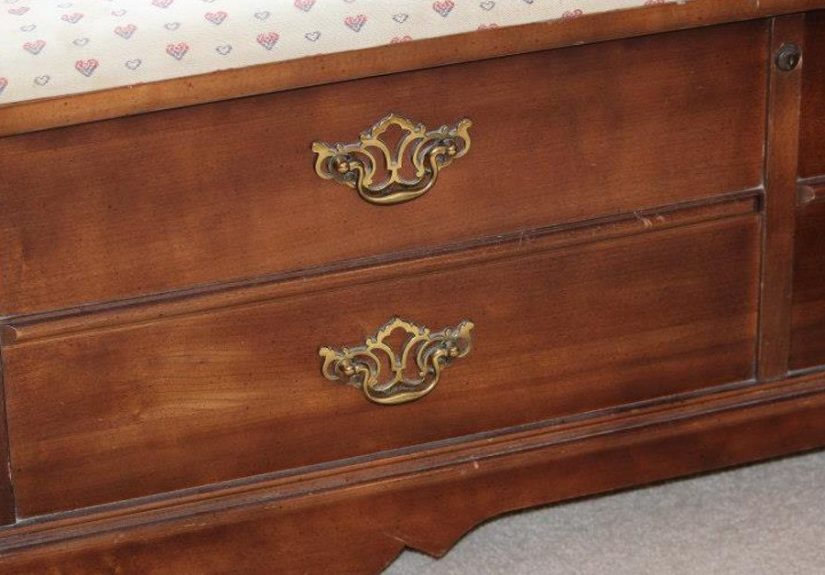
Hardware is the jewelry of furniture. The right pulls, hinges, escutcheons, or decorative plates can make a cedar chest feel intentional rather than merely “fixed.” If the original hardware is attractive, clean and reuse it. Aged brass, antique bronze, matte black, and brushed nickel can each create a different mood.
For a vintage chest, original hardware often preserves character. For a modern makeover, simple knobs or clean-lined pulls can make the chest feel current. Just measure existing holes before ordering replacements. Nothing ruins a hardware glow-up like discovering your new pulls are one-quarter inch off.
Design Ideas: From Blah to Beautiful
The Classic Heirloom Look
Strip the tired finish, sand gently, stain in a warm walnut tone, and seal with a satin topcoat. Add polished original hardware and style the chest at the foot of a bed with folded quilts. This look says, “I know where the good linens are.”
The Cottage Painted Chest
Paint the body creamy white, soft sage, or dusty blue. Lightly distress the edges if you like a casual farmhouse feel. Add antique brass hardware and line the bottom with acid-free tissue before storing blankets.
The Modern Entryway Bench
Paint the chest matte black or charcoal, add sleek hardware, and place a long cushion on top. Use it for shoes, scarves, and seasonal accessories. Add wall hooks above it and suddenly your entryway looks like it has a life coach.
The Two-Tone Statement Piece
Stain the lid and paint the base in a bold color such as deep green or navy. This works especially well if the top has beautiful grain but the body has cosmetic flaws. The result feels custom without requiring a custom-furniture budget.
What to Store in a Cedar Chest
Cedar chests are excellent for storing blankets, sturdy linens, seasonal textiles, and protected wool items. However, delicate heirlooms should not always sit directly against cedar. Cedar can release oils and acids that may discolor fragile textiles or affect paper over time. For quilts, vintage clothing, documents, and photos, use acid-free tissue, archival boxes, cotton garment bags, or protective containers.
Avoid storing leather directly inside for long periods because cedar can dry it out. Also avoid using mothballs in a cedar chest. Their fumes are strong, toxic, and unnecessary for most home storage situations. A clean cedar chest with breathable protection is usually a much better plan.
Common Mistakes to Avoid
Over-Sanding Veneer
This is the classic cedar chest mistake. Once veneer is sanded through, you cannot simply “unsand” it. Use light pressure and stop as soon as the surface is smooth enough for your chosen finish.
Skipping the Safety Check
An old locking latch is not charming if it is dangerous. Remove or replace unsafe locks before the chest becomes part of daily life.
Sealing the Cedar Interior
If you seal the inside with paint or polyurethane, you reduce the natural cedar aroma. Keep the interior unfinished unless there is a specific reason to seal it.
Using the Wrong Topcoat
A decorative chest may do fine with wax or oil, but a chest used as a bench needs a more durable protective finish. Match the topcoat to the job.
How to Style a Restored Cedar Chest
Once your cedar chest is beautiful again, give it a place to shine. At the foot of the bed, it can store extra blankets and anchor the room. In the entryway, it can work as a bench with hidden storage. In the living room, it can serve as a coffee table if the lid is flat and the finish is durable. In a nursery or guest room, it can hold seasonal bedding, keepsakes, or toys as long as the safety lock issue has been handled.
Style it with restraint. A tray, a folded throw, a small lamp, or a stack of books is enough. You just spent time making the chest beautiful; do not bury it under seventeen decorative pumpkins unless autumn has made a compelling legal argument.
Real-Life Experience: Lessons From Turning a Tired Cedar Chest Into a Showpiece
The first thing you learn during a cedar chest makeover is that old furniture is never just old furniture. It has secrets. Sometimes the secret is gorgeous wood grain under a cloudy finish. Sometimes the secret is a missing screw, a mystery stain, or a wad of ancient wrapping paper hiding behind the hinge. Either way, a cedar chest project teaches patience fast.
One of the best experiences is the moment after cleaning. Before sanding, before paint, before stain, a simple deep clean can reveal the true condition of the piece. A chest that looked hopeless in a dim garage may suddenly show elegant trim, solid construction, or a lid that closes perfectly. That is when the project shifts from “maybe I made a mistake buying this” to “oh, this is going to be good.”
Another lesson is that sanding is both powerful and dangerous. On a solid cedar interior, light sanding can bring back that warm, pencil-shaving cedar scent that makes the whole project feel rewarding. On a veneered exterior, sanding too aggressively can create a pale, patchy spot that announces itself like a tiny disaster billboard. The best approach is to start gently, check often, and remember that smooth is more important than perfectly raw.
Paint can be a lifesaver. Some people feel guilty painting old wood, but not every chest has museum-quality grain. If the veneer is damaged, the finish is blotchy, or repairs are visible, paint can honor the piece by making it useful and loved again. A soft green painted cedar chest in a bedroom can look calm and charming. A black cedar chest with brass hardware in an entryway can look surprisingly expensive. The color choice should fit the home, not a rulebook written by imaginary furniture police.
Staining, on the other hand, is deeply satisfying when the wood cooperates. Watching a dull lid turn rich and warm under stain is one of those DIY moments that makes you briefly believe you could host a home renovation show. The trick is preparation. Stain exposes sanding marks, leftover finish, and uneven repairs. If you want a stained finish, the surface must be clean, evenly sanded, and ready to absorb color.
Hardware also changes everything. A cedar chest with dated pulls can look heavy and forgotten. Swap or clean the hardware, and suddenly the same chest looks designed. Original brass hardware can often be polished lightly and reused. If the old pieces are missing or badly damaged, new hardware gives the chest a fresh identity. Measuring carefully saves frustration, especially when replacing pulls with existing holes.
The most meaningful part of restoring a cedar chest is deciding what role it will play next. Maybe it becomes blanket storage at the end of a bed. Maybe it holds family keepsakes. Maybe it becomes a bench where people sit to tie their shoes. That is the beauty of the project: you are not just making furniture prettier; you are returning it to daily life.
And yes, there will be imperfect moments. A drip may need sanding. A stain color may look different than expected. A hinge screw may vanish into the floor dimension where all tiny hardware goes to retire. But those little challenges are part of the story. In the end, a restored cedar chest has more character than anything bought new. It carries history, function, and your own effort in every corner.
Conclusion
Taking a cedar chest from blah to beautiful is one of the most rewarding furniture makeover projects because it combines practicality, history, and style. Start with safety, especially if the chest has an old locking latch. Clean thoroughly, repair damage, sand with care, and choose a finish that suits both the wood and your home. Refresh the cedar interior without sealing away its natural aroma, upgrade the hardware, and style the finished piece where it can be used and admired.
A cedar chest does not need to remain a dusty relic or a forgotten storage box. With the right approach, it can become a bedroom anchor, an entryway bench, a living room statement, or a treasured family piece ready for another generation. From cedar chest blah to cedar chest beautiful, the makeover is part craft project, part rescue mission, and part proof that great furniture sometimes just needs a second chance.