Table of Contents >> Show >> Hide
- What Does “Half Crystal, Half Regenerative” Actually Mean?
- Why the Crystal Side Still Matters
- What the Regenerative Side Adds
- How a Hybrid Design Bridges Both Worlds
- The FM Surprise: Yes, This Can Work Above AM Broadcast
- Why High Q Is Such a Big Deal
- Best Use Cases for This Kind of Radio
- Common Mistakes That Make Builders Blame the Radio Unfairly
- Experience Section: What Building and Using One Really Feels Like
- Conclusion
- SEO Tags
Some electronics projects whisper. This one practically grins at you from the workbench.
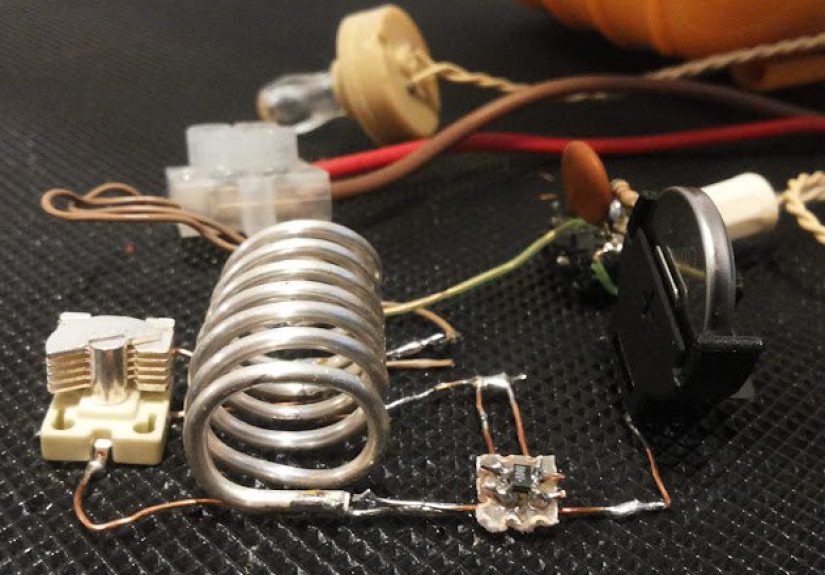
A “half crystal radio, half regenerative radio” is exactly the kind of phrase that makes radio nerds lean forward and everyone else wonder whether you’ve started talking to old vacuum tubes again. But the idea is beautifully simple: build a receiver that can act like a crystal set when it has no power, then become a regenerative receiver when you feed it a little electricity. In one mode, it survives on the energy arriving through the antenna. In the other, it gets a serious performance boost from controlled feedback. Same spirit, two personalities.
That is what makes this topic so charming. It combines the almost magical austerity of a classic crystal radio with the cleverness of a regenerative receiver, which is basically what happens when a simple radio decides it would like a graduate degree in signal sensitivity. The result is a compact lesson in radio history, analog design, and the very human joy of making something work with fewer parts than seems reasonable.
What Does “Half Crystal, Half Regenerative” Actually Mean?
A traditional crystal radio is the minimalist hero of radio design. It usually relies on a tuned circuit, a detector, an antenna, ground, and a high-impedance earphone. No battery. No wall plug. No drama. It works by selecting a radio signal, rectifying it, and letting the recovered audio reach your ear. That simplicity is why crystal sets are still beloved by hobbyists, teachers, and people who enjoy proving that physics can be both elegant and mildly smug.
A regenerative radio, by contrast, adds an active device and positive feedback. The signal is amplified and fed back in phase so the circuit behaves as though it has much more gain and much sharper tuning than its parts count would suggest. When adjusted just below oscillation, a regen receiver becomes far more sensitive and selective than a plain crystal set. In other words, it is still simple, but now it has opinions.
So when someone says a receiver is “half crystal radio, half regenerative radio,” they are usually describing a hybrid design that can operate in two states:
Mode 1: Crystal-Style Reception
With no external power applied, the circuit behaves like a passive detector-based receiver. A suitably chosen device, often one with a very low threshold or depletion-mode behavior, can still respond to the RF signal without a powered amplification stage. Reception is limited, delicate, and highly dependent on strong signals, a good antenna, and a light load on the tuned circuit.
Mode 2: Regenerative Reception
When power is applied, the same active device becomes part of a regenerative detector. Now the circuit can be adjusted near the point of oscillation, which sharply improves sensitivity and selectivity. Suddenly the radio goes from “I can barely hear that station if the moon is in a good mood” to “Oh, there it is, and now it sounds like a real receiver.”
Why the Crystal Side Still Matters
It is tempting to treat the crystal-radio half as a nostalgic stunt, but that undersells what is happening. A crystal set teaches the core jobs every radio must do: capture energy, select a frequency, detect the modulation, and turn that into sound. Strip away the ICs, menus, displays, and presets, and you are left with the bones of radio itself.
The tuned circuit is the first star of the show. The coil and variable capacitor form a resonant network that favors one frequency range over others. This is where selectivity is born. Change the capacitance, and you change the resonant frequency. That is radio tuning in its most direct form.
The detector is the second star. A diode, crystal detector, or suitable transistor-like device rectifies the RF waveform so the audio envelope can be recovered. That sounds dry on paper, but in practice it is deliciously strange: invisible energy arrives through a wire, gets sorted, gets nudged through a nonlinear device, and becomes speech or music. Not bad for a circuit that barely looks awake.
The catch, of course, is that crystal sets are picky. They want strong signals, efficient antennas, careful impedance handling, and high-impedance earphones. Load the tuned circuit too much and performance drops. Use the wrong detector and sensitivity suffers. Treat the coil like a random spring from a ballpoint pen, and the radio may respond by doing absolutely nothing.
What the Regenerative Side Adds
Regeneration was one of the great leaps in early radio. By feeding a portion of the amplified signal back into the tuned circuit in phase, a regenerative receiver multiplies effective gain and sharpens the apparent Q of the circuit. That means weaker stations become easier to hear, and nearby stations become easier to separate.
This is why regenerative radios held such a strong place in radio history. They offered impressive performance with a small number of parts at a time when active devices were expensive and every extra stage mattered. Even today, hobbyists love regens because they prove you do not need a giant parts bin to build a serious receiver.
But regenerative circuits are not autopilot-friendly. The control must be adjusted carefully. Too little feedback and the radio feels sleepy. Too much and it breaks into oscillation, whistles, or behaves like it has consumed too much coffee. That edge-of-oscillation behavior is not a bug; it is the whole personality of the design.
How a Hybrid Design Bridges Both Worlds
The clever part of a hybrid receiver is the active device choice. Some modern designs use a FET that can still conduct usefully at zero bias, allowing the circuit to act like a passive or near-passive detector with no applied power. Once powered, that same device can provide the active behavior needed for regeneration.
This is where the phrase “half crystal, half regenerative” becomes more than a cute headline. It is not just a crystal radio with an amplifier glued on as an afterthought. It is a design where the core detection element and tuned network are arranged so the circuit meaningfully operates in both a no-power and powered state.
That dual nature creates a great educational contrast. In crystal mode, the radio shows you how much can be done with raw RF energy and careful component choices. In regenerative mode, it shows you what a little positive feedback can do when analog design stops being polite and starts getting effective.
The FM Surprise: Yes, This Can Work Above AM Broadcast
Most people associate crystal radios with AM broadcast stations, long antennas, and old-school earphones. That is fair. But hybrid designs have drawn attention because some can also work on the FM broadcast band, which feels like a plot twist in a chapter you thought you already understood.
FM complicates life because a simple detector does not directly recover frequency variations the way an AM envelope detector handles amplitude changes. The trick is slope detection. If the tuned circuit is offset slightly from the carrier frequency, the FM signal moves up and down the slope of the resonant response. That turns frequency changes into amplitude changes. Once that happens, a simple detector can recover audio from the resulting amplitude variation.
Is slope detection the world’s most elegant FM solution? Absolutely not. It is simple, not perfect. It is sensitive to tuning and linearity, and it does not match the performance of proper FM detector stages. But it works well enough to make these hybrid receivers fascinating. Suddenly, the old crystal-set mindset sneaks into VHF territory and says, “Move over, I brought a trick.”
In practice, FM-capable hybrid sets demand high-Q tuned components, careful layout, and realistic expectations. The no-power side may only deliver strong local stations faintly, while powered regenerative operation can produce much more satisfying results. Still, that is precisely the appeal: the circuit lets you hear the difference between passive cleverness and active cleverness in real time.
Why High Q Is Such a Big Deal
If there is one technical detail worth underlining in permanent marker, it is this: high Q matters. A lot.
Q, or quality factor, describes how selective and low-loss a tuned circuit is. A higher-Q coil-and-capacitor combination stores energy more efficiently and wastes less of it as heat or unnecessary loading. In a crystal-style receiver, that means better signal selection and more usable signal at the detector. In a regenerative receiver, it means the circuit has a stronger foundation before feedback even enters the picture.
This is why serious builders fuss over coil winding, component placement, stray capacitance, detector loading, and coupling. None of that is glamorous. Nobody puts “minimized parasitics” on a T-shirt. But it is the difference between a radio that teaches you something and a radio that teaches you new vocabulary you should not say in front of children.
Best Use Cases for This Kind of Radio
This hybrid concept is ideal for experimenters, students, and hobbyists who want more than a quick novelty build. It is especially good for people who want to understand why radios work instead of simply assembling one from a bag of mystery parts.
It is also a terrific demonstration piece. In one session, you can show someone passive detection, tuned-circuit selectivity, the effect of detector loading, the meaning of Q, and the dramatic improvement that regenerative feedback can bring. That is a lot of education packed into one stubborn little box.
It is less ideal for anyone seeking instant, foolproof, speaker-level listening. This is not a Bluetooth speaker with a tuning knob. It is a hands-on receiver, and it expects the operator to participate.
Common Mistakes That Make Builders Blame the Radio Unfairly
Using the Wrong Earphone
A low-impedance earbud can drag the detector stage down like a piano tied to a bicycle. A proper high-impedance earphone, crystal earphone, or buffered audio stage makes a world of difference.
Overloading the Tuned Circuit
Directly hanging too much detector or headphone load across the LC network reduces Q and hurts selectivity. Taps, lighter coupling, or buffering can help.
Expecting Passive Mode to Behave Like Powered Mode
The unpowered side is the minimalist mode. It is supposed to be weaker. That is part of the lesson, not evidence that the circuit has betrayed you.
Driving Regeneration Too Hard
More feedback is not always better. The sweet spot is near oscillation, not deep into chaos. Think “careful seasoning,” not “dump the whole salt shaker in.”
Experience Section: What Building and Using One Really Feels Like
The experience of working with a half crystal, half regenerative radio is part science lab, part treasure hunt, and part tiny emotional roller coaster. On paper, the circuit looks modest. On the bench, it can feel alive in a way modern sealed electronics rarely do.
The first surprise is how physical the whole process feels. You do not just switch it on and receive a station. You wind a coil, trim a lead, move your hand near the capacitor, and suddenly the tuning shifts a little. You reroute a wire and the background noise changes. You touch the regeneration control a hair too far and the set starts to protest with a whistle. The radio reminds you, over and over, that RF is not abstract. It is tangible, moody, and very aware of sloppy construction.
In crystal-style mode, the listening experience is almost theatrical. You put on an earphone and lean in, because the signal is often faint and private. When audio finally appears from a receiver with no battery connected, it feels slightly ridiculous, like you have gotten away with something. Even if you understand the theory perfectly, the emotional response is still: “Wait, that worked?” It is one of the rare electronics moments where the physics and the magic arrive together.
Then comes powered mode, and the radio’s personality changes. Weak stations that were barely ghosts can become recognizable. Tuning gets sharper. The set starts acting less like a museum demonstration and more like a real receiver. That transition is the most satisfying part of the entire project, because it teaches through contrast. You hear the before and after with your own ears. Passive detection says, “Here is the bare minimum.” Regeneration says, “Now watch what feedback can do.”
There is also a wonderfully old-fashioned skill involved in operating the thing. You are not tapping presets. You are balancing controls, listening carefully, and learning where the circuit feels happiest. It rewards patience. Rush the tuning and you miss the station. Rush the regeneration and you land in squeal city. But once you get the feel for it, the receiver starts making sense the way a musical instrument makes sense: not all at once, but through repeated hands-on use.
And maybe that is the best part of the whole experience. A hybrid radio like this does not just deliver audio. It teaches respect for the craft behind early radio design. It turns invisible waves into a practical lesson in resonance, detection, feedback, and restraint. It reminds you that elegant engineering does not always mean more parts, more software, or more layers. Sometimes it means building a radio that can whisper like 1922 and sharpen up like 1932, all on the same bench, under the same fingertips.
If you enjoy projects that make you smarter while occasionally humbling you, this one is hard to beat. It is history, physics, and hobby joy all wound into the same coil.
Conclusion
A half crystal radio, half regenerative radio is more than a novelty phrase. It is a compact demonstration of how radio evolved from passive detection to active, feedback-assisted reception without losing the beauty of simplicity. In one design, you can experience the fragile elegance of a crystal set and the punchier performance of a regenerative receiver. That alone makes it worth building, studying, or at least admiring from a respectful distance while pretending you definitely knew what regeneration was all along.
For anyone interested in crystal radio design, regenerative radio principles, FM slope detection, or classic low-part-count receiver ideas, this hybrid approach is a brilliant reminder that old circuits still have new things to teach.