Table of Contents >> Show >> Hide
- First Question: Does the Baby Wild Rabbit Actually Need Help?
- What to Do Right Away If a Baby Rabbit Needs Help
- Food: What Baby Wild Rabbits Eat and What They Should Never Eat
- Habitat: The Safest Setup for a Baby Wild Rabbit
- Signs of Illness, Injury, or Distress
- What Not to Do
- When to Call a Wildlife Rehabilitator
- A Quick Reality Check on Survival
- Conclusion
- Common Real-Life Experiences With Baby Wild Rabbits
Finding a baby wild rabbit can trigger an immediate human response: scoop first, Google later. That instinct comes from a good place, but with wild bunnies, the kindest move is often the least dramatic one. In many cases, a baby rabbit that looks lonely is not abandoned at all. Mother rabbits stay away from the nest for most of the day to avoid attracting predators, then return briefly to nurse, usually around dawn and dusk. So yes, wild rabbit parenting can look suspiciously like ghosting, but in nature, it is actually smart survival strategy.
If you have discovered a baby cottontail in your yard, under a shrub, or in a shallow patch of grass that your lawn mower almost turned into a crime scene, this guide will walk you through what to do next. We will cover how to tell whether a baby wild rabbit truly needs help, what food is safe, what habitat setup works best, what mistakes to avoid, and when to call a licensed wildlife rehabilitator immediately. The goal is simple: help the rabbit without accidentally harming it.
First Question: Does the Baby Wild Rabbit Actually Need Help?
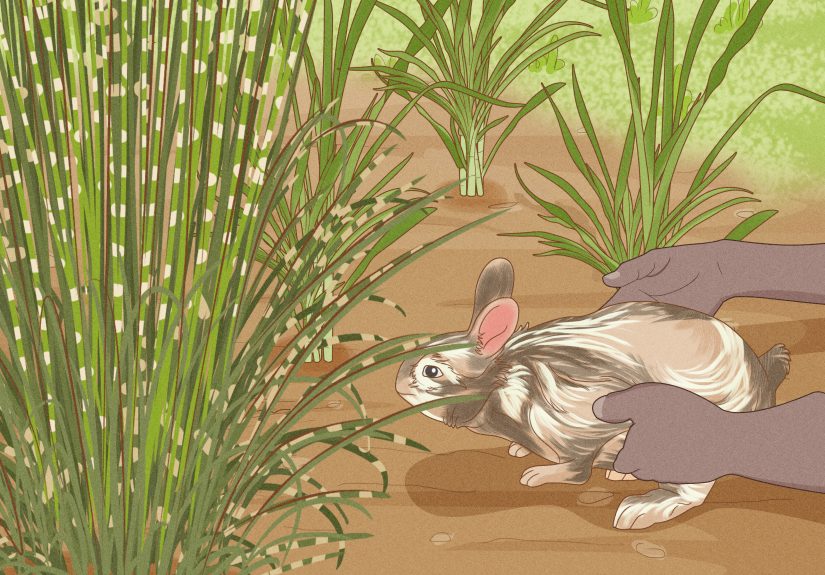
This is the most important step in baby wild rabbit care. Many healthy rabbits are accidentally “rescued” when they should have been left alone. Wild cottontails build shallow nests in grass, leaf litter, or garden beds and cover the babies with fur and plant material. The nest can look oddly exposed, but that is normal.
A baby rabbit usually does not need help if it is:
- Warm, quiet, and not visibly injured
- Resting in a nest lined with grass or fur
- Fully furred with eyes open
- Able to hop, hold its ears upright, and move normally
- About the size of a softball or roughly 4 to 5 inches long
A baby rabbit may need help if it is:
- Cold, weak, lethargic, or crying continuously
- Bleeding or has visible wounds
- Covered in flies or fly eggs
- Brought in by a cat or dog
- Clearly dehydrated, severely thin, or lying exposed away from the nest for a long time
- Still hairless or eyes closed, and the nest is destroyed or the mother is confirmed dead
How to Check Whether the Mother Is Returning
If the nest appears intact and the babies are warm and quiet, leave them in place. You can place a few light pieces of grass, string, or twigs over the nest in a small crisscross pattern and check it the next morning after dawn or after dusk. If the pattern has been disturbed, the mother likely returned. If it remains completely untouched and the babies look weaker, that is a sign to call a wildlife rehabilitator.
If the nest was disturbed by mowing, pets, or curious humans, gently rebuild it with the original grass and fur if possible and place the babies back inside. Contrary to a common myth, the mother will not reject the babies simply because a human touched them. Wild rabbits are not running fingerprint forensics.
What to Do Right Away If a Baby Rabbit Needs Help
If the rabbit is injured, chilled, or truly orphaned, think warm, dark, and quiet. That is the golden rule of emergency care until a licensed wildlife rehabilitator takes over.
Make a Safe Temporary Holding Space
Use a small box or pet carrier lined with a soft towel or T-shirt. Keep the rabbit in a dim, quiet room away from children, pets, loud televisions, and well-meaning people who want to “just peek.” Stress can kill wild rabbits surprisingly fast, so minimal handling matters.
If the bunny feels cold, provide gentle heat on one side of the box only. A heating pad on low under half the box or a warm water bottle wrapped in cloth works well. This lets the rabbit move away from the heat if it gets too warm. Never place a baby rabbit directly on a heating pad, and never blast it with a heat lamp like it is the star of a tiny desert music festival.
Do Not Offer Food or Water Immediately
This surprises many people, but do not rush to give a wild baby rabbit water from a bowl, cow’s milk, or random greens from the fridge. Improper feeding can cause aspiration, bloating, diarrhea, or shock. A cold or stressed rabbit may not digest properly at all. Stabilize first. Contact a wildlife rehabilitator second. Feed only if you have been specifically instructed by a qualified professional.
Food: What Baby Wild Rabbits Eat and What They Should Never Eat
When people search for “how to feed a baby wild rabbit,” they often imagine a miniature bottle, a blanket, and a Disney-level bonding montage. Reality is far less cute and much more delicate. Baby wild rabbits are difficult to raise, and feeding mistakes are one of the biggest reasons they do not survive in home care.
What They Eat in the Wild
Very young baby rabbits nurse from their mother once or twice a day. As they grow, they begin nibbling grasses and other natural vegetation. Young cottontails develop quickly. By around two to three weeks, they may begin exploring outside the nest, and by about three weeks or so many are already becoming independent.
What You Should Not Feed
- Cow’s milk
- Human baby formula
- Bread, crackers, cereal, or processed foods
- Large bowls of water
- Fruit-heavy diets
- Carrots as a main food
- Store-bought salad mixes as a cure-all
Cow’s milk is a particularly bad idea. It can cause serious digestive upset and dehydration. Also, carrots have a great publicist, but they are not the magic answer to rabbit care. Wild baby rabbits do not need a cartoon snack plan.
If a Rehabilitator Tells You to Feed the Rabbit
Only in true orphan cases, and only under expert guidance, temporary formula feeding may be recommended. Wildlife and veterinary resources commonly reference species-appropriate milk replacers such as kitten milk replacer or carefully selected goat-milk-based options for emergency use. But the details matter enormously: position, amount, temperature, and frequency can all affect survival.
If a rehabilitator instructs you to feed before transfer, follow their directions exactly. In general, babies are fed upright, never on their backs, and with tiny amounts delivered slowly to avoid aspiration. More is not better. Faster is definitely not better. Overfeeding can be as dangerous as underfeeding.
Habitat: The Safest Setup for a Baby Wild Rabbit
“Habitat” means two different things in baby rabbit care. First, it may mean restoring the outdoor nest if the bunny belongs there. Second, it may mean creating a temporary indoor recovery space while waiting for a rehabilitator.
Best Outdoor Habitat: The Original Nest
If the rabbit is uninjured and the mother is likely nearby, the best habitat is the natural nest. Rebuild the shallow depression with the original grass and fur if needed. Keep dogs leashed and cats indoors. Mark the area so no one mows over it. Give the family space and time.
Do not relocate the nest across the yard unless absolutely necessary. Wild rabbit mothers know where to find their young. Moving babies too far can break that connection.
Best Temporary Indoor Habitat: Small, Quiet, and Simple
If the rabbit truly needs rescue, the ideal temporary habitat is not a giant cage full of toys, lettuce confetti, and emotional support stuffed animals. Keep it simple:
- A small box or carrier
- Soft, non-looping cloth or towel
- Gentle warmth on one side if needed
- No bright lights
- No deep water dish
- No unnecessary handling
A compact space helps the rabbit feel secure and reduces the risk of frantic jumping or injury. Wild rabbits are prey animals and can panic easily. Quiet is not a luxury here. It is treatment.
Signs of Illness, Injury, or Distress
If you are unsure whether the rabbit is in trouble, look for practical red flags instead of guessing based on cuteness level. A baby wild rabbit needs urgent help if it has:
- Open wounds or broken limbs
- Blood around the nose or mouth
- Labored breathing
- Cold body temperature
- Sunken belly or signs of dehydration
- Fly eggs, maggots, or foul odor
- Neurologic signs such as spinning, twitching, or inability to stand
- Any contact with a cat, even if no wound is obvious
Cat attacks are especially dangerous because bacteria from a cat’s mouth can cause severe infection quickly. If a cat had the rabbit in its mouth, treat that as an emergency even if the bunny looks “mostly okay.”
What Not to Do
Sometimes the best rabbit care is a list of mistakes to avoid. Here are the biggest ones:
Do Not Keep It as a Pet
Wild rabbits are not domesticated rabbits in disguise. They are built for life outside, and in many places it is illegal to keep native wildlife without a permit. Even if a baby rabbit survives home care, captivity can cause chronic stress and poor outcomes.
Do Not Overhandle It
A rabbit that sits still is not necessarily calm. It may be frozen in fear. Limit touch, talking, cuddling, and passing the baby around for family photos. This is not the moment for a woodland-themed social media debut.
Do Not Force Water
Never drip water into the mouth or put a weak baby rabbit over a dish and hope instinct takes over. Aspiration happens fast and can be fatal.
Do Not Assume Every Small Rabbit Is a Baby in Trouble
A young cottontail with open eyes, full fur, upright ears, and the ability to hop is often already old enough to be alone. Wild rabbits grow up quickly. Nature does not wait for kindergarten graduation.
When to Call a Wildlife Rehabilitator
Call a licensed wildlife rehabilitator, wildlife veterinarian, humane society, or state wildlife agency if:
- The rabbit is injured, cold, or weak
- The nest was destroyed and cannot be restored
- The mother is confirmed dead
- The rabbit was caught by a cat or dog
- You are dealing with a hairless or eyes-closed baby outside the nest
- You are unsure what to do next
Time matters. The longer a truly orphaned or injured rabbit stays in amateur care, the lower its odds. A rehabilitator has the training, permits, feeding tools, medication access, and release planning that home care cannot match.
A Quick Reality Check on Survival
Baby wild rabbits are fragile. Even under expert care, they can decline quickly because stress, dehydration, shock, and improper feeding all hit hard. That is why good rabbit care is less about trying to become an overnight bunny nurse and more about making excellent early decisions. Identify correctly, handle minimally, stabilize properly, and transfer fast.
Conclusion
If you remember only one thing from this guide, remember this: the best way to care for a baby wild rabbit is to first decide whether it needs human care at all. Many do not. If the rabbit is healthy, warm, and in or near a nest, your job may simply be to protect the area and step away. If it is injured, cold, weak, or clearly orphaned, keep it warm, dark, and quiet, avoid feeding unless a professional tells you to, and contact a licensed wildlife rehabilitator as quickly as possible.
That approach may not feel heroic in the movie-trailer sense, but it is exactly the kind of calm, informed action that gives a baby wild rabbit the best chance of surviving and returning to the wild where it belongs.
Common Real-Life Experiences With Baby Wild Rabbits
One of the most common experiences people have starts with yard work. Someone heads outside to mow, rake, or pull weeds and suddenly spots a tiny nest that looks like a handful of fur and dried grass with little ears tucked inside. Panic sets in immediately. The first thought is often, “The mother is gone. I have to save them.” But in many real-life cases, the best outcome comes from rebuilding the nest, covering the babies lightly, keeping pets away, and waiting. People are often amazed to discover that the mother returns overnight even when she was nowhere in sight all day.
Another common situation happens when a single small rabbit is found alone in the lawn. Because it is tiny, people assume it must be a helpless newborn. Then they look more closely and notice it is fully furred, its eyes are open, and its ears stand up. That rabbit may simply be a young juvenile doing exactly what wild rabbits do at that stage: staying still, hiding low, and trying very hard not to become lunch. Many finders later realize that what looked like abandonment was actually independence in progress.
Pet encounters are another huge source of emergency rabbit rescues. A dog noses into a nest. A cat proudly delivers a bunny like an unwanted gift basket from nature. In those moments, people often feel guilty and frantic, and that emotional rush can lead to mistakes like force-feeding, washing the rabbit, or setting up an elaborate cage. What tends to help most is slowing down. Place the rabbit in a secure box, reduce noise, provide gentle warmth, and call a rehabilitator. Calm decisions consistently beat dramatic ones.
Some people also experience the frustrating middle ground where they are not sure whether to act or not. The babies look okay, but the nest seems exposed. The rabbit is small, but it can hop. The mother has not been seen, but then again, nobody is exactly running 24-hour rabbit surveillance. In these cases, using simple observation tools, like checking the nest condition or watching from a distance at the right time of day, often prevents unnecessary rescue. Many people later say the hardest part was not the care itself. It was resisting the urge to interfere too soon.
There are also difficult experiences where intervention is absolutely necessary. A nest may be destroyed by a mower. A baby may be cold after heavy rain. A cat-caught rabbit may look uninjured but still require urgent expert care. In those situations, people often learn an important lesson very quickly: baby wild rabbits are much more fragile than they appear. They do not tolerate stress well, and tiny handling errors can have big consequences. That is why licensed wildlife rehabilitators matter so much.
Across all these real-world situations, one pattern stands out. The most successful helpers are not the ones who do the most. They are the ones who observe carefully, act gently, and know when to hand the job to a professional. In baby wild rabbit care, good judgment is the real rescue skill.