Table of Contents >> Show >> Hide
- First: Know What You’re Making (So It Actually Works)
- Safety Before You Spray
- The Best Easy DIY Weed Killer (Vinegar + Soap)
- The “Stronger” DIY Weed Killer (Vinegar + Salt + Soap) Use Carefully
- The Most Natural Weed Killer of All: Boiling Water
- Myths & “Natural” Ingredients That Don’t Do What You Think
- How to Make Your DIY Weed Killer Work Better
- Natural Weed Prevention That Actually Changes the Game
- Where DIY Weed Killers Make Sense (And Where They Don’t)
- Troubleshooting: “It Worked… Then the Weed Came Back”
- Bottom Line: The “Best Natural Weed Killer” Is a Combo
- Real-World Experiences & Lessons From DIY Weed Killing (Extra Insights)
- Experience #1: “It browned fast… so why is it green again?”
- Experience #2: “I sprayed carefully… and still hit my flowers.”
- Experience #3: “The salt recipe worked… and now nothing grows there. At all.”
- Experience #4: “My sprayer clogged and I invented new words.”
- Experience #5: “DIY works… but the weeds keep returning every week.”
- Experience #6: “I want natural weed control that’s safer for pets and kids.”
Weeds have one job: show up uninvited, act like they pay rent, and make you question every life choice that led to this patio crack. The good news? You can knock out many small, annoying weeds with a simple, natural DIY weed killer made from everyday ingredientswithout turning your yard into a science experiment.
The honest news? “Natural” doesn’t automatically mean “harmless,” and most homemade weed killers are contact solutions. That means they burn the leaves they touchgreat for baby weeds, less magical for deep-rooted legends that treat your efforts like a warm-up stretch. Still, if you want an easy, effective, budget-friendly approach for driveway cracks, sidewalks, gravel, and pavers, you’re in the right place.
First: Know What You’re Making (So It Actually Works)
Most natural DIY weed killers fall into two categories:
- Contact killers: Damage leaves and green growth on contact. Fast browning. Often requires repeat applications, especially on perennials.
- Prevention & suppression: Mulch, hand removal, and pre-emergent strategies that stop weeds from getting started in the first place.
Vinegar-based mixes work because acetic acid dries out plant tissue on contact. Stronger concentrations are more effective, but also more irritating and risky to handle. Household vinegar is weaker, so it’s best for young, tender weeds rather than mature weeds with deep roots and big attitudes.
Safety Before You Spray
Let’s keep your weed battle from becoming a “why is my eye watering?” situation.
- Protect yourself: Wear gloves and eye protection. Avoid breathing mist.
- Pick your weather: Use a calm, dry day so the spray doesn’t drift onto plants you actually like.
- Keep it off desirable plants: Vinegar solutions are non-selectivethey can burn grass, flowers, veggies, shrubs… basically anything green and innocent.
- Never mix with bleach: Not “maybe,” not “just a little.” Don’t do it.
- Choose the right area: Vinegar/salt mixes are best for hardscape weeds (cracks, pavers, gravel). Avoid garden beds and lawns unless you enjoy unintended consequences.
The Best Easy DIY Weed Killer (Vinegar + Soap)
If you want the simplest natural weed killer that’s still effective on small weeds, start here. This recipe is great for seedlings and young weeds in cracks and along edges.
Recipe #1: Simple Vinegar Weed Killer Spray
Ingredients
- White household vinegar
- Liquid dish soap (a small amount)
- Spray bottle or pump sprayer
Why the soap? Dish soap helps the vinegar solution cling to leaves instead of beading up and rolling off like a tiny acid rain slip ’n slide.
How to make it
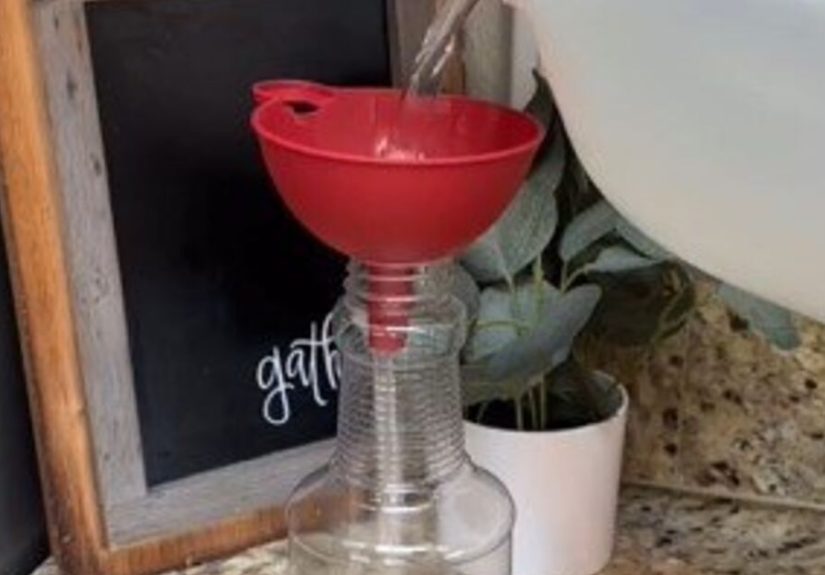
- Fill your sprayer with vinegar.
- Add a small squirt of dish soap and gently swirl (don’t shake like a soda unless you want foam fireworks).
- Label the bottle so nobody “cleans the counter” with it later.
How to use it for best results
- Spray directly onto the weed leaves until they’re evenly coated.
- Apply in full sun when possible. Heat and light help speed up the drying effect.
- Expect visible wilting or browning within hours to a day on small weeds.
- Reapply in a few days if the weed tries to rebound.
Best for: tiny weeds, fresh sprouts, sidewalk cracks, patio edges, gravel paths.
Not great for: mature dandelions, established perennials, weeds with deep taproots, your lawn.
The “Stronger” DIY Weed Killer (Vinegar + Salt + Soap) Use Carefully
This is the viral recipe everyone shares like it’s a family secret. It can work well for hardscape weeds because salt helps dry out plant tissue and can create longer-lasting “nothing grows here” conditions.
But here’s the catch: salt can linger, damage soil structure, and make it harder for anything (including future plants) to grow. So treat it like hot sauce: powerful, not for every meal.
Recipe #2: Hardscape-Only Vinegar + Salt Weed Killer
Ingredients
- White vinegar
- Salt
- Liquid dish soap
- Warm water (optional, helps dissolve salt)
How to make it
- Dissolve salt in warm water first (this helps avoid sprayer clogs).
- Add vinegar and a small amount of dish soap.
- Pour into a sprayer and label it clearly: “WEED SPRAY (DO NOT TOUCH YOUR TOMATOES).”
How to use it
- Spot-spray weeds in cracks, between pavers, or in gravelplaces you truly don’t want plants.
- Avoid runoff into lawns, flower beds, and tree roots.
- Reapply as needed, but don’t drench the area repeatedly unless your goal is permanent plant exile.
Best for: driveways, sidewalks, pavers, gravel, fence-line cracks.
Avoid in: garden beds, lawns, near desirable plants, anywhere you want to plant later.
The Most Natural Weed Killer of All: Boiling Water
It’s simple. It’s cheap. It’s oddly satisfying. Boiling water kills weeds by destroying plant tissue instantlyno mixing, no sprayers, no “did I measure the soap?” drama.
Recipe #3: Boiling Water Weed Control
- Boil water in a kettle or pot.
- Carefully pour directly onto the weeds (aim for the crown/base).
- Repeat on stubborn weeds that re-sprout.
Best for: weeds in cracks, along curb lines, in gravel.
Be careful: obvious burn risk; keep kids/pets away until it cools.
Myths & “Natural” Ingredients That Don’t Do What You Think
Epsom Salt Isn’t a Weed Killer
Epsom salt (magnesium sulfate) is commonly used as a garden amendment. It doesn’t reliably kill weeds and can be more “plant food” than “plant doom.” If your goal is weed control, don’t count on it to do the heavy lifting.
Baking Soda: Helpful in Cracks, Not a Garden Strategy
Baking soda can dry out small weeds in pavers and cracks, but it’s not a precision tool and can affect nearby plants. It’s a spot treatment, not a landscaping philosophy.
“More Concentrated Vinegar” Isn’t Automatically Better
Higher-acid horticultural vinegar can be more effective on weeds than standard kitchen vinegar, but it can also be much more irritating to skin and eyes. If you choose stronger products, treat them like you would any serious yard chemical: protective gear, careful application, and no casual spraying on a breezy day.
How to Make Your DIY Weed Killer Work Better
Small tweaks make a big differencebecause weeds are basically nature’s most committed overachievers.
1) Timing: Hit Weeds When They’re Young
DIY vinegar sprays work best on weeds with just a few leaves. Once weeds mature, they store more energy in their roots and can re-sprout even if the top growth browns.
2) Aim for the Leaves (And the Crown)
Coat the leaves thoroughly, and if you can reach the crown (where stems meet the soil), do it. Contact sprays need contact to… you know… contact.
3) Reapply Strategically
If the weed re-greens, reapply. Think of it like dealing with spam calls: one block helps, but persistence wins the war.
4) Use Prevention So You Don’t Live in a Constant Spray Loop
The most “effective natural weed killer” is often not a sprayit’s stopping weeds from germinating and taking hold.
Natural Weed Prevention That Actually Changes the Game
Mulch: The Quiet Champion of Organic Weed Control
A thick layer of mulch blocks light, reduces weed seed germination, helps soil hold moisture, and generally makes your garden look like it has its life together.
- Use organic mulch like wood chips, shredded bark, or straw where appropriate.
- Aim for a generous layer (commonly a few inches), keeping mulch away from direct contact with plant stems.
Hand Pulling (Yes, Really) But With the Right Trick
Pull weeds after rain or watering when the soil is soft. You’ll get more root out, which matters most for dandelions and other deep-rooted weeds.
Pre-Emergent Options: Corn Gluten Meal (With Realistic Expectations)
Corn gluten meal is discussed as an organic pre-emergent that can help suppress some weed seedlings by interfering with early root development. But results can vary widely depending on timing, rates, and conditionsand it can add nitrogen, which isn’t always what your lawn needs. If you use it, treat it as part of a broader strategy, not a one-and-done miracle.
Where DIY Weed Killers Make Sense (And Where They Don’t)
Great use cases
- Weeds in sidewalk cracks
- Driveway weeds
- Gravel path weeds
- Pavers and patio seams
- Fence-line sprouters (spot-treated carefully)
Use caution (or avoid)
- Lawns: Vinegar sprays can damage grass. Spot treat only if you accept collateral damage.
- Vegetable gardens & flower beds: Non-selective sprays can burn your plants and affect soil if salt is involved.
- Near tree roots: Repeated harsh applications (especially salt) can stress plants you want to keep.
Troubleshooting: “It Worked… Then the Weed Came Back”
That usually means it’s a perennial
Perennials store energy in roots and can re-sprout after the leaves are damaged. Your options:
- Repeat contact treatments to exhaust the plant over time.
- Dig it out (best for taproots when soil is moist).
- Improve prevention (mulch, ground cover, edging) so new weeds don’t take over the space.
Rain washed it off
If it rains soon after application, effectiveness drops. Apply when you have a dry window so the solution stays on the leaves long enough to do its job.
Bottom Line: The “Best Natural Weed Killer” Is a Combo
If you want an easy, effective, and natural approach, use a simple vinegar + soap spray for young weeds in hardscape areas, reserve salt mixes for places you truly want barren, and lean heavily on prevention (mulch, hand removal, and timing). That’s how you keep weeds from turning your weekend into a recurring appointment.
Real-World Experiences & Lessons From DIY Weed Killing (Extra Insights)
People love DIY weed killers because the first win feels immediate: spray it, and by the end of the day the weed looks like it just got grounded for the summer. But real life is messier (because… outdoors). Here are common experiences gardeners run intoand how to get better results without losing your sense of humor.
Experience #1: “It browned fast… so why is it green again?”
This is the classic moment when you realize your weed is a perennial with a strong support system (aka roots). Dandelions, plantain, and other tough weeds often bounce back because contact sprays mainly damage top growth. The best move is to treat the first browning as step one, not the finale. Wait a couple of days, re-spray any green comeback, andif it keeps returningpull it after rain when the soil is soft. Many people find that repeating contact treatments plus occasional digging is what finally tips the balance.
Experience #2: “I sprayed carefully… and still hit my flowers.”
Wind is the sneaky villain in this story. Even a light breeze can carry fine mist onto nearby plants. A lot of folks learn the hard way that “I’ll just do a quick spray” turns into “why do my marigolds look emotionally devastated?” The fix is simple: spray early in the morning when air is calmer, use a low-spray setting (not a fog), and get close to the target. Some people even use a piece of cardboard as a shield between the weed and nearby plantslow-tech, high satisfaction.
Experience #3: “The salt recipe worked… and now nothing grows there. At all.”
Salt-based DIY weed killers can feel like a cheat codeuntil you realize you’ve accidentally created the world’s smallest no-plant zone. This usually happens when the solution runs off into the soil or gets applied repeatedly in the same spot. If your goal is to keep paver cracks clear, that might be fine. But if you ever want to plant in that area later, you may regret it. A common lesson: use salt mixes only where you truly want long-term suppression, apply lightly, and avoid soaking the ground. Many gardeners switch to vinegar + soap for routine touch-ups and reserve salt for the most stubborn hardscape seams.
Experience #4: “My sprayer clogged and I invented new words.”
Salt doesn’t always dissolve well, especially in cold water, and undissolved crystals can clog nozzles. People who love their sanity dissolve salt in warm water first, strain it if needed, and then add vinegar and soap. Others skip salt entirely and use boiling water for cracksless mess, no equipment drama, and the kettle never clogs (unless you’re boiling gravel, which… please don’t).
Experience #5: “DIY works… but the weeds keep returning every week.”
This is where prevention changes everything. Many people realize the real enemy isn’t the weed they seeit’s the thousands of seeds waiting for sunlight. Once you add mulch in beds, edge borders cleanly, and fill cracks (polymeric sand or appropriate fillers for pavers), the weed pressure drops fast. DIY spray becomes a spot tool instead of a lifestyle. And that’s the dream: fewer weeds, less work, more time doing literally anything else.
Experience #6: “I want natural weed control that’s safer for pets and kids.”
Household vinegar solutions are still irritating if they get in eyes or on sensitive skin, so families often choose methods that leave less residuelike boiling water for cracks, and mulch + hand pulling in beds. The big win is creating a routine: do a quick walk-through once a week, pull small weeds while they’re tiny, and spot-treat hardscape weeds before they grow into a full-season project.
If you take one lesson from all of this, make it this: DIY weed killers are most effective when they’re early, targeted, and paired with prevention. You don’t need a perfect yardyou just need weeds to stop acting like they own the place.