Table of Contents >> Show >> Hide
- Pick Your Snake Style (Before You Buy Anything)
- Tools & Materials (Mix-and-Match)
- Method 1: The Pool Noodle “Posable” Giant Snake (Fast + Budget-Friendly)
- Method 2: Chicken Wire + Papier-Mâché Giant Yard Snake (Lightweight, Big, Dramatic)
- Method 3: The Gnarly Spray-Foam “Rotten Snake” (High Texture, Haunted House Energy)
- Paint & Realism Tricks That Make People Double-Take
- Weatherproofing & Safety (Because Halloween Comes With Dew)
- Troubleshooting: Fix the Weird Stuff Fast
- Final Touches That Make It Halloween-Ready
- Conclusion
- Real-World Experience: What I Learned After Making Giant Snakes (So You Don’t Have To)
Some Halloween decorations whisper “spooky.” A giant snake decoration, on the other hand, hisses
“I have taken over this property and I’m charging rent.” The good news: you don’t need a movie-prop
budget or a degree in reptilian psychology to build one. You just need a plan, a few cheap materials, and the
willingness to explain to your neighbors why you’re buying pool noodles in bulk like it’s a chlorinated apocalypse.
Below are three proven DIY buildsfrom quick-and-flexible to “wow, that’s a whole situation”plus
paint tricks, weatherproofing, and mounting ideas so your snake looks intentional (and not like a garden hose
that lost a fight with a lawn mower).
Pick Your Snake Style (Before You Buy Anything)
A giant snake prop looks best when it has a job. Decide where it lives and what it’s “doing”:
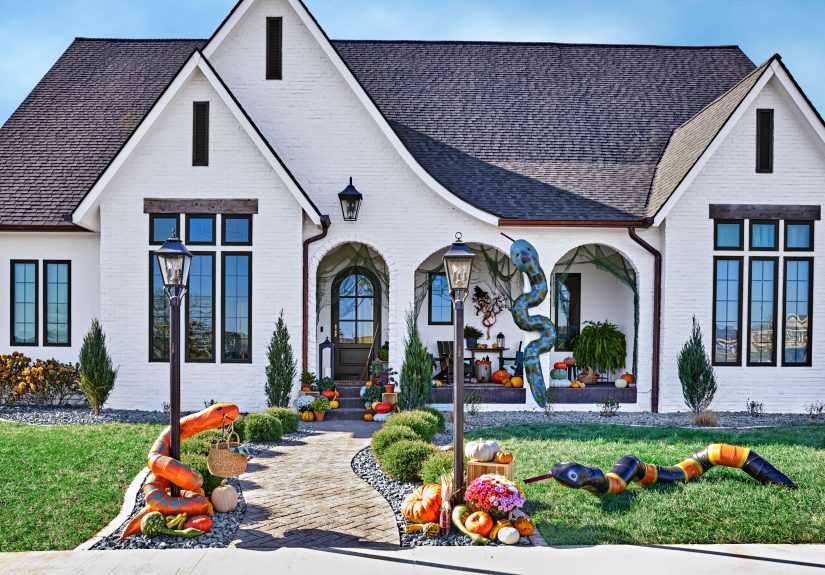
- Porch Coil: wraps around a railing or columns, head near the candy bowl.
- Yard Ambush: half-hidden in shrubs, tail disappearing into mulch.
- Tree Drop: “falling” from a branch (lightweight build only).
- Rising Cobra: front half reared up, hood flared, dramatic entrance energy.
- Haunted Ruins: rotten, textured, and gnarlylike it’s been lurking since 1847.
Size tip: For maximum “WHOA” with minimal effort, aim for 8–12 feet.
It reads as gigantic, fits most porches/yards, and still stores without you needing a second garage.
Tools & Materials (Mix-and-Match)
Basic tools
- Utility knife + extra blades (dull blades tear foam)
- Scissors
- Hot glue gun + glue sticks
- Duct tape and/or masking tape
- Zip ties
- Pliers and wire cutters
- Paintbrushes + cheap sponge brushes
Choose your “body” material
- Pool noodles (fast, flexible)
- Foam pipe insulation (lighter, already snake-ish)
- Chicken wire (big shapes, lightweight armature)
- Expanding spray foam (texture king, mess champion)
Support (the “spine”)
- Thick-gauge wire (or multiple wire hangers twisted together)
- PVC pipe (great for a reared-up cobra or outdoor stability)
- Wood stakes or rebar (for anchoring in the yard)
Finishing supplies
- Acrylic craft paint (easy, forgiving)
- Craft foam-safe primer or foam primer (if you plan to use spray paint)
- Clear outdoor topcoat / UV-resistant clear coat (optional but helpful)
- Fishnet stockings or mesh laundry bag (for instant scale pattern)
- Felt/foam sheets for tongue, fangs, eye ridges
Method 1: The Pool Noodle “Posable” Giant Snake (Fast + Budget-Friendly)
This is the best option if you want a big Halloween snake decoration that’s lightweight, easy to shape,
and done in a weekendoften in an afternoon if you’re fueled by caffeine and seasonal chaos.
Step 1: Build the spine
- Choose your length (example: 10 feet). Plan for a head section (about 12–18 inches).
-
Make a spine using thick wire (or twisted hangers). If you want extra stiffness, run the wire through
flexible tubing or wrap it in tape so it doesn’t poke through foam. - Decide whether your snake will be coiled (easier) or stretched (more dramatic).
Step 2: Add the “meat”
-
If your pool noodles have holes, slide them over the wire spine. If not, cut a slit lengthwise, nest the wire inside,
then tape shut. -
For a tapered tail, cut the last 18–24 inches into sections and trim each section slightly smaller as you go.
Tape the transitions smoothly. -
For curves, cut shallow V-notches on the inside of the bend, close the bend, then tape it tight. Small notches create
smooth curves; big notches create sharp turns (your snake’s “attitude era”).
Step 3: Texture the body so it doesn’t scream “POOL TOY”
- Quick texture: wrap the whole body in masking tape (paint grips better than on slick foam).
- Better texture: wrap with paper towels or thin paper, then brush on diluted white glue (PVA).
- Scale hack: later, lay fishnet over the body and stencil/dry-brush paint through it.
Step 4: Make a big, convincing head (cardboard + foam = magic)
- Cut a basic head profile from cardboard or foam board: top jaw, bottom jaw, and side “cheeks.”
- Bulk it up with scrap foam, crumpled paper, or small pieces of noodle. Tape until it looks smooth.
- Add eye ridges (foam strips) and nostrils (carve or glue on).
- Tongue: cut a long forked tongue from red foam/felt and glue inside the mouth.
Step 5: Paint it like you mean it
Use acrylics for control. Start with a dark base (black, deep green, brown), then layer highlights. A simple three-step
paint job reads as “detailed” from the sidewalk:
- Base coat: darker overall.
- Mid-tone: sponge or dry-brush along the back and sides.
- Highlight: light dry-brush on edges, jawline, and scale texture.
Want that scale pattern to pop? Stretch fishnet evenly over the body, lightly dab (or mist) a lighter color on top,
then remove the netting carefully. Boom: instant reptile vibes.
Mounting ideas (porch and yard)
- Porch: zip-tie the body to railing balusters; hide ties with a paint touch-up.
- Yard: push two or three stakes into the ground and zip-tie the snake to them along the belly.
- “Emerging” look: bury the tail tip under mulch and add leaves over the seam.
Method 2: Chicken Wire + Papier-Mâché Giant Yard Snake (Lightweight, Big, Dramatic)
If you want a snake that feels more like a parade prop or haunted attraction piecethis is it. The structure is light,
and papier-mâché gives you a paintable skin that looks surprisingly “real” at night (especially under porch lights).
Step 1: Shape the armature
-
Wear gloves (chicken wire is basically a handshake from a cactus). Form a long tube, then pinch and twist to create
a tapering tail. - For coils, shape a big spiral on the ground and reinforce key bends with extra wire wraps or zip ties.
- For a reared-up cobra, anchor a PVC spine into a base (wood board) and build wire around it.
Step 2: Bulk and smooth
Wrap the armature with crumpled newspaper, plastic bags, or foam scraps to round out the body. Tape everything down.
Think of this as the snake’s “muscle layer.” You’re sculpting silhouette first; details come later.
Step 3: Papier-mâché skin
- Tear newspaper into strips (torn edges blend better than scissor cuts).
-
Mix paste to a batter-like consistency (flour + water is classic). Add a pinch of salt if you’re worried about mold
in humid areas. -
Dip strips, squeegee excess paste between fingers, and layer across the form. Do 2–3 layers, letting it dry
between major sessions if possible. - For smoother details (snout, eye ridges), use papier-mâché pulp or tissue paper for the final layer.
Step 4: Head, hood, and drama
- Head: build from cardboard ribs + taped paper bulk + papier-mâché skin.
- Cobra hood: cut two hood shapes from cardboard, attach to sides of the neck, then skin with paper.
- Fangs: foam triangles or carved craft foam painted off-white.
Step 5: Paint + protect
Prime with a base coat of acrylic paint (it also helps seal paper). Then add your pattern: diamondbacks, boas, cobras,
cartoon “Beetle-snake,” whatever fits your theme. Finish with a clear topcoat if it’ll be outside for multiple nights.
Method 3: The Gnarly Spray-Foam “Rotten Snake” (High Texture, Haunted House Energy)
This is for makers who want their yard to look like the set of a spooky jungle moviecomplete with a serpent that
appears to have been waiting for Halloween since the invention of fear.
Step 1: Make a rough core
- Build a basic body shape using scrap cardboard tubes, pool noodles, or wire + newspaper wrap.
- Add stakes or a PVC support where you want it to stand, bend, or “rise.”
Step 2: Spray foam in layers (patience saves your sanity)
-
Work outside or in a well-ventilated area with drop cloths. Spray foam expands a lotlike it’s trying to impress
someone. -
Apply in thin passes. Let each layer cure before adding more. This avoids gooey collapses and weird
internal bubbles. - Build up head shapes, eye sockets, and scale ridges by adding foam where you want volume.
Step 3: Carve and sand
Once cured, carve with a utility knife. For a rotting look, carve pits, cracks, and missing chunks. For cleaner “reptile”
texture, carve shallow scale rows and smooth transitions.
Step 4: Seal before spray paint (important!)
Many aerosol paints can melt certain foams if applied directly. If you want to use spray paint, seal first with a foam-safe
primer or a barrier coat. Acrylic brush paint is usually the simplest, safest route.
Paint & Realism Tricks That Make People Double-Take
Make the eyes the “focus point”
- Use plastic half-spheres (craft eyes), ping-pong balls, or foam domes.
- Glossy finish on eyes; matte on skin. That contrast screams “alive.”
- Add a dark “eyeliner” ring and a vertical pupil for instant snake energy.
Scales without carving 4,000 tiny regrets
- Fishnet/mesh overlay + light spray/dab of paint for a scale pattern.
- Dry-brush highlights across raised texture (tape wrinkles, paper texture, foam bumps).
- Stencil a few “hero scales” near the head where people look most.
Shading recipe (easy and effective)
- Base coat: dark.
- Wash: watered-down dark brown/black into creases.
- Dry-brush: lighter color on high points and edges.
Weatherproofing & Safety (Because Halloween Comes With Dew)
Weatherproofing basics
- Paper projects: paint is your first sealer. Add a clear outdoor topcoat if it’ll be out for days.
- Foam projects: use acrylic paint or a foam-safe primer before any aggressive spray paints.
-
Outdoor sealers: “outdoor” doesn’t always mean “waterproof forever.” If you’re displaying for multiple
seasons, plan on touch-ups or re-sealing.
Common-sense safety (still important)
- Ventilate when using aerosols, spray foam, or strong adhesives.
- Keep heat sources away from spray cans and foam (flammability is real, and so is embarrassment).
- Cap or tape wire ends so nobody gets poked during setup.
- If kids will touch it, avoid loose fangs, sharp edges, and flimsy stakes.
Troubleshooting: Fix the Weird Stuff Fast
“My snake won’t hold a pose.”
- Add a second wire alongside the first (taped together) to stiffen the spine.
- Hide a thin PVC section inside the body where you need rigidity (neck, rise, tight curve).
“Paint is flaking off foam.”
- Base-coat the foam with a brush-on sealer (PVA glue mix, craft sealer) before painting.
- Avoid heavy spray paint blasts directly onto unsealed foam.
“It looks like a pool noodle (help).”
- Add a paper skin (paper towels + diluted glue) and repaint.
- Give it a belly color (lighter stripe underneath). Real snakes have contrast.
- Upgrade the head. A great head makes a simple body believable.
Final Touches That Make It Halloween-Ready
- Lighting: tuck orange or green LEDs under coils for eerie underglow.
- Sound: a tiny Bluetooth speaker playing jungle sounds is unfairly effective.
- Story: add a “Warning: Snake Relocation In Progress” sign. Comedy = confidence.
Conclusion
The secret to a great DIY giant snake decoration is not perfectionit’s silhouette, head detail, and smart paint.
Start with the method that fits your time and tools, then let lighting and placement do the heavy lifting. Whether your snake
is a porch guardian, a yard ambush, or a full-blown haunted-ruins monster, you’ll end up with a prop that makes people stop,
stare, and immediately text someone: “YOU HAVE TO SEE THIS.”
Real-World Experience: What I Learned After Making Giant Snakes (So You Don’t Have To)
The first time you build a giant Halloween snake, you’ll discover a universal truth: the “easy part” is making something long.
The real work is making something long that doesn’t look like you lost a fight with the pool aisle.
My biggest lesson? Start with the pose. I used to build the whole body straight, paint it, then try to bend it into a coil.
That’s how you get a snake that looks like it’s doing awkward yoga instead of threatening the neighborhood. Now I shape the snake
early and keep checking the silhouette from across the yard. If it doesn’t look cool from 20 feet away, it won’t magically look cool
once you’ve spent two hours painting scales the size of nickels.
Second lesson: heads are emotional. You can get away with a simple body, but a “meh” head makes the whole prop feel like a craft project.
A strong headdefined jawline, raised eye ridges, and a mouth that has intentionsturns the same body into a creature. I once upgraded a head
with nothing but thicker brow ridges and a darker shadow under the jaw, and suddenly people started asking, “Did you buy that?”
(This is the highest compliment known to Halloween.)
Third: paint is a lie detector. If your surface is slick or your texture is too smooth, paint exposes it immediately.
Pool noodles especially love to remind you they were born for cannonballs, not cosplay. Wrapping the body in masking tape or a thin paper skin
gives paint something to grip and instantly knocks down the “toy” vibe. And if you want a shortcut to realism, add a lighter belly stripeyour brain
reads that contrast as “animal,” even if you’re not sure why.
Fourth: outdoor weather is the villain of every DIY Halloween prop. Dew makes paper projects sad. Wind makes lightweight props migrate.
Spray paint makes certain foams throw a tantrum. The fix isn’t complicatedseal, anchor, testbut you do have to respect it. I’ve learned to do a
10-minute “porch rehearsal” the night before: set the snake where it will go, turn on the lights you’ll actually use, and see what disappears in the dark.
Most of the time, you’ll realize you need brighter highlights near the head and slightly deeper shadows under coils. It’s the same prop, but suddenly it
photographs better, reads better, and looks like you planned it.
Fifth (and my personal favorite): the best scares are the ones that start as a joke. I once placed a “tail” under the welcome mat like the snake
lived inside the house. People stepped over it, laughed, then noticed the head wrapped around the porch post and did a full-body double-take.
That mix of humor and “wait, is that real?” is exactly what makes giant snake decorations so fun. You’re not just building a propyou’re staging a tiny,
ridiculous horror movie in your front yard, and the audience is anyone brave enough to come get candy.
So if you’re on the fence, build the snake. Worst case: you end up with a very fancy pool noodle. Best case: you become the legend of the block.