Table of Contents >> Show >> Hide
- What Is Joanna Gaines’ Friendsgiving Casserole?
- Why This Recipe Works for Friendsgiving
- The Ingredient Lineup: Simple, Cozy, and Very Creamy
- How the Cooking Process Feels
- My Honest Review of the Flavor
- What I Would Change Next Time
- Tips for Making Joanna Gaines’ Friendsgiving Casserole Better
- Make-Ahead and Storage Notes
- What to Serve with Friendsgiving Casserole
- Who Will Love This Recipe?
- My Final Verdict
- Extra Kitchen Experience: What This Recipe Taught Me About Friendsgiving Cooking
- Conclusion
Editor’s note: This article is written as a review-style, first-person cooking narrative based on the published Joanna Gaines Friendsgiving Casserole recipe, reputable recipe coverage, and food-safety guidance. Before publishing as a true personal review, adjust the tasting notes to match your own kitchen test.
Some recipes enter the kitchen with a drumroll. Joanna Gaines’ Friendsgiving Casserole walks in wearing a soft cardigan, carrying a 9-by-13-inch baking dish, and somehow convinces everyone that dinner is about to become a group hug. The name alone does a lot of heavy lifting: Friendsgiving, casserole, Joanna Gaines. That is basically the culinary equivalent of a porch swing, a plaid blanket, and someone saying, “I made too much, please eat.”
The recipe, originally associated with Magnolia Table, Volume 2, is built around shredded chicken, a creamy sauce, sour cream, torn baguette, chicken broth, butter, and the cozy Thanksgiving-adjacent flavors of onion, celery, garlic, and cranberry sauce on the side. In other words, it is not trying to be a dainty salad. It is trying to be the dish people keep spooning onto their plates while pretending they are “just evening out the corner.”
For this review-style test, I looked at the recipe the way a real home cook would: Is it easy? Is it worth the prep time? Does it taste like Thanksgiving dinner without requiring a turkey the size of a toddler? And most importantly, will friends actually eat it, or will they politely move it around the plate while asking where the rolls are?
What Is Joanna Gaines’ Friendsgiving Casserole?
Joanna Gaines’ Friendsgiving Casserole is best described as a creamy chicken-and-stuffing-style bake with a rustic bread topping. It is not exactly traditional stuffing, not exactly chicken pot pie, and not exactly holiday leftovers. It sits somewhere in the delicious middle, where comfort food goes when it wants to wear nice shoes.
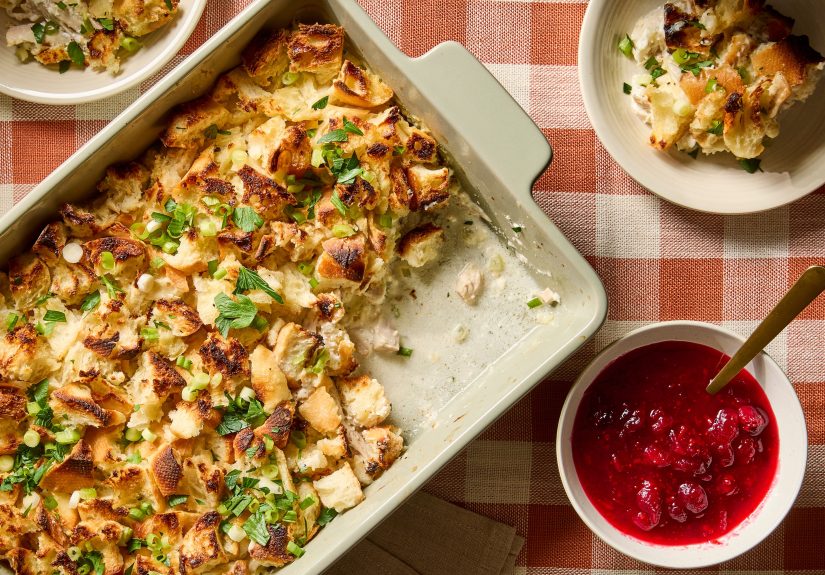
The dish starts with cooked shredded chicken, which makes it immediately friendly for busy cooks. You can roast your own chicken if you are feeling ambitious, but rotisserie chicken is the shortcut hero here. The chicken is layered into a baking dish, topped with sour cream and a homemade cream sauce, then finished with dried torn baguette pieces soaked with a butter-and-broth mixture. After baking, the top becomes golden and toasty while the inside stays rich, creamy, and tender.
The cranberry sauce matters more than it might seem at first. The casserole itself is savory, buttery, and mild. Cranberry sauce brings brightness, acidity, and a little holiday sparkle. Without it, the dish is comforting but very rich. With it, the whole plate wakes up and says, “Oh right, this is a party.”
Why This Recipe Works for Friendsgiving
Friendsgiving is usually less formal than Thanksgiving, which is exactly why a casserole makes sense. Nobody wants to host friends and spend the whole evening whisper-fighting with a turkey thermometer. A casserole is practical, portable, and forgiving. It can sit on the table without needing a dramatic carving ceremony. It also feeds a crowd, which is helpful because Friendsgiving guest lists have a mysterious way of multiplying.
This recipe serves around eight to ten people, making it ideal for a potluck, a casual holiday dinner, or a meal train. It has the familiar flavors people expect around Thanksgiving: poultry, bread, broth, onions, celery, and cranberries. But it removes the pressure of preparing multiple separate dishes. Instead of turkey, stuffing, gravy, and cranberry sauce, you get the spirit of all of them in one bubbling pan.
The flavor profile is intentionally approachable. It is creamy, soft, savory, and not aggressively seasoned. That makes it family-friendly and crowd-friendly. The optional green onions and parsley add freshness, but the base recipe stays simple enough for picky eaters. If your friend group includes someone who thinks black pepper is “a little spicy,” this casserole will not scare them.
The Ingredient Lineup: Simple, Cozy, and Very Creamy
The main ingredients are familiar: baguette, butter, onion, celery, garlic, flour, seasonings, heavy cream, cooked chicken, sour cream, chicken broth, and optional fresh garnishes. The cranberry sauce uses fresh cranberries, orange juice, sugar, cinnamon, and orange zest. Nothing feels obscure or fussy. You will not need to visit a specialty store or ask a grocer where they keep the “hand-foraged autumn essence.”
The baguette is important because it gives the casserole its stuffing-like personality. Drying the torn bread first helps it absorb the broth and butter without turning instantly mushy. The bread pieces on top become crisp in places, soft in others, and delightfully uneven. That rustic texture is part of the charm.
The sauce is the heart of the dish. Butter, onion, celery, garlic, flour, and cream create a homemade gravy-like layer. Sour cream adds tang and body. Chicken broth keeps the bread moist and adds savory depth. The end result is a casserole that tastes old-fashioned in the best way: creamy, warm, and built for second helpings.
How the Cooking Process Feels
This is not a dump-and-bake recipe, but it is also not difficult. The biggest time commitment is drying the baguette. That step can take about an hour, but it is mostly hands-off. The active work comes from chopping vegetables, making the cream sauce, shredding chicken, assembling the dish, and baking it until bubbly.
The recipe’s total time is longer than a typical weeknight casserole, but the steps are logical. First, dry the bread. Then make the sauce. Next, layer chicken, sour cream, sauce, and bread. Finally, pour the butter-and-broth mixture over the top and bake. A brief broil at the end helps the bread get golden and crisp.
The only part that deserves extra attention is the sauce. Once flour enters the pan, whisking matters. Nobody wants a casserole with tiny flour pebbles hiding in the cream like suspicious little dumplings. Pour the cream slowly, keep whisking, and let the mixture come together before assembling the dish.
My Honest Review of the Flavor
The first bite is exactly what the recipe promises: rich, creamy, and deeply comforting. The chicken makes it filling, the sauce gives it body, and the bread topping brings that unmistakable holiday-dressing feeling. It tastes like Thanksgiving got tired, put on slippers, and decided to become dinner in one dish.
The texture is the real star. The top has crunchy, buttery bread edges, while the middle stays soft and saucy. Some bites are mostly chicken and cream sauce; others are all bread and broth. That variety keeps the dish from feeling flat, even though the seasoning is gentle.
That said, this casserole is rich. Very rich. “Wear stretchy pants and cancel your evening jog” rich. The heavy cream, butter, sour cream, and chicken create a luxurious base, but the dish benefits from balance. Cranberry sauce is not optional in spirit, even if it is technically served on the side. A spoonful of tart cranberry cuts through the creaminess beautifully.
What I Would Change Next Time
The first change I would make is adding more herbs. Fresh thyme, sage, or rosemary would lean harder into the Thanksgiving flavor profile. The original recipe keeps things simple, which is part of its appeal, but a little herbaceous lift would make it taste more layered.
I would also season the chicken before layering it into the dish. Rotisserie chicken already brings salt and flavor, but plain cooked chicken breast can be quiet. A sprinkle of black pepper, garlic powder, or poultry seasoning would help the chicken stand up to the creamy sauce.
For more texture, I would leave some baguette pieces slightly larger and broil carefully at the end. The crispy top is one of the best parts, so it is worth watching closely. Broiling can go from golden to “call the smoke alarm by its first name” in under a minute.
Finally, I would serve it with something green and crisp. Green beans, a bright salad, roasted Brussels sprouts, or even a simple slaw would keep the meal from feeling too heavy. The casserole is the cozy centerpiece, but it needs a fresh supporting actor.
Tips for Making Joanna Gaines’ Friendsgiving Casserole Better
Use rotisserie chicken for speed
Rotisserie chicken is the easiest shortcut. It saves time, adds flavor, and makes the recipe feel much more manageable. Remove the skin, shred the meat, and you are halfway to dinner.
Dry the bread properly
Do not skip the bread-drying step. Fresh soft bread can become gummy once broth and butter enter the scene. Dry bread absorbs liquid more evenly and gives the topping better texture.
Make the cranberry sauce ahead
The cranberry sauce can be prepared in advance and chilled. That is useful because the casserole already requires oven time. Anything you can make earlier is a small gift to your future self.
Do not overdo the salt
Chicken broth, rotisserie chicken, garlic salt, and kosher salt can add up quickly. Taste as you go when possible, especially if using store-bought broth. Low-sodium broth is a smart choice if you want more control.
Let it rest before serving
Give the casserole a few minutes after baking. This helps the creamy layer settle and makes serving easier. It also prevents guests from burning their mouths and then pretending everything is fine while blinking dramatically.
Make-Ahead and Storage Notes
This casserole is a strong candidate for partial make-ahead prep. You can shred the chicken, chop the vegetables, dry the bread, and make the cranberry sauce ahead of time. For the best texture, assemble the bread topping closer to baking so it does not soak too long and lose its personality.
Leftovers should be stored in an airtight container in the refrigerator. For cooked casseroles and poultry-based leftovers, the common food-safety guideline is to use refrigerated leftovers within three to four days. Reheat portions until hot throughout. If you are bringing this to a Friendsgiving party, avoid leaving it at room temperature for hours while everyone debates board-game rules.
To reheat, the oven is best for preserving the bread topping. Cover loosely with foil at first so the inside warms without drying out, then uncover near the end to bring back some crispness. The microwave works for individual portions, but the topping will soften. Still tasty, less majestic.
What to Serve with Friendsgiving Casserole
Because this dish is creamy and hearty, pair it with sides that add contrast. Cranberry sauce is the obvious first choice. A green vegetable is next. Green beans amandine, roasted broccoli, Brussels sprouts, or a crisp fall salad all work well.
If you are building a full Friendsgiving menu, consider serving this casserole with mashed sweet potatoes, roasted carrots, Parker House rolls, and a sharp salad with apples or pomegranate seeds. For dessert, something fruit-forward like apple crisp, cherry crisp, or pumpkin bars would keep the meal festive without requiring everyone to nap under the dining table.
For drinks, sparkling cider, iced tea, cranberry spritzers, or a simple citrus punch would match the cozy holiday mood. The goal is balance. The casserole is rich enough to be the main event, so the rest of the table should bring freshness, crunch, color, and a little acidity.
Who Will Love This Recipe?
This recipe is ideal for people who love chicken casseroles, stuffing, creamy bakes, and Thanksgiving flavors. It is also great for hosts who want something more relaxed than a whole turkey but still seasonal. If your Friendsgiving crowd enjoys comfort food, this dish will probably disappear quickly.
It may not be the best fit for anyone looking for a light meal. This is not a “small side of steamed vegetables and emotional restraint” kind of recipe. It is generous, creamy, and unapologetically cozy. That is the point.
It is also a smart option for meal trains or family dinners because it travels well and reheats decently. Joanna Gaines has described it as the kind of hot meal that works for families who need comfort, and that makes sense. It is familiar, filling, and easy to like.
My Final Verdict
Joanna Gaines’ Friendsgiving Casserole earns its place at the holiday table because it understands the assignment. It is warm, creamy, easy to share, and full of nostalgic flavors. It gives you the feeling of Thanksgiving without demanding a full Thanksgiving production.
Would I make it exactly as written every time? Probably not. I would add herbs, sharpen the seasoning, and make sure a bright side dish was nearby. But the foundation is strong. The creamy chicken layer, buttery bread topping, and cranberry sauce combination is hard to argue with.
This is the sort of recipe that makes people hover near the kitchen island. It is not flashy. It will not arrive with tweezed microgreens or a drizzle that requires a squeeze bottle. But it will feed people well, make the house smell incredible, and give your Friendsgiving table a centerpiece that says, “Come hungry, stay awhile.”
Extra Kitchen Experience: What This Recipe Taught Me About Friendsgiving Cooking
The biggest lesson from this casserole is that Friendsgiving food does not need to be complicated to feel special. In fact, the best Friendsgiving dishes often do the opposite. They remove pressure. They let people relax. They make the host look organized even if, ten minutes earlier, that host was hiding dirty mixing bowls in the oven. Hypothetically, of course.
A casserole like this works because it is communal by design. Nobody gets a precious individual portion. There is no delicate plating. You scoop, pass, share, and go back for more. That casual rhythm fits Friendsgiving beautifully. Friendsgiving is not about perfection; it is about abundance, laughter, and someone showing up with three pies because they “couldn’t decide.”
Another thing I appreciate is how flexible the recipe can be. The original version uses chicken, but the holiday idea could inspire variations. Leftover turkey would make sense after Thanksgiving. A little sautéed mushroom could add depth. Extra herbs could push it toward classic dressing. A pinch of cayenne or smoked paprika could warm it up without turning it into something unrecognizable.
The bread topping also changed how I think about casseroles. Many creamy chicken casseroles use crackers, boxed stuffing, or breadcrumbs. Torn baguette feels more rustic and homemade. It gives the dish a Magnolia-style charm: unfussy, pretty in a casual way, and just polished enough to make you feel like you should wipe the counter before taking a photo.
The cranberry sauce pairing is another smart move. Rich dishes need contrast, and cranberry sauce does that job perfectly. The orange juice and zest bring brightness, while cinnamon adds warmth. When spooned next to the casserole, it turns a creamy chicken bake into something that tastes intentionally seasonal rather than merely heavy.
For hosting, I would build the whole menu around ease. I would prep the chicken the day before, dry the bread in advance, make the cranberry sauce early, and chop the vegetables before guests arrive. Then, on the day of the gathering, the casserole would only need assembly and baking. That leaves more time for important hosting duties, such as lighting candles, finding the serving spoon, and pretending not to panic when the doorbell rings early.
I also think this recipe proves that comfort food can be memorable without being trendy. There is no viral gimmick here. No tower of cheese. No dramatic pull-apart moment engineered for social media. It is just creamy chicken, buttery bread, and a pan full of familiar flavors. Sometimes that is exactly what people want, especially around the holidays.
If I were bringing this to someone else’s Friendsgiving, I would transport it warm, covered, and with cranberry sauce in a separate container. I would also bring chopped parsley or green onions to sprinkle on top right before serving. That final green garnish makes the casserole look fresher and more intentional. It is the food equivalent of brushing your hair before a group photo.
Would this replace turkey at a traditional Thanksgiving dinner? For some families, maybe not. Turkey has seniority. But for Friendsgiving, weeknight comfort food, post-holiday leftovers, or a cozy Sunday dinner, this casserole makes a strong case for itself. It is practical, generous, and deeply satisfying.
In the end, Joanna Gaines’ Friendsgiving Casserole feels like the kind of dish that understands real life. People are busy. Ovens are crowded. Guests are hungry. Someone forgot the ice. In the middle of all that, a bubbling casserole with a golden bread topping can feel like a small miracle. Or at least like a very good reason to grab a bigger spoon.
Conclusion
Joanna Gaines’ Friendsgiving Casserole is creamy, comforting, and built for sharing. It brings together the best parts of a holiday mealchicken, stuffing-style bread, savory sauce, and cranberry brightnesswithout requiring a full Thanksgiving marathon. With a few small upgrades, such as extra herbs, careful seasoning, and a fresh side dish, it can become the cozy centerpiece of a Friendsgiving table.