Table of Contents >> Show >> Hide
- What Are Isometric Exercises?
- How Isometric Exercise Works
- Benefits of Isometric Exercises
- Limitations of Isometric Exercises
- Best Isometric Exercise Examples
- How Long Should You Hold an Isometric Exercise?
- How to Add Isometric Training to Your Routine
- Safety Tips for Isometric Exercise
- Who Can Benefit Most from Isometric Exercises?
- Real-World Experiences With Isometric Exercises
- Conclusion
If regular exercise sometimes feels like a high-speed chase scene, isometric exercise is the freeze-frame. Your muscles fire, your body works, and yet there’s little to no visible movement. It looks simple. It often feels very not simple. Hold a plank for 20 seconds and your abs will file a formal complaint.
Still, isometric exercises deserve more love than they usually get. They’re beginner-friendly, joint-friendly, travel-friendly, and surprisingly useful for everything from maintaining strength to supporting mobility and even helping some people manage blood pressure. They are not magic, and they are not a complete replacement for full-range strength training. But used well, they can be one of the smartest tools in your fitness toolbox.
In this guide, we’ll break down what isometric exercises are, how they differ from other types of strength training, their biggest benefits, their limitations, and the best isometric exercise examples to try. We’ll also cover how to add them to a practical workout routine without turning your living room into a dramatic plank theater.
What Are Isometric Exercises?
Isometric exercises are strength exercises in which a muscle contracts and produces tension without changing length very much and without moving the joint through a visible range of motion. In plain English, you get into a position and hold it. Your muscles work hard, but your body doesn’t travel much.
A plank is a classic example. So is a wall sit, a glute bridge hold, or pressing your palms together as hard as you can. Your body is not pumping out reps, but it is absolutely working.
Isometric vs. Isotonic Exercise
This comparison helps clear up the confusion:
- Isometric exercise: Muscle contracts, but the joint stays mostly still. Example: holding a wall sit.
- Isotonic exercise: Muscle contracts while changing length and moving a joint. Example: squats, curls, lunges, push-ups.
Both types matter. Isometric strength training is excellent for static control, joint-friendly loading, and improving muscular endurance in a specific position. Isotonic training usually does more for building muscle through a full range of motion, improving coordination, and increasing overall functional strength. The smartest training plans often use both.
How Isometric Exercise Works
When you hold a position, your nervous system recruits muscle fibers to resist gravity or outside force. That tension challenges the muscle even though the movement is minimal. This is one reason isometric holds can feel deceptively brutal. A wall sit looks like “just standing against a wall” until your quads start sending urgent messages to headquarters.
Because there is less joint movement, isometric exercises can be useful when full-motion exercises are uncomfortable, not yet tolerated, or simply not the best fit for the moment. Physical therapists often use them early in rehab because they let people activate muscles and maintain strength with less irritation.
Benefits of Isometric Exercises
1. They’re approachable for beginners
If you’re new to strength training, isometric workouts can be a low-pressure entry point. You do not need a squat rack, a gym membership, or the confidence of someone who casually says “leg day” with a smile. Many isometric moves use only body weight and are easy to scale by shortening the hold.
2. They can help maintain and build strength
Isometric contractions challenge the muscles enough to support strength gains, especially for beginners and people returning to exercise. They are also helpful when you want to keep a muscle active without performing lots of dynamic repetitions.
3. They may be easier on painful or recovering joints
Because the joint does not move much, isometric exercise can be a smart option for people dealing with arthritis, post-surgery recovery, tendon irritation, or pain during full-range movement. That does not mean every isometric move is automatically safe for every condition, but it does mean these exercises can offer a practical middle ground between total rest and aggressive loading.
4. They support mobility and body awareness
Isometric training is often associated with strength, but it can also help people improve control in certain positions. Holding tension near the end of a comfortable range can teach the body to feel more stable there. That can make future movement feel smoother and more confident.
5. They may help lower blood pressure in some people
This is one of the most interesting parts of the conversation around isometric exercise. Research has found that certain isometric training protocols, especially wall squats and handgrip training, may help reduce blood pressure. That said, this does not mean you should replace your walking routine, medications, or doctor’s advice with heroic wall sits. Think of isometrics as one promising tool, not a solo act.
6. They’re efficient
A short isometric routine can be surprisingly effective. A few rounds of planks, wall sits, and glute bridge holds can challenge your major muscle groups in less time than it takes to scroll through “quick workouts” and never actually start one.
Limitations of Isometric Exercises
Isometric exercises are useful, but they are not the entire kingdom of fitness. Here’s where they fall short:
- They do not train a full range of motion as well as dynamic exercises.
- They may produce strength gains that are most noticeable in the position you train.
- They are not usually the best standalone strategy for building maximum muscle size, power, speed, or athletic performance.
- They can tempt people to hold their breath, which is not ideal, especially if blood pressure is a concern.
That’s why the best approach is usually a mixed routine: isometrics for control, tolerance, and targeted strength, plus dynamic resistance training and aerobic activity for broader fitness.
Best Isometric Exercise Examples
Here are some of the most practical isometric exercise examples for home workouts, rehab-style training, and general strength development.
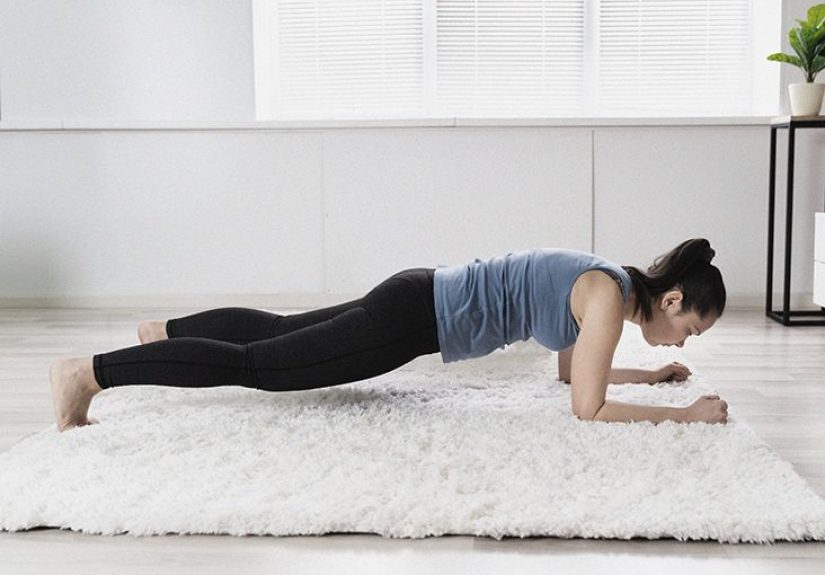
Plank
The plank is the all-star of isometric core exercises. It strengthens the abdominals, shoulders, chest, and deep trunk muscles that help stabilize your spine.
How to do it: Start on your forearms or hands, extend your legs behind you, and keep your body in a straight line from head to heels. Brace your core and hold.
Wall Sit
The wall sit is one of the best known isometric leg exercises. It targets the quads, glutes, and core while teaching your lower body to tolerate sustained tension.
How to do it: Stand with your back against a wall, slide down until your knees are comfortably bent, and hold. You do not need to force a perfect 90-degree angle on day one. Your quads will still get the memo.
Glute Bridge Hold
This move strengthens the glutes and posterior chain with minimal equipment and minimal drama.
How to do it: Lie on your back with knees bent and feet flat on the floor. Lift your hips until your body forms a line from shoulders to knees, then hold.
Dead Hang
A dead hang is a simple but effective isometric exercise for grip, shoulders, and upper-body endurance.
How to do it: Hang from a sturdy pull-up bar with shoulders engaged and hold for time.
Isometric Biceps Hold
This one is exactly what it sounds like: a curl that stops mid-rep and stays there. It’s a useful way to challenge the arms without endless repetitions.
How to do it: Hold dumbbells at about a 90-degree elbow bend and maintain the position with steady tension.
Quad Set
This rehab favorite is often used after knee injury or surgery and can be especially helpful when full movement is limited.
How to do it: Sit or lie with the leg straight, tighten the thigh muscles, press the knee downward, and hold.
Split Squat Hold
This isometric variation targets the quads, glutes, and balance muscles while building tolerance for lower-body work.
How to do it: Step into a split stance, lower into a lunge position, and hold without bouncing.
Wall Press or Palms Press
If you want an isometric chest and shoulder move without equipment, pressing against a wall or pressing your palms together can create real tension.
How to do it: Push hard into the wall or into your opposite hand and hold steady tension for several seconds.
How Long Should You Hold an Isometric Exercise?
That depends on your goal and your current fitness level. For beginners, even a 5- to 10-second hold can be worthwhile. For general strength and endurance, 15 to 30 seconds is a common target. More advanced exercisers may use longer holds or multiple rounds.
A practical starting point looks like this:
- Choose 3 to 5 exercises
- Hold each for 10 to 20 seconds
- Rest 20 to 60 seconds
- Repeat for 2 to 4 rounds
- Train 2 to 3 days per week
If your main interest is blood pressure support, specialized protocols are often more structured than a casual plank session. Those plans may involve low-intensity wall sits or handgrip work done several times per week. That kind of training is worth discussing with a healthcare professional, especially if you already have hypertension or take blood pressure medication.
How to Add Isometric Training to Your Routine
Option 1: Use isometrics as a warm-up
A short plank, glute bridge hold, or wall sit can wake up the muscles before dynamic training.
Option 2: Use them as a low-impact strength session
On busy days, travel days, or flare-up days, a short isometric workout may be more realistic than a full lifting session.
Option 3: Pair them with dynamic exercises
Try a wall sit after squats, or a split squat hold after lunges. This can increase time under tension without adding a pile of extra reps.
Option 4: Use them in rehab or return-to-exercise plans
If you are coming back from injury or surgery, isometric training may help you rebuild confidence and muscle activation before more demanding movements. In that situation, form and exercise selection matter a lot, so professional guidance is smart.
Safety Tips for Isometric Exercise
- Breathe steadily and do not hold your breath.
- Start with shorter holds and build gradually.
- Stop if you feel sharp pain, chest pain, dizziness, or unusual shortness of breath.
- Use good posture and alignment instead of chasing a longer hold with sloppy form.
- If you have high blood pressure, heart disease, recent surgery, or a chronic condition, ask your clinician what type and intensity make sense for you.
In other words, the goal is controlled tension, not turning purple while trying to win a private contest against a wall.
Who Can Benefit Most from Isometric Exercises?
Isometric training can be useful for a wide range of people, including beginners, older adults, people with arthritis, people returning after injury, and exercisers who want a simple home workout option. Athletes can use isometrics too, especially for position-specific strength and tendon loading, but they usually benefit most when isometrics are paired with other forms of training.
If your goal is total-body fitness, the winning formula is not “only isometric” or “never isometric.” It’s balance. A routine that includes aerobic activity, dynamic resistance training, mobility work, and a few well-chosen isometric holds covers a lot more ground.
Real-World Experiences With Isometric Exercises
One reason isometric exercises remain popular is that people often feel the benefit quickly, even before they can measure it. A beginner who tries a plank for the first time may not walk away saying, “I have transformed into a superhero,” but they often notice something important: their core switched on in a way it never did during random sit-ups. A wall sit can create the same kind of lightbulb moment. It looks easy, then your legs start shaking like they just received deeply upsetting news. That immediate feedback helps people understand what muscle tension actually feels like.
For many older adults or people easing back into exercise, isometrics can feel less intimidating than fast-paced workouts or heavy lifting. There is comfort in knowing you can stop, reset, and shorten the hold without feeling like you failed. That matters. Consistency is easier when the workout does not feel like punishment. People who avoid exercise because of pain, stiffness, or fear of making things worse often find isometric work more approachable, especially when it is introduced by a physical therapist or used as part of a gentle home routine.
There is also a psychological win built into static holds. They teach patience. During a split squat hold or glute bridge hold, you cannot rely on momentum. You have to stay present, keep breathing, and manage discomfort without panicking. That sounds very dramatic for a 20-second exercise, but it is useful training. Over time, people often report improved body awareness, better control, and more confidence in positions that once felt weak or unstable.
Desk workers tend to appreciate isometrics for a different reason: convenience. A few rounds of wall sits, calf raises with a pause, or standing glute squeezes can fit into a break without much setup. Parents like them because they can squeeze in a mini session while dinner is in the oven. Travelers like them because hotel gyms are unpredictable and hotel carpets are often emotionally complicated. Isometric exercises are portable, quiet, and surprisingly effective when time is short.
People managing blood pressure or joint discomfort often describe isometric training as a helpful addition rather than a miracle cure. That is the healthiest way to view it. Walking, full-body strength training, sleep, stress management, and medical care still matter. But a structured routine of low-intensity wall sits or handgrip holds may feel realistic in a way that bigger fitness plans sometimes do not. Real adherence often beats perfect theory.
Perhaps the most common experience with isometric exercise is this: at first it seems too simple to matter, then it quietly earns a permanent place in the routine. That is usually the sign of a useful exercise method. It does not need fireworks. It just needs results, consistency, and a level of effort that makes your muscles say, “Oh, so we are definitely doing this.”
Conclusion
Isometric exercises are simple in appearance but powerful in practice. They involve contracting muscles without much joint movement, making them useful for beginners, busy people, rehab settings, joint-friendly training, and targeted strength work. They may also support blood pressure management when used in structured programs.
Still, the best way to use isometric exercise is not to treat it like the only fitness method you will ever need. Use it as part of a bigger plan. Hold a plank. Sit on that invisible chair. Squeeze the glutes like your jeans depend on it. Then keep walking, lifting, stretching, and building a well-rounded routine that works for your body and your life.