Table of Contents >> Show >> Hide
- What Happened At The National Christmas Tree Lighting?
- Why Did Melania's Smile Get So Much Attention?
- The Conspiracy Theories: From "Body Double" To "Contractual Appearance"
- Melania Trump, Christmas, And A Complicated Holiday History
- The Power Of First Lady Optics
- Why The Internet Loves Reading Melania's Face
- Supporters Saw Elegance, Critics Saw A Clue
- The National Christmas Tree Tradition Is Bigger Than One Viral Moment
- Media Literacy: How To Read Viral Moments Without Falling Into The Rabbit Hole
- What This Moment Says About Celebrity Politics
- Experience Section: What Watching This Viral Moment Feels Like
- Conclusion
At most holiday events, the formula is simple: a big tree, a countdown, a few cheerful waves, and enough twinkling lights to make every phone camera work overtime. But when Melania Trump stepped forward at the 2025 National Christmas Tree Lighting and pressed the button that sent the tree glowing in gold, the internet did what the internet does best: it zoomed in, slowed down, overanalyzed, and turned a public smile into a full-blown mystery novel.
The phrase "Maybe she knows something we don't" quickly became the unofficial caption for online reactions to Melania's appearance. Some viewers focused on her unusually broad smile. Others treated her polished, composed expression as a clue in a political soap opera. A few revived old jokes and unsupported theories about body doubles, contractual appearances, and her true feelings about White House holiday duties. In other words, the National Christmas Tree was not the only thing lighting up that night. Social media was glowing too, and not always with good cheer.
Still, beneath the memes and dramatic captions sits a more interesting story about public image, political theater, first lady expectations, and how modern audiences treat every facial expression like a press release. Melania Trump has long been one of the most closely watched and least easily interpreted figures in American political life. Her reserved style, minimalist public messaging, and carefully controlled appearances make her an easy target for speculation. Add a Christmas ceremony, a bright white coat, a rare big smile, and a highly polarized political environment, and you get the perfect recipe for viral commentary.
What Happened At The National Christmas Tree Lighting?
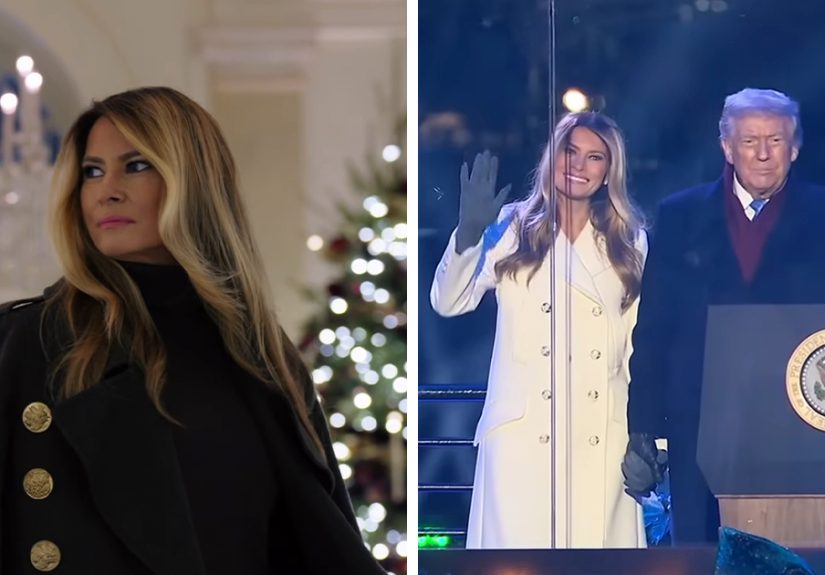
The 2025 National Christmas Tree Lighting took place on December 4, 2025, on the Ellipse near the White House. President Donald Trump stood with First Lady Melania Trump during the annual ceremony, a tradition with roots stretching back to the early 20th century. During the main moment of the evening, Trump announced that the first lady would do the honors. After a countdown, Melania stepped forward and activated the lights, turning the tree into a sparkling holiday centerpiece.
Officially, the moment was routine, festive, and highly choreographed. Unofficially, the internet treated it like the season finale of a prestige drama. Photos and clips from the event spread quickly, with viewers dissecting Melania's smile, posture, coat, timing, and general demeanor. Her expression, described by some as unusually bright and by others as oddly stiff, became the center of a new wave of online speculation.
The ceremony itself included the kind of classic holiday elements expected from a national event: music, lights, patriotic staging, and remarks about Christmas and public service. The tree lighting also connected to the broader 2025 White House Christmas theme, "Home Is Where the Heart Is," which emphasized warmth, tradition, family, service, and national symbolism. But once social media latched onto Melania's facial expression, the conversation drifted away from ornaments and into internet detective territory.
Why Did Melania's Smile Get So Much Attention?
Melania Trump is not known for the kind of constantly animated public persona that many political spouses adopt. Her image has often been cool, quiet, fashion-forward, and difficult to read. That reserve has become part of her public brand. So when she appeared at the tree lighting with a wide, camera-ready smile, some viewers saw a festive moment. Others saw a puzzle.
That is where the online reaction became less about the event and more about expectation. People are not just reacting to what they see; they are reacting to what they expected to see. If someone expects Melania to look detached, then a big smile feels suspicious. If someone expects her to perform elegance under pressure, the same smile looks perfectly normal. The difference is not always in the video. Sometimes, it is in the viewer's imagination, already wearing a tiny detective hat.
Public figures live under a microscope, but first ladies often live under a microscope with holiday garland wrapped around it. They are expected to look supportive but not staged, stylish but not extravagant, warm but not performative, patriotic but not political, and cheerful even when standing outside in December weather. That is a lot of emotional choreography for one person to accomplish while someone else counts down from five.
The Conspiracy Theories: From "Body Double" To "Contractual Appearance"
The comments that followed the tree lighting covered familiar territory. Some users joked that Melania's smile looked so unusual it must mean she knew something hidden from the public. Others floated the old, unsupported "Fake Melania" body double theory that has followed her for years. Some suggested her appearance was part of a private arrangement, while others speculated about her marriage, mood, and motivation.
None of these claims came with credible evidence. They are best understood as internet folklore: half joke, half projection, and fully powered by the algorithm's appetite for drama. The body double theory, in particular, has resurfaced at different moments since the first Trump administration, usually when Melania wears sunglasses, appears unusually still, or is photographed from an awkward angle. Like many conspiracy theories, it thrives not because it is supported by facts, but because it is easy to remix into memes.
There is also a cultural reason these theories stick. Melania's public image has always contained a certain mystery. She gives fewer spontaneous remarks than many public figures, rarely explains her emotions in detail, and often lets fashion and staging do the talking. That leaves open space, and the internet hates open space. It rushes in with jokes, theories, captions, and suspicious zoom-ins. Silence becomes a clue. A smile becomes a plot twist. A white coat becomes a symbol. Somewhere, a comment section buys a magnifying glass.
Melania Trump, Christmas, And A Complicated Holiday History
The Christmas setting also mattered because Melania has a long, sometimes controversial connection to White House holiday decor. During Donald Trump's first term, her Christmas designs became viral events of their own. Some praised her style as dramatic and high-fashion. Others mocked certain displays as cold, severe, or unintentionally spooky. The red trees from 2018, for example, became a meme machine almost instantly.
Then came the leaked 2018 audio, released publicly in 2020, in which Melania expressed frustration about the intense criticism and pressure surrounding Christmas decorations. The recording has been repeatedly resurfaced whenever she appears at holiday events. That old controversy gave social media users another reason to frame her tree lighting appearance as ironic: here she was, once again, participating in a major Christmas tradition, and doing it with a smile big enough to launch a thousand comments.
But it is too simple to say that one old frustrated comment defines her entire relationship with the holidays. Public holiday duties at the White House are not just about personal taste. They involve tradition, staff, volunteers, symbolism, media coverage, and a level of scrutiny that would make most people rethink hanging even one wreath. Melania's 2025 theme leaned traditional and sentimental, highlighting home, service, children, and national heritage. Whether critics found it charming or staged, it showed a deliberate return to warmth after years of public debate over her holiday aesthetic.
The Power Of First Lady Optics
In American politics, the first lady is not elected, but she is constantly evaluated. Her clothes, causes, gestures, smiles, silences, and holiday decorations all become part of a national conversation. That is especially true for Melania Trump, whose fashion choices often communicate more than her speeches. At the tree lighting, her white coat created a striking visual against the darker evening setting and bright holiday lights. It looked elegant, but it also made her stand out like the main character in a Christmas mystery directed by social media.
Optics matter because political events are designed for cameras. The National Christmas Tree Lighting is not only a holiday ceremony; it is a symbolic performance of unity, continuity, and seasonal optimism. Presidents use it to project warmth. First ladies use it to support tradition. Families watch it as a holiday ritual. Reporters document it as a public event. Social media users, meanwhile, treat it as raw material for instant interpretation.
That interpretation can be playful, but it can also turn unfair. A person's expression in a single frame may not reflect their actual mood. Cold weather, bright lights, timing cues, security instructions, and the simple awkwardness of being watched by millions can all shape how someone looks. A still image can freeze a half-second of movement and make it look like a confession. The internet then builds a story around it, adds a soundtrack, and asks everyone to pick a side.
Why The Internet Loves Reading Melania's Face
Part of the fascination comes from contrast. Donald Trump is a highly verbal, highly visible political figure who often narrates his own perspective in real time. Melania, by comparison, is controlled and selective. That contrast creates tension. When one half of a public couple speaks constantly and the other speaks rarely, people begin to treat the quieter person as a secret text waiting to be decoded.
Melania's facial expressions have therefore become a recurring internet genre. A slight smile, a lowered gaze, a glance to the side, or a quick change in expression can spark commentary. Sometimes the commentary is humorous. Sometimes it is mean-spirited. Sometimes it is clearly political wish-casting, where people project their own hopes or criticisms onto her face. This is not unique to Melania, but she is unusually suited to the role because her public reserve leaves room for interpretation.
The tree lighting reaction shows how quickly viewers can move from observation to conclusion. "She smiled" becomes "she knows something." "She looked stiff" becomes "she does not want to be there." "She appeared cheerful" becomes "something must have changed." This leap is entertaining, but it is not evidence. It is storytelling, and the internet is very good at storytelling when it has a short clip and too much caffeine.
Supporters Saw Elegance, Critics Saw A Clue
Not all reactions were conspiratorial. Many supporters praised Melania's appearance, calling her elegant, classy, and poised. They saw the moment as a graceful return to a beloved national tradition. For them, the tree lighting was not a mystery; it was a holiday scene featuring a first lady doing exactly what first ladies often do: standing beside the president, smiling for cameras, and helping mark the beginning of the Christmas season.
Critics, however, interpreted the same footage through a very different lens. To them, the smile looked forced, the staging felt artificial, and the broader context of Melania's past holiday controversies made the moment ripe for mockery. This split reveals more about political polarization than about Melania herself. In today's media environment, even a Christmas tree can become a partisan Rorschach test. One viewer sees warmth. Another sees performance. A third sees a conspiracy theory wearing black gloves.
The truth is probably less dramatic. Public ceremonies are scripted. People smile when cameras are on. First ladies appear at symbolic events. Politically famous couples often project unity, regardless of what outsiders imagine about their private lives. That may not be as entertaining as a viral theory, but it is usually closer to reality.
The National Christmas Tree Tradition Is Bigger Than One Viral Moment
The National Christmas Tree Lighting has been part of American public life since 1923, when President Calvin Coolidge participated in the first ceremony on the Ellipse. Over the decades, presidents have used the event to signal continuity, comfort, and national spirit. The tradition has survived changes in politics, media, music, security, technology, and public taste.
That long history is why the annual ceremony carries symbolic weight. It is not just a tree. It is a stage where the presidency tries to look human, seasonal, and unifying. The lights are decorative, yes, but they also serve as a visual shorthand for optimism. That is why every detail matters: who pushes the button, what is said, who attends, what the first lady wears, and how the crowd reacts.
In 2025, the event collided with a media culture that transforms even ceremonial moments into viral debate. The tree lighting still did its traditional job, but the internet added a second ceremony of its own: the lighting of the comment section. One ceremony had music and gold lights. The other had screenshots, jokes, and theories. Both were very bright.
Media Literacy: How To Read Viral Moments Without Falling Into The Rabbit Hole
When a public figure's expression goes viral, it is useful to pause before accepting the loudest interpretation. A few simple questions can keep a viewer grounded. Is there full video, or only a cropped clip? Is the claim based on evidence, or just vibes? Is the reaction coming from a credible report, a comedy account, or a random post chasing engagement? Is the theory plausible, or merely entertaining?
In Melania's case, the strongest verified facts are straightforward: she attended the ceremony, stood with President Trump, stepped forward during the countdown, and lit the National Christmas Tree. The more dramatic claims about hidden meanings, private contracts, or replacement theories are speculation. They may be funny to some viewers, but they should not be treated as news.
This distinction matters because viral politics often blurs the line between commentary and information. A joke can become a rumor. A rumor can become a headline. A headline can become a belief. Before long, a smile at a tree lighting becomes "evidence" in a story no one can prove. That does not mean people cannot joke about public figures. It means readers should know when they are laughing at satire and when they are being asked to believe something unsupported.
What This Moment Says About Celebrity Politics
The Melania tree lighting reaction also shows how much American politics now overlaps with celebrity culture. First ladies are not just political spouses; they are style figures, symbols, influencers, targets, and characters in the national imagination. Their public appearances are judged with the intensity once reserved for red carpets. Coat color, facial expression, posture, and even hand placement can become news-adjacent content.
Melania's fashion background adds another layer. Viewers expect visual polish from her, and she often delivers it. But polished visuals can also feel distant, especially to critics who want warmth or spontaneity. That tension makes her appearances endlessly discussable. She looks composed, which some people admire. She looks guarded, which others question. Either way, she rarely looks accidental.
The tree lighting was therefore a perfect Melania moment: elegant, controlled, visually striking, and just ambiguous enough for the internet to argue over. It gave supporters something to praise and critics something to decode. It also gave entertainment sites, political commentators, and social media users a seasonal storyline with built-in sparkle.
Experience Section: What Watching This Viral Moment Feels Like
Watching the Melania tree lighting discourse unfold feels a little like attending a holiday party where someone quietly says, "Did you notice that?" Suddenly, everyone stops talking about cookies and starts analyzing the host's eyebrow. One person insists the smile was completely normal. Another says it was the smile of a woman who has read tomorrow's headlines. A third person has already made a meme, posted it, and refreshed the page seventeen times.
The experience is entertaining because it gives people a shared puzzle. Even if the puzzle has no real solution, the act of solving it becomes social. People compare screenshots, quote one another, exaggerate for comic effect, and build tiny theories that are more about cultural mood than factual reality. In that sense, Melania's smile became a holiday conversation starter. It was the political equivalent of asking whether a family recipe really needs raisins: suddenly everyone has an opinion, and no one is leaving the room.
For casual viewers, the moment may have been harmless fun. A famous person looked unexpectedly cheerful; the internet made jokes. For more serious media consumers, however, the reaction is a reminder of how quickly perception becomes narrative. We often think we are observing public figures objectively, but we are usually watching through layers of expectation. If someone already believes Melania dislikes public appearances, every stiff moment confirms it. If someone believes she is elegant and misunderstood, every smile proves it. The same clip becomes two different stories depending on who presses play.
There is also a strange intimacy in how people talk about first ladies. Viewers often speak as if they know the private emotional temperature of a marriage, a family, or a household simply by watching a few seconds of public footage. That confidence can be funny, but it can also become unfair. Most people would not want their own facial expressions analyzed after standing outside in the cold under bright lights while an entire nation watched. Many of us would look mysterious too. Some of us would look like we just remembered we left soup on the stove.
The better experience is to enjoy the humor without confusing it for proof. It is fine to laugh at the absurdity of online overanalysis. It is fair to discuss the public image Melania has cultivated. It is reasonable to note that her holiday history has been controversial and meme-friendly. But it is also important to separate a viral caption from a verified fact. A smile can be a smile. A public appearance can be a public appearance. A Christmas tree can be, believe it or not, a Christmas tree.
In the end, the most revealing part of the story may not be Melania's behavior at all. It may be our behavior while watching her. We have become expert interpreters of tiny gestures, amateur detectives of celebrity politics, and full-time residents of the comment section. The National Christmas Tree Lighting was designed to celebrate tradition and seasonal unity. Instead, it also became a mirror showing how modern audiences consume politics: visually, emotionally, suspiciously, and with a surprisingly strong commitment to zooming in.
Conclusion
Melania Trump's behavior at the 2025 National Christmas Tree Lighting sparked conspiracy theories because it landed at the intersection of politics, symbolism, holiday tradition, and internet culture. Her wide smile and polished appearance gave viewers something to interpret, while her history of reserved public behavior made the moment feel unusually open to speculation. Critics saw mystery. Supporters saw elegance. Social media saw content.
But the most responsible reading is also the simplest: Melania attended a major public ceremony, participated in a long-running presidential tradition, and became the subject of viral overanalysis because that is what happens when a highly scrutinized public figure steps into bright lights. The theories may be entertaining, but they remain unsupported. The real story is less about secret meanings and more about how quickly the internet turns a holiday ritual into a cultural debate.