Table of Contents >> Show >> Hide
- Why Music Can Still “Work” When Memory Doesn’t
- Benefits of Music for Alzheimer’s and Dementia
- 1) It can reduce agitation, anxiety, and distress (especially in the right setting)
- 2) It supports mood and emotional well-being
- 3) It can improve connection and communication
- 4) It can help with routine and daily care tasks
- 5) It can encourage movement and physical engagement
- 6) It can ease caregiver stress, too
- Disadvantages and Risks: When Music Isn’t Helpful (and What to Do)
- Best Types of Music for Alzheimer’s: What Usually Works Best
- How to Use Music in Dementia Care (Without Making It Weird)
- Music Therapy vs. “Playlist Care”: What’s the Difference?
- Quick FAQ
- Conclusion
- Real-World Experiences: What Actually Happens When the Music Starts (500+ Words)
Music and Alzheimer’s is one of those pairings that sounds almost too simplelike “water and plants” or “coffee and Monday.” But here’s the twist: while music can’t cure Alzheimer’s disease, it can absolutely change a moment. And in dementia care, moments are not small things. Moments are the whole economy.
Families and clinicians have been using music therapy for dementia and personalized playlists for years because music can reach people even when language gets harder, memories get foggier, and days feel unpredictable. The research is still evolving, results vary, and yesmusic can backfire sometimes (more on that). But used thoughtfully, it’s one of the most accessible, low-cost, human tools we have for improving quality of life.
This article breaks down the benefits, the disadvantages, and the best types of music for Alzheimer’splus practical tips to make music helpful instead of… an accidental emotional jump-scare.
Why Music Can Still “Work” When Memory Doesn’t
Alzheimer’s disease affects multiple brain systems, especially those involved in forming new memories and organizing daily tasks. But music is not a single-lane road in the brainit’s an entire highway system. Listening to or making music recruits regions tied to:
- Emotion and reward (why a favorite song can feel like a warm blanket)
- Movement and rhythm (why toes tap even when words don’t come)
- Attention and arousal (why music can calm or energizesometimes in seconds)
- Autobiographical memory (why “our song” can unlock a story you haven’t heard in years)
That’s why a person living with Alzheimer’s might not remember what they ate for breakfast, but they can sing a chorus from 1964 with suspiciously perfect timing. It’s not magicit’s neuroscience plus emotion plus repetition. (Also: the brain loves a good hook. Pop producers were onto something.)
Benefits of Music for Alzheimer’s and Dementia
1) It can reduce agitation, anxiety, and distress (especially in the right setting)
Agitation in dementia can show up as restlessness, pacing, irritability, repetitive questions, or sudden frustrationoften because the world feels confusing or overwhelming. Music can help by offering structure and comfort when words don’t.
For many families, a “calming playlist” becomes a go-to non-drug tool for difficult times: late afternoon “sundowning,” stressful transitions (bathing, dressing), or noisy environments. In advanced stages, simply listening to soothing music can relax some people and lessen agitation.
Real-life example: A caregiver notices that every evening around 5:30, their dad starts pacing and insisting he “has to go to work.” Instead of correcting him (which often escalates things), they try a familiar big-band playlist at low volume, sit with him, and offer a simple job: “Can you help me pick the next song?” The goal isn’t to “fix” the beliefit’s to soften the distress.
2) It supports mood and emotional well-being
Multiple studies suggest music-based interventions can improve moodparticularly depressive symptomsand may improve emotional well-being and quality of life for some people with dementia. Even when cognition doesn’t measurably change, mood can. And mood matters because it affects sleep, relationships, participation in care, and overall safety.
Music can also provide a sense of control. Alzheimer’s takes away a lot of “I choose.” Music offers it back in a small but meaningful way: “I like this.” “Not that one.” “Turn it up.” That’s agencyserved with a beat.
3) It can improve connection and communication
Music is a social tool disguised as entertainment. People may hum, clap, sway, smile, make eye contact, or singeven in later stages when conversation is difficult. That shared moment can reduce isolation and help caregivers reconnect in a way that feels natural, not clinical.
Group singing is especially powerful because it builds community, cues breathing, and makes participation possible even with limited words. You don’t need perfect pitch. You need a shared chorus and permission to be a little silly.
4) It can help with routine and daily care tasks
Many caregivers use music as “behavioral scaffolding”a predictable cue that helps someone transition from one task to the next. Examples:
- A “morning songs” playlist during dressing and breakfast
- A slow-tempo playlist before bedtime to support relaxation
- A familiar song to signal, “We’re getting in the car now” (aka the moment chaos often auditions for a starring role)
Even if the person doesn’t remember the routine consciously, the body can learn the pattern: music → activity → completion.
5) It can encourage movement and physical engagement
Rhythm naturally pulls the body into motiontapping, stepping, gentle dancing, chair movement. That matters because physical activity supports balance, circulation, sleep, and mood. For people with dementia who are less motivated to exercise, music can be the secret ingredient that makes movement feel less like a chore and more like… life.
6) It can ease caregiver stress, too
Caregiving is demanding. Music can reduce tension in the environment and offer caregivers a practical tool that doesn’t require a prescription, a special device, or a three-hour training. Sometimes it’s not just the person with Alzheimer’s who needs regulation. Sometimes it’s the room.
Disadvantages and Risks: When Music Isn’t Helpful (and What to Do)
Music is powerfulwhich means it can be powerful in the wrong direction, too. Here are the most common downsides and how to prevent them.
1) Overstimulation (volume, tempo, or “too much happening”)
Loud music, fast tempos, or busy arrangements can increase agitationespecially if someone is already overwhelmed. Dementia can reduce the brain’s ability to filter sensory input, so what feels “fun” to you can feel like a crowded mall on Black Friday to them.
Fix: Lower the volume first. Then simplify: fewer instruments, slower tempo, fewer sudden changes.
2) Emotional triggers (sad memories or stressful associations)
Music is tied to autobiographical memory. That’s usually the point… until it isn’t. A song can bring back grief, trauma, or anxiety. A romantic ballad might remind someone of a spouse who died. A patriotic song might spark wartime memories. A hymn might trigger a complicated relationship with religion.
Fix: If you see distress (tears, withdrawal, anger), don’t argue with the emotion. Change the track and validate: “That one didn’t feel good. Let’s try something else.”
3) Hearing issues and headphone problems
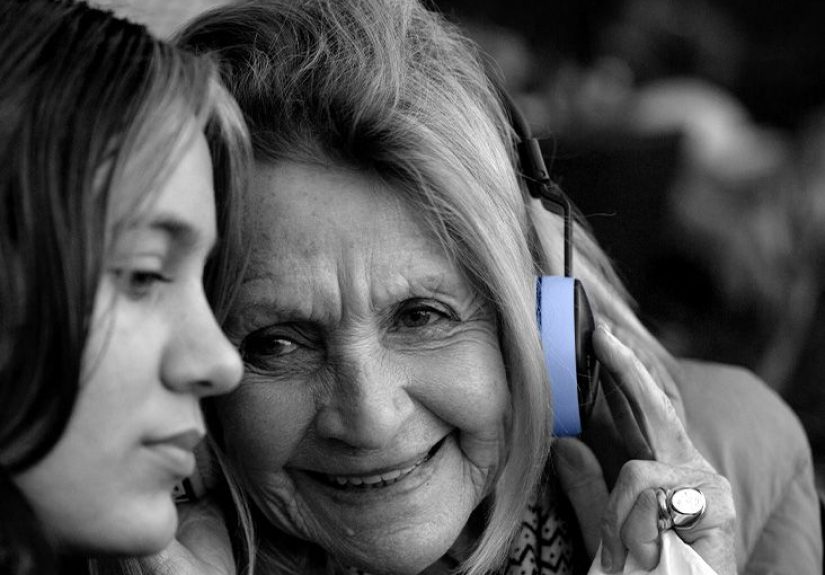
Many older adults have hearing loss or use hearing aids. Headphones can be uncomfortable, confusing, or too loud. Also, isolating someone with headphones might reduce engagement if they can’t see or interact with others while listening.
Fix: Try a small speaker first. If using headphones, keep volume low, check comfort frequently, and stay present in the room.
4) Safety concerns with movement
Music that encourages dancing is wonderfuluntil someone stands up quickly, loses balance, and falls. Movement-based music activities can increase risk without proper precautions.
Fix: Use chair-based movement, hold hands for standing dance, clear the floor, and keep sessions short.
5) The evidence is promising, but not uniform
Research suggests music-based interventions can reduce depressive symptoms and improve some behavioral outcomes, but effects may vary by intervention type, setting, and individual. Some large reviews find limited effects on agitation or cognition overall, even when mood improves. Translation: music helps many people, but it’s not a guaranteed “behavior off-switch.”
Fix: Set expectations like this: “Music won’t stop Alzheimer’s, but it can improve the day.” That’s realistic, hopeful, and honest.
Best Types of Music for Alzheimer’s: What Usually Works Best
There isn’t one universal “best music” for dementia. The best music is the music that is meaningful to that person. Still, patterns show up again and again in memory care.
1) Personalized “life soundtrack” playlists (top choice)
If you do one thing, do this: build playlists based on the person’s preferencesespecially songs from their teens and early adulthood, when musical identity often forms most strongly. Familiar music is more likely to trigger recognition, comfort, and participation.
Starter categories:
- “High school & early 20s” favorites
- Love songs and wedding-era music
- Road trip music
- Faith or spiritual music (if it’s meaningful)
- Holiday songs (use carefullyjoy for some, grief for others)
2) Calming, steady-tempo music for agitation or bedtime
When the goal is relaxation, aim for steady rhythm, moderate-to-slow tempo, and gentle dynamics. Instrumental music can work well when lyrics are confusing or overstimulating.
Good candidates: soft jazz, acoustic guitar, mellow classical, harp, piano, nature-infused ambient tracks, and slower oldies.
3) Singing-friendly music for connection
Songs with strong choruses, predictable phrasing, and clear lyrics invite participation. Think folk, gospel, classic country, Broadway standards, or well-known pop from their era.
Pro tip: If someone struggles with conversation, try singing the first line and pausing. Many people “fill in” the next line automatically, like a musical autocomplete.
4) Rhythm-forward music for movement and engagement
If the goal is physical activation (chair marching, clapping, stepping), choose music with a clear beat and consistent tempo.
Good candidates: Motown, swing, upbeat rock ‘n’ roll, Latin rhythms (if culturally familiar), marching-band style tunes, or percussion-based tracks.
5) Live music (when possible) can be extra engaging
Live singing or guitar can increase attention and interaction because it’s happening with the person, not just to them. You don’t need a concert. You need warmth, eye contact, and songs they recognize.
How to Use Music in Dementia Care (Without Making It Weird)
Here’s a practical approach that families and facilities use to make music helpful and repeatable.
Step 1: Pick a goal (one goal per session)
- Calm: reduce anxiety/agitation
- Connect: increase engagement and interaction
- Move: encourage safe physical activity
- Transition: make care tasks smoother
- Reminisce: invite positive memories and conversation
Step 2: Match the music to the goal
“Calm” music is different from “move” music. Using dance tracks during sundowning is like trying to put out a fire with confetti.
Step 3: Control the environment
- Lower background noise (TV, multiple conversations)
- Keep volume moderate
- Make it social when possible (sit together, hum together)
- Watch facial expressionsyour best feedback tool
Step 4: Start short and track responses
Begin with 10–20 minutes. Notice what changes: posture, breathing, eye contact, pacing, mood. If a song consistently helps, it’s a keeper. If a song consistently causes distress, retire itno hard feelings, no encore.
Step 5: Use music proactively, not just in emergencies
Music works best when it’s part of routine, not only deployed when things are already boiling over. Think of it like a seatbelt, not an ambulance.
Music Therapy vs. “Playlist Care”: What’s the Difference?
Music therapy is a clinical service delivered by credentialed professionals who use music interventions to meet individualized goalsmood, communication, cognition, motor function, and more. You don’t need musical talent to participate. A therapist may use singing, rhythmic exercises, songwriting, movement, or receptive listening depending on the person’s needs.
Playlist care (personalized music listening) is what families and caregivers do at home or in facilities: selecting meaningful music and using it intentionally to support comfort and engagement. This can be incredibly effective, especially when it’s individualized and used thoughtfully.
When to consider professional music therapy:
- Persistent agitation or distress that doesn’t respond to basic strategies
- Goals involving movement, speech, or structured engagement
- Care settings where staff need training and consistent protocols
- Complex emotional responses to music that require clinical support
Quick FAQ
Does music slow Alzheimer’s progression?
There’s no solid evidence that music prevents or stops Alzheimer’s disease progression. However, music-based interventions may improve mood, behavioral symptoms, and quality of lifewhich can meaningfully change daily experience.
Is instrumental music better than songs with lyrics?
It depends. Lyrics can support singing and connection, but they can also overstimulate or confuse. Instrumental music can be calming and predictable. Many people benefit from a mix: lyrics for engagement, instrumental for relaxation.
How loud should the music be?
Comfortably audible, never blasting. If the person winces, frowns, pulls away, or looks tense, lower the volume. If you’re using headphones, be especially cautious and check often.
Conclusion
Music is not a cure for Alzheimer’s. But it can be a bridgebetween caregiver and loved one, between confusion and comfort, between isolation and connection. The biggest wins come from personalized music used with intention: matching the style to the goal, keeping volume and environment supportive, and watching the person’s response like it’s the world’s most important playlist review (because it kind of is).
Used well, music can reduce distress, improve mood, and spark engagement even in later stages. Used poorly, it can overstimulate, trigger sadness, or create safety issues. The difference is rarely “genre” and almost always context: the right song, for the right person, at the right time.
And if you take nothing else away, take this: Alzheimer’s can steal words, but music often keeps the door to emotion unlocked. Sometimes that door opens to joy. Sometimes to tears. Either way, it’s connectionand connection is care.
Real-World Experiences: What Actually Happens When the Music Starts (500+ Words)
If you’ve never tried music with someone living with Alzheimer’s, the first experience can be oddly emotionallike you’re watching a familiar person briefly “come back online.” Not permanently. Not perfectly. But enough to make you blink and think, Wait… was that a smile?
One of the most common things caregivers report is that music changes the “temperature” of the room faster than almost anything else. You can go from tense and prickly to softer in a single songespecially if the track is familiar and the volume isn’t trying to reenact a stadium tour. Sometimes it’s the first 10 seconds: shoulders drop, breathing slows, the person stops scanning the room like they’re searching for an exit. It’s not that the Alzheimer’s disappears; it’s that the nervous system finds a foothold.
Another big experience: music gives you something to do together that isn’t a test. A lot of daily interactions in dementia care unintentionally turn into pop quizzes: “Do you remember me?” “What day is it?” “Where are we?” Even when asked kindly, those questions can feel like failure traps. Music flips the script. When you play a song and hum along, there’s no right answer. The person can tap, sway, sing one word, or just listenand it all counts as participation.
And yes, the singing is real. You’ll see people who struggle to form full sentences suddenly nail a chorus with impressive confidence. It’s not always the whole songsometimes it’s the rhythm, sometimes it’s a handful of lyrics, sometimes it’s just the melody. But the moment can feel like a tiny miracle because it’s a form of competence in a life that’s been shrinking.
Caregivers also notice that music can “unlock stories,” but not in a neat, linear way. You might play a 1950s love song and suddenly hear, “That’s the one from the dance,” followed by a pause, followed by a look that says more than the words do. Or the person might tell a story that’s partly true, partly mixed up, and entirely meaningful emotionally. The trick is not to fact-check it like a courtroom attorney. The goal is to join the feeling: “That sounds like it was a good night.” That’s how music becomes reminiscence therapy without anyone announcing, “Now we will do reminiscence therapy.”
But experienced caregivers will also tell you this: sometimes the “wrong” song hits like a wave. The person gets quiet. Tearful. Agitated. That doesn’t mean music was a mistakeit means music is honest. When that happens, the best move is gentle pivoting: lower the volume, switch to a neutral instrumental track, and offer reassurance. The person might not be able to explain why the song hurts. They just know it does. Respect that. You’re not curating a museum of memories; you’re caring for a person in the present.
Finally, there’s a caregiver experience nobody advertises: music can help you regulate. When you’re exhausted, stretched thin, and repeating the same reassurance 40 times a day, it’s easy to become emotionally flator overly reactive. A familiar song can remind you of who your loved one is beyond the diagnosis. It can also remind you who you are: a human trying their best, not a machine built for infinite patience. Sometimes the playlist is as much for the caregiver as it is for the person with Alzheimer’sand that’s not selfish. That’s sustainable care.
In the end, music works in Alzheimer’s care for the same reason it works everywhere else: it makes life feel like life. Even if it’s just for three minutes.