Table of Contents >> Show >> Hide
- Why Geek Culture and Prosthetics Make Perfect Sense
- From “Try to Blend In” to “Check Out My Robot Arm”
- Real-World Examples of Prosthetics Inspired by Comics, Games, and Sci-Fi
- The Technology Behind the Superpowers
- Why “Cool” Can Be Clinically Useful
- But Let’s Keep the Cape Grounded: Limits and Tradeoffs
- Beyond Comics: The Future of Expressive Prosthetics
- Experiences from the Real World: What These Prosthetics Can Feel Like
- Conclusion
For decades, prosthetics were often treated like the beige minivans of medical devices: practical, serious, and not exactly the sort of thing anyone would show off at recess. Then the nerds arrived with a better idea. What if a prosthetic hand did not try so hard to disappear? What if it looked like something Tony Stark built after too much coffee? What if a kid walked into school with a Spider-Man-inspired arm, a Halo-themed sleeve, or a design that shouted, “Yes, I am different, and honestly, it looks awesome”?
That shift matters more than it might seem. Modern prosthetics are no longer only about replacing function. They are also about confidence, identity, participation, and joy. Parents, clinicians, engineers, and patients have all learned the same lesson: when a prosthetic feels personal, people are often more willing to use it. A device can help with daily tasks, sure, but it can also change the social script. Instead of hearing, “What happened to your arm?” a child may hear, “Whoa, where did you get that?” That is not a tiny difference. That is a world of difference.
Today, the rise of 3D printing, digital scanning, customizable covers, and pop-culture partnerships has pushed prosthetic design into a new era. Comics, video games, animation, sci-fi, fashion, and maker culture have all shaped what modern prosthetics can look like. The result is a category that is more expressive, more affordable in some cases, and far more human. Or perhaps delightfully superhuman.
Why Geek Culture and Prosthetics Make Perfect Sense
Comic books have always been obsessed with upgraded bodies. Superheroes get mechanical suits, power gauntlets, energy shields, magic armor, robotic limbs, and enough glowing tech to bankrupt a small city. So it was almost inevitable that comic-inspired prosthetics would resonate with kids and adults who already saw science fiction as a language of possibility.
There is also a deeper emotional reason the connection works. Traditional prosthetics often aimed to blend in. The design goal was realism: skin tone, quiet lines, nothing flashy. For some users, that remains exactly the right choice. But for others, realism can feel like pressure to hide. Expressive prosthetics flip that idea on its head. They do not apologize for being visible. They turn visibility into style.
That is a big deal in pediatric prosthetics, where social confidence can be just as important as grip strength. Kids do not live in a vacuum. They live in classrooms, playgrounds, sports practices, lunch lines, birthday parties, and chaotic family photos where somebody is definitely blinking. A prosthetic that sparks curiosity instead of pity can change how peers react. It can also change how the wearer feels about being seen.
From “Try to Blend In” to “Check Out My Robot Arm”
The prosthetics world did not transform overnight, but the culture around design has clearly shifted. Pediatric programs and limb-difference organizations have increasingly recognized that appearance is not a shallow add-on. It is part of use, acceptance, and emotional comfort.
That is one reason expressive design keeps gaining ground. The modern prosthetic conversation is no longer only about whether a device can pinch, hold, or stabilize. It is also about whether the person wearing it actually likes it enough to keep using it. If a prosthetic is uncomfortable, visually unappealing to the user, or socially awkward, it may end up in a drawer. And a drawer is a terrible place for innovation.
Customization Is Not Just Decoration
This is where personalization becomes surprisingly practical. Colors, patterns, themed covers, favorite characters, and custom graphics can make a prosthetic feel less like a prescription and more like ownership. That emotional connection can help reduce stigma, build confidence, and encourage wear. In other words, a cool design is not the opposite of good rehabilitation. Sometimes it is part of it.
Researchers and clinicians have long noted that prosthesis acceptance depends on more than raw function. Comfort, appearance, weight, durability, expectations, and social experience all affect whether people adopt a device. That is especially true for children, whose bodies grow quickly and whose social environments can be brutally honest in the way only children can manage. A superhero arm may not solve every clinical challenge, but it can make the device feel welcome in a child’s life rather than awkwardly borrowed from it.
Real-World Examples of Prosthetics Inspired by Comics, Games, and Sci-Fi
This trend is not hypothetical. It is already happening, and some of the most visible examples come from organizations willing to mix engineering with fandom.
Open Bionics helped bring comic and franchise energy into the mainstream by creating Hero Arm covers inspired by major entertainment properties. Their bionic arm line became known for swappable designs influenced by Iron Man, Star Wars, Frozen, and later Spider-Man. The brilliance was not only in the licensing. It was in the message. A prosthetic did not have to look medical first and personal second. It could look like the user wanted it to look.
Then there is Limbitless Solutions, the University of Central Florida-connected nonprofit that has become famous for colorful, expressive 3D-printed bionic arms for children. Limbitless has leaned hard into the idea that a prosthetic can be creative and confidence-building, not merely serviceable. Over the years, the organization has been associated with designs linked to Iron Man, Halo, League of Legends, and other pop-culture worlds. It also paired prosthetic training with video game-based systems, which sounds exactly like the sort of future nerds were promised and, for once, actually got.
On the university side, USC Freehand has worked with Children’s Hospital Los Angeles to create colorful, collaborative prosthetics for young patients. Students and families do not just select a generic model and call it a day. They work through fit and design preferences together, and those custom touches can include playful visual elements inspired by favorite characters and themes. That kind of collaboration matters because it treats the child not as a passive recipient, but as a co-designer.
The open-source maker world deserves a huge share of the credit too. Communities such as e-NABLE helped popularize low-cost, 3D-printable assistive devices that volunteers could fabricate and customize. This movement did more than cut costs. It democratized imagination. Once people could print devices locally and personalize colors and details, the door opened to superhero hands, game-inspired aesthetics, and all sorts of geek-approved upgrades. The maker scene basically looked at prosthetics and said, “What if we added more imagination and fewer excuses?”
The Technology Behind the Superpowers
Comic-inspired prosthetics may grab attention because of how they look, but the real engine is technology. Today’s devices are being shaped by digital scanning, CAD modeling, additive manufacturing, lightweight materials, and increasingly sophisticated control systems.
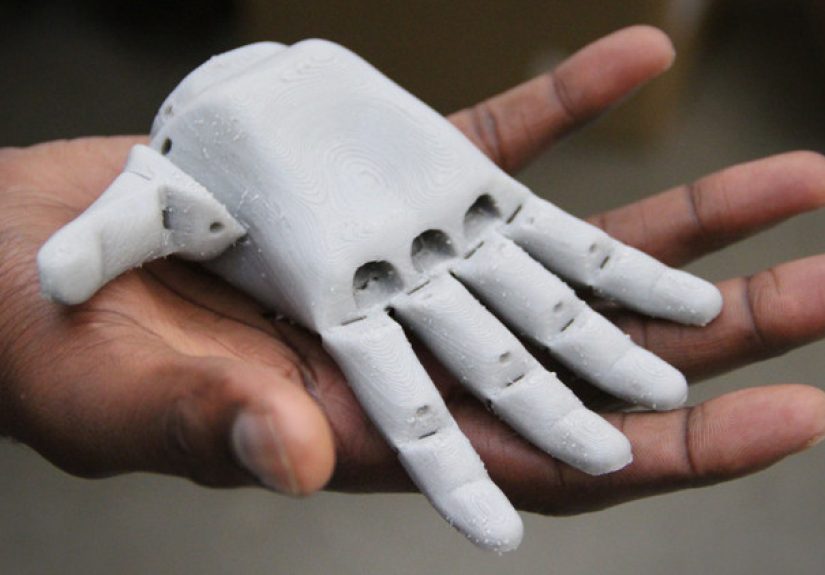
3D printing is a major reason expressive prosthetics have become more realistic to produce. Traditional prosthetic fabrication can be labor-intensive, expensive, and hard to update quickly. With 3D printing, engineers and clinicians can iterate faster, customize shapes more easily, and produce parts with lower tooling demands. For growing children, that flexibility matters. Kids do not stay the same size for long, and families are understandably less enthusiastic about paying premium prices for something that may soon be outgrown.
Digital scanning has helped too. Instead of relying only on repeated manual processes, teams can capture the shape of a residual limb, build a digital model, and refine the design before printing. At UC San Diego, for example, researchers working on 3D-printed prostheses have explored using smartphone-based scans, digital twins, and rapid production to reduce costs and speed up delivery. That kind of workflow is not just efficient. It creates more room for personalization.
Myoelectric systems add another layer of “wow.” These devices use muscle signals to control movement, allowing some users to open and close a prosthetic hand or switch among grip patterns. For children and teens, that can make the prosthetic feel less like a static tool and more like active equipment. Add haptic feedback, visual design, game-based training, or swappable covers, and suddenly the device lives in the same universe as gaming controllers, wearable tech, and superhero gadgets. That cultural overlap is powerful.
Why “Cool” Can Be Clinically Useful
Let us say the quiet part out loud: coolness can have clinical value.
That sounds silly until you think about how people actually behave. A technically excellent device that a child feels embarrassed to wear may not deliver much benefit. A less intimidating, more expressive device that the child loves and uses regularly may have more impact on participation, confidence, and daily life. Rehabilitation does not happen in a spreadsheet. It happens in real routines, real relationships, and real moods.
That is why self-expression matters so much in the prosthetics conversation. A personalized limb can shift attention from loss to agency. It can turn an uncomfortable conversation into a fun one. It can support social integration and make peers more curious in a positive way. It can also help families reframe the device from something they are nervously “managing” to something the child is excited to wear.
Organizations focused on limb difference have emphasized this broader emotional picture. Children often benefit from seeing people and characters who look like them. Representation, peer connection, and individualized care can all support self-esteem. In that sense, a comic-inspired prosthetic is not frivolous. It is one more tool for helping someone feel recognized rather than reduced.
But Let’s Keep the Cape Grounded: Limits and Tradeoffs
As fun as this trend is, superhero styling should not be confused with a miracle cure. Even the coolest prosthetic on Earth still has to fit well, function safely, and match the user’s goals. Some devices are best for certain activities and not others. Some children prefer no prosthesis at all. Others may want a passive device for one setting, a myoelectric option for another, and an activity-specific attachment for sports or hobbies.
That last category matters a lot. Clinics specializing in upper-limb prosthetics often note that activity-specific devices can be ideal for biking, batting, music, work tasks, or other focused uses. So while a comic-inspired sleeve may help with daily wear and confidence, a family still needs to think practically. What does the child want to do? Ride a bike? Hold a violin bow? Stabilize paper while writing? Throw a baseball? Conquer the galaxy? One of those may require additional planning.
There is also the question of durability, maintenance, cost coverage, and training. A prosthetic can look incredible and still require therapy, adjustments, and patience. Devices for children must account for growth, changing needs, and the reality that kids occasionally test engineering limits with the chaotic energy of a caffeine-powered raccoon. Personal style helps, but it does not replace clinical support.
Beyond Comics: The Future of Expressive Prosthetics
The next chapter of prosthetic design will likely stretch far beyond comics, even if comics helped kick the door open. The future is about identity-driven devices shaped by the interests of the wearer. That may mean anime-inspired covers, sleek fashion-forward shells, sports branding, minimalist transparent designs, bold color blocking, gaming aesthetics, or art collaborations that make the prosthetic feel closer to wearable culture than medical equipment.
In fact, the smartest direction for the field may be less “make everyone look like Iron Man” and more “let people decide what power looks like for them.” Some users want a futuristic mechanical look. Others want softness and elegance. Others want bright colors, flowers, team logos, comic references, or something that looks like it belongs in a cyberpunk movie. Personalization is the point.
And that personalization could increasingly intersect with practical tech. Imagine devices that combine expressive shells with better sensors, simpler controls, lighter materials, faster fitting, tele-rehab support, and modular activity-specific attachments. That is not fantasy. It is a design philosophy already taking shape.
Experiences from the Real World: What These Prosthetics Can Feel Like
Across stories from clinics, nonprofits, universities, and patient communities, one pattern shows up again and again: the emotional experience of wearing an expressive prosthetic can be just as memorable as the functional one.
Picture a child heading into school with a standard-looking prosthesis that feels clinical, cautious, and a little too grown-up. Now picture that same child walking in with a prosthetic hand inspired by a superhero, a favorite game, or a custom design they helped choose. The hallway reaction changes immediately. The device stops being a symbol of difference alone and becomes a conversation starter. Kids want to know what character it is based on. Teachers ask questions with excitement instead of discomfort. Friends want a closer look. That shift can ease social tension before a single word about anatomy or disability is even spoken.
Families often describe this change as a confidence boost, but that phrase can sound smaller than the reality. Confidence is not just smiling more for photos. It can mean being willing to raise your hand in class, join an activity, try using the device in public, or stop hiding your limb behind your back in pictures. It can mean wearing short sleeves because the prosthetic feels expressive instead of embarrassing. It can mean finally hearing curiosity framed as admiration.
There is also the delight of function mixed with style. For some children, the first thrill is not dramatic. It is holding a cup. Brushing hair. Catching a light ball. Stabilizing paper while drawing. Riding a bike with less strain. Picking up snacks with the seriousness of a tiny engineer testing a prototype. These are ordinary actions, but when they are regained through a device that also feels cool, they become something bigger. Utility and pride start working together.
Teenagers and adults experience this differently but no less intensely. For them, expressive prosthetics can become part of personal style rather than a medical compromise. Some users lean into sleek sci-fi aesthetics. Others choose artistic, colorful, or fashion-oriented shells. The point is not to turn every device into cosplay. The point is to stop pretending that medical technology exists outside culture. People want devices that fit their lives, and life includes taste, identity, humor, and self-presentation.
Another common experience is that the prosthetic becomes easier to discuss. An expressive design invites questions the user may actually enjoy answering. Instead of a conversation built around pity, the exchange can revolve around design, fandom, engineering, or creativity. That matters psychologically. It gives the wearer more control over the narrative.
Not every story is effortless, of course. Some people try a prosthetic and decide it is not for them. Some switch between devices depending on the day. Some love the look but need more training to get comfortable with the function. Some only want an activity-specific option for sports, music, or work. That is normal. The real lesson is not that one kind of prosthetic works for everyone. It is that when people are given more choice, more voice, and more room for self-expression, the experience of prosthetic use can become richer, more positive, and more personal.
Conclusion
Prosthetics inspired by comics and beyond are not a gimmick. They are part of a broader evolution in assistive technology, one that recognizes that people do not live as bundles of functional needs alone. They live as fans, students, athletes, artists, gamers, workers, parents, and unapologetic nerds.
The best modern prosthetics honor that whole picture. They help with daily tasks, yes, but they also help with confidence, social participation, and identity. They prove that engineering can be playful without losing seriousness. They remind us that design is not fluff when it changes whether a device gets worn. And they show that the future of prosthetics may belong not just to clinicians and engineers, but also to storytellers, artists, families, and users who know exactly what they want on their sleeve. Sometimes literally.
In the end, the real superpower is not the comic-book aesthetic. It is the freedom to turn a prosthetic from something people feel pressured to hide into something they are proud to claim. That is not fantasy. That is progress wearing a very cool arm.