Table of Contents >> Show >> Hide
- Why Custom Bunk Beds Keep Winning
- What “Peppermint Design” Looks Like in a Bunk Room
- The Non-Negotiables Before You Build
- Stairs vs. Ladders: The Great Household Debate
- The Features That Separate “Nice” from “Why Didn’t We Do This Sooner?”
- Materials and Finishes Worth Taking Seriously
- Custom Bunk Bed Ideas for Different Kinds of Homes
- Design Mistakes to Avoid
- on the Real Experience of Living With Peppermint-Style Custom Bunk Beds
- Conclusion
If you have ever looked at a kids’ room, a guest room, or a vacation-house bunk room and thought, “This space could either become genius or become a daily shin bruise,” welcome. You are among friends. Custom bunk beds live right at that intersection where style, function, and family diplomacy all meet. They are part architecture, part furniture, part storage plan, and part peace treaty between the people who want a beautiful room and the people who just want somewhere to stash thirty-seven stuffed animals.
That is why the phrase Peppermint Design custom bunk beds works so well as a mood and a goal. It suggests something fresh, playful, tailored, and a little bit joyful instead of heavy, clunky, or strictly utilitarian. The best custom bunk beds do not feel like dorm leftovers. They feel built for the way real families live: shared rooms, surprise sleepovers, awkward wall niches, vacation homes packed on weekends, and small bedrooms that need to work much harder than their square footage suggests.
Today’s smartest bunk-bed ideas borrow from real-world design guidance and product innovation: safe upper guardrails, comfortable access, storage stairs, built-in nooks, flexible layouts, convertible frames, and materials that do not make the room feel like a plywood panic attack. Whether you are planning a polished built-in bunk room or researching premium ready-made options you can personalize, here is what matters most.
Why Custom Bunk Beds Keep Winning
Custom bunk beds solve a problem that regular beds politely ignore: floor space is finite, but family needs are not. A bunk bed instantly pushes sleep vertically, opening up room for desks, toy storage, circulation, or simply the miracle of being able to walk across the room without stepping on a dinosaur puzzle.
That practical advantage is the first reason bunk beds remain popular, but it is not the only one. Design publications and furniture brands keep returning to bunk rooms because they create a “small footprint, big personality” effect. One smart wall can suddenly hold sleeping space, drawers, book storage, lighting, and even a desk. That is the kind of efficiency interior designers love because it makes a room feel intentional rather than crowded.
Custom work raises the ceiling on what a bunk bed can do. Instead of forcing your room to adapt to a standard frame, the design adapts to your room. A tucked-away alcove can become a cozy stacked sleeping nook. A narrow bedroom can use bunks plus a storage staircase. A guest room can become a flexible sleepover suite. A vacation house can squeeze in cousins without looking like summer camp accidentally got a mortgage.
What “Peppermint Design” Looks Like in a Bunk Room
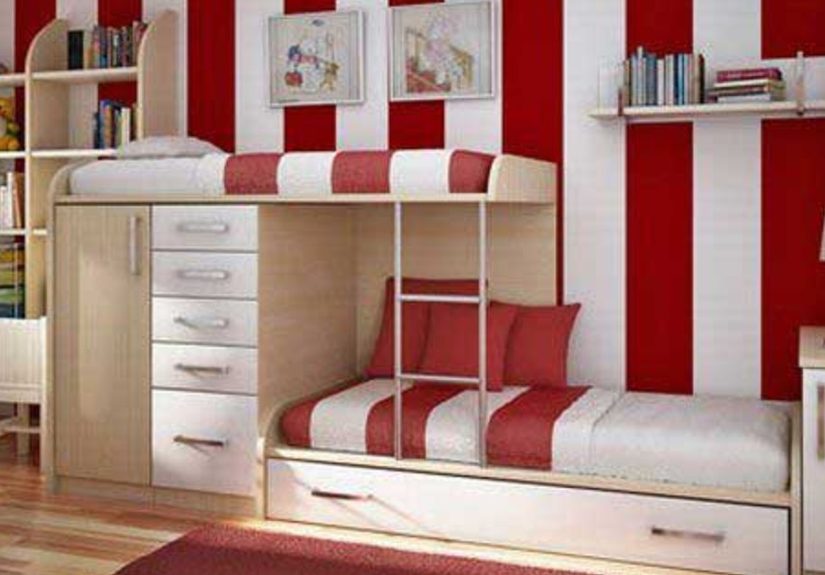
Let’s define the vibe. A peppermint-style bunk room is not necessarily red-and-white stripes, unless you are very committed to whimsy and happen to own matching pajamas. It is more about the feeling: crisp lines, cheerful energy, smart built-ins, and custom details that make the room look edited rather than overstuffed.
In practice, that usually means a few things. The bunks feel integrated into the room instead of dropped in as an afterthought. Storage is hidden in plain sight. Every sleeper gets some version of “their spot,” whether that is a shelf, sconce, cubby, curtain, or reading nook. The finishes feel light, fresh, and durable. And the layout respects both beauty and daily life, which is another way of saying there is enough room to change sheets without needing yoga certification.
A peppermint-inspired custom bunk design can lean coastal, modern farmhouse, Scandinavian, classic American, or clean contemporary. The common thread is balance: playful without being chaotic, practical without looking clinical, and customized without drifting into novelty furniture that ages faster than a middle-school haircut.
The Non-Negotiables Before You Build
1. Start with safety, not Pinterest courage
This is the grown-up part, but it matters. A beautiful bunk bed that ignores safety guidance is just expensive regret. The upper bunk needs real guardrail protection, and mattress thickness must match what the bed is designed to hold so that the guardrail still does its job. If you are researching or commissioning a bunk system, the upper bunk is where you ask the boring questions with the energy of a detective.
And yes, age matters. Younger children should not be assigned to the top bunk just because they are “super responsible” or “basically a tiny mountain goat.” The top bunk should be treated as a feature with rules, not as a test of childhood optimism.
2. Measure the room like your dignity depends on it
Because it does. Ceiling height, window placement, vent locations, wall obstructions, fan clearance, and door swing all matter. Designers and manufacturers repeatedly show that bunk beds are not just about mattress size; they are about access zone, headroom, and circulation. A bed that technically fits can still feel awful if the top sleeper cannot sit up comfortably or if the stairs land where the closet needs to open.
Pay special attention to how much footprint you are willing to dedicate to access. Straight ladders save space. Angled ladders are usually easier to climb but project further into the room. Stairs take the most floor space, but they can repay that footprint by incorporating drawers and offering a much more comfortable climb.
3. Plan for sheet-changing, bedtime, and actual human behavior
Many people design for sleeping and forget about living. But the daily experience matters more than the showroom photo. Can an adult reach the top bunk to make the bed? Is there a handhold? Is there a place for a water bottle, a chapter book, or a phone charger in a teen room? Is bedtime lighting soft and direct, or is everyone relying on one ceiling light that feels like a police interrogation?
The best custom bunk beds account for routine. They are easy to climb, easy to clean, and easy to maintain. That is not glamorous, but neither is muttering at fitted sheets while balanced on a ladder.
Stairs vs. Ladders: The Great Household Debate
If custom bunk beds had a presidential election, this would be the issue. Stairs are usually the luxury move. They feel safer, more stable, and more comfortable for kids and adults alike. They also open the door to one of the most beloved features in modern bunk design: drawers built right into the steps. That is storage so efficient it deserves a slow clap.
Ladders, on the other hand, are still valuable when the room is tight. A good ladder keeps the footprint compact and the overall design visually lighter. If you go this route, look for wide, comfortable treads, thoughtful grip, and placement that does not turn entry into an obstacle course.
There is no universal winner. The right answer depends on room size, the age of the sleepers, and how much built-in storage you need. But in design terms, stairs often help a custom bunk bed feel more architectural and intentional, while ladders help it feel leaner and more minimal.
The Features That Separate “Nice” from “Why Didn’t We Do This Sooner?”
Storage stairs
These are the overachievers of the bunk-bed world. They provide safer access, hidden drawer space, and a built-in visual anchor. Pajamas, extra linens, books, nightlights, winter socks, Lego pieces currently threatening the household, all of it can disappear into those steps.
Under-bunk drawers or a trundle
Need more storage? Add drawers. Need one more sleep spot? Add a trundle. Need both? Welcome to custom work, where ambition is rewarded and budget must be gently coached. Under-bed additions are especially helpful in guest bunk rooms and shared kids’ rooms where floor space is precious.
Open niches, shelves, and reading lights
This is what makes a bunk feel personal instead of generic. Built-in cubbies hold books, stuffed animals, headphones, or a small basket for bedtime essentials. A dedicated light for each bunk reduces the classic sibling complaint of “I was trying to sleep and the sun apparently moved indoors.”
Convertible flexibility
Some premium systems can later separate into two beds or shift into a different arrangement. That flexibility is gold if you expect the room to evolve over time. A room for little kids becomes a room for older kids. A guest room becomes a homework room. Furniture that can pivot with the family tends to age better and justify the investment.
Built-in desks or work zones
In a small room, bunking the bed may be the only way to free up a true work surface. A loft-style upper bunk with a desk below is especially useful for older kids, teens, and compact homes where every square foot needs a side hustle.
Materials and Finishes Worth Taking Seriously
Custom bunk beds are touched, climbed, leaned on, and occasionally used as pirate ships despite clear household policy. In other words, materials matter. Look for sturdy wood species, quality plywood where appropriate, durable joinery, and finishes that can handle real life.
Many premium children’s furniture brands now highlight features like low-emission certifications, water-based finishes, sustainably sourced wood, and durable construction. Those details are not marketing fluff when you are placing a large furniture piece in a room where kids sleep every night. They also help explain why some bunks feel solid and refined while others feel one cartwheel away from becoming a legal issue.
From a style standpoint, lighter painted finishes, warm wood tones, and natural textures remain the easiest path to longevity. They allow the room to feel fresh and cheerful without locking you into a very specific trend. Then you can bring in the personality through wallpaper, bedding, sconces, curtains, or hardware instead of baking every whim directly into the millwork.
Custom Bunk Bed Ideas for Different Kinds of Homes
For a shared kids’ room
Go for clearly defined individual zones. Each bunk should have its own light, shelf, and a little privacy marker, even if that marker is just a paint detail or a soft curtain panel. Storage stairs in the middle can help the room feel symmetrical and fair. Sibling diplomacy loves symmetry.
For a vacation house bunk room
Build for capacity, durability, and easy cleanup. Integrated drawers, wipeable finishes, hooks, and open cubbies work harder than decorative fluff. This is the room where cousins will arrive with backpacks, wet swimsuits, flashlights, and immediate opinions.
For a guest room
Adult-friendly bunks are very real and surprisingly stylish when scaled well. Use larger lower bunks, calmer finishes, solid reading lights, and thoughtful headroom. Nobody wants to feel like they are sleeping in a children’s exhibit about vertical living.
For a very small room
Use wall-to-wall or alcove millwork so the bunks feel built in rather than bulky. Keep the palette bright. Add storage below. Consider a loft-plus-desk arrangement if only one sleeper needs the room. Small spaces reward precision; custom bunks thrive on it.
Design Mistakes to Avoid
Do not oversize the staircase without thinking through circulation. Do not add so much under-bed storage that the lower bunk starts to feel like a cave. Do not ignore mattress depth. Do not forget where outlets need to go. Do not place the bed where a ceiling fan becomes a villain in the story. And do not design only for the reveal photo.
The best bunk rooms feel easy. That ease is usually the result of a lot of invisible decisions made correctly: enough rail height, enough headroom, enough storage, enough light, and enough restraint. Good custom design is not about squeezing in every possible feature. It is about choosing the right ones and letting them work hard.
on the Real Experience of Living With Peppermint-Style Custom Bunk Beds
Living with custom bunk beds is different from admiring them online, and honestly, that is where the magic proves itself. In a photo, a bunk room looks charming. In real life, it becomes one of the hardest-working spaces in the house. It handles sleep, play, reading, hiding, storage, hosting, and the occasional emotional summit between siblings who both believe the blue blanket is legally theirs.
The first thing most people notice is how much calmer the room feels once the layout is solved. Two or more sleep spaces stop fighting with the rest of the furniture. The floor opens up. The room suddenly has a center instead of feeling like furniture was placed by committee. Parents like the order. Kids like the sense that the room has “cool built-in spots.” Guests like not feeling as though they were assigned to a folding cot near the laundry basket.
There is also an emotional benefit to custom bunk beds that people do not talk about enough: they create belonging. A good custom setup gives each person a defined place. One bunk gets the star pillow and the shark book. One gets the sconce and the secret snack drawer. One gets the top bunk bragging rights. Even when the room is shared, the design quietly says, “There is room for you here.” That matters more than trend reports ever will.
Storage changes the experience too. When stairs hide pajamas, extra sheets, books, and favorite toys, the room becomes easier to reset. Cleanup takes less time because the room already knows where things go. That sounds dramatic, but it is true. Built-in storage reduces the amount of furniture needed elsewhere, which keeps the space from looking busy. The effect is subtle and wonderful: fewer visual interruptions, fewer random bins, fewer “Why is there a sock in the window?” moments.
Then there is bedtime. A thoughtfully designed bunk room tends to make bedtime smoother because everything is within reach. A child can climb safely, grab a book, switch on a small light, and settle in. An adult can help with sheets or stories without performing a full upper-body workout. In guest rooms, visitors feel taken care of because the bunks include the details that make a stay comfortable: a ledge for glasses, a plug for charging, a reading light, and enough space not to feel boxed in.
Of course, living with bunks also reveals the truth: the best ones are not merely cute. They are systems. They support routines. They absorb clutter. They make small rooms feel smart instead of compromised. And they tend to become memory-making places without even trying. Kids remember whispering across the bunks. Cousins remember sleepovers. Adults remember being absurdly pleased that a room could be so functional and still look magazine-worthy.
That is the real appeal of a peppermint-style custom bunk bed. It is sweet, yes, but not sugary. It is playful, but not impractical. It is tailored enough to solve a problem and cheerful enough to feel special. In a good custom bunk room, space is not just saved. It is upgraded.
Conclusion
If you are considering Peppermint Design custom bunk beds, think bigger than the bed itself. Think about how the room should feel at 7 a.m., at bedtime, during sleepovers, during holiday visits, and during the random Tuesday when everyone is late and cannot find the clean pillowcase. The best bunk beds are not just stacked mattresses. They are highly organized, deeply practical, beautifully integrated spaces that make a room do more while looking better.
That is why custom bunk beds continue to stand out. They solve square-footage problems, create memorable rooms, and let you tailor storage, comfort, and safety to your exact needs. Done well, they are one of the smartest investments you can make in a hardworking bedroom. Done badly, they are a cautionary tale with drawers. Aim for the first category.