Table of Contents >> Show >> Hide
- Why These Rare Antarctic Photos Still Hit So Hard
- The Expedition Behind the Camera
- Frank Hurley and the Art of Freezing Time
- What the Photos Actually Show
- The Survival Story Hiding in the Background
- Science, Not Just Suffering
- Why These Century-Old Photos Still Matter Today
- Conclusion
- Extended Reflection: What It Feels Like to Spend Time With These Photos
Some photographs feel less like pictures and more like weather. The rare images from the first Australasian Antarctic Expedition do exactly that. You do not simply look at them; you feel them creeping up your sleeves. There are men bent sideways by wind, sled dogs staring into a white horizon, huts that look one blizzard away from becoming driftwood, and landscapes so empty they make modern life seem ridiculously noisy. More than a century later, these century-old Antarctic photos still carry the kind of chill that air-conditioning could never imitate.
Led by Douglas Mawson, the Australasian Antarctic Expedition was not just another flag-planting mission in the so-called Heroic Age of Antarctic exploration. It was a serious scientific push into one of the least understood parts of the planet. That matters, because the photos are not simply dramatic relics. They are visual evidence of how exploration, science, endurance, and a little bit of glorious stubbornness all collided at the bottom of the world. If the title sounds icy, the story behind these images is even colder.
Why These Rare Antarctic Photos Still Hit So Hard
The power of these rare photos of the Australasian Antarctic Expedition comes from how unpolished they feel. Modern cold-weather imagery tends to look heroic in a polished, sponsored-by-someone way. These old images do not bother with that. They show a world where the weather was boss, the equipment was temperamental, and everyone looked like they had personally offended the wind.
That is part of what makes them unforgettable. The expedition photographs capture Antarctica before it was familiar to the public imagination. There are no glossy tourism brochures here, no sleek research stations with comforting geometry. Instead, there is raw ice, improvised survival, and a sense that every simple action, from carrying supplies to stepping outside, was a full-contact negotiation with nature.
And then there is the emotional effect. In one frame, a sledging party looks tiny against a huge white emptiness. In another, the camp appears half-swallowed by snow. The message is consistent: Antarctica was not a backdrop. It was an active force, rude and relentless, throwing its weight around like the final boss in a game nobody asked to play.
The Expedition Behind the Camera
Douglas Mawson Was Chasing Knowledge, Not Just Glory
When people talk about Antarctic history, they often leap straight to the race for the South Pole. Mawson had different priorities. The Australasian Antarctic Expedition focused on the long stretch of coastline south of Australia, a region that had been only partly understood. The mission combined exploration with research in geology, meteorology, magnetism, biology, and mapping. In other words, this was not a sightseeing cruise with unusually aggressive weather. It was a full-scale scientific campaign.
That scientific purpose changes how the photos read. The men in the images were not only explorers posing against icebergs for future coffee-table books. They were collecting observations, hauling instruments, making records, and trying to turn an icy unknown into documented knowledge. The result is that even the quietest photos carry a layer of purpose. A hut is not just a hut. It is a laboratory, dorm room, clinic, kitchen, and last defense against the atmosphere all at once.
Cape Denison Was Beautiful, Brutal, and Basically Wind With Extra Wind
The expedition’s main base at Cape Denison in Commonwealth Bay became legendary for its violent conditions. The place has long been associated with ferocious katabatic winds, and the photos make that reputation feel extremely earned. Snow does not just sit politely in these images. It scours, piles, hardens, and attacks. Clothing stiffens. Faces disappear under layers. Buildings seem less constructed than besieged.
That is why the visual record matters so much. Written accounts can describe a blizzard, but a photograph showing men leaning into a gale as though gravity has changed delivers the point faster. The camera catches the absurdity of ordinary tasks in extraordinary conditions. Fetching supplies looks like a military campaign. Walking to another structure looks like a dare.
Frank Hurley and the Art of Freezing Time
No discussion of these century-old Antarctic expedition photos works without Frank Hurley, the expedition’s official photographer. Hurley did not merely document the journey. He shaped how generations would imagine Antarctica. His eye for drama, contrast, scale, and atmosphere turned survival into visual history.
That does not mean the images are exaggerated fluff. Quite the opposite. Hurley understood that the coldest places on earth did not need embellishment; they needed framing. He found drama in ship decks rimmed with ice, dog teams lined up against blank distance, men dwarfed by snow slopes, and interiors where routine life continued under impossible pressure. He showed that polar exploration was not only about grand journeys. It was also about waiting, repairing, cooking, improvising, and trying not to let the wind bully you into an existential crisis.
There is also a technical miracle behind these images. Early Antarctic photography was hard enough in daylight. In extreme cold, with fragile equipment and a landscape dominated by glare, shadow, and blowing snow, it became a test of patience and ingenuity. That is partly why these rare photos feel so precious. Each one represents effort before it represents aesthetics.
What the Photos Actually Show
1. Men Reduced to Human Scale
One of the most striking things in the photos is how small the explorers look. Not weak, exactly. Just correctly sized. Antarctic photography has a way of resizing human confidence. A person becomes a dark mark on a white field. A group becomes a tiny punctuation mark in the middle of geological silence. It is humbling in the best way.
That is one reason the images still resonate today. Modern culture is absolutely packed with people trying to look larger than life. These photos go in the opposite direction. They remind us that survival can be dignified without being glamorous, and that courage often looks like a tiny figure walking into an oversized storm because the work still has to get done.
2. Sled Dogs, Supplies, and the Mechanics of Survival
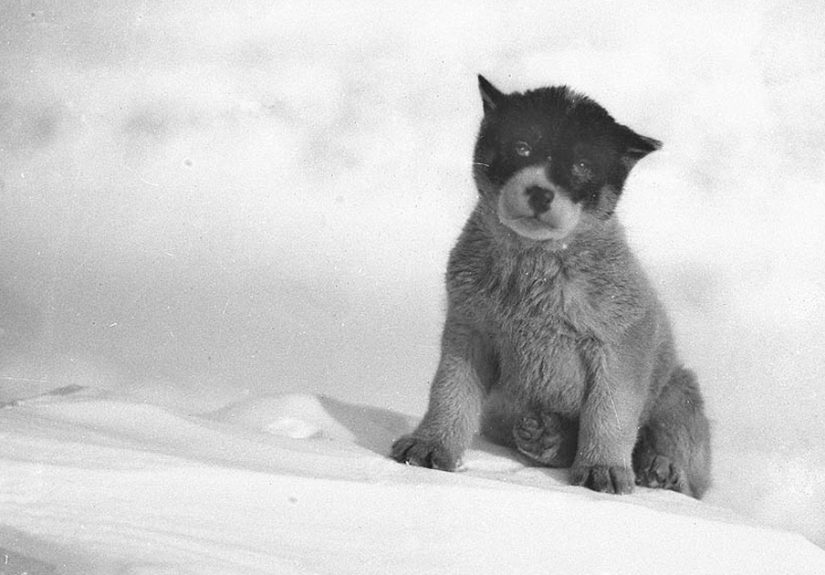
Some of the most memorable expedition images feature dog teams and sledges. They add motion and personality to a landscape that might otherwise seem abstractly hostile. The dogs were workers, companions, and sometimes the only lively shapes in a world dominated by white. In the photos, they often look more at home than the humans, which is both funny and slightly rude.
The sledges matter too. They make the expedition’s survival logic visible. Every object had weight, value, and consequence. Food, scientific gear, fuel, clothing, rope, and instruments had to be moved across terrain that did not care whether your back was already done negotiating. The photos of hauling and loading make the expedition’s hardship concrete. Polar exploration was never only about grand speeches and map lines. It was also about logistics, which is a very boring word for a very exhausting reality.
3. The Hut as a Tiny Republic of Warmth
Interior images from Antarctic expeditions always carry a special kind of intimacy, and the Australasian Antarctic Expedition is no exception. Outside, the world is a frozen argument. Inside, you see boots, bunks, books, tables, lamps, scientific materials, and the stubborn attempt to maintain order. The hut becomes a tiny republic of warmth, routine, and sanity.
These photographs help explain why Antarctic history still fascinates readers. They reveal that endurance is not just dramatic rescue material. It is also domestic. It is tea, note-taking, drying gloves, fixing gear, eating whatever is available, and pretending the wind hammering the walls is none of your business. The expedition members were not living inside an action scene twenty-four hours a day. They were building a temporary human world in a place that seemed fundamentally opposed to human comfort.
4. Ice, Rock, and Negative Space
Some rare photos from the expedition are powerful because almost nothing is happening in them. A ridge, a snowfield, a bleak shoreline, a distant berg, a figure standing alone. That negative space is part of the story. Antarctica in these images is not crowded with spectacle. It is spacious, stripped down, and eerily calm until it is suddenly not.
This visual sparseness gives the photos their modern feel. They can look almost minimalist, yet they are packed with emotional information. Loneliness. Determination. Exposure. Wonder. Fatigue. You can read all of it in a nearly empty frame. It is impressive what one person, one horizon line, and a whole lot of ice can do.
The Survival Story Hiding in the Background
Even when a photo looks calm, viewers who know the history can feel the tension underneath. The expedition included one of the most famous survival ordeals in Antarctic history. During a disastrous far-eastern sledging journey, Mawson lost both companions and then fought his way back alone through extreme conditions. That experience became central to the expedition’s legacy and helps explain why the photos feel heavier than ordinary archival images.
What makes the visual record so haunting is that some photographs were taken before the worst happened. Seen afterward, they gain a tragic stillness. A team posing with equipment is no longer just a team posing with equipment. It becomes a moment before events turned terrible. The camera preserves innocence it does not understand it is preserving.
That emotional aftershock is part of why these rare historical photos make people shiver. Yes, the snow looks cold. But the deeper chill comes from time itself. We know things the people in the frame do not know yet. That gap between the photographed moment and the later reality gives the images a strange ache.
Science, Not Just Suffering
It would be easy to turn the first Australasian Antarctic Expedition into a pure survival epic and call it a day. But that would flatten the real accomplishment. The expedition gathered scientific data that mattered. It mapped coasts, studied weather, observed magnetism, documented wildlife, and helped push Antarctica from rumor, ambition, and rough outline toward research and record.
That scientific seriousness is quietly visible in the photographs. Instruments appear. Sampling happens. Camps are organized around work. The men are often pictured not in triumphant poses but in the middle of tasks. That is one reason these images age so well. They are not only about conquest. They are about curiosity. And curiosity, unlike some old imperial chest-thumping, still ages pretty gracefully.
The expedition also sits at an interesting threshold in technology. It belonged to the old world of sledges, wooden ships, and vulnerable huts, but it also brushed against modernity through wireless communication experiments and new equipment. That mixture makes the photos especially compelling. They capture the last great age of rugged analog exploration just as the future was knocking on the ice.
Why These Century-Old Photos Still Matter Today
We live in a time when images are abundant, edited to death, and forgotten by lunch. These Antarctic expedition photographs do the opposite. They slow you down. They insist on atmosphere. They remind you that documentation can be both evidence and art.
They also resonate because Antarctica has not stopped mattering. The continent now sits at the center of conversations about climate, weather systems, scientific cooperation, and environmental change. Looking at these old images is a way of seeing the early human encounter with a place that still shapes the planet. The photos are historical, but the subject is not dead history. It is still unfolding.
And maybe that is the real reason they make people shiver. They show a world that feels distant, yet not fully gone. The boots, the hut walls, the dog traces, the ice cliffs, the hard angles of survival, the fascination with weather and observation, the desperate respect for the environment, all of it still feels recognizable. The century between then and now suddenly looks thinner than expected.
Conclusion
The rare photos of the first Australasian Antarctic Expedition do more than preserve an old adventure. They reveal how fragile people look in extreme places, how powerful a camera can be when it meets real hardship, and how science and endurance were tangled together in one of polar history’s most compelling journeys. Douglas Mawson’s expedition left maps, records, and legend behind, but these photographs may be its most immediate legacy.
They still sting with cold because they still feel alive. The men are bracing against weather. The dogs are pulling into the unknown. The huts are holding on by sheer determination. The ice is as indifferent as ever. More than a hundred years later, the photos remain sharp enough to cut through modern comfort and remind us that some chapters of history were written not in ink, but in wind, frost, and light on glass.
Extended Reflection: What It Feels Like to Spend Time With These Photos
Looking through these old Antarctic images for more than a few minutes creates a surprisingly physical reaction. At first, you notice the obvious things: the snow, the coats, the dogs, the hut, the ice. Then the atmosphere starts doing its work. You begin to sense the cold not as a temperature but as a pressure. The air in the pictures seems thin, sharp, and impatient. You can almost imagine the sting on exposed skin, the ache in your hands, the exhausting ritual of putting on layers just to step outside and do something as glamorous as not getting blown into next week.
There is also a strange emotional compression in the photos. They make the world feel bigger and smaller at the same time. Bigger, because the landscape is absurdly open and the sky seems to swallow everything. Smaller, because life gets reduced to elemental concerns: shelter, food, teamwork, timing, weather, and whether the thing you urgently need has just disappeared under snow. Modern life is full of fake emergencies. These photos are a good reminder of what a real emergency environment looks like. Spoiler: it involves a lot more ice and a lot less email.
What lingers most is the loneliness. Even group photos can feel lonely in Antarctica because the background is so immense and indifferent. A few people standing together do not conquer that feeling; they simply share it. That is probably why the images can feel unexpectedly moving. They show companionship without sentimentality. People worked together because isolation in such a place was not poetic. It was dangerous. In that sense, the photos become records of dependence as much as endurance.
And yet they are not depressing. That is the twist. For all their cold severity, the images also carry wit, ingenuity, and even a stubborn sort of cheerfulness. Humans are weirdly adaptable creatures. Give us a violent polar coast, a hut, some equipment, and a problem, and apparently we will still organize things into shelves, write notes, make plans, and try to take a decent photograph while the planet attempts to sandblast us. That combination of vulnerability and defiance is deeply compelling.
By the time you finish sitting with the rare photos of the first Australasian Antarctic Expedition, the word “historic” almost feels too mild. These are not just old pictures. They are emotional weather reports from another era. They record scale, fear, discipline, curiosity, routine, and awe all at once. Most of all, they remind you that the people in them were not legends yet. They were just cold, busy, determined humans trying to do difficult work in an unforgiving place. That may be why the images still feel so immediate. Strip away the century, and they still speak the same language: hold on, keep moving, pay attention, and respect the ice.