Table of Contents >> Show >> Hide
- The Story Behind the Rhinoplasty Backlash
- Why Early Rhinoplasty Results Can Look So Different
- Why Influencers Are Pressured to Share Everything
- The Internet’s Beauty Court Has No Qualifications
- Rhinoplasty, Social Media, and the Filter Effect
- What “See The Potential” Really Means
- How Public Figures Can Handle Cosmetic Surgery Scrutiny
- What Readers Should Know Before Judging Any Rhinoplasty Result
- Experience-Based Reflections: What This Story Teaches About Healing, Confidence, and Online Noise
- Conclusion
Rhinoplasty recovery is not exactly a red-carpet debut. It is more like renovating a house while the paint is still wet, the furniture is covered in plastic, and someone on the internet is standing outside yelling, “Why doesn’t it look finished?” That is why the story of influencer Indy Clinton being brutally trolled after her rhinoplasty struck such a nerve online. She had a medical and cosmetic procedure, shared parts of her healing journey, and then found herself defending results that were not even final yet.
The phrase “see the potential” became the perfect summary of the situation. After surgery, especially nose surgery, the face can look swollen, uneven, stiff, or simply unfamiliar for weeks or months. Yet social media often behaves as if every image is a final verdict. One screenshot, one video, one awkward angle, and suddenly the comment section turns into a panel of unpaid judges with suspiciously strong opinions.
Clinton, an Australian influencer and mother of three, reportedly underwent rhinoplasty after a surfing-related injury. She had previously told followers she did not want to turn the recovery into a promotional spectacle or monetize every detail. Still, some commenters accused her of not being transparent enough, while others mocked her appearance during the healing phase. Her response was not just about one nose job. It opened a bigger conversation about cosmetic surgery, privacy, online cruelty, influencer culture, and the unrealistic expectation that healing should look pretty at every stage.
The Story Behind the Rhinoplasty Backlash
According to public reporting, Clinton told followers that her rhinoplasty was connected to an old surfing accident. She also made it clear that she had mixed feelings about how much of the process to share. That detail matters. Influencers live in a strange world where they are expected to be open, but not too open; polished, but authentic; vulnerable, but entertaining; private, but not suspiciously private. It is a job description designed by a committee of raccoons with Wi-Fi.
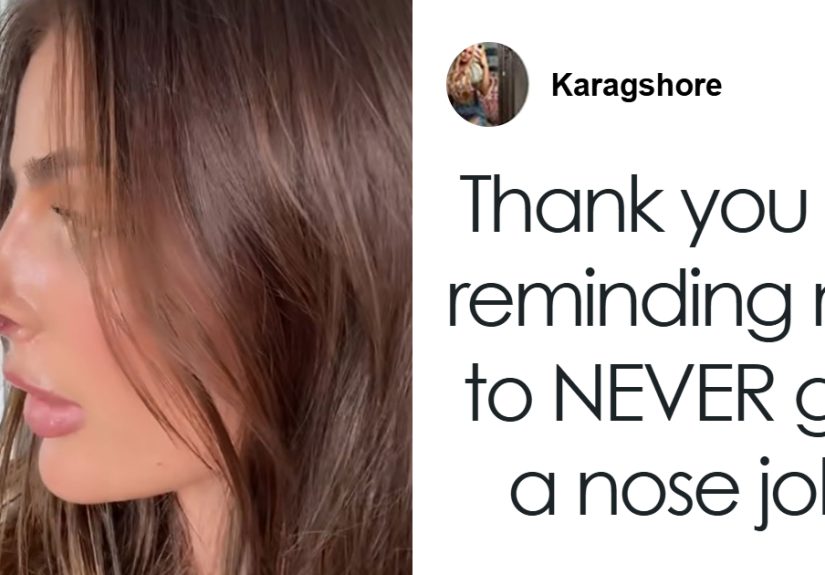
When Clinton appeared online after surgery, her nose was still bandaged and clearly healing. Instead of waiting for the recovery process to unfold, some viewers rushed to compare, criticize, and speculate. One comment reportedly compared her look to Michael Jackson, a reference that carried more insult than insight. Clinton pushed back, explaining that she was still swollen and that viewers needed to imagine how the result might settle over time.
That is the problem with cosmetic surgery content online: people want the big reveal, not the middle chapter. They want the “before” and “after,” not the “during,” where the face may be puffy, the nose may look larger than expected, and the patient may still be figuring out how to sleep upright without becoming emotionally attached to a mountain of pillows.
Why Early Rhinoplasty Results Can Look So Different
Rhinoplasty is one of the most delicate facial procedures because the nose sits in the center of the face and even tiny changes can alter the overall balance. It can be performed for cosmetic reasons, functional reasons, or both. Some people seek rhinoplasty to refine the bridge, tip, nostrils, or profile. Others need it to correct breathing issues, structural problems, trauma, or injuries.
The catch is that the final result does not appear immediately. In the first stage of recovery, swelling and bruising are common. A splint may be worn for support, and the nose can look wider, lifted, stiff, or uneven. This is normal. It is also exactly the phase when the internet loves to take screenshots and behave as if it has discovered a scandal.
Swelling Is Part of the Process, Not Proof of Failure
Medical guidance from major plastic surgery and health organizations consistently notes that rhinoplasty swelling can take months to resolve. Initial swelling may improve within weeks, but the nose often continues refining for up to a year. The tip can be especially stubborn because tissue in that area may hold swelling longer. In other words, judging a rhinoplasty after a few days or weeks is like reviewing a cake while it is still batter. Technically, you can do it, but everyone will wonder why you brought a fork.
This is why Clinton’s “see the potential” defense made sense. Early results are not final results. A person recovering from nose surgery may look different from one day to the next. Lighting, camera lenses, facial expressions, makeup, swelling, and angles can all change the appearance. Social media, however, freezes one moment and invites everyone to pretend it is permanent.
Rhinoplasty Is Not Always About Chasing Perfection
One of the most unfair assumptions about nose surgery is that every patient is chasing a trendy “perfect” nose. In reality, motivations vary widely. Some patients want better breathing. Some want to correct an injury. Some want to soften a bump, adjust asymmetry, or restore confidence after years of discomfort. Some want a subtle change that still looks like them, just a little more balanced.
That nuance often disappears online. When an influencer has a procedure, viewers may treat it like public property. They debate whether the person “needed” it, whether the surgeon did a good job, whether the patient is being honest, and whether the new look is acceptable. But a face is not a group project. Cosmetic surgery may be visible, but the decision is still personal.
Why Influencers Are Pressured to Share Everything
Modern influencer culture has trained audiences to expect full access. Followers see morning routines, grocery hauls, parenting updates, vacations, closet cleanouts, skin-care routines, and occasionally a suspiciously aesthetic bowl of oatmeal that nobody actually eats that neatly. Because of that constant access, privacy can start to look like deception.
But there is a difference between being honest and being obligated to provide a medical documentary. Clinton’s critics accused her of not being transparent enough, but she had already acknowledged the procedure. What some viewers seemed to want was not honesty; it was control. They wanted the right to watch every stage, inspect every decision, and comment on every change.
That expectation is unhealthy for both creators and audiences. A person can be open about having surgery without broadcasting every appointment, incision, worry, or private conversation with a doctor. Medical recovery is not a subscription perk. It is still recovery.
The Internet’s Beauty Court Has No Qualifications
Online comment sections can be helpful when people share support, personal experiences, and realistic recovery advice. Unfortunately, they can also turn into a circus where confidence goes to be pelted with popcorn. The rhinoplasty backlash showed how quickly viewers can move from curiosity to cruelty.
Mocking someone’s healing face is not “just an opinion.” It can affect how that person feels during an already vulnerable time. Cosmetic surgery recovery may involve physical discomfort, anxiety, second-guessing, and patience. Add thousands of strangers analyzing your face, and the emotional pressure can become intense.
It is especially troubling because social media already encourages people to compare themselves constantly. Filters, editing apps, front-facing cameras, and influencer beauty standards can make normal human features seem like problems to solve. When audiences then attack someone for changing a feature, the message becomes impossible: “Look perfect, but do not try too hard. Be natural, but also meet our standards. Be honest, but only in the way we approve.” No wonder everyone is tired.
Rhinoplasty, Social Media, and the Filter Effect
Research and medical commentary increasingly point to a link between image-focused social media and interest in cosmetic procedures. Platforms built around selfies and short videos can amplify appearance comparison. Filters can slim noses, smooth skin, reshape faces, lift eyes, and create a version of beauty that is technically fictional but emotionally persuasive.
For some people, cosmetic surgery can be a thoughtful and positive choice. For others, the desire may be fueled by unrealistic expectations or constant comparison. That is why responsible surgeons usually focus on consultation, medical history, facial anatomy, emotional readiness, and realistic goals. A good rhinoplasty conversation is not, “Make me look like this filtered selfie.” It is, “What is safe, balanced, functional, and appropriate for my face?”
The Clinton controversy reflects this larger cultural tension. We live in an era where people are more open about procedures, yet also more judgmental about them. The same audience that asks influencers to disclose cosmetic work may punish them when they do. That creates a no-win situation: silence invites suspicion, but honesty invites trolling.
What “See The Potential” Really Means
“See the potential” is not just a defense of a swollen nose. It is a reminder that healing is unfinished by definition. It asks people to pause before forming a permanent opinion about a temporary stage. It also applies beyond rhinoplasty. People recover from procedures, life changes, injuries, breakups, weight fluctuations, stress, and personal reinventions. Not every stage is camera-ready. Not every stage needs commentary.
In cosmetic surgery, potential is not about promising perfection. It is about understanding the timeline. A nose that looks stiff in week two may soften by month three. A tip that looks overly lifted may settle. Swelling that makes the bridge look wider may gradually fade. Final refinement can take a long time, and every person heals differently.
That patience is difficult online because the internet rewards immediate reactions. The fastest joke gets likes. The harshest take gets attention. The most dramatic comparison gets shared. But speed is not the same as accuracy, and cruelty is not the same as confidence.
How Public Figures Can Handle Cosmetic Surgery Scrutiny
Public figures do not owe strangers unlimited access, but they can still set boundaries in a clear way. Clinton’s response showed one possible approach: acknowledge the procedure, correct misinformation, and remind people that the result is still developing. That kind of response can be useful because it shifts the focus from gossip to reality.
For influencers, a healthy approach might include sharing only what feels comfortable, avoiding medical advice unless qualified, and directing followers to professionals for procedure-specific questions. It is also fair to delete cruel comments, block repeat offenders, or step away from posting during recovery. Boundaries are not a scandal. They are maintenance.
For audiences, the rule is even simpler: do not say something about a person’s healing face that you would be embarrassed to say while sitting across from them at lunch. If that standard removes 80 percent of comment sections, wonderful. The internet could use the fresh air.
What Readers Should Know Before Judging Any Rhinoplasty Result
Before reacting to a rhinoplasty photo online, remember three things. First, early swelling can distort the shape. Second, lighting and camera angles can exaggerate features. Third, the patient’s goals may not match your personal taste. A successful rhinoplasty is not always the smallest nose or the most dramatic transformation. Often, the best result is one that supports breathing, suits the face, and feels right to the patient.
It is also important not to assume that cosmetic surgery automatically means insecurity. People make appearance-related decisions for many reasons. Some are deeply personal. Some are practical. Some are medical. Some are aesthetic. The decision does not need to be defended in a courtroom of strangers using profile pictures of cartoon frogs.
Experience-Based Reflections: What This Story Teaches About Healing, Confidence, and Online Noise
Stories like “Woman brutally trolled after rhinoplasty defends the results” resonate because they expose something many people have experienced in smaller ways: the discomfort of being judged while still becoming. You do not need to be an influencer or have rhinoplasty to understand that feeling. Anyone who has changed a hairstyle, started a fitness routine, worn something bold, recovered from an injury, or simply posted a photo on a bad angle knows how quickly people can comment before they understand.
One practical lesson from this story is that healing needs privacy. Even when a person chooses to share part of the journey, they do not have to share all of it. If someone posts a recovery update, that does not mean viewers are entitled to medical records, surgeon details, private fears, or daily progress pictures. Sharing is not the same as surrendering ownership.
Another lesson is that early results require emotional patience. Many cosmetic surgery patients describe a period of doubt after the procedure. This can happen because swelling changes the face, the person is tired, and the brain is adjusting to a new reflection. During that stage, outside criticism can feel louder than common sense. That is why supportive friends, realistic expectations, and follow-up care matter so much. A person recovering from surgery does not need a comment section acting like a dramatic Greek chorus.
There is also a broader experience here for anyone who consumes beauty content online. It helps to remember that most images are incomplete stories. A selfie does not show the consultation, the injury, the years of discomfort, the decision-making process, the anxiety, the swelling timeline, or the private reasons behind a change. When viewers forget that, they start treating people like products. They review faces as if they are shopping for lamps.
For people considering rhinoplasty, the most valuable takeaway is not “get it” or “do not get it.” The takeaway is to slow down. Learn about recovery. Choose a qualified surgeon. Ask about risks, breathing, healing, revision possibility, and realistic outcomes. Be honest about motivation. If the goal is to look like a filtered version of someone else, pause. If the goal is personal, informed, and grounded in real anatomy, the conversation may be healthier.
For people who have already had surgery, Clinton’s experience is a reminder that your timeline is yours. The internet may want an instant reveal, but your body does not operate on social media scheduling. Swelling does not care about engagement rates. Tissue does not settle faster because someone in the comments is impatient. Healing is allowed to be boring, slow, and private.
Finally, this story teaches a simple but powerful etiquette rule: curiosity is not a license for cruelty. You can wonder about a celebrity’s procedure without insulting them. You can discuss beauty standards without mocking someone’s face. You can support transparency without demanding performance. The best response to someone in recovery is not a punchline. It is basic human restraint, which, admittedly, remains the rarest cosmetic enhancement on the internet.
Conclusion
Indy Clinton’s rhinoplasty backlash became more than a viral beauty story because it highlighted a messy truth about online culture. People demand honesty from influencers, then punish them for showing imperfect moments. They want transparency, but only if it looks polished. They discuss recovery, but often forget that recovery is not the result.
The phrase “see the potential” works because it invites patience. Rhinoplasty can take months to settle, and the final outcome may not be visible for up to a year. More importantly, a person’s appearance during healing should not be treated as public entertainment. Whether someone has surgery for an injury, breathing, confidence, or personal preference, they deserve space to recover without becoming a target.
The internet will always have opinions. Some will be thoughtful. Some will be useful. Some should have stayed in the drafts folder with the lid firmly closed. But the better response is simple: wait before judging, think before commenting, and remember that behind every viral “after” photo is a real person living through the “during.”