Table of Contents >> Show >> Hide
- What Slow Design Actually Means (No, It’s Not a Timer Setting)
- Who Is Katrin Arens?
- How Katrin Arens Practices Slow Design (Principle by Principle)
- Why Reclaimed Wood Matters (Beyond the Vibe)
- Steal the Strategy: How to Apply “Katrin Arens Energy” in Your Own Home
- Common Myths About Slow Design (Let’s Retire These Gently)
- Why Katrin Arens Belongs in the Slow Design Conversation
- Field Notes: A 500-Word “Slow Design” Experience Inspired by Katrin Arens
- Conclusion
If “fast furniture” is the snack aisle of home decorflashy packaging, questionable ingredients, regret by Tuesdaythen
slow design is the long, nourishing dinner you actually remember. It’s less about waiting forever for a chair (though, yes, patience helps),
and more about choosing objects made with intention: materials that already have a story, forms that don’t expire with next month’s algorithm,
and craftsmanship that gets better with time instead of falling apart the moment you look at it sternly.
One designer who embodies that philosophy in a refreshingly no-gimmicks way is Katrin Arens, known for working with what she calls
“abused wood”discarded boards, salvaged doors, old shutters, and other castoffs that most people would label “construction-site confetti.”
Arens sees something else: character, continuity, and the kind of quiet beauty you can’t fake with a distressing tool and a Pinterest mood board.
In this deep dive, we’ll break down what slow design really means, how Katrin Arens puts it into practice, why reclaimed materials matter beyond
the buzzwords, and how you can borrow the approachwithout turning your living room into a reclaimed-wood museum (unless that’s your thing).
What Slow Design Actually Means (No, It’s Not a Timer Setting)
Slow design is often misunderstood as “taking a long time to make something.” But the heart of the idea is more interesting:
it’s design that expands awarenessof materials, making, use, repair, and the human experience around an object.
Instead of optimizing for speed and novelty, slow design optimizes for meaning, longevity, and accountability.
In interiors and furniture, that translates into pieces that are thoughtfully sourced, ethically made, and built to live a long life
including the messy, real-life parts of living (kids, pets, moving day, the occasional coffee spill that somehow becomes a permanent memory).
The Six Principles of Slow Design
A widely cited framework describes six overlapping principles. Think of them as prompts, not commandments etched into reclaimed oak:
- Reveal: make hidden processes and materials visible.
- Expand: design for richer meanings beyond basic function.
- Reflect: encourage mindful, “reflective consumption.”
- Engage: use collaborative, transparent, open processes.
- Participate: invite users/clients into the design journey.
- Evolve: allow artifacts to mature and gain value over time.
Now let’s put those ideas into a real-world contextbecause philosophy is great, but your entryway still needs somewhere to put shoes.
Who Is Katrin Arens?
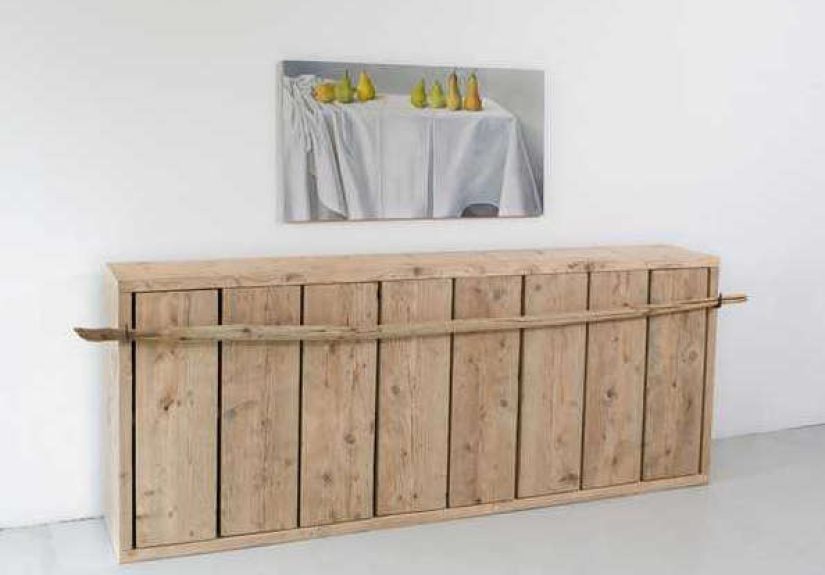
Katrin Arens is a German-born, Italy-based designer known for furniture and interiors built from reclaimed materialsespecially salvaged wood.
For decades, she has been creating pieces that feel both minimal and soulful: clean lines, quiet proportions, and surfaces that proudly show
their previous lives.
Her work is often associated with rustic minimalism, but “rustic” doesn’t quite cover it. What Arens does is closer to
material honesty: she doesn’t try to erase knots, cracks, worn edges, or old nail marks. Instead, she frames them so the object
becomes calm, functional, and deeply human.
“Abused Wood”: A Name With a Point
Arens uses the phrase “abused wood” to describe boards that have been used, weathered, discarded, andby normal consumer standardswritten off.
Calling it “abused” isn’t just dramatic flair. It’s a reminder that materials have lifecycles, and that design can either
accelerate the landfill pipeline or slow it down by creating real attachment.
A Northern Italy Base Built for Making
Arens’ story is also rooted in place. Northern Italy is rich with skilled artisans and an architectural landscape where old buildings are
continuously repaired, adapted, and reused. That environment naturally supports the kind of work she does: sourcing castoffs, collaborating
with craftspeople, and building projects that feel connected to local history rather than global sameness.
How Katrin Arens Practices Slow Design (Principle by Principle)
1) Reveal: Let the Material Tell on Itself
In mass production, materials are often disguised: veneers pretending to be solid wood, plastic pretending to be stone, finishes pretending
nothing ever happened. Arens goes the opposite direction. Her reclaimed boards still show wear, grain variation, and subtle scars.
The object “reveals” its making and its past without needing a plaque that says, “Hello, I was once a door.”
This is more than aesthetics. When you can see what something is made ofand how it’s put togetheryou’re more likely to treat it as a keeper.
Slow design doesn’t rely on guilt to change behavior; it relies on relationship.
2) Expand: Design Beyond Function
A kitchen cabinet door can be a door. Or it can be a piece of architectural history that happens to open and close.
In Arens’ interiors, reclaimed wood becomes a way to expand the meaning of everyday spaces.
One example often highlighted in her work is the use of salvaged wood in custom kitchenswhere old boards become cabinet fronts and panels
paired with pragmatic materials like stainless steel. The result is functional (it still needs to survive real cooking) but also layered:
your kitchen becomes a daily reminder that “new” doesn’t have to mean “newly manufactured.”
3) Reflect: Make the Home a Place You Actually Notice
Slow design encourages “reflective consumption”not as a lecture, but as a lived experience.
Arens’ pieces often feel quiet enough to let you breathe. They don’t scream for attention; they hold it.
There’s a practical side to that calm, too. When a space is built around a few meaningful, well-made elements, you stop chasing constant upgrades.
Your home becomes less like a scrolling feed and more like a lived-in story.
4) Engage: Collaboration as a Feature, Not a Footnote
Slow design favors open, collaborative processes. Arens’ work is frequently described in terms of working with artisans and fabricators,
not just ordering parts from a catalog. That matters: when skilled hands and local knowledge shape the outcome, the design gains depth.
Even details like custom metalwork (rails, supports, hardware) become part of the object’s identityfunctional, yes, but also a reminder that
design is a human practice, not just a supply chain.
5) Participate: The Client Isn’t a Checkout Button
A big difference between fast and slow design is the role of the user. Slow design treats the buyer as a participant, not just a consumer.
In practice, that can mean made-to-order sizing, adapting designs to a space, or reusing components a client already owns.
Arens is known for incorporating existing elements when it makes senselike keeping appliances or fixtures that are still perfectly good.
That choice is practical, sustainable, and strangely refreshing in a world where “upgrade” is treated like a moral obligation.
6) Evolve: Build for Patina, Repair, and the Long Haul
The best slow-design objects don’t peak on day one. They mature.
Reclaimed wood is naturally suited for this because it already has stability and character, and because wear tends to look like patina
instead of damage.
Arens’ approachsimple forms, sturdy construction, and finishes designed to lastsupports that evolution.
A piece can absorb years of living and still look intentional, not “oops.”
Why Reclaimed Wood Matters (Beyond the Vibe)
Let’s talk impact. Reclaimed wood is not automatically sustainable just because it’s old. The real sustainability wins come from:
avoiding new extraction, diverting material from disposal, and reducing processing energy.
Less Waste, More Value
Construction and demolition debris is a major waste stream. Reusing and recycling building materials keeps valuable resources in circulation,
and wood can be repurposed into new productsincluding furniture and engineered-wood applicationswhen managed responsibly.
The Carbon and Energy Angle
Life-cycle research comparing reclaimed lumber and flooring to virgin equivalents has found dramatic differences in energy use and
global warming potential under specific assumptions and supply-chain scenarios.
The takeaway isn’t “every reclaimed board saves the planet by lunch,” but rather that
reuse can significantly reduce environmental burdenespecially when it avoids energy-intensive milling and manufacturing.
Forests, Sourcing, and Accountability
Sustainable wood isn’t only about reclaimed materials; responsible forestry matters, too.
In the furniture industry, organizations and scorecards increasingly emphasize verified sourcing and reclaimed/salvaged content as part of
reducing deforestation risk and encouraging better practices across supply chains.
Steal the Strategy: How to Apply “Katrin Arens Energy” in Your Own Home
You don’t need a 19th-century spinning mill or a team of artisans on speed dial to practice slow design at home.
You just need a slightly different decision-making filter.
1) Start With One “Forever” Piece
Pick the item you interact with constantlydining table, bed frame, kitchen shelving, entry consoleand invest in something built to last.
Slow design works best when you commit to fewer, better anchors.
2) Choose Materials With a Past (and a Future)
Look for reclaimed wood, salvaged stone, vintage hardware, or responsibly sourced solid wood. Ask:
Where did it come from? What was it before? Can it be repaired?
3) Reuse What’s Already Good
If a fixture, appliance, or cabinet box is functional, consider integrating it into the new design.
It’s budget-friendly and reduces wasteplus it keeps your project from becoming “Demolition: The Musical.”
4) Let Imperfection Be the Point
A knot, a crack, a color shiftthese aren’t defects in slow design; they’re the receipt that proves your piece is real.
The goal is not “pristine.” The goal is “alive.”
5) Design for Maintenance (Not Just Photos)
If you can’t clean it, fix it, refinish it, or move it without panic, it’s probably not slow design.
Prioritize finishes that can be renewed and structures that can be tightened, repaired, and kept in service.
Common Myths About Slow Design (Let’s Retire These Gently)
Myth: Slow design means rustic everything
Nope. Slow design can be minimal, modern, even sleek. The “slow” part is about values: thoughtful sourcing, ethical making, longevity, repair.
Arens’ work proves you can be clean-lined without being cold.
Myth: It’s always expensive
Up front, sometimes. Over time, often not.
Fast furniture can be cheap until you replace it three times and develop an emotional grudge against your Allen key.
Slow design tends to cost less per year of use because it stays in your life.
Myth: Reclaimed wood is automatically eco-perfect
Reclaimed wood still needs responsible handlingsafe finishes, honest sourcing, and smart transport.
The most “slow design” move is asking questions and choosing suppliers who can answer them.
Why Katrin Arens Belongs in the Slow Design Conversation
Katrin Arens is a compelling slow-design figure because her work sits at the intersection of
sustainability, craft, and restraint.
She doesn’t rely on novelty or trend-chasing. She relies on materials with history and forms that don’t need constant explaining.
In a design culture that sometimes treats “new” as a personality trait, Arens’ reclaimed-wood interiors make a quieter argument:
the most modern choice might be the one that already existsrepaired, reimagined, and given a long future.
Field Notes: A 500-Word “Slow Design” Experience Inspired by Katrin Arens
Imagine you decide to furnish your entryway with a console tablenothing flashy, just something sturdy enough for keys, mail, and the daily
chaos of “where did my sunglasses go now?” You could order a flat-pack option and be done in a weekend. But you choose a slower path.
The experience starts where fast furniture usually ends: at the material source. You visit a local salvage yard and run your hand along stacks
of weathered boardssome from old barns, some from remodeling projects, some from who-knows-where but obviously well-lived. It’s not romantic
in a movie way. It’s dusty, practical, and full of decisions. You’re not picking a “color.” You’re choosing a story: nail holes, saw marks,
sun-faded grain, and the occasional mystery stain that makes you raise one eyebrow like a detective.
Next comes the shift that slow design forces: you stop shopping and start collaborating. You talk with a local woodworker about what the boards
can realistically become. Instead of asking, “Can you copy this photo?” you ask, “What does this wood want to do?” The answer changes the design.
A crack becomes a feature that’s stabilized, not hidden. A warped edge becomes the front face, framed cleanly so it reads intentional and calm.
You keep the silhouette simplevery Katrin Arens in spiritbecause the material is already doing the interesting work.
Then there’s the patience part, which turns out to be less annoying than expected. While the piece is being made, you notice how many “instant”
objects in your home are also the ones you don’t care about. The waiting becomes a filter: if you’re willing to wait for it, you’re probably
willing to keep it. That’s reflective consumption in real time.
When the console arrives, the experience doesn’t end. It evolves. The first week, you catch yourself touching the surfacefeeling the raised grain
and the waxed finish. A month later, a small scuff appears, and instead of panic, you feel…relief. The piece isn’t fragile. It’s alive.
You learn how to maintain it: a gentle clean, a refresh of finish when needed, a mindset of care rather than replacement.
The biggest surprise is emotional: the table quietly changes your behavior. You stop tossing things onto it like it’s disposable real estate.
You place items more intentionally. The object doesn’t just hold your keysit slows your routine by a few seconds each day. In a world engineered
for speed, that tiny pause is its own kind of luxury. And that’s the real slow-design payoff: not perfection, but a home that feels more human.