Table of Contents >> Show >> Hide
- What Is the NRSO2415-11, Exactly?
- Why “Straight Wall” Is a Bigger Deal Than It Sounds
- Key Design Features You’ll Actually Notice on the Floor
- Where the NRSO2415-11 Fits Best (Use Cases)
- Choosing the Right Version: What to Confirm Before You Buy
- Best Practices: How to Get More Value (and Fewer Headaches) From Your Totes
- Sustainability and Cost: The “This Isn’t Just a Box” Argument
- FAQ
- Real-World Experiences (Extra )
- Experience #1: Standard footprints calm down chaotic workflows
- Experience #2: Straight walls make counting and picking faster
- Experience #3: Handle comfort matters on day three, not day one
- Experience #4: Lids/top caps are the difference between “storage” and “transport”
- Experience #5: The tote becomes a “process container,” not just a container
- Conclusion
If you’ve ever watched a warehouse team try to “organize” parts using a random mix of cardboard boxes, mystery bins,
and one heroic laundry basket, you already know the truth: containers run the world. The
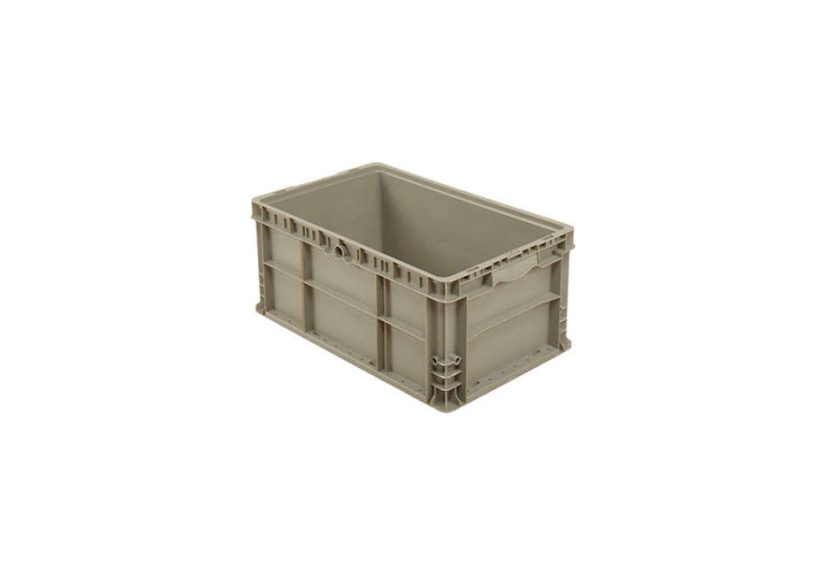
Straight Wall Container Solid – Stackable NRSO2415-11 is one of those deceptively simple tools that
makes everything downstream easierpicking, packing, kitting, line-side delivery, cleaning, counting, and even
convincing your team that “inventory accuracy” is not a myth.
This guide breaks down what the NRSO2415-11 is, why straight-wall geometry matters, how it fits into real operations,
and how to get the most value out of it without turning your facility into a plastic tote museum.
What Is the NRSO2415-11, Exactly?
The NRSO2415-11 is a solid, stackable straight-wall container in the popular
24" x 15" footprint, with an overall height around 11". Think of it as
a reusable industrial tote built to move parts and products through manufacturing, storage, and distribution with a
consistent footprint that plays nicely with pallets, shelving, and many material-handling workflows.
Quick Specs (the “tell me the numbers” section)
- Outside dimensions: ~24" L x 15" W x 11" H
- Inside dimensions (usable floor area): roughly ~21"–22" L x ~13" W (varies by spec sheet)
- Volume: about 1.6–1.7 cu. ft.
- Weight: commonly listed around ~5–6 lb depending on version and supplier
- Walls: solid (not vented), straight (not tapered)
- Primary superpower: stable stacking and excellent “cube” utilization
That 24 x 15 footprint is especially popular because it’s modular with common pallet systemsmeaning you can build
tidy layers without weird gaps that waste space or cause stacks to wobble like they’re auditioning for a talent show.
Why “Straight Wall” Is a Bigger Deal Than It Sounds
“Straight wall” isn’t marketing poetryit’s geometry that helps you pack more product into the same footprint and
avoid the dead-space that comes with tapered, nestable totes. Straight walls typically give you:
1) Better cube utilization
Straight, smooth interior walls maximize usable internal volume. That means more parts per tote, fewer trips, fewer
touches, and less “why are we out of stock when I swear I saw a mountain of this yesterday?”
2) More predictable stacking
Stackable straight-wall totes are designed with consistent top/bottom footprints and stacking interfaces so loaded
stacks stay aligned. In practical terms: fewer shifted towers and fewer “who bumped the tote Jenga?” incidents.
3) Easier compatibility with process and automation
A consistent footprint and straight sides can help when you’re using conveyors, carts, shelving, pallet layers, or
automation-adjacent workflows. Even if you’re not running a fully automated warehouse, standardized totes can make
your “human automation” (aka your team) significantly faster.
Key Design Features You’ll Actually Notice on the Floor
The NRSO2415-11 style of straight-wall container is typically built for industrial reusability. Features often
associated with this class of tote include:
Reinforced sidewalls and ribbing
External ribbing helps prevent bowing and adds strength for stacking. It also helps the tote survive that one moment
when someone decides the best way to move it is “drag it like a sled.”
Ergonomic handles
Many straight-wall 24 x 15 containers include molded-in handles designed for repeated lifts. This matters more than
people expectbecause the “small discomfort” becomes “big problem” after 200 lifts per shift.
Solid walls and bottom
Solid versions are great for parts that shouldn’t snag, fall through vents, or get dusted by whatever’s happening on
the next aisle. If you need airflow or drainage through the sidewalls, you’d typically choose a vented model instead.
Label/ID areas
Many industrial totes include recessed areas or flat zones for labels, barcodes, or identification cardshelpful for
scanning and for preventing labels from peeling off when totes rub against each other.
Where the NRSO2415-11 Fits Best (Use Cases)
Work-in-process (WIP) in manufacturing
Straight-wall containers are often used to move parts between stationsmachining to assembly, assembly to test, test
to pack-out. The consistent footprint supports standardized staging, carts, and line-side presentation.
Kitting and assembly support
If you build kits (hardware sets, subassemblies, repair bundles), the 24 x 15 footprint is a sweet spot: big enough
for meaningful volume, small enough to handle by hand. Add dividers or dunnage inserts when you need separation and
protection.
Warehouse picking and replenishment
For piece-pick or batch-pick operations, standardized totes help keep pick paths consistent, simplify training, and
reduce the “we ran out of totes so now we’re picking into… a cardboard box from the break room” problem.
Returns, reverse logistics, and internal transport
Reusable totes shine when products circulatebetween plants, between a DC and a store, or through a refurb/returns
process. Stackability and durability help control damage and reduce packaging waste over time.
Choosing the Right Version: What to Confirm Before You Buy
“NRSO2415-11” is commonly used as a product identifier across suppliers, but specifications can vary slightly across
manufacturers or related families. Before standardizing, confirm the following:
1) Exact outside height and inside clearance
If you’re optimizing shelf height, trailer cube, or automated handling clearances, a half-inch matters. Many product
lines have similar footprints with different heights (7.5", 9", 11", 14", etc.).
2) Bottom style and system compatibility
Smooth bottoms are often preferred for conveyor movement and easy cleaning. Some systems use cross-stack or textured
bottoms for different stability or handling needs. Match the tote bottom to your process.
3) Material and temperature/chemical exposure
Straight-wall industrial totes are frequently made from polyethylene or similar durable plastics. If you work with
oils, solvents, extreme temperatures, or require specific compliance (like food-contact), confirm material specs with
the supplier.
4) Lids, top caps, and security
If dust control, tamper evidence, or stacking stability is critical, look for compatible lids/top caps. Some straight-wall
systems are designed to integrate with pallet “seat belt” or retention systems for transport.
Best Practices: How to Get More Value (and Fewer Headaches) From Your Totes
Standardize labeling locations
Pick a consistent label position (same side, same corner, same height). It speeds scanning and reduces mis-picks.
Bonus: auditors love it. Your future self also loves it.
Don’t overfill above the rim
Overfilled totes reduce stack stability and can crush products in the tote below. If your product “grows” during
processing (bagged items, flexible packs), plan headspace.
Match tote height to the workflow
For kitting and frequent bench access, slightly shorter heights can reduce reaching and improve visibility. For
transport and storage density, taller heights can reduce tote count. Choose based on how the tote is used most of the time.
Implement tote hygiene (even for non-food operations)
Dust, chips, and debris cause defects and slowdowns. A simple cleaning cadenceplus easy-drain design features on some
modelscan improve quality without adding a ton of labor.
Sustainability and Cost: The “This Isn’t Just a Box” Argument
Straight-wall reusable containers are often adopted for long-term cost control: fewer disposable cartons, less
repacking, less damage, and more consistent handling. Some manufacturers also offer versions made with recycled
plastics or sustainability-focused product lines, helping reduce the footprint of reusable packaging over time.
The biggest financial win usually comes from standardization. When everyone uses the same footprint, you can design
racks, carts, pallet patterns, trailer loads, and return loops around something predictablemeaning less chaos and more throughput.
FAQ
Is the NRSO2415-11 good for automation?
Many straight-wall totes are designed to interface well with conveyors and standardized material-handling systems,
especially when they have consistent footprints and smooth bottoms. Always validate with your specific conveyor
surface, guides, and transfer points before full rollout.
Solid vs. vented: which should I pick?
Choose solid when you want containment, dust protection, and fewer snag points for small parts.
Choose vented when airflow and drainage matter (for example, certain washdown workflows). If your
process involves moisture, confirm sanitation needs and material compatibility.
How many fit on a pallet layer?
The 24 x 15 footprint is commonly used as a modular “fraction” of a standard AIAG pallet footprint, making it easy to
build stable layers. The exact pattern depends on the pallet size and your system rules, but this footprint is widely
chosen because it stacks efficiently.
Real-World Experiences (Extra )
Since I can’t physically walk your aisles and lift a tote (tragic, I know), the next best thing is sharing
common real-world experiences teams report when they adopt a 24 x 15 straight-wall container like the
NRSO2415-11. If you’re deciding whether to standardizeor you’re trying to stop the “random-container era”this is the
practical stuff that doesn’t always show up on a spec table.
Experience #1: Standard footprints calm down chaotic workflows
One of the first things teams notice is how quickly operations feel “less messy” when totes share a consistent
footprint. Pick carts stop looking like a game of Tetris played by someone in a hurry. Staging lanes become more
predictable. You can create simple rules like “one tote per SKU for WIP” or “two totes per kit,” and suddenly your
visual management starts working instead of becoming wall art.
Experience #2: Straight walls make counting and picking faster
Straight walls sound boringuntil you’re trying to grab parts quickly. The vertical sides reduce that annoying taper
that steals usable space and makes parts pile up in the middle. Teams often report quicker picking because items sit
more uniformly, and it’s easier to use dividers, foam, or thermoformed inserts without fighting angled walls. It also
helps cycle counting because you can actually see what’s in there without excavating like an archaeologist.
Experience #3: Handle comfort matters on day three, not day one
If the tote gets lifted a lot, handle design stops being a “nice-to-have.” People rarely complain on day one. By day
three, you’ll hear which totes feel good and which ones feel like they were designed by someone who has never held
anything heavier than a coffee cup. Ergonomic handles reduce fatigue and improve controlespecially when gloves are
involved or when totes are transferred between stations frequently.
Experience #4: Lids/top caps are the difference between “storage” and “transport”
Many teams start with open totes and then realize dust, mixed parts, or accidental drops become issues in transport or
longer-term storage. Adding compatible lids/top caps can reduce contamination and damage, and it can make stacking
feel more secure during moves. It also helps when totes go outside a controlled environment (trailers, shared docks,
cross-plant transfers). The experience here is simple: open totes are great for fast access; covered totes are great
for protection and travel.
Experience #5: The tote becomes a “process container,” not just a container
Once standardized, the tote often becomes the unit of work: a batch, a kit, a lane, a replenishment signal. Teams
build simple systems around itcolor coding by product family, label zones for scan points, and consistent tote
quantities per pallet layer. Over time, the tote isn’t just holding parts; it’s holding your process together.
The best implementations treat the NRSO2415-11 footprint like a building block: design the rack bays, carts, and
staging lanes to fit it cleanly, and you’ll see fewer exceptions and faster training for new staff.
The big takeaway from real operations is that the NRSO2415-11 style tote delivers the most value when it’s part of a
systemstandard footprint, standard labels, standard handling rulesnot when it’s “one more container option” added to
the pile. If you want to level up fast, standardize the tote, standardize the label, and standardize where it lives.
Your operation will feel smoother… and you’ll save your team from the dark ages of “Where did we put that box?”
Conclusion
The Straight Wall Container Solid – Stackable NRSO2415-11 is popular for a reason: it’s modular,
durable, and space-efficient. Whether you’re managing WIP in manufacturing, building kits, running a picking
operation, or tightening up internal transport, a standardized 24 x 15 straight-wall tote can reduce friction across
the entire workflow. Choose the right height and bottom style, align it with your labeling and handling rules, and
you’ll get the kind of operational improvement that feels almost suspiciously simple.