Table of Contents >> Show >> Hide
- When a No-Pets Lease Becomes a Creative Brief
- Why These Digital Furry Animals Feel Weirdly Real
- Why the 29 New Pics Work Like Tiny Comedy Sketches
- More Than Cute: This Is a Sharp Piece of Internet-Era Art
- Why Viewers Respond So Deeply to Imaginary Pets
- The Experience of Loving a Pet That Exists Only on a Screen
- Final Thoughts
Some people respond to a no-pets lease by sighing dramatically, buying one sad succulent, and pretending it is emotionally supportive. This artist took a much better route. Instead of arguing with apartment rules or trying to smuggle a cat past the landlord like it is a tiny furry fugitive, he built an entire universe of imaginary pets and dropped them into everyday life through digital art.
That is the charm of this series. It is not simply “cute animal art,” and it is definitely not just another scroll-and-forget internet gallery. The work lands because it mixes technical skill with a very human feeling: wanting companionship, wanting mischief, and wanting a little life in your home even when your lease says absolutely not. The result is a collection of digital furry animals that look as if they have always belonged in kitchens, living rooms, sidewalks, and awkward little domestic corners where real pets usually rule the kingdom.
What makes the project so memorable is the balance between fantasy and familiarity. These creatures are not realistic in the strict zoological sense. You are not going to find one at a shelter, in a wildlife guide, or hiding under your porch. But emotionally? They are instantly recognizable. They pout. They hover. They cause problems with the confidence of a pet that pays no rent and feels great about it. In other words, they behave exactly like animals we already adore.
When a No-Pets Lease Becomes a Creative Brief
The origin story is part of what gives the series its staying power. The artist has explained that he could not have pets in his apartment, so he invented imaginary ones instead. That idea alone feels like the beginning of a short film, or at least the best possible answer to the question, “What do artists do with mild heartbreak and too much imagination?” In this case, the answer was to create fluffy digital companions and place them into real-life situations so convincingly that viewers briefly forget they are not real.
There is something wonderfully modern about that setup. Plenty of renters know the strange little sting of browsing pet videos while living in a building that treats one goldfish like a contractual event. Housing policies vary widely, and landlords often weigh broader renter appeal against concerns about damage, fees, and liability. That tension helps explain why “no pets” remains such a familiar phrase in rental life. So when an artist turns that restriction into a creative world full of playful virtual animals, the idea hits a nerve for a lot of people. It is funny, sure, but it is also relatable in a way that makes the project feel bigger than a simple gag.
Even better, the concept did not stop at being clever. It evolved into a recognizable visual language. The animals are soft, bright-eyed, expressive, and just mischievous enough to feel alive. They are not presented as majestic fantasy beasts standing on a cliff under dramatic lightning. They are stealing the spotlight in ordinary places. That is the genius move. By putting impossible creatures into regular domestic scenes, the artist makes fantasy feel casual. It is magical, but in sweatpants.
Why These Digital Furry Animals Feel Weirdly Real
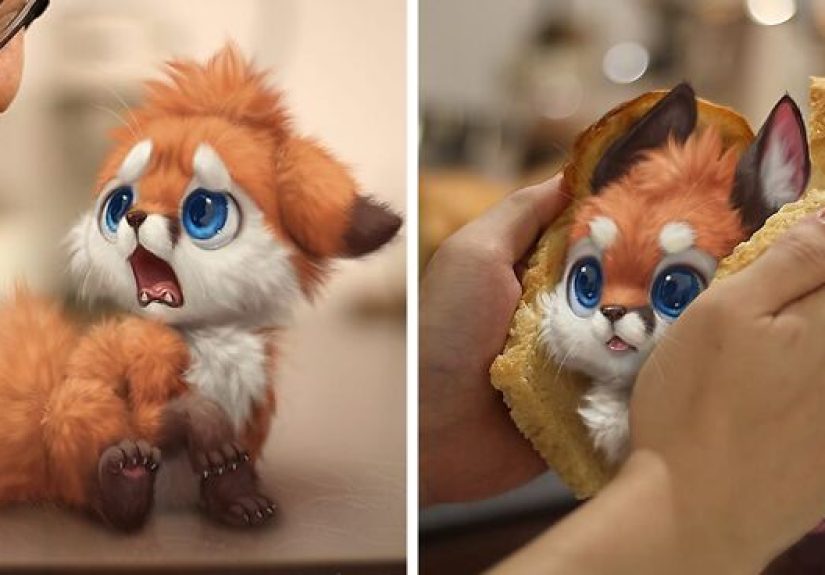
The technical side matters more than people think. Cute ideas are everywhere online. What separates a viral novelty from a memorable body of work is execution. These images work because the creatures do not just sit on top of a photograph like stickers. They appear to belong to the scene. Light feels consistent. Texture makes sense. Shadows behave. The animals have weight, attitude, and a relationship to the environment around them.
Realism Lives in the Small Stuff
That kind of believability comes from fundamentals artists and VFX professionals talk about all the time: lighting, shading, reflections, surface texture, and compositing. If any one of those pieces is off, the illusion breaks. A creature can be adorable, but if it does not match the room’s light or cast a convincing shadow, your brain calls foul immediately. Here, the artist gets enough of those details right that the fantasy holds together.
There is also a strong sense of observation underneath the whimsy. Good creature design often borrows from real anatomy, real gesture, and real animal behavior. You can see it in the postures, the facial expressions, and the way the creatures seem to interact with chairs, counters, bowls, or doorways. They are stylized, yes, but they still obey the visual rules of the world around them. That is what sells the joke.
Cute Is Doing Serious Work Here
Another reason the series sticks is that the animals are designed for emotional speed. You do not need five minutes to “understand” them. One look and your brain decides: tiny chaos goblin, would protect at all costs. That instant readability is not accidental. Big eyes, soft fur, rounded features, and exaggerated expressions all help create immediate affection. The creatures feel less like abstract fantasy designs and more like personalities with suspiciously strong opinions about your groceries.
In many images, the comedy comes from contrast. The real world stays plain and believable while the furry intruder behaves as if the scene was built specifically for its nonsense. That tension is gold. The more normal the setting, the funnier the creature becomes. It is the artistic version of hearing a dramatic opera singer perform while someone microwaves leftovers in the background.
Why the 29 New Pics Work Like Tiny Comedy Sketches
The “29 new pics” framing sounds like a standard gallery roundup, but the best way to read the collection is as a series of mini-stories. Each image has a setup, a mood, and a punchline. One creature turns mealtime into rebellion. Another stares with the intensity of a born snack thief. Another looks as if it has mistaken a random household object for a piece of gym equipment. There is a frame-by-frame storytelling instinct at work here, even though each image stands alone.
That is why the series feels bigger than “look at this cute fox.” The animals are not just posed. They are performing. A creature refusing vegetables is funny because the joke is familiar; it mirrors the stubbornness people already project onto pets, children, or occasionally themselves. A tiny furry athlete doing chin-ups is funny because it gives a ridiculous amount of dignity to a clearly ridiculous being. A sneaky little digital prowler eyeing food from across the room taps into the universal truth that no snack is safe once an animal notices it.
These are the kinds of images that invite captions, imagined dialogue, and unsolicited emotional investment. Viewers do not just look at them. They narrate them. They decide which one is their favorite, which one they would adopt, which one would absolutely destroy a couch, and which one would somehow end up with its own fan club. That interactive quality is a huge part of why the project travels so well online. It gives the audience a role in the fun.
More Than Cute: This Is a Sharp Piece of Internet-Era Art
There is a tendency to underestimate playful digital art, especially when it involves fluffy creatures and a high risk of people saying “Aww” in public. But this series deserves more credit than that. It sits at an interesting intersection of digital illustration, creature design, photo manipulation, and social-media storytelling. It is accessible without being lazy. Technical without being cold. Sweet without becoming syrupy.
It also fits neatly into a broader creative trend: artists using digital tools to make imagined beings feel emotionally real. Across fantasy illustration, digital collage, and surreal photo art, creators keep returning to animals because animals are already loaded with personality in the public imagination. We read motives into them. We assign them names. We turn one crooked glance into a complete biography. This artist understands that instinct and uses it brilliantly.
The work also benefits from restraint. The scenes are not overloaded with spectacle. The artist does not need a cosmic background, a castle, and seventeen moons to make the image interesting. A bowl on a table, a corner of a room, or a simple everyday backdrop is enough. That choice keeps the focus where it belongs: on the meeting point between the ordinary and the impossible.
Why Viewers Respond So Deeply to Imaginary Pets
Part of the answer is obvious: people love animals. Real animals, cartoon animals, pixel animals, giant fantasy animals, suspiciously judgmental stuffed animals, all of it. But there is another layer here. Companion animals are tied to comfort, routine, humor, affection, and home. Even when the creature on screen is fictional, it can still trigger some of those same emotional cues. That is why digital pets, virtual companions, and animal-inspired characters have had such staying power across internet culture.
These images tap into the emotional architecture of pet ownership without requiring the actual logistics of pet ownership. No feeding schedule. No vet appointments. No scratched furniture. No lease violation email that begins with “Dear resident.” Just the best part: the feeling that your space has been interrupted by a tiny being with personality. It is fantasy, yes, but fantasy aimed directly at a very real desire.
And in a strange way, that makes the series feel comforting rather than escapist. It does not ask viewers to leave everyday life behind. It asks them to imagine everyday life becoming slightly warmer, sillier, and more alive. That is a very different kind of dream. It is not “what if I lived in another world?” It is “what if my boring Tuesday kitchen had one impossible visitor with fluffy ears and terrible manners?” Honestly, that is a stronger pitch.
The Experience of Loving a Pet That Exists Only on a Screen
There is a very particular feeling that comes from seeing one of these images at the right moment. You are probably tired. Maybe you are procrastinating. Maybe you opened one tab for “just a second” and the internet lured you into a gallery of tiny fake animals behaving like they own the building. Then, somehow, a strange thing happens: you do not just admire the art. You start to feel the absence it is filling.
That is what makes this project more than cute content. It captures the emotional texture of wanting companionship in small spaces. Apartments can be efficient, practical, and perfectly fine, but they can also feel temporary. A little too managed. A little too rule-bound. Pets change that. They make a place feel inhabited in a deeper way. They add noise, routine, surprise, and presence. When that option is off the table, the lack can feel surprisingly personal. These digital animals step into that emotional gap and wink at it.
They are also funny because they mimic the best parts of living with pets: the interruptions. Real pets are experts at inserting themselves into daily life as if everything you own was purchased for their entertainment. Your laptop? Warm bed. Your groceries? Public spectacle. Your clean laundry? Finally, a throne. These digital creatures carry that same energy. They do not appear as noble ornaments. They arrive like tiny freeloaders with charisma.
And maybe that is why the images feel so satisfying. They restore a little unpredictability to controlled spaces. A carefully arranged room becomes a stage. A plain meal becomes a conflict. A quiet moment becomes a joke. The creature does not just decorate the photo; it changes the emotional temperature of the scene. Suddenly the image has a pulse.
There is also something sweet about the way viewers respond to the work. People immediately talk about adoption, names, favorite personalities, and which creature would be the biggest menace. That response says a lot. We do not only want art to impress us. We want it to invite us in. We want to feel included in the story. These images manage that with remarkable ease. They give the audience just enough information to start imagining a life around the character.
In that sense, the series reflects a broader truth about modern digital culture: people are not just consuming images anymore. They are co-narrating them. The viewer becomes part of the performance, adding captions, backstories, and emotional logic. One person sees a cute fox. Another sees a chaotic little roommate who steals broccoli but cries when scolded. The art opens the door, and the audience happily runs through it.
Maybe that is the real magic here. These imaginary pets are not real, but the reaction they create absolutely is. The laughter is real. The tenderness is real. The longing is real. The urge to send the image to a friend with the message “This is literally you” is extremely real. Great art does not always need to be grand or solemn. Sometimes it just needs to make an impossible creature feel like it belongs in your life for ten glorious seconds.
Final Thoughts
This Artist Can’t Have Pets In His Apartment, So He Puts Digital Furry Animals In Real-Life Situations (29 New Pics) succeeds because it turns a limitation into a signature. What could have remained a clever one-line concept becomes something richer: a funny, technically polished, emotionally resonant series about longing, imagination, and the universal power of a mischievous little face.
At one level, the appeal is simple. The creatures are adorable. At another level, the project shows how effective digital art can be when it respects both craft and feeling. The images are playful, but they are also carefully built. They understand realism well enough to bend it, comedy well enough to time it, and pet psychology well enough to fake it with alarming accuracy.
And maybe that is the best compliment possible: these animals do not exist, but they feel like they already have rent-free space in the audience’s imagination. Which, to be fair, is probably the only kind of pet policy most landlords cannot regulate.