Table of Contents >> Show >> Hide
- Why a Papasan Chair Base Makes a Surprisingly Great Ottoman
- Before You Start: The “Is This Base Trying to Betray Me?” Checklist
- Design Options: Pick Your Ottoman Personality
- Tools and Materials
- Step-by-Step: Turning a Papasan Base Into a Real Ottoman
- Step 1: Clean, Tighten, and Prep the Base
- Step 2: Measure and Decide Your Ottoman Diameter
- Step 3: Cut a Plywood Circle (Without Summoning Geometry Trauma)
- Step 4: Reinforce the Base-to-Top Connection (This Is Where “Ottoman” Happens)
- Step 5: Add Foam (Comfort Layer) and Batting (Polish Layer)
- Step 6: Upholster Like a Pro (Even If You’re Not)
- Step 7: Finish the Underside (Optional, but Very Satisfying)
- Step 8: Attach the Upholstered Top to the Papasan Base
- Style Ideas That Make It Look Intentionally Expensive
- Cost and Time: A Realistic Example
- Common Mistakes (and How to Avoid Them)
- Extra : What the “Trash to Ottoman” Experience Usually Feels Like (In Real Life)
- Conclusion
- SEO Tags
Somewhere out there, a papasan chair is living its best life. Somewhere else (possibly your garage), a papasan chair base is
living its next lifemostly as a dust-collecting monument to “I’ll DIY that someday.”
Today is that day. We’re taking “trash” (okay, “gently neglected curb-find”) and turning it into a big, cozy, conversation-starting
ottoman that looks like you bought it from a boutique that charges extra for the word “artisan.”
This project is the sweet spot of furniture upcycling: you’re reusing a sturdy, already-round structure (the papasan base),
adding a solid top, then upholstering it with the same basic approach used in countless ottoman and chair-seat makeovers.
The result? A plush footrest, extra seating in a pinch, and a smug sense of victory every time someone says,
“Waityou made that?”
Why a Papasan Chair Base Makes a Surprisingly Great Ottoman
Papasan chairs are essentially a bowl (the seat) sitting in a ringed base. When the bowl or cushion is worn out, the base often still has
plenty of life leftespecially if it’s steel, hardwood, or thick rattan/wicker in decent shape. That ringed geometry is ottoman gold:
round ottomans feel soft and welcoming in a room full of rectangles, and the wide stance can be very stable if you build the top correctly.
What You’re Repurposing
- The base: A ring or cross-ring structure that can support weight and keep the ottoman from wobbling.
- The vibe: Papasan furniture already reads “cozy,” so your finished piece will feel intentionalboho, modern, or farmhouse depending on fabric.
- The scale: Many papasan cushions run roughly in the 40–50 inch range, which is prime “big ottoman” territory for living rooms.
Before You Start: The “Is This Base Trying to Betray Me?” Checklist
Upcycling is fun. Face-planting into your coffee table because your base cracked is less fun. Do a quick inspection:
- Wobble test: Set the base on a flat floor and press down at several points. If it rocks like a toddler on a sugar rush, plan to level it or reinforce it.
- Material check: Rattan/wicker can dry out and become brittle; metal can rust; wood can split. Small issues are fixablemajor structural damage is a “thanks, next.”
- Joint sanity: Tighten screws/bolts. If the base has multiple rings, make sure they’re secure and not separating.
- Floor protection: Add felt pads or rubber feet. Your floors deserve peace.
Design Options: Pick Your Ottoman Personality
The same papasan base can become different kinds of ottomans, depending on what you want it to do.
Choose a lane (or do what DIYers do best: start with one plan and “creatively pivot” halfway through).
Option A: The Classic Plush Round Ottoman
Upholstered top, soft edges, cozy look. Great for feet, trays (with a sturdy tray), and casual seating.
Option B: The “Yes, It’s Storage” Ottoman
Add a hinged top and use the base’s interior volume for throws, board games, or the emotional baggage of unfinished projects.
Option C: The Swivel “Spinny” Ottoman
If your papasan base has a swivel mechanism and it’s in great condition, you can keep it.
It’s not required, but it is objectively funny when guests discover your ottoman rotates like an office chair.
(Make sure it’s stable and rated to support shifting weight.)
Tools and Materials
You can keep this project fairly simpleno sewing machine required if you choose an easy wrap-and-staple approach.
Tools
- Staple gun + staples (a manual gun works for many projects; electric/pneumatic can be easier)
- Screwdriver/drill (for attaching the top)
- Pliers or staple remover (for removing old fabric/staples)
- Measuring tape + marker
- Scissors (sharp) and/or utility knife
- Saw (jigsaw recommended for cutting a round top; many hardware stores will cut plywood for you)
- Sandpaper or sanding block
- Clamps (optional, but very helpful)
Materials
- Plywood top: 1/2″ to 3/4″ plywood (thicker = sturdier feel)
- Foam: Upholstery foam, typically 2″–5″ thick depending on how plush you want it
- Batting (Dacron/poly batting): Helps round edges and smooth the foam
- Upholstery fabric: Performance fabric, canvas, denim, drop cloth, faux leatheranything durable
- Spray adhesive: Optional, for bonding foam to plywood
- Dust cover fabric: Cambric or any lightweight fabric for the underside (optional, but makes it look pro)
- Hardware: Screws, washers, mending plates, L-brackets (depends on your base and reinforcement needs)
- Feet/casters: Optional, if you want the ottoman slightly taller or more mobile
Step-by-Step: Turning a Papasan Base Into a Real Ottoman
Step 1: Clean, Tighten, and Prep the Base
Clean off dust, grime, and whatever mystery residue your “free” find came with. If it’s rattan/wicker, avoid soaking ituse a soft brush,
vacuum attachment, or lightly damp cloth. Tighten fasteners. If the base is rough or splintery, sand it.
Want to paint it? Go for it. A matte black base instantly modernizes the look, while warm wood tones lean boho. Just let finishes cure fully
before upholstery work so you don’t glue your project to the floor (ask literally no one, because nobody would do that… totally).
Step 2: Measure and Decide Your Ottoman Diameter
Flip the base the way you plan to use it and measure the widest “support ring” where your top will sit.
Your plywood top should be large enough to be stable and visually balanced, but not so big that it overhangs wildly and invites tipping.
Rule of thumb: Aim for a top that’s slightly larger than the inner support ring, and either flush with or only modestly wider than the outer ring.
Step 3: Cut a Plywood Circle (Without Summoning Geometry Trauma)
The easiest method: draw a circle using a string-and-pencil compass. Mark the center of your plywood, tie a string to a nail at the center,
tie the other end to a pencil, and draw your circle at the radius you want. Then cut with a jigsaw or bandsaw.
Don’t have the tools? Many hardware stores can cut plywood, and you can also use a pre-cut round tabletop if you find one at a salvage store.
Step 4: Reinforce the Base-to-Top Connection (This Is Where “Ottoman” Happens)
This part separates “cute idea” from “functional furniture.” The goal is a rigid, secure connection between the papasan base and the plywood top.
How you do this depends on your base design:
- Metal ring base: Use screws + washers through the plywood into the ring’s attachment points (if available), or use small mending plates/L-brackets.
-
Rattan/wicker base: Avoid relying on thin cane alone. Add a wood “cleat” or cross-brace under the plywood that spreads load onto sturdier parts of the base.
Use bolts with washers where possible to distribute pressure. - Swivel base: If keeping swivel, ensure hardware is tight and centered. If removing swivel, replace it with a solid support plate or wood blocking.
Stability tip: If the base is a ring, consider adding a second plywood disc underneath (smaller than the top) to act like a “spreader plate,”
reducing flex and giving you more anchoring points.
Step 5: Add Foam (Comfort Layer) and Batting (Polish Layer)
Place plywood on top of foam and trace the outline. Cut foam with a serrated knife, electric carving knife, or fine saw.
Thicker foam (3″–5″) gives that plush, sink-in ottoman feel; thinner foam (2″) feels more structured and tray-friendly.
Use spray adhesive to bond foam to plywood if you want it to stay perfectly centered.
Then wrap batting over the foam and around the edgesthis softens corners and helps the fabric look smooth instead of “wrapped plywood.”
Step 6: Upholster Like a Pro (Even If You’re Not)
Lay your fabric face down. Center your foam-topped plywood upside down onto it. Cut fabric leaving generous overhang (usually 4″–8″ beyond the edge,
more if your foam is thick).
Now staple. The classic approach that prevents crooked fabric and weird wrinkles:
- Staple the center of one side.
- Pull tight and staple the opposite side’s center.
- Repeat for the remaining two sides.
- Work outward from the centers, alternating sides as you go, keeping tension even.
Corners (or in this case, the round edge) are where beginners panic. Don’t. Treat the excess fabric like gift wrap:
make small, even pleats, keep them tidy, and staple as you go. If you want a super-clean edge, add welt cordbut it’s optional.
Your ottoman will still look fantastic without it.
Step 7: Finish the Underside (Optional, but Very Satisfying)
If you want it to look store-bought, add a dust cover: cut a piece of cambric (or other lightweight fabric) slightly larger than the underside,
fold the edges under, and staple it neatly around the perimeter. It hides your staples and keeps batting fuzz from escaping like it’s trying to migrate.
Step 8: Attach the Upholstered Top to the Papasan Base
With the top finished, flip it right-side up and position it on the base. Mark attachment points, then secure with appropriate hardware:
screws into wood cleats, bolts with washers, or brackets. Tighten everything and re-check for wobble.
Safety note: If the ottoman shifts when you press near the edge, reinforce before anyone sits on it. Feet-only is still furniture, but you’re aiming for “actually sturdy.”
Style Ideas That Make It Look Intentionally Expensive
Fabric Picks That Don’t Cry at the First Spill
- Performance fabric: Great for families, pets, and people who believe coasters are “a suggestion.”
- Canvas or denim: Durable, casual, easy to staple, forgiving for beginners.
- Drop cloth: Budget-friendly and surprisingly chic when taut and neatly stapled.
- Faux leather/vinyl: Wipes clean easily, but can show staple mistakesso take your time.
Texture Moves
Want a designer look? Add texture: bouclé for a cozy modern vibe, chunky weave for coastal/boho, or a subtle stripe for tailored polish.
Round ottomans also look amazing in a single bold color because the silhouette is already “soft” and sculptural.
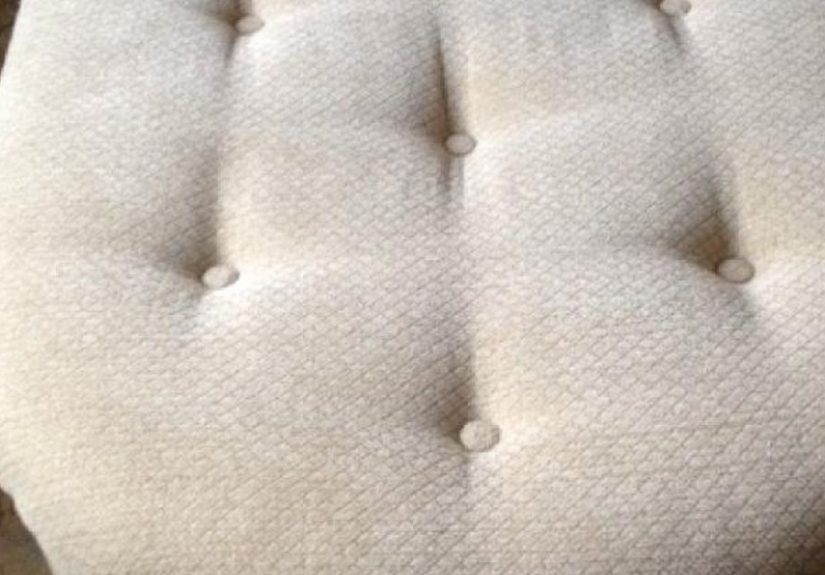
Tufting (If You Want Extra Drama)
Tufting can make your ottoman look high-end fast. It’s not required, but it’s a fun upgrade:
mark button locations, drill small holes through the plywood, and pull upholstery thread through with buttons or covered buttons.
Just remember: tufting adds time, but also adds “wow.”
Cost and Time: A Realistic Example
One reason “trash to ottoman” is so satisfying is the value math. Here’s a common budget scenario:
- Papasan base: Free to $30 (curb, thrift, marketplace)
- Plywood circle: $15–$40
- Foam: $25–$90 (depends on thickness/quality/size)
- Batting: $10–$25
- Fabric: $20–$120 (depends on yardage and whether it’s performance fabric)
- Staples/adhesive/hardware: $10–$35
Time: 2–6 hours for the basic version (more if painting, tufting, or adding hinges/storage).
Most of the “time” is really “me staring at fabric and deciding which side is the good side.”
Common Mistakes (and How to Avoid Them)
- Too-thin plywood: If the top flexes, you’ll feel it. Go thicker or reinforce with a second layer.
- Uneven stapling tension: Staple centers first, then alternate sides. Your fabric will behave.
- Skipping batting: Batting is the difference between “soft, rounded edges” and “hello, sharp plywood outline.”
- Ignoring base condition: Tighten, reinforce, and protect the material (especially rattan/wicker).
- Not planning the height: A low ottoman can look cool, but make sure it plays nicely with your sofa seat height.
Extra : What the “Trash to Ottoman” Experience Usually Feels Like (In Real Life)
The first “experience” of turning a papasan chair into an ottoman usually begins with optimism and a slightly delusional belief that
everything you need is already in your house. (It isn’t. You will, at minimum, need more staples. You always need more staples.)
But that early stagedragging the papasan base into the light, wiping off the dust, and realizing it’s actually pretty sturdyfeels like
discovering a hidden superpower: you can see furniture potential where other people see “please take this away.”
Next comes the “decision spiral,” which is a highly technical term for staring at fabric swatches like you’re choosing a life partner.
The funny part is that round ottomans are surprisingly forgiving. Even a plain canvas looks intentional on a big, cushy circle,
and textured fabrics look extra fancy because the shape already reads as sculptural. Many DIYers report the same moment of joy:
the instant the top gets wrapped and stapled, and suddenly it’s not “a plywood disc with foam,” it’s an ottoman.
Furniture magic is real, apparently, and it smells faintly of spray adhesive.
The learning curve usually shows up at the edges. Pulling fabric tight is easy in theory and comedic in practiceespecially if you’re working alone
and your fabric keeps drifting off-center like it’s trying to escape. The trick is to treat stapling like a calm, symmetrical dance:
center staples first, then opposite side, then rotate. People who follow that rhythm tend to get smooth tops quickly; people who don’t
tend to invent new words. The good news is that staple removers exist, and they are the unsung heroes of upholstery projects.
Removing three “oops” staples can save you from a lifetime of staring at one tiny wrinkle.
Another common experience: realizing that batting is not optional if you want the piece to look polished. The batting step can feel like
“extra,” but it’s the thing that softens transitions and makes the edge look rounded instead of lumpy. DIYers often say the ottoman
looked “fine” without battinguntil they added batting, and then it looked “store-bought.” That’s the difference between a weekend craft
and a piece you’d proudly center in your living room.
Finally, there’s the moment you set the finished ottoman down, step back, and wonder why you ever paid retail for furniture.
The best part isn’t just saving moneyit’s the way the ottoman becomes a story object. Guests ask about it. Pets claim it.
Someone inevitably puts their feet up and says, “This is comfy,” which is basically a standing ovation in DIY language.
And you get the long-term satisfaction of knowing that something headed for the landfill is now the most-used “seat” in the room.
Not bad for a project that started as a papasan chair base and a little stubborn creativity.
Conclusion
A papasan chair base might not look like an ottoman at first glance, but that’s the whole point of upcycling: you’re not buying new furniture,
you’re re-imagining what you already have (or what someone else was ready to toss). With a solid plywood top, quality foam,
batting for a smooth finish, and a clean staple-and-wrap upholstery job, you can create a large, stylish ottoman that’s sturdy, comfortable,
and uniquely yours.
So the next time you spot a lonely papasan base on the curb, don’t think “trash.” Think “future footrest.” Then think, “Do I have enough staples?”
(The answer is still no, but at least now you know.)