Table of Contents >> Show >> Hide
- What Is Modern Primitive Furniture?
- Why Modern Primitive Furniture Feels So Right Now
- Key Elements of the Modern Primitive Look
- Modern Primitive Furniture, 7 Favorites
- How to Decorate With Modern Primitive Furniture
- Where Modern Primitive Furniture Works Best
- What to Look for Before Buying
- Common Mistakes to Avoid
- Real-Life Experience: Living With Modern Primitive Furniture
- Conclusion
Modern primitive furniture is having one of those design moments that feels both brand-new and ancient enough to have witnessed someone invent bread. It is raw but refined, sculptural but useful, rustic but not “I live inside a decorative butter churn.” The look blends simple silhouettes, handmade character, natural materials, and a touch of intentional roughness with the clean lines of contemporary interiors.
At its best, modern primitive design does not try to make a room look old. Instead, it gives a modern room a sense of age, weight, warmth, and human touch. Think carved wood chairs, chunky benches, hand-finished stools, slab tables, leather seats, stone accents, and joinery that looks honest rather than hidden. It is the opposite of furniture that appears to have been assembled by a nervous robot in a windowless warehouse.
The trend connects with several larger interior design movements: organic modern style, slow decorating, biophilic design, artisan-made furniture, modern rustic interiors, and the renewed appetite for texture after years of ultra-smooth minimalism. In other words, people still want calm rooms, but they no longer want rooms that feel like a waiting area for a very expensive dentist.
What Is Modern Primitive Furniture?
Modern primitive furniture combines primitive-inspired forms with contemporary proportion, comfort, and styling. The word “primitive” here does not mean crude or unsophisticated. In design, it points to simple construction, elemental shapes, visible materials, and objects that feel close to the hand of the maker. A primitive-inspired chair might have a broad wooden back, pegged joinery, or a seat that feels carved rather than manufactured. A modern primitive bench might look like it belongs in a centuries-old farmhouse, yet sit beautifully beside a linen sectional and a plaster wall.
The style often borrows from early American, rural European, Japanese, Scandinavian, and folk furniture traditions. It favors materials such as oak, walnut, maple, pine, ash, leather, cane, rush, wool, linen, clay, stone, and iron. But modern primitive furniture is not a history lesson with cushions. Contemporary designers reinterpret these references with cleaner profiles, better ergonomics, and a more edited visual language.
Why Modern Primitive Furniture Feels So Right Now
The appeal is easy to understand. Many homes today are filled with sleek appliances, flat screens, perfect rectangles, and surfaces that wipe clean with suspicious ease. Modern primitive furniture brings back irregularity. A stool may show grain variation. A bench may have a hand-shaped edge. A chair may look slightly ceremonial, as if it expects you to sit down and confess your design sins.
There is also a sustainability angle. While not every primitive-style piece is automatically eco-friendly, the best examples encourage buying fewer, better objects. Solid wood, repairable construction, and timeless silhouettes make more sense than disposable furniture that starts wobbling the moment someone looks at it with confidence. This trend rewards patina, not perfection. Scratches become character. Dents become evidence of actual life. The furniture ages with you, which is charming until it ages better than you do.
Key Elements of the Modern Primitive Look
1. Honest Materials
Modern primitive furniture celebrates what things are made of. Wood looks like wood. Leather looks like leather. Stone looks like stone. You rarely see glossy veneers pretending to be something grander. The finish may be oiled, waxed, charred, limed, or lightly stained, but the material remains the main event.
2. Sculptural Simplicity
The forms are often basic but memorable: a three-legged chair, a plank bench, a cylinder-backed armchair, a blocky side table, or a stool with a thick round seat. These pieces do not need decorative gymnastics. Their power comes from proportion, silhouette, and texture.
3. Handmade Character
Visible joinery, small asymmetries, carved surfaces, pegged legs, and hand-finished edges all contribute to the feeling that a personnot just a production linehad a meaningful conversation with the object. That human quality is one reason the style feels warm even in very minimal interiors.
4. Neutral, Earthy Color
The palette tends to stay grounded: oak, walnut, blackened wood, chalk white, clay, charcoal, oatmeal, tobacco leather, rust, stone gray, and deep brown. These tones work beautifully with plaster walls, limewash paint, wool rugs, linen drapery, and handmade ceramics.
Modern Primitive Furniture, 7 Favorites
The following seven favorites capture the spirit of the trend. Some are revived classics, some are contemporary interpretations, and all of them show how primitive-inspired design can feel fresh in a modern home.
1. The Marolles Chair
The Marolles Chair is a wonderful example of how a humble rural design can become a modern icon. Originally connected to midcentury French craft traditions, the chair has a simple wooden frame, a grounded silhouette, and the kind of quiet confidence that does not need a swivel base, cup holder, or Bluetooth speaker to prove itself.
Its appeal lies in the combination of utility and soul. The chair feels architectural without being stiff, rustic without being kitschy, and old-world without becoming theatrical. In a dining room, it adds instant depth. In an entryway, it looks like it has been waiting patiently for someone with excellent boots. Pair it with a modern table, a woven pendant, and a pale wall finish for a room that feels collected rather than decorated overnight.
2. Counter-Space Oak Stools
Oak stools are the little black dress of modern primitive furniture, except they are wooden, chunkier, and less likely to complain about being placed near a kitchen island. A well-made oak stool can serve as seating, a plant stand, a bedside table, or the place where mail goes to retire mysteriously.
Modern primitive stools work because they are compact but full of personality. Traditional joinery, sturdy legs, and visible grain make them feel substantial even when the footprint is small. Use a pair at the end of a bed, tuck one beside a bathtub, or place one near a reading chair with a small stack of books. The goal is not to make the room look rustic; it is to give the room a tactile pause.
3. Counter-Space Oak Bench
A simple oak bench may be one of the most versatile pieces in the modern primitive universe. It can live in an entry, dining room, hallway, bedroom, mudroom, or under a window. It can hold people, baskets, folded blankets, or one very judgmental cat.
The best primitive-inspired benches have strong proportions and minimal fuss. A thick seat, honest legs, and careful joinery are enough. In modern interiors, an oak bench softens sharper architectural lines and adds a sense of permanence. Place one under abstract art for contrast, or pair it with peg rails and woven baskets for a more utilitarian look. The bench says, “Come in, take off your shoes, and please do not leave them in the exact middle of the floor.”
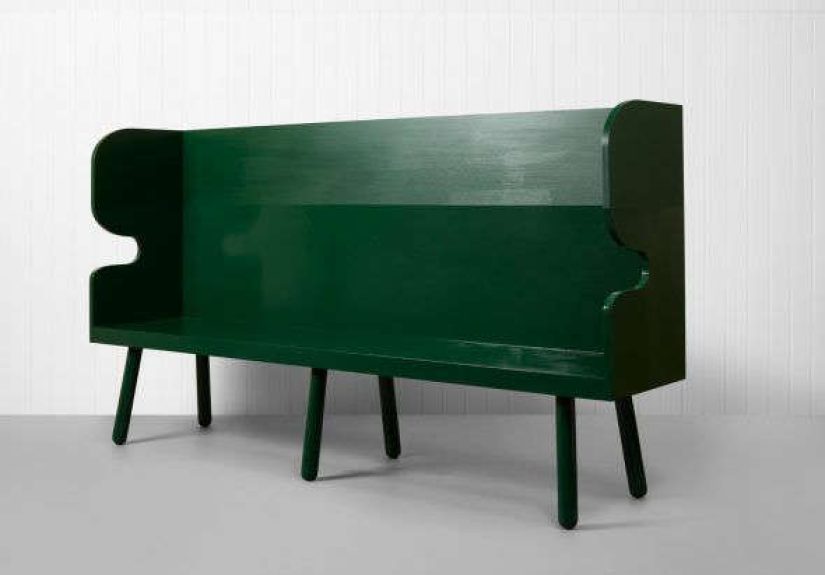
4. Sue Skeen’s Plank Settle
The settle is one of the most charming old furniture forms to return to modern interiors. Traditionally, a settle is a high-backed wooden bench often found in pubs, churches, and farmhouse rooms. In a contemporary setting, the form becomes unexpectedly dramatic. It creates a small architectural moment, almost like a room within a room.
Sue Skeen’s Plank Settle captures the beauty of this idea. It has presence, structure, and a slightly ceremonial quality, but it still functions as seating. In an open-plan home, a settle can help define space without building a wall. In a dining area, it can replace standard chairs on one side of the table. In an entry, it turns the daily act of putting on shoes into something that feels suspiciously elegant.
5. Waka Waka Wood Cylinder Back Accent Armchair
Modern primitive furniture does not always mean European farmhouse references. Waka Waka’s wood armchair designs show how Japanese architectural inspiration, playful geometry, and contemporary craft can meet in one memorable object. A cylinder-back wooden chair feels almost like a tiny piece of sculpture that happens to let you sit on it.
This kind of chair is perfect for people who want furniture with personality but not chaos. It has quirky proportions, yet the natural material keeps it grounded. Place it in a corner with a floor lamp, next to a low table, or across from a soft sofa. The contrast between a blocky wood chair and a plush upholstered piece can make an entire room feel more thoughtful.
6. BDDW Leaf Side Table
Side tables are often treated like accessories, but in modern primitive design, a side table can be the quiet hero of the room. BDDW’s Leaf Side Table brings together a stocky, architectural shape and beautiful wood options. It feels organic without looking like someone simply dragged a stump indoors and called it a design concept.
A sculptural side table works especially well beside a clean-lined sofa, a low lounge chair, or a bed with simple linen bedding. It adds a handcrafted note without overwhelming the space. The leaf-like reference gives the piece softness, while the solid form gives it weight. This balance is the secret sauce of the trend: nature-inspired, but edited; rugged, but sophisticated.
7. Neri & Hu Commune Bench
The Commune Bench by Neri & Hu represents the more refined side of modern primitive furniture. It draws on the idea of communal living and shared space, but its execution is polished enough for contemporary interiors. The bench has a social quality: it invites people to sit together, pause, talk, or at least pretend not to check their phones for four minutes.
This piece works beautifully in dining rooms, galleries, wide hallways, and living spaces where furniture is expected to do more than simply fill a wall. A bench like this can make a home feel more intentional. It suggests gathering, not just decorating. That is an important distinction, because modern primitive style is ultimately about connection: to materials, to craft, to history, and to daily rituals.
How to Decorate With Modern Primitive Furniture
Start With One Strong Piece
You do not need to turn your house into a very stylish archaeological site. Start with one statement piece: a carved chair, a plank bench, a chunky stool, or a wood side table. Let it create tension against smoother modern elements. A primitive-inspired chair beside a sleek sofa often looks more interesting than a room where everything comes from the same collection.
Mix Rough and Refined Textures
The look works best when raw materials are balanced by softness. Pair wood with linen, stone with wool, leather with plaster, and iron with warm lighting. If every surface is rough, the room can start to feel like a medieval fitness center. If every surface is smooth, the primitive piece may look stranded. Balance is the whole game.
Use Negative Space
Modern primitive furniture needs breathing room. These pieces often have strong silhouettes, so crowding them with too many accessories weakens the effect. Let a bench sit under one large artwork. Let a sculptural chair stand near a window. Let a side table hold one lamp or one ceramic bowl. This is not the moment for seventeen tiny decorative objects having a group meeting.
Keep the Palette Natural
Warm neutrals, muted earth tones, and soft contrast help the furniture shine. Try creamy walls, tobacco leather, blackened wood, pale oak, mushroom gray, clay, olive, and rust. If you love color, add it through art, textiles, or a single painted accent. Modern primitive design can handle color, but it prefers color that looks like it has spent time outdoors.
Where Modern Primitive Furniture Works Best
This style is surprisingly flexible. In a city apartment, modern primitive furniture adds warmth and authenticity. In a farmhouse, it keeps rustic elements from feeling overly themed. In a coastal home, it creates contrast against white walls and breezy fabrics. In a minimalist space, it adds the soul that minimalism sometimes misplaces in a drawer labeled “later.”
The trend is especially effective in living rooms, dining rooms, entries, and bedrooms. A primitive-style bench at the foot of a bed can make a bedroom feel layered. A carved chair in an entry creates a welcoming first impression. A chunky side table in a living room makes the space feel less showroom-perfect and more human. Even a single wooden stool in a bathroom can warm up tile, stone, and polished fixtures.
What to Look for Before Buying
Check Construction
Look for solid wood, stable joinery, and thoughtful finishing. Primitive-inspired should not mean wobbly. A piece can look rustic and still be beautifully engineered. Sit on chairs and benches when possible, check for movement, and make sure the finish suits your lifestyle.
Consider Scale
Modern primitive furniture often has visual weight. A chunky bench or thick table may look amazing online but overpower a small room. Measure carefully and leave enough space around the piece. The goal is presence, not furniture that appears to be slowly annexing the living room.
Ask About Materials
Solid oak, walnut, maple, ash, and pine all age differently. Reclaimed wood may have knots, cracks, nail marks, and color variation. These are often part of the beauty, but you should understand what you are buying. For leather seats, ask about patina, maintenance, and cleaning. For stone pieces, check porosity and sealing requirements.
Buy With Longevity in Mind
The best modern primitive pieces should feel relevant for years. Avoid anything that looks artificially distressed in a gimmicky way. Real texture beats fake aging every time. A good rule: if the piece would look beautiful in a modern loft, a country house, and a quiet cabin, it probably has staying power.
Common Mistakes to Avoid
The first mistake is going too theme-heavy. Modern primitive design is not about recreating a historic cabin down to the last lantern. Mix periods and styles so the room feels collected. A primitive bench can sit under contemporary art. A carved stool can live beside a modern tub. A rustic chair can pair with a steel-framed table.
The second mistake is confusing roughness with quality. A poorly made table is not charming simply because it has knots. Craft matters. Proportion matters. Comfort matters. If a chair looks gorgeous but feels like a punishment invented by a strict ancestor, it may not be the one.
The third mistake is forgetting light. Modern primitive furniture can become visually heavy in dark rooms. Use warm lamps, pale walls, mirrors, and natural textiles to keep the space from feeling gloomy. A little shadow is romantic. Too much shadow makes guests wonder whether they have wandered into a stylish root cellar.
Real-Life Experience: Living With Modern Primitive Furniture
Living with modern primitive furniture is different from simply admiring it in a photo. In images, the style looks calm, sculptural, and effortlessly tasteful. In real life, it also becomes practical in ways that are easy to appreciate. A small wooden stool near the sofa quickly becomes the most useful object in the room. It holds coffee, books, a laptop, a candle, a snack plate, or the remote control that everyone insists they did not lose. Unlike a delicate glass table, it does not panic when life happens nearby.
One of the best experiences with this style is how it changes the mood of a room without requiring a full renovation. For example, imagine a plain white living room with a neutral sofa, a basic rug, and a standard coffee table. Add a carved wood side table, a plank bench under the window, and a handmade ceramic lamp, and suddenly the room feels warmer and more intentional. The architecture has not changed. The square footage has not changed. But the emotional temperature rises. The space feels less like a rental listing and more like a place where someone makes soup on purpose.
Modern primitive furniture also teaches patience. Many of these pieces look better when they are not overstyled. At first, it can be tempting to decorate every surface, especially if you are used to filling empty corners. But the beauty of a primitive-inspired piece often comes from letting it stand on its own. A bench may only need one folded wool throw. A stool may only need a small bowl. A chair may need nothing at all except a good spot in the room and the confidence to be slightly odd.
There is also a tactile pleasure that does not show up fully in online shopping photos. Running your hand along a waxed oak bench, sitting in a chair with a shaped wooden back, or seeing the grain shift in daylight gives the furniture a presence that flat-pack pieces rarely deliver. These objects invite touch. They remind you that furniture is not just visual content for a room; it is part of everyday movement. You sit, lean, place, lift, slide, and return to it again and again.
The style is especially rewarding for households that want beauty without fragility. A primitive-inspired bench in an entry can handle shoes, bags, children, guests, and seasonal chaos. A sturdy stool can move from kitchen to bedroom to patio. A solid wood table can take on patina rather than looking ruined after one enthusiastic dinner. That does not mean the pieces are indestructible, but they often age gracefully. A small mark becomes part of the story instead of a design emergency requiring three cleaning products and a deep breath.
Another real-life benefit is flexibility. Modern primitive furniture plays well with many styles because it is based on material and shape rather than a narrow decorative theme. It can warm up a modern apartment, calm down a colorful room, add edge to a traditional space, or bring structure to a relaxed organic interior. If your taste changes, a good wood bench or sculptural stool can move with you. It may outlast your paint colors, your throw pillows, and possibly your commitment to keeping houseplants alive.
The only warning is that modern primitive furniture can become addictive. Once you bring in one honest, handmade-looking piece, overly shiny or flimsy furniture may start to look a little guilty. You may find yourself inspecting joinery at restaurants, admiring old stools at flea markets, and saying things like “great patina” with alarming seriousness. But as design problems go, falling in love with durable, soulful furniture is not a bad one to have.
Conclusion
Modern primitive furniture is more than a passing visual trend. It reflects a larger shift toward homes that feel grounded, tactile, personal, and connected to craft. The seven favorites highlighted here show the range of the style, from revived rural chairs and sturdy oak stools to sculptural side tables and refined communal benches. Each piece brings something that mass-produced furniture often lacks: presence.
The key is to use modern primitive furniture thoughtfully. Choose one or two strong pieces, balance them with soft textiles and clean lines, and give them space to breathe. Done well, the look feels warm, current, and quietly dramatic. It is not about pretending to live in the past. It is about bringing the best parts of the pastcraft, simplicity, material honesty, and durabilityinto rooms designed for modern life.
Note: This original article synthesizes current and established design information from reputable U.S. design publications, furniture retailers, artisan furniture makers, and interior trend reporting, including coverage of organic modern style, rustic-modern interiors, sculptural furniture, handcrafted wood design, and the modern primitive furniture movement.