Table of Contents >> Show >> Hide
- What Does “Blended Scotch Whisky” Actually Mean?
- A Quick History of Johnnie Walker
- Inside the Blend: How Johnnie Walker Is Made
- The Johnnie Walker Label Lineup (and What They Taste Like)
- How to Enjoy Johnnie Walker Blended Scotch Whisky
- Is Blended Scotch “Worse” Than Single Malt?
- Choosing the Right Johnnie Walker for You
- Experiences and Stories Around Johnnie Walker Blended Scotch Whisky
If you’ve ever stood in a liquor store staring at a wall of colored labels and wondering why some bottles of Johnnie Walker cost as much as a weekend getaway, you’re in the right place. Johnnie Walker isn’t just “that whisky with the fancy walking guy on the label” – it’s one of the world’s most famous blended Scotch whiskies and a crash course in what blending can do when it’s done really, really well.
In this guide, we’ll break down what “blended Scotch whisky” actually means, how Johnnie Walker fits into the whisky universe, how it’s made, what the different label colors stand for, and how to enjoy it without needing a sommelier-level vocabulary. We’ll finish with some real-world style experiences and ideas so you can turn that bottle on your shelf into something more than just decoration.
What Does “Blended Scotch Whisky” Actually Mean?
Let’s start with the words on the label. “Johnnie Walker Blended Scotch Whisky” isn’t just marketing talk – each word is doing actual legal heavy lifting:
- Scotch means the whisky was distilled and matured in Scotland, in oak casks, for at least three years.
- Whisky (with no “e” in the Scottish spelling) is a distilled spirit made from grains like barley, wheat, or maize, fermented and then aged.
- Blended means it’s a mix of different component whiskies, not just one single malt from one distillery.
Under Scotch whisky regulations, a blended Scotch whisky is a blend of one or more single malt Scotch whiskies with one or more single grain Scotch whiskies. In simpler terms, you’re getting a carefully balanced combination of flavorful malt whiskies and lighter, smoother grain whiskies in each bottle.
Most of the Scotch the world drinks is blended. Estimates suggest that nearly nine out of ten bottles of Scotch sold globally are blended whiskies, not single malts. That means blending isn’t the “cheap corner” of the industry – it is the industry’s backbone. The master blender’s job is to juggle dozens of component whiskies and make every bottle taste like “house style,” whether it’s a Tuesday in Tokyo or a Saturday in New York.
A Quick History of Johnnie Walker
Johnnie Walker’s story starts in 1820 in Kilmarnock, Scotland, when John Walker opened a grocery shop. Like many grocers of his day, he sold spirits – but he went a step further and began blending whiskies to create a more consistent and enjoyable flavor for his customers.
His son and grandson later expanded that small-town business into something much bigger, building up the whisky side of the operation and pushing the brand beyond Scotland. By the late 19th and early 20th centuries, Johnnie Walker was already expanding worldwide, making use of Britain’s global trading routes and positioning itself as a reliable, recognizable Scotch whisky brand.
The brand’s famous Striding Man logo and color-coded labels emerged in the early 1900s. The idea was simple and genius: people might not remember “Old Highland Whisky Special Reserve,” but they’ll absolutely remember “Red Label” or “Black Label.” Over time, Johnnie Walker grew into one of the world’s best-selling Scotch whiskies, with bottles showing up in everything from bar carts to movie scenes.
Today, Johnnie Walker is owned by Diageo, one of the largest spirits companies in the world, and its blends are sold in nearly every country where alcohol is legal. It’s not just a brand; it’s basically an ambassador for Scotch itself.
Inside the Blend: How Johnnie Walker Is Made
Johnnie Walker doesn’t come from a single distillery. Instead, it pulls from a wide network of malt and grain distilleries across Scotland. Think of it as a symphony orchestra: each distillery contributes a different “instrument” – smoky, fruity, woody, spicy – and the blender arranges them into something harmonious.
The Components: Malt and Grain Whisky
Single malt whisky is made from malted barley at a single distillery, usually in copper pot stills. It often brings big flavors: smoke, fruit, malt sweetness, and complex aromas.
Grain whisky is made from a mix of cereals (like wheat or maize plus some malted barley) and distilled in continuous column stills. It’s lighter and more neutral in character, which makes it perfect as a “canvas” for blended Scotch. Grain whisky is typically aged at least three years in oak casks, often longer for premium blends.
In Johnnie Walker’s blends, malt whiskies bring character and distinct regional flavors (think smoky Islay, fruity Speyside, or malty Highlands), while grain whiskies provide smoothness, structure, and drinkability.
From Grain to Glass: The Production Steps
While each distillery may tweak details, the core process looks like this:
- Malting & mashing: Barley is malted, dried (sometimes over peat smoke), ground, and mixed with hot water to extract sugars.
- Fermentation: Yeast ferments the sugary liquid (wort) into a kind of “beer” with alcohol and flavor compounds.
- Distillation: For malt whisky, the wash is distilled in pot stills; for grain whisky, it’s usually continuous column stills. This concentrates the alcohol and refines the flavor.
- Maturation: The new spirit (new make) is filled into oak casks and aged in Scotland for at least three years, often much longer for the premium blends.
- Blending: Master blenders taste whiskies from dozens of distilleries and hundreds of casks, combining them to achieve the target flavor. This is where Johnnie Walker’s signature character is created.
For something like Johnnie Walker Black Label, that could mean blending upward of 30–40 different malt and grain whiskies, all aged for at least 12 years. The result is a whisky that tastes recognizably “Black Label,” year after year, despite natural variation in individual casks.
The Johnnie Walker Label Lineup (and What They Taste Like)
One of the easiest ways to understand Johnnie Walker is by its colors. Each label has a typical flavor profile and purpose, from cocktail-friendly to special-occasion luxury.
Red Label: The High-Energy Mixer
Johnnie Walker Red Label is the brand’s entry-level blend, with no age statement. It’s designed for versatility and mixing, not for long, contemplative sipping sessions.
Flavor-wise, you can expect bright grain notes, some spice, a bit of smoke, and enough punch to stand up in a highball or whisky-and-ginger ale. It’s often used at parties where you need something affordable, recognizable, and reliable.
Black Label: The 12-Year-Old Icon
Johnnie Walker Black Label is where many whisky fans really start paying attention. It’s a 12-year-old blended Scotch, meaning every component has been aged at least 12 years in oak casks.
Black Label is usually described as rich, smooth, and layered. Common tasting notes include:
- Nose: gentle smoke, vanilla, dried fruit, winter spices, and a little citrus.
- Palate: caramel, toffee, sweet apples or stone fruits, subtle smoke, and some oak spice.
- Finish: lingering spice, faint smoke, a touch of dried fruit or peel.
Black Label is often recommended as a “house whisky” because it’s approachable enough for beginners yet interesting enough for more experienced drinkers. It works neat, with a splash of water, or in spirit-forward cocktails.
Double Black: Turn Up the Smoke
Johnnie Walker Double Black is basically Black Label’s moodier sibling. It takes the Black Label style and adds more peaty, smoky malts and heavily charred casks to dial up the intensity.
If you like the idea of Islay-style smokiness but aren’t ready to jump straight into a peat bomb, Double Black is a nice bridge. Expect more campfire smoke, char, and dark spice, with sweetness still in the mix to keep things balanced.
Gold, 18-Year-Old, and Blue: The Premium Ladder
Once you climb past Black and Double Black, you enter the “treat yourself” zone:
- Gold Label Reserve: A smooth, honeyed, dessert-friendly blend often described as creamy, with notes of vanilla, fudge, and gentle smoke. It’s great for celebrations or pairing with desserts.
- Johnnie Walker Aged 18 Years: A blend where every component has at least 18 years of maturation. Expect more depth: dried fruits, nuts, complex oak, and refined spice. This one feels more “quiet luxury” than flashy.
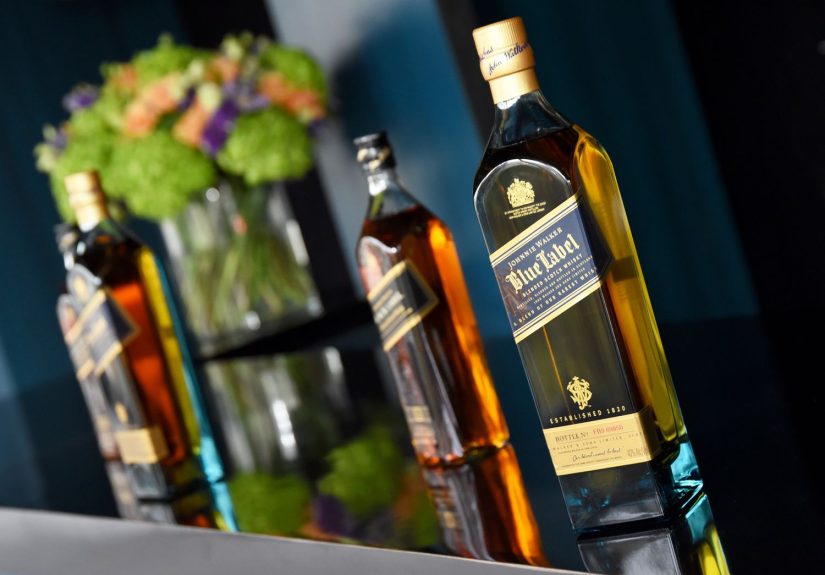
- Blue Label: The flagship luxury blend, using some very old and rare casks. It has no age statement but is all about silky texture, layered complexity, and a long, elegant finish. It’s the one you see in gift boxes, often opened for milestone birthdays or big promotions.
All of these are still blended Scotch whiskies – they simply use older, rarer, or more characterful components, plus extremely tight quality control.
How to Enjoy Johnnie Walker Blended Scotch Whisky
There’s no official “correct” way to drink Johnnie Walker – anyone who insists there is probably also corrects people’s grammar at parties. That said, some serving styles let the whisky shine differently.
Neat or With a Splash of Water
For Black Label, 18, or Blue, many people prefer it neat in a tulip-shaped glass, which helps funnel the aromas. Adding a few drops of water can open up additional flavors, softening the alcohol bite and revealing more fruit, smoke, or spice.
On the Rocks
Ice will chill and dilute the whisky over time. This can be a good thing if you find neat whisky too intense. Just know that as the drink gets colder, some subtle aromas may hide, while the texture gets smoother and more refreshing.
Highballs and Cocktails
Red Label and Black Label are both great in highballs:
- Scotch & Soda: One part whisky to three parts chilled soda water over ice, with a lemon twist.
- Scotch & Ginger: Whisky plus ginger ale or ginger beer, maybe with a lime wedge.
Black Label also works well in spirit-forward classics like an Old Fashioned or a Rob Roy, bringing smoke and depth without dominating the glass.
Food Pairing Ideas
Because it’s blended, Johnnie Walker can be surprisingly food-friendly:
- Red Label: fried chicken, burgers, spicy wings, or bar snacks.
- Black Label: smoked salmon, grilled steak, aged cheddar, dark chocolate.
- Gold or Blue: rich desserts, artisanal cheeses, or simply enjoyed solo as a digestif.
Is Blended Scotch “Worse” Than Single Malt?
Short answer: no. Longer answer: it depends what you like.
There’s a persistent myth that single malt whisky is always superior and blended whisky is just “cheap filler.” Reality is more nuanced. Blended Scotch exists at every level – from budget-friendly mixing whisky to ultra-premium bottles that cost more than your monthly rent.
The key difference is philosophy:
- Single malt: showcases the character of one distillery and one production style.
- Blended Scotch: showcases the blender’s artistry in combining multiple distilleries and styles into a consistent, balanced flavor.
Given that most Scotch sold globally is blended, it’s not an “inferior” category – it’s simply a different approach. If you enjoy balance, consistency, and smoothness, you may find yourself reaching for a blend more often than a single malt. And Johnnie Walker has built its entire reputation on exactly that.
Choosing the Right Johnnie Walker for You
Here’s a quick guide to picking a bottle that matches your mood, budget, and taste.
- On a budget & want to mix: Try Red Label in highballs or simple cocktails.
- Want an everyday sipping whisky: Black Label is a solid go-to, neat or on the rocks.
- Like smoke and intensity: Double Black gives you more peat and charred oak without going full bonfire.
- Celebrating or gifting: Gold, 18-Year-Old, or Blue make impressive presents and feel special to open.
If you’re just starting out, consider doing a mini tasting with small pours of Red, Black, and maybe Double Black. Take notes on what you like: sweetness, smoke, spice, or fruit. That will help you navigate the rest of the whisky world too, not just Johnnie Walker.
Experiences and Stories Around Johnnie Walker Blended Scotch Whisky
Facts and flavor notes are helpful, but whisky really comes alive in the experiences around it. While everyone’s story is different, there are a few classic “Johnnie Walker moments” that many people recognize.
The First “Real Whisky” Moment
For a lot of people, their first serious encounter with Scotch isn’t a super-rare single malt in a crystal glass – it’s a pour of Black Label at a friend’s place or at a bar where someone says, “Here, try this, it’s better than the usual stuff.”
The experience usually goes something like this: first sip – whoa, that’s stronger than beer. Second sip – okay, there’s something smoky, sweet, and kind of cozy about this. Third sip – “Why have I not been drinking this all along?” It’s not about tasting every note perfectly; it’s about realizing there’s more to whisky than “burn.”
Hosting Your First Whisky Night
Because Johnnie Walker has a clear lineup of labels, it’s perfect for a casual tasting night at home. You don’t need fancy gear or an encyclopedic whisky vocabulary. A simple setup might look like:
- Red Label for highballs as people arrive.
- Black Label and Double Black side by side for neat tasting.
- A small pour of Gold, 18, or Blue as the “grand finale.”
You can print or jot down some basic flavor notes on cards (smoke level, sweetness, fruitiness) and let everyone argue over whether they taste “honeyed stone fruit” or “just whisky.” Spoiler: both answers are allowed.
By the end of the night, guests usually have discovered at least one label they genuinely like. Some will gravitate toward smoky Double Black; others will fall for the smooth, rounded character of Black or Gold.
Travel and Duty-Free Adventures
Walk through any international airport and you’ll see elaborate Johnnie Walker displays in duty-free shops. Limited editions, gift packs, fancy boxes – it’s like a candy store for adults who have just survived airport security.
Many travelers pick up a bottle of Blue Label or a travel-exclusive expression as a “souvenir with a story.” It’s easy to bring home, it doesn’t need dusting like a porcelain figurine, and you can open it later as a liquid time capsule of that trip. “Remember that time we almost missed our connection in Dubai? At least we got this bottle out of it.”
Celebrations, Milestones, and Quiet Moments
Johnnie Walker also shows up a lot at life milestones. Promotions, new jobs, weddings, anniversaries – a nicely boxed bottle of Blue or 18-Year-Old is the kind of gift that says, “I didn’t know what size shirt you wear, so I brought something everyone can enjoy.”
But it’s not just about big events. Plenty of people keep a bottle of Black Label on hand for small, quiet victories: finishing a stressful project, successfully assembling flat-pack furniture, or finally getting the kids to bed on time. A single measured pour can become a mini ritual – a way of slowing down and marking the moment.
Building a Personal Whisky Journey
One of the best parts about Johnnie Walker is that it can serve as a roadmap if you’re building your palate. You might start with highballs using Red Label, then graduate to sipping Black Label neat, then explore Double Black if you like smoke or step up to Gold and 18 if you enjoy richer sweetness and older oak notes.
As you do this, you’ll start to notice patterns: maybe you love gentle smoke but not heavy peat, or you like whiskies with dried fruit and vanilla, or you prefer lively, spicy blends over super-smooth ones. Those preferences will help you navigate other Scotch brands, Irish whiskies, bourbons, and beyond.
In a way, understanding “What is Johnnie Walker blended Scotch whisky?” is like learning the basic chords on a guitar. It doesn’t make you a master musician overnight, but it gives you a foundation. Once you can taste what a well-made blend offers – balance, consistency, and character – you’re better equipped to explore the rest of the whisky world with confidence (and a lot more fun).
Whether you’re raising a glass of Red in a busy bar, savoring Black after a long day, or opening a treasured Blue Label for a special occasion, Johnnie Walker’s blended Scotch whisky is less about the label color and more about the moment you create around it.