Table of Contents >> Show >> Hide
- 15 Fun Facts and Behind-the-Scenes Trivia About The Mary Tyler Moore Show
- 1. Mary Richards was almost a divorced woman
- 2. The show premiered at exactly the right cultural moment
- 3. WJM-TV became one of TV’s most beloved fake workplaces
- 4. Mary Tyler Moore helped build the company behind the show
- 5. The opening theme became a cultural anthem
- 6. The hat toss became bigger than the scene itself
- 7. Mary’s apartment was practically a character
- 8. Rhoda was the perfect best friend because she was not a sidekick
- 9. The show launched successful spin-offs
- 10. Betty White joined as Sue Ann Nivens and stole scenes with a smile
- 11. “Chuckles Bites the Dust” is considered a sitcom masterpiece
- 12. The series won 29 Emmy Awards
- 13. Women writers helped shape the show’s authenticity
- 14. The series finale became a model for saying goodbye
- 15. The show still influences modern sitcoms
- Why The Mary Tyler Moore Show Still Feels Fresh
- Viewing Experience: Watching Mary Richards Today
- Conclusion
The Mary Tyler Moore Show did not need explosions, cliffhangers, or a dragon budget to change television. It needed a newsroom, a Minneapolis apartment, a boss who hated “spunk,” a best friend with razor-sharp timing, and one woman tossing a tam into the air like she had just invented optimism. Premiering on CBS in 1970, the sitcom followed Mary Richards, a single career woman building a new life as an associate producer at the fictional WJM-TV. By the time the series ended in 1977, it had become one of the most influential American sitcoms ever made.
What made the show special was not just that it was funny, though it was absolutely funny. It was that its humor came from character, intelligence, workplace pressure, friendship, awkward dating, ambition, and the little social shifts happening in 1970s America. Mary Richards was not waiting for a husband to complete the plot. She was learning how to complete a broadcast, negotiate a paycheck, host a disastrous party, and keep her dignity while Ted Baxter turned the evening news into a circus with hair spray.
Below are 15 trivia tidbits about The Mary Tyler Moore Show that reveal why the series still feels fresh, warm, and quietly revolutionary decades later.
15 Fun Facts and Behind-the-Scenes Trivia About The Mary Tyler Moore Show
1. Mary Richards was almost a divorced woman
One of the most famous pieces of Mary Tyler Moore Show trivia is that Mary Richards was originally imagined as divorced. That may sound mild today, but in 1970 prime-time television was still nervous about making a divorced woman the warm, funny, central figure of a sitcom. Network executives also worried viewers might connect Mary Tyler Moore to Laura Petrie, her beloved character from The Dick Van Dyke Show, and mistakenly think Laura had divorced Rob Petrie. To avoid that confusion, Mary Richards became a single woman starting over after a broken engagement. Ironically, that adjustment made the character even more distinctive. Mary was not defined by a failed marriage; she was defined by possibility.
2. The show premiered at exactly the right cultural moment
The Mary Tyler Moore Show debuted on September 19, 1970, during a period when conversations about women’s independence, equal pay, workplace opportunity, and social expectations were moving into the mainstream. Mary Richards was not written as a slogan in heels. She was funny, cautious, generous, ambitious, and occasionally overwhelmed. That balance mattered. Viewers could admire her without feeling lectured. The show’s genius was making social change look like everyday life: a woman asking for respect at work, paying rent, supporting friends, and trying to keep a straight face when her colleagues were being ridiculous.
3. WJM-TV became one of TV’s most beloved fake workplaces
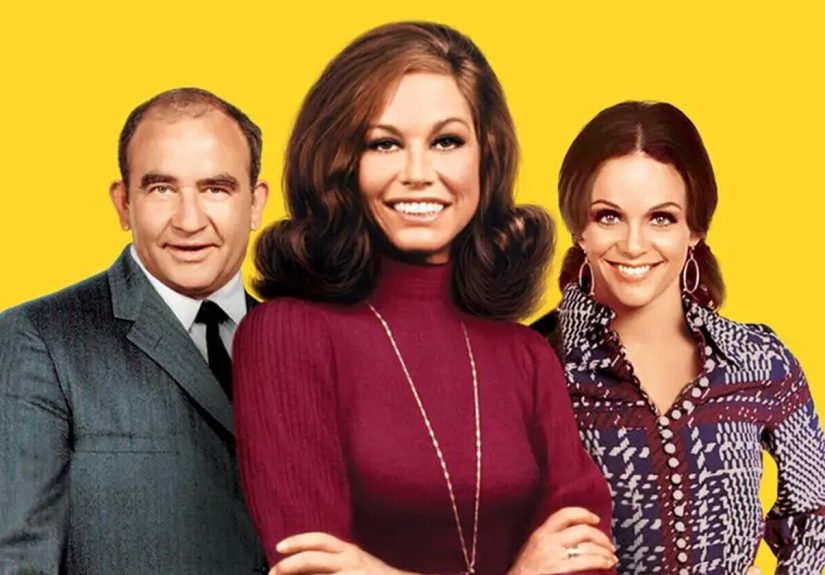
The fictional WJM-TV newsroom was small, chaotic, underfunded, and somehow cozy. Mary worked with producer Lou Grant, newswriter Murray Slaughter, anchorman Ted Baxter, and later Sue Ann Nivens, the smiling menace of the station’s cooking show. Unlike earlier sitcoms that revolved mostly around the family home, this series treated the workplace as a second family. The office was where Mary learned confidence, where Lou softened, where Murray sharpened jokes like darts, and where Ted proved that confidence and competence are distant cousins who do not always attend the same reunion.
4. Mary Tyler Moore helped build the company behind the show
The series came from MTM Enterprises, the production company associated with Mary Tyler Moore and her then-husband Grant Tinker. MTM became a major force in American television, producing not only The Mary Tyler Moore Show but also other respected series across comedy and drama. The company’s logo, featuring the kitten Mimsie, became almost as recognizable to TV fans as the show itself. It was a playful parody of the roaring MGM lion, except this mascot meowed with far less intimidation and considerably more charm.
5. The opening theme became a cultural anthem
The theme song, “Love Is All Around,” written and performed by Sonny Curtis, is one of the great TV openings. Its most famous line asks who can turn the world on with her smile, and the answer is obvious before the verse even finishes. The song captures the show’s tone: hopeful but not sugary, independent but not icy, cheerful without pretending life is easy. Like the best theme songs, it does more than introduce the program. It tells you how to feel when Mary walks through Minneapolis: maybe life is messy, but you might just make it after all.
6. The hat toss became bigger than the scene itself
Mary’s joyful hat toss in downtown Minneapolis is one of the most famous images in television history. It appears simple: a woman on a city street throws her tam into the air. Yet the moment became a visual shorthand for freedom, reinvention, and city-girl optimism. Fans still associate Minneapolis with Mary Richards because of that sequence. A bronze statue near Nicollet Mall celebrates the pose, giving visitors the irresistible urge to toss an imaginary hat of their own. If public art could wink, this statue probably would.
7. Mary’s apartment was practically a character
Mary’s first apartment, located in the fictional 119 North Weatherly, became one of TV’s most memorable single-woman homes. The exterior shots used a real Minneapolis house, while the interiors were created on a soundstage. The apartment had personality: a sunken living room, warm textures, a big “M” on the wall, and just enough 1970s design to make modern minimalists clutch their neutral throw pillows. It felt aspirational without being too polished. Mary’s apartment said, “I am independent,” but also, “Please ignore the emotional chaos currently happening near the sofa.”
8. Rhoda was the perfect best friend because she was not a sidekick
Valerie Harper’s Rhoda Morgenstern could have been written as the funny neighbor and nothing more. Instead, Rhoda became a fully developed character with insecurities, wit, energy, and a spectacular ability to puncture tension. Her friendship with Mary worked because the two women were different without being opposites in a cartoonish way. Mary was polished and cautious; Rhoda was bold and self-mocking. Together they created one of television’s great female friendships, proving that a sitcom could build emotional stakes around women supporting each other instead of competing over the same man.
9. The show launched successful spin-offs
Few sitcoms have produced spin-offs with the range of The Mary Tyler Moore Show. Rhoda followed Valerie Harper’s character into a new chapter. Phyllis gave Cloris Leachman’s sharp, socially ambitious Phyllis Lindstrom her own spotlight. Then came Lou Grant, which transformed Ed Asner’s character from sitcom boss into the lead of a serious newspaper drama. That last move was especially unusual. Lou Grant crossed genres, moving from comedy to drama while keeping the same character. Ted Baxter probably would have called that “journalistic gymnastics.”
10. Betty White joined as Sue Ann Nivens and stole scenes with a smile
Betty White’s Sue Ann Nivens, host of The Happy Homemaker, arrived later in the series and added a deliciously wicked flavor. Sue Ann appeared sweet on camera, but off camera she was sharp, flirtatious, competitive, and wonderfully inappropriate. The role gave White a chance to play against her sunny public image, and she did it with surgical comic precision. Sue Ann could make a casserole sound like a threat. Her character helped deepen the show’s workplace comedy by proving that even the station’s homemaking expert could be more dangerous than the evening news.
11. “Chuckles Bites the Dust” is considered a sitcom masterpiece
The season six episode “Chuckles Bites the Dust” is often ranked among the greatest sitcom episodes ever made. The plot centers on the bizarre death of Chuckles the Clown and the WJM staff’s struggle to respond appropriately. The episode builds toward a funeral scene in which Mary, who has scolded everyone else for joking, cannot stop laughing. The brilliance lies in its emotional accuracy. Grief and laughter are uncomfortable neighbors, but they often share a fence. The episode showed that comedy could handle death without becoming cruel or shallow.
12. The series won 29 Emmy Awards
The Mary Tyler Moore Show earned a remarkable 29 Emmy Awards during its run, including honors for acting, writing, directing, and outstanding comedy series. Its Emmy success reflected more than popularity. The industry recognized the show’s craft: clean scripts, layered performances, precise direction, and an ensemble that worked like a perfectly tuned comedy machine. The show’s final seasons were especially celebrated, and its awards record stood as a major benchmark for sitcom excellence for many years.
13. Women writers helped shape the show’s authenticity
Behind the scenes, the writing staff included important female voices, including Treva Silverman, whose work helped the series capture the details of women’s lives with honesty and wit. That mattered because the show did not treat Mary, Rhoda, Phyllis, or Sue Ann as one-note types. They had professional ambitions, romantic disappointments, vanity, pride, generosity, and contradictions. In other words, they were written like people. The show’s female perspective was not decorative; it was structural, baked into the way stories were chosen, shaped, and sharpened.
14. The series finale became a model for saying goodbye
The final episode, “The Last Show,” aired in 1977 and remains one of television’s most admired finales. Instead of relying on a gimmick, it let the characters face change together. The famous group hug, followed by the cast awkwardly shuffling toward the tissue box, is both silly and genuinely moving. That is the show in miniature: sentiment undercut by comedy, comedy deepened by affection. Many later sitcom finales owe a debt to this balance. It showed how to close a series without betraying what made audiences love it.
15. The show still influences modern sitcoms
Any sitcom centered on a single working woman, a chosen family, or a workplace full of lovable disasters owes something to The Mary Tyler Moore Show. Its fingerprints can be felt in series about ambitious women, messy offices, media workplaces, and friendships that matter as much as romance. The show proved that a female lead could be funny without being foolish, strong without being humorless, and independent without being lonely. That may sound obvious now, but television had to learn it somewhere. Mary Richards helped teach the lesson with a smile.
Why The Mary Tyler Moore Show Still Feels Fresh
The reason The Mary Tyler Moore Show remains watchable is not nostalgia alone. Nostalgia may get viewers through the door, but character keeps them on the couch. Mary is not perfect. Lou is not just gruff. Rhoda is not merely sarcastic. Ted is not only vain. Murray is not only the guy with the punchlines. Every major character has a comic rhythm and a human center.
The show also respected silence, embarrassment, and awkward pauses. Many modern comedies chase speed, stacking jokes so quickly that characters barely breathe. The Mary Tyler Moore Show allowed a look, a pause, or a tiny shift in posture to carry the laugh. Mary Tyler Moore was especially gifted at physical comedy. She could communicate panic, politeness, irritation, and moral conflict in one nervous smile. She made restraint funny, which is much harder than falling over furniture, although she could probably do that too if the script demanded it.
Its deeper legacy lies in how it expanded the idea of what sitcoms could discuss. Equal pay, divorce, loneliness, dating, career pressure, friendship, aging, and grief all appeared within a format that still delivered jokes. The show did not announce, “Tonight, we will explore a major social issue.” It simply let life into the room.
Viewing Experience: Watching Mary Richards Today
Watching The Mary Tyler Moore Show today feels a little like opening a time capsule and discovering that someone inside packed snacks, good lighting, and emotional intelligence. Yes, the clothes are gloriously 1970s. Yes, the office technology looks ancient enough to belong in a museum next to a rotary phone and a typewriter with commitment issues. But the social situations remain surprisingly recognizable. Anyone who has tried to prove themselves at work, survive a bad date, comfort a friend, or host a gathering that slowly becomes a controlled disaster will find something familiar in Mary’s world.
One of the best viewing experiences is noticing how gently the show builds trust. Early episodes introduce Mary as competent but uncertain. She knows she deserves a place in the newsroom, yet she is still learning how to claim it. That is a very modern feeling. Many viewers have had a first job, a new city, or a personal reset where they looked confident on the outside while internally asking, “Does everyone else know the rules, or are we all improvising?” Mary’s charm comes from the fact that she is absolutely improvising, but she does it with manners.
The friendship scenes may be the show’s greatest comfort food. Mary and Rhoda talking in the apartment can feel more relaxing than an expensive wellness retreat, and no one has to pretend to enjoy cucumber water. Their conversations are funny because they are specific: apartment complaints, romantic insecurity, career worries, tiny jealousies, and the kind of blunt honesty only a trusted friend can deliver. Rhoda can tease Mary mercilessly, but the affection is never in doubt.
The workplace scenes offer a different pleasure. WJM is dysfunctional, but not toxic in the modern prestige-TV sense. Nobody needs a corporate survival guide; they need a better anchor, a stronger budget, and perhaps a Ted Baxter containment strategy. Lou Grant’s relationship with Mary is especially satisfying because it grows slowly. He begins as the intimidating boss, but the series reveals his loyalty, vulnerability, and respect for Mary. Their bond is not romantic, which makes it more interesting. It is mentorship, friendship, and workplace trust wrapped in sarcasm.
For new viewers, the best approach is not to treat the show like homework because it is “important.” Treat it like a smart comedy that happens to be historically important. Start with the pilot to understand Mary’s fresh start, then watch key episodes like “Chuckles Bites the Dust” and “The Last Show.” Notice the writing economy. Notice how jokes come from who the characters are, not from random punchline machinery. Most of all, notice how Mary Richards keeps moving forward. She does not always know exactly where she is going, but she walks through the city like the future might be friendly. That is still a pretty good reason to toss a hat in the air.
Conclusion
The Mary Tyler Moore Show remains a landmark because it combined warmth, wit, cultural timing, and unforgettable characters. Its trivia is fun, but the bigger story is even better: a sitcom about one woman making a life on her own helped change what television believed audiences would embrace. Mary Richards was not a superhero. She was a working woman with nerves, ambition, friends, flaws, and one very famous hat. That was enough to turn the world on with her smile.
Note: This publication-ready article synthesizes verified background from reputable television history, entertainment, awards, biography, and cultural sources, including major U.S. references such as the Television Academy, Peabody Awards, Writers Guild of America, Britannica, AP, TIME, People, NPR-affiliated coverage, Los Angeles Times, Architectural Digest, and Minneapolis tourism/history resources. The article is fully rewritten in original language for web publication.