Table of Contents >> Show >> Hide
- Why Small-Space Landscaping Needs a Different Strategy
- 16 Small-Space Landscaping Ideas That Actually Work
- 1. Create a Clear Focal Point
- 2. Divide the Yard Into Mini Zones
- 3. Go Vertical With Trellises and Arbors
- 4. Choose Compact and Dwarf Plants
- 5. Use Containers Like Movable Architecture
- 6. Build Raised Beds With Multiple Jobs
- 7. Make Paths Work Harder
- 8. Add Privacy Without Closing Everything In
- 9. Keep the Plant Palette Cohesive
- 10. Mix Textures for Depth
- 11. Replace Some Lawn With Low-Maintenance Ground Cover
- 12. Add a Small Water Feature
- 13. Use Lighting to Stretch the Space After Dark
- 14. Choose Furniture That Folds, Stacks, or Stores
- 15. Design for Pollinators in Pockets
- 16. Borrow the View
- Small-Space Landscaping Mistakes to Avoid
- Best Plants for Small-Space Landscaping
- How to Make a Small Yard Feel Bigger
- Experience Notes: What Small Yards Teach You Over Time
- Conclusion
A small yard is not a gardening tragedy. It is a design challenge wearing cute shoes. Whether you have a narrow side yard, a balcony, a postage-stamp patio, or a front plot that looks like it was measured with a teaspoon, smart small-space landscaping can make it feel useful, beautiful, and surprisingly roomy.
The secret is not squeezing in every plant you saw on social media at 1:00 a.m. The secret is choosing features that work hard: vertical structures, compact plants, flexible seating, clear paths, layered greenery, and focal points that make the eye travel instead of bumping into the fence and giving up.
These 16 small-space landscaping ideas will help you make the most of your plot without turning it into a botanical storage closet. Think cozy, not crowded; lush, not chaotic; charming, not “I lost the patio under twelve planters.”
Why Small-Space Landscaping Needs a Different Strategy
Large landscapes can absorb mistakes. A tiny yard cannot. In a compact garden, one oversized shrub can become the neighborhood mayor, a bulky table can block traffic, and too many unrelated materials can make the space feel smaller than it actually is. That is why successful compact garden design depends on scale, repetition, function, and visual flow.
Before buying plants or pavers, ask three questions: How do I want to use the space? Where does the sun fall? What view do I want to create from inside the house? Once those answers are clear, the rest becomes much easierand much less expensive.
16 Small-Space Landscaping Ideas That Actually Work
1. Create a Clear Focal Point
Every small yard needs one “look here” moment. It might be a dwarf tree in a large container, a small fountain, a sculptural chair, a colorful planter, or a slim arbor framing the garden entrance. A focal point gives the eye somewhere to land, which makes the space feel intentional instead of random.
For a front yard, the focal point may naturally be the front door. Frame it with matching pots, low shrubs, or a curved path. In a backyard, try a compact fire bowl, a specimen plant, or a wall-mounted piece of outdoor art. Keep it simple. One star is elegant; seven stars is a talent show.
2. Divide the Yard Into Mini Zones
It sounds backward, but dividing a small landscape can make it feel larger. Instead of one exposed rectangle, create zones: a bistro corner, a planting strip, a reading nook, and a narrow path. Each area gives the brain a new “room” to discover.
You do not need walls. Use an outdoor rug, two planters, a low bench, a change in paving, or a row of ornamental grasses. The trick is to suggest separation without building barriers that block sight lines.
3. Go Vertical With Trellises and Arbors
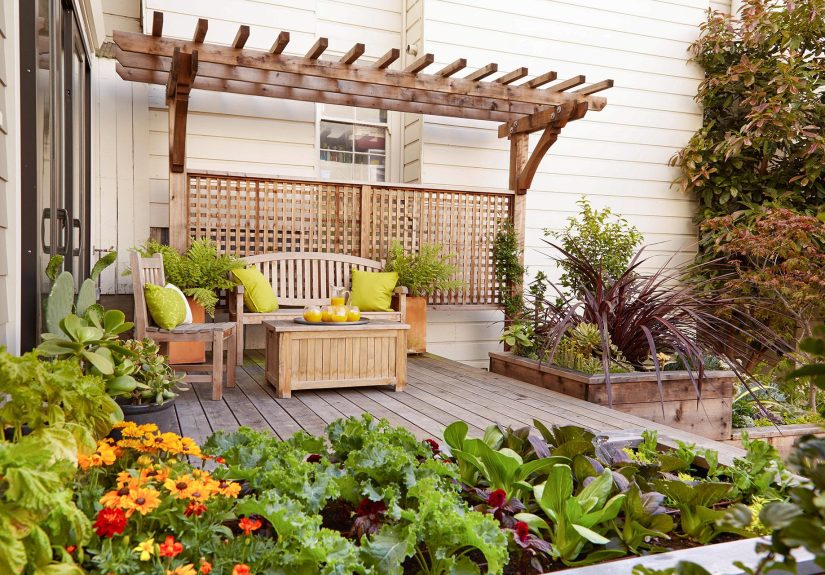
When ground space is limited, look up. Trellises, arbors, wall grids, hanging baskets, and espaliered plants let you garden in three dimensions. Climbing roses, clematis, jasmine, pole beans, cucumbers, and grape vines can all bring life upward instead of sprawling across precious square footage.
Vertical gardening is especially useful for patios, balconies, and side yards. A trellis can also provide privacy, shade, and structure. That is a lot of work from one skinny object, which is exactly the kind of overachiever a small yard needs.
4. Choose Compact and Dwarf Plants
Small-space landscaping rewards restraint. Choose plants labeled dwarf, compact, patio, columnar, or miniature. These varieties are bred or selected to stay manageable, which means less pruning and fewer awkward moments where your “cute little shrub” becomes a leafy monster blocking the window.
Good options include dwarf hydrangeas, compact boxwoods, dwarf conifers, patio roses, columnar evergreens, compact ornamental grasses, and small Japanese maples. For edible landscaping, look for patio tomatoes, dwarf blueberries, compact peppers, herbs, and strawberries.
5. Use Containers Like Movable Architecture
Containers are the superheroes of small yard landscaping. They bring color to patios, define edges, soften hardscape, and allow renters to garden without digging. A large pot can act like a focal point. A trio of containers can mark an entrance. A row of planters can create a privacy screen.
Choose containers with drainage holes and use quality potting mix rather than heavy garden soil. Large containers are usually easier to maintain than tiny ones because they hold moisture better and give roots more room. Tiny pots are adorable, but they dry out faster than gossip at a block party.
6. Build Raised Beds With Multiple Jobs
Raised beds are not just for vegetables. In a compact plot, they can define space, improve soil, add structure, and even double as seating if built with a wide edge. A narrow raised bed along a fence can hold herbs, flowers, or leafy greens without eating up the center of the yard.
For a polished look, match the raised bed material to your home or patio. Wood feels warm and casual, metal looks modern, brick feels classic, and stone adds texture. Keep beds narrow enough that you can reach the center without stepping into them.
7. Make Paths Work Harder
A path in a small yard should do more than move people from A to B. It should guide the eye, create rhythm, and make the landscape feel deeper. A slightly curved path can make a short distance feel more interesting, while stepping stones set in ground cover create charm without heavy construction.
Use gravel, pavers, brick, flagstone, or mulch depending on your style and budget. In very small areas, avoid too many competing materials. Repeating one or two surfaces keeps the space calm and cohesive.
8. Add Privacy Without Closing Everything In
Privacy matters, but a tall solid fence can make a tiny yard feel like a box. Instead, try layered privacy: a slatted screen, lattice with vines, tall grasses, narrow evergreens, bamboo in containers, or a pergola with climbing plants.
The goal is filtered privacy, not fortress living. You want to block the neighbor’s recycling bins, not all evidence of sunlight and civilization. Screens that allow air and light through usually feel better in small spaces.
9. Keep the Plant Palette Cohesive
In a small landscape, repetition is your friend. Choose a limited palette of plants and repeat them in groups. This creates unity and helps the eye move smoothly through the garden. Too many one-off plants can feel like a clearance rack with roots.
Try repeating three to five core plants, then adding seasonal accents for color. For example, use boxwood, lavender, creeping thyme, and dwarf hydrangea as the foundation, then rotate annuals in containers. The result feels designed, not accidental.
10. Mix Textures for Depth
Texture gives a small garden richness. Combine fine-textured plants like ornamental grasses with bold leaves such as hosta, heuchera, elephant ear, or oakleaf hydrangea. Add hardscape textures too: gravel, wood, stone, metal, or woven furniture.
Texture is especially important when your color palette is simple. A mostly green garden can still feel layered and dramatic if the leaves vary in size, shape, gloss, and movement.
11. Replace Some Lawn With Low-Maintenance Ground Cover
A tiny patch of lawn often requires almost as much effort as a large one, only with more awkward mower turns. If the grass struggles, consider replacing part of it with ground covers, gravel, stepping stones, mulch, or low plantings.
Creeping thyme, sedum, ajuga, moss, dwarf mondo grass, and native ground covers can soften hardscape and reduce maintenance. Choose plants suited to your region, light, and foot traffic. A ground cover that thrives in Oregon shade may not be thrilled about a Texas sidewalk in August.
12. Add a Small Water Feature
You do not need a pond worthy of a palace. A small fountain, bubbling urn, wall fountain, or solar-powered water bowl can bring sound, movement, and a sense of calm. Water features also help mask traffic noise, which is useful when your “peaceful garden retreat” is twelve feet from a delivery truck route.
Keep the scale appropriate. In a compact landscape, a simple self-contained fountain is often better than an elaborate pond. Add a few surrounding plants and you have an instant focal point.
13. Use Lighting to Stretch the Space After Dark
Outdoor lighting makes a small yard feel usable after sunset and more spacious from inside the house. Use low-voltage path lights, string lights, lanterns, or small uplights aimed at trees, trellises, or textured walls.
Do not overdo it. The goal is a glow, not a landing strip. Warm, subtle lighting creates depth and makes the garden feel like an outdoor room.
14. Choose Furniture That Folds, Stacks, or Stores
Furniture can make or break a small plot. A giant sectional may be comfortable, but if it blocks the door, the grill, and your will to live, it is not helping. Choose bistro tables, folding chairs, stackable stools, built-in benches, or storage benches.
Round tables often fit small spaces better than rectangular ones because they improve traffic flow. Built-in seating along a wall or raised bed saves floor space and makes the design feel custom.
15. Design for Pollinators in Pockets
A pollinator garden does not require a meadow. Even a few well-chosen plants can support bees, butterflies, and beneficial insects. Use native plants when possible, choose blooms for spring, summer, and fall, and avoid pesticides that harm pollinators.
Try compact native flowers such as coneflower, coreopsis, bee balm, black-eyed Susan, asters, milkweed where appropriate, and goldenrod in suitable varieties. Add a shallow water source with stones for landing, and leave some stems or leaf litter in quiet corners for overwintering insects.
16. Borrow the View
One of the smartest small-space landscaping ideas is to use what lies beyond your property line. If there is a beautiful tree next door, frame it with your own planting. If your yard opens toward the sky, keep the center low and place taller plants around the edges. If your window looks out over the patio, make that view count year-round.
This is called borrowing the view, and it is a classic design move. You are not stealing the neighbor’s maple. You are simply letting it do unpaid visual labor.
Small-Space Landscaping Mistakes to Avoid
Planting Without Checking Mature Size
The tag may say “small,” but always check mature height and spread. Plants grow. Some grow with ambition. Give shrubs, trees, and perennials enough room so your garden does not become a pruning gym membership.
Using Too Many Materials
Brick, gravel, concrete, metal, wood, tile, glass, and twelve colors of mulch can make a small yard feel busy. Choose a few materials and repeat them. Simplicity makes compact spaces look more expensive.
Forgetting Water Access
A balcony garden ten steps from a faucet is fun. A balcony garden that requires hauling water through the living room twice a day is character-building in the worst way. Plan irrigation, hose access, or self-watering containers before planting.
Blocking Movement
Leave enough room to walk, sit, open gates, pull out chairs, and carry a watering can without performing garden yoga. A beautiful landscape that is annoying to use will eventually become a beautiful landscape you avoid.
Best Plants for Small-Space Landscaping
The best plants depend on your climate, soil, and sunlight, but these categories are reliable starting points:
- For structure: dwarf boxwood, compact hollies, columnar junipers, dwarf conifers, small Japanese maples.
- For flowers: dwarf hydrangeas, coneflowers, coreopsis, salvia, lavender, geraniums, marigolds, petunias.
- For shade: hosta, heuchera, ferns, astilbe, carex, wild ginger, foamflower.
- For containers: herbs, lettuce, peppers, cherry tomatoes, strawberries, compact roses, dwarf citrus in suitable climates.
- For vertical growth: clematis, climbing roses, jasmine, pole beans, cucumbers, grapes, passionflower in warm regions.
Always match plants to your local conditions. Sun exposure, winter temperatures, humidity, wind, and soil drainage matter more than a pretty photo. A plant that thrives in a coastal California courtyard may sulk dramatically in a Midwestern freeze.
How to Make a Small Yard Feel Bigger
Use diagonal lines, curved paths, repeated plant groupings, and open sight lines. Keep taller plants around the perimeter and lower plants near seating areas or views. Add mirrors carefully only where they will not confuse birds or reflect harsh sun. Use pale surfaces in dark corners and deeper colors where you want drama.
Another trick is to blur the line between indoors and outdoors. Place containers near doors, repeat interior colors outside, and choose furniture that feels like an extension of your home. When the patio feels connected to the living room, the whole home seems larger.
Experience Notes: What Small Yards Teach You Over Time
After working with small gardens, patios, balconies, and narrow side yards, one lesson becomes clear: a small landscape tells the truth quickly. If something is too big, it announces itself. If a plant is thirsty, it wilts in plain sight. If a chair is in the wrong place, you will bump into it every morning until you either move it or develop a personal feud with furniture.
The best small-space landscaping usually starts with observation, not shopping. Spend a few days watching the light. Notice where water collects after rain. See which view you enjoy from the kitchen window. Pay attention to the path you naturally take across the yard. These small details are more useful than any trendy garden product because they tell you how the space actually behaves.
One common experience is the temptation to buy too many plants at once. Small plants look harmless at the nursery. They sit there in their little pots, acting innocent. Then they grow, spread, lean, flop, and demand elbow room. A better approach is to plant in layers and leave breathing space. The garden may look slightly sparse at first, but within a season or two it will feel balanced instead of crowded.
Containers are another teacher. They are wonderfully flexible, but they need attention. In hot weather, pots can dry quickly, especially on concrete, decks, balconies, and rooftops. Grouping containers helps create humidity and visual impact, but each pot still needs proper drainage and enough soil volume. A single large container often performs better than several tiny pots because roots stay cooler and moisture lasts longer.
Small yards also prove that maintenance is design. A narrow path edged cleanly looks larger. A pruned vine looks romantic; an ignored vine may attempt to annex the garage. Deadheading flowers, refreshing mulch, washing patio furniture, and keeping containers watered are not glamorous tasks, but they make the whole plot feel loved.
The most satisfying small-space gardens often include one personal touch: a chair where morning coffee tastes better, a pot of basil by the door, a birdbath visible from the window, or a vine-covered trellis that screens just enough of the world. These details make the space feel less like a project and more like a place.
In the end, a small plot does not ask you to think smaller. It asks you to think smarter. Every inch matters, but that is the fun of it. With the right plants, a clear plan, and a little patience, even the tiniest outdoor space can become a green retreat with personality, comfort, and just enough drama to make the neighbors slow down on their evening walk.
Conclusion
Small-space landscaping is about making smart choices, not making compromises. A compact yard can hold privacy, beauty, food, fragrance, seating, color, and wildlife value when every element earns its place. Use vertical structures, compact plants, containers, raised beds, paths, lighting, and layered textures to create a plot that feels bigger than its measurements.
Start with one improvement: a focal point, a better path, a container grouping, or a small pollinator pocket. Then build slowly. Great small gardens are not created by filling every gap. They are created by giving every gap a purpose.