Table of Contents >> Show >> Hide
- Before You Plant: 6 Rules That Make Any Perennial Low-Maintenance
- 1) Match the plant to the sunlight you actually have
- 2) Water deeply in year one, then let roots do the heavy lifting
- 3) Think “right plant, right place” (and your future self will send you thank-you notes)
- 4) Mulch like a grown-up
- 5) Skip the constant fertilizer
- 6) Choose varieties bred for fewer problems
- 27 Low-Maintenance Perennial Flowers for Beginners
- 1) Purple Coneflower (Echinacea)
- 2) Black-Eyed Susan (Rudbeckia)
- 3) Daylily (Hemerocallis)
- 4) Stonecrop / Sedum
- 5) Catmint (Nepeta)
- 6) Perennial Salvia (Salvia spp.)
- 7) Yarrow (Achillea)
- 8) Coreopsis (Tickseed)
- 9) Shasta Daisy (Leucanthemum × superbum)
- 10) Peony (Paeonia)
- 11) Siberian Iris (Iris sibirica)
- 12) Bearded Iris (Iris germanica)
- 13) Russian Sage (Salvia yangii / Perovskia)
- 14) Lavender (Lavandula)
- 15) Hardy Geranium (Cranesbill Geranium)
- 16) Coral Bells (Heuchera)
- 17) Hosta
- 18) Astilbe
- 19) Bleeding Heart (Dicentra)
- 20) Lamb’s Ear (Stachys byzantina)
- 21) Creeping Thyme (Thymus serpyllum)
- 22) Garden Phlox (Phlox paniculata)
- 23) Bee Balm (Monarda)
- 24) Asters (New England / New York Aster)
- 25) Blanket Flower (Gaillardia)
- 26) Blazing Star (Liatris)
- 27) False Indigo (Baptisia)
- Low-Maintenance Care Cheat Sheet (Because You’re Busy)
- Beginner Field Notes: Experiences That Make You a Better Perennial Gardener (Plus a Few Laughs)
- Conclusion
Want a flower garden that looks like you definitely know what you’re doing… without needing a weekend degree in horticulture? Welcome to the wonderful world of low-maintenance perennial flowersplants that come back every year, forgive a missed watering, and still show up with blooms like they’re trying to impress the neighbors.
A quick reality check (said with love): “low-maintenance” doesn’t mean “zero-maintenance.” It means fewer tantrums, less constant fussing, and a much higher chance you’ll still like gardening by July. The secret is picking the right perennials for your light, your soil, and your patience level. Let’s make “easy perennials” actually easy.
Before You Plant: 6 Rules That Make Any Perennial Low-Maintenance
1) Match the plant to the sunlight you actually have
“Full sun” usually means 6+ hours of direct sun. “Part shade” is often 3–6 hours (or dappled light). Shade is under 3 hours. If your “sunny bed” is actually “sunny from 11:12 to 11:47,” choose shade-tolerant perennials and save yourself heartbreak.
2) Water deeply in year one, then let roots do the heavy lifting
Most beginner failures aren’t from under-watering foreverthey’re from not helping plants establish. Deep, less-frequent watering encourages deep roots. After that, many hardy perennial flowers become impressively drought tolerant.
3) Think “right plant, right place” (and your future self will send you thank-you notes)
A plant that loves dry, well-drained soil will sulk in a soggy spot. A moisture-lover will crisp up in sandy soil without help. Put each perennial where it wants to live, and maintenance drops dramatically.
4) Mulch like a grown-up
A 2–3 inch layer of mulch helps suppress weeds and moderate soil moisture. Keep mulch a couple inches away from crowns/stems so you don’t invite rot. (Mulch volcanoes belong in geology, not gardening.)
5) Skip the constant fertilizer
Many easy-care perennials bloom best with moderate fertility. Over-fertilizing can mean floppy growth, fewer flowers, and plants that need staking.
6) Choose varieties bred for fewer problems
Some classics (like garden phlox and bee balm) can get powdery mildew in humid regions. Modern, disease-resistant varieties and good spacing keep them on the “low-maintenance” list where they belong.
27 Low-Maintenance Perennial Flowers for Beginners
These beginner-friendly perennials are popular across the U.S. because they’re dependable, long-lived, and generally unfussy. Exact hardiness varies by varietyuse USDA Hardiness Zones and local guidance when you shop.
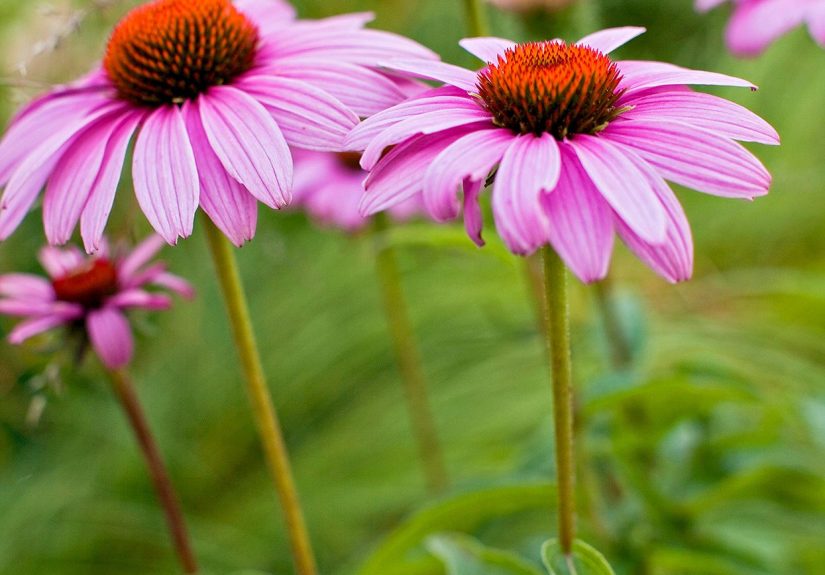
1) Purple Coneflower (Echinacea)
A pollinator magnet with sturdy daisy-like blooms that handle heat and average soil. Once established, coneflower is famously tolerant of “benign neglect.” Bonus: the seed heads feed birds if you leave them standing.
2) Black-Eyed Susan (Rudbeckia)
Sunshine on a stem. Black-eyed Susans thrive in full sun, tolerate poorer soils, and bloom for weeks. They’re great for beginners who want maximum color with minimal pampering.
3) Daylily (Hemerocallis)
The ultimate “set it and forget it” bloomer. Daylilies are hardy, adaptable, and laugh in the face of inconsistent watering once established. They also multiply over time, so you get more flowers for free.
4) Stonecrop / Sedum
If you want a plant that thrives on “I meant to water you,” sedum is it. Many types are heat- and drought-tolerant with succulent-like foliage and late-season blooms that pollinators love.
5) Catmint (Nepeta)
Soft gray-green foliage, long blooming, and practically no drama. Catmint thrives in sun with well-drained soil and often reblooms if you shear it back after the first flush. (Also: it’s not actually for cats… but some will still roll in it like tiny weirdos.)
6) Perennial Salvia (Salvia spp.)
Spiky blooms, pollinator power, and drought tolerance once established. Perennial salvias are excellent “backbone” plants in sunny borders and usually don’t demand much beyond a haircut after blooming.
7) Yarrow (Achillea)
Tough, drought tolerant, and happy in lean soils where fussier flowers refuse to cooperate. Yarrow blooms in flat-topped clusters and is great for cutting or dryingplus it doesn’t need rich soil to look good.
8) Coreopsis (Tickseed)
Bright, cheerful blooms for weeks with minimal care. Coreopsis thrives in sun and well-drained soil, tolerates heat, and keeps flowering with occasional deadheading (or a midseason trim).
9) Shasta Daisy (Leucanthemum × superbum)
Classic white petals, sunny centers, and a cottage-garden vibe that’s hard to mess up. Give Shasta daisy sun and decent drainage; it rewards you with reliable summer blooms.
10) Peony (Paeonia)
Peonies are famously long-lived and low-maintenance once establishedthink decades. Plant them in full sun with good drainage, avoid burying the eyes too deep, and enjoy spring blooms that look like they belong in a wedding budget.
11) Siberian Iris (Iris sibirica)
Elegant blooms and grassy foliage that stays attractive after flowering. Siberian iris is generally easier than some bearded types, tolerating a range of soils and requiring only occasional division when clumps get crowded.
12) Bearded Iris (Iris germanica)
A bright, classic perennial for sunny spots with good drainage. The trick is simple: keep rhizomes from being buried too deeply and give them sun. Once settled, they’re sturdy and dependable.
13) Russian Sage (Salvia yangii / Perovskia)
Airy lavender-blue flowers, silvery foliage, and strong drought tolerance once established. Russian sage thrives in sun and well-drained soil, and it’s a go-to for hot, dry gardens where other plants complain loudly.
14) Lavender (Lavandula)
Fragrant, beautiful, and low-maintenance if you nail drainage and sunlight. Lavender prefers dry-ish, well-drained soil and lots of sun. In humid regions, spacing and airflow are your best friends.
15) Hardy Geranium (Cranesbill Geranium)
Not the patio pot kindthis is the tough perennial workhorse. Hardy geranium forms tidy mounds, blooms generously, and often acts as a flowering groundcover. It’s a great “fills the gaps” plant for beginners.
16) Coral Bells (Heuchera)
Loved for colorful foliage and delicate flower spikes that attract hummingbirds. Coral bells are easy in part shade and well-drained soil, making them ideal for gardeners who want color even when flowers take a break.
17) Hosta
Shade gardening’s MVP. Hostas are grown mostly for foliage, but their flower spikes are charming too. They’re low maintenance in shade or morning sun, especially when given consistent moisture and protected from slug buffets.
18) Astilbe
If your garden is shadier and stays a bit moist, astilbe is your low-maintenance answer. It produces feathery plumes and attractive foliage, and it’s a reliable perennial for adding texture without requiring constant attention.
19) Bleeding Heart (Dicentra)
A shade-garden classic with heart-shaped blooms in spring. Bleeding heart is generally easy in part shade with consistent moisture. It may go dormant in summer heatdon’t panic; it’s resting, not dying.
20) Lamb’s Ear (Stachys byzantina)
Velvety silver leaves that look great all season and tolerate drought once established. Lamb’s ear is especially low-maintenance in sunny, well-drained sites. It spreads, so give it room (or enjoy the free groundcover).
21) Creeping Thyme (Thymus serpyllum)
A fragrant, flowering groundcover that handles sunny spots and lean soil. Creeping thyme is great between stepping stones and in edges where you want low height, minimal mowing, and a little “wow.”
22) Garden Phlox (Phlox paniculata)
Big, colorful summer clusters and a sweet fragranceyes, please. For low-maintenance success, choose disease-resistant varieties, give phlox sun, and allow airflow. It’s the difference between “easy” and “why is it dusty?”
23) Bee Balm (Monarda)
Hummingbirds adore it, and you’ll feel like a wildlife hero. Bee balm can be easy if you choose resistant varieties and avoid crowding. It spreads readily, which is either a feature or a surprise, depending on your personality.
24) Asters (New England / New York Aster)
Late-season color that shows up when summer bloomers start fading. Asters are excellent for pollinators heading into fall and are generally easy in sun, especially when cut back in early summer for bushier growth.
25) Blanket Flower (Gaillardia)
Hot colors, long bloom season, and strong drought tolerance once established. Blanket flower thrives in full sun and well-drained soil and is especially useful for beginners in warmer, drier areas.
26) Blazing Star (Liatris)
Vertical purple blooms that butterflies can’t resist. Liatris is a tough native-leaning perennial for sunny gardens with decent drainage. It adds height and structure without needing staking or babysitting.
27) False Indigo (Baptisia)
A long-lived, drought-tolerant perennial with spring blooms and attractive seed pods. Baptisia develops a deep taproot, which makes it hardy and low-maintenance once establishedbut also means it prefers not to be moved. Plant it, love it, leave it.
Low-Maintenance Care Cheat Sheet (Because You’re Busy)
- Planting: Dig a wide hole, loosen surrounding soil, and plant at the same depth as the pot.
- Watering: Water regularly the first growing season. After that, water during droughtespecially for sun perennials in sandy soils.
- Weeding: Weed early; perennials fill in over time and naturally shade out competitors.
- Deadheading: Optional for many plants, but it can extend bloom (coreopsis, salvia, catmint, blanket flower).
- Cutback: Many perennials just need a spring cleanup. Leave seed heads for birds if you like winter interest.
- Dividing: Every few years for some (daylily, iris, hosta) when clumps get crowded or bloom less.
Beginner Field Notes: Experiences That Make You a Better Perennial Gardener (Plus a Few Laughs)
Beginners tend to believe gardening success is about having a “green thumb.” In reality, it’s mostly about noticing patterns and making small adjustments kind of like learning to cook, except your ingredients occasionally get eaten by rabbits.
One of the most common first-year experiences is the “watering spiral.” A new gardener waters every day, proudly, like a plant parent on a mission. The perennials respond by growing shallow rootsbecause why would they dig deep when room service arrives daily? Then the gardener misses a few days in a heat wave and everything droops dramatically. The lesson: water deeper, less often. You’re training roots to be independent adults, not houseplants that demand hourly emotional support.
Another classic moment: planting the right plant in the wrong light. Someone buys lavender because it smells amazing (true) and looks adorable (also true), then tucks it into a damp, partially shaded corner because that spot is “open.” Lavender reacts the way you would react if asked to run a marathon in flip-flops. Meanwhile, the hosta sitting in full afternoon sun starts getting crispy edges like it spent spring break without sunscreen. Once you start matching sun-lovers to sun and shade-lovers to shade, “low-maintenance” suddenly becomes real.
Spacing is the sneaky experience no one believes until it happens. New gardeners look at a 4-inch pot and think, “Aw, it’s tiny. I’ll plant three of them six inches apart for an instant flower bed.” By midsummer, those plants are shoulder-checking each other like commuters and airflow disappears. Then powdery mildew shows up, smugly, because it loves crowding. The fix is boring but powerful: trust the mature size. If you want instant fullness, use annuals as “fillers” the first year while perennials grow in.
Most people also have a “mulch moment.” They learn that mulch is great… then apply it like frosting on a cake, piled against stems. The perennials respond with rot or pest issues, and the gardener learns to keep crowns visible. A simple 2–3 inch layer, pulled back from stems, makes your garden neater, reduces weeding, and helps moisture levels stay steadierthree wins without extra work.
There’s also the emotional experience of letting plants look “messy” for the sake of wildlife. Beginners often deadhead everything immediately, then discover birds love coneflower seed heads and gardens look charming with some winter structure. Many gardeners end up with a compromise: tidy the front border, let the back bed be a little wilder, and enjoy the birds and pollinators that show up.
Finally: the biggest beginner breakthrough is realizing you don’t need 60 different plants to have a gorgeous garden. A small set of hardy perennial flowers like coneflower, black-eyed Susan, catmint, sedum, salvia, and a few shade staples like hosta and coral bellscan carry a yard for years. Repetition looks intentional, reduces decision fatigue, and makes maintenance simpler. You’ll still experiment (because gardeners can’t help themselves), but your “core cast” keeps the show running even when you’re busy.
Conclusion
The best perennial flowers for beginners share three traits: they match your site conditions, they establish strong roots in year one, and they don’t demand constant interventions to look good. Start with a handful of these low-maintenance favorites, plant them where they’ll thrive, and you’ll build a garden that gets better every seasonwith less work, fewer regrets, and more time to actually enjoy the blooms.