Table of Contents >> Show >> Hide
- Flight Feathers 101: What You’re Actually Trimming
- Should You Clip at All? A Quick, Honest Reality Check
- Prep Like a Pro: Safety Setup Before You Clip Anything
- 3 Ways to Clip a Cockatiel’s Flier Feathers
- How Many Feathers? How Often? And What “Good” Looks Like
- Aftercare: Keep the Next 48 Hours Boring (Boring Is Good)
- Bonus: of Real-World Wing-Trim Experience (What People Learn the Hard Way)
- Conclusion
Your cockatiel is basically a tiny, feathered athlete with a built-in jet engine and a talent for launching at the worst possible moment
(usually when someone opens a door, turns on a ceiling fan, or decides it’s the perfect time to carry a laundry basket like a medieval shield).
So it’s no surprise many bird parents Google “cockatiel wing clipping” at 2 a.m. while their bird practices parkour on the curtain rod.
Wing trimming (often called “clipping flight feathers”) is one of the most debated grooming topics in the bird world. Done thoughtfully and
conservatively, it can reduce lift and help prevent dangerous escapes. Done poorly, it can increase crash risk, create fear, and even cause injuries.
This guide walks you through three common wing-trim styles, how to choose the right one, and how to keep the process as safe and low-drama as possible.
Important: If this is your first time, the safest move is to have an avian veterinarian (or an experienced professional groomer working with one)
show you exactly which feathers to trim on your specific cockatiel. A “one-size-fits-all” clip is where many people accidentally create a “falling rock” situation.
Flight Feathers 101: What You’re Actually Trimming
When people say “clip a bird’s wings,” they don’t mean cutting skin, bone, or anything living. You’re trimming feather lengthlike a haircut.
The goal is not to “delete flight” entirely (birds can still surprise you), but to reduce the bird’s ability to generate enough lift to take off and gain height.
Primary feathers vs. secondary feathers (and why this matters)
-
Primary flight feathers (primaries) are the long outer wing feathers that provide most of a bird’s forward thrust.
These are typically the feathers trimmed in a standard wing clip. -
Secondary flight feathers (secondaries) are closer to the body and help form the “airfoil” for lift and controlled gliding.
Trimming these can make landing harder and increase injury risk. -
Coverts are the smaller feathers that “cover” the bases of the larger flight feathers. They act like protective shingling.
A safe trim avoids cutting coverts.
Bottom line: Most reputable guidance focuses on trimming only the primary flight feathers, while leaving secondaries and coverts alone.
If someone tells you to “just snip whatever looks long,” politely back away like it’s a haunted blender.
What are “blood feathers” and why you should fear them (respectfully)
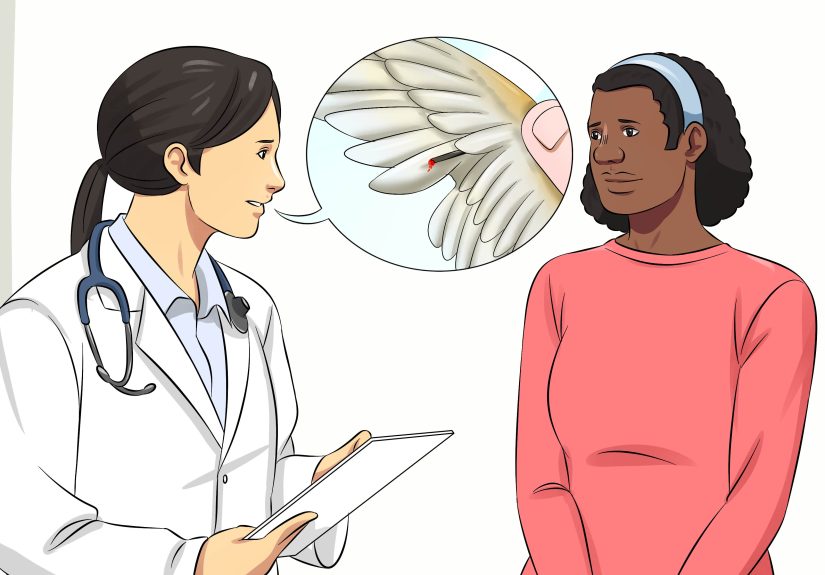
During molt, new feathers grow in with a blood supply in the shaft. These are often called blood feathers or pin feathers.
Accidentally cutting one can cause heavy bleeding and may become an emergency.
If you see a feather shaft that looks dark, filled, or “juicy” (technical term: nope), stop and ask your avian vet for help.
Should You Clip at All? A Quick, Honest Reality Check
Many bird owners clip for safetypreventing escapes, reducing collisions with windows, and limiting risky flight in busy homes.
Others keep birds fully flighted for exercise, confidence, and natural behavior (with careful training and a bird-proof environment).
Both choices can be ethical when they’re made thoughtfully and prioritize the bird’s welfare.
What matters most is this: clipping is a tool, not a force field. A clipped bird may still catch a draft and fly farther than you expectespecially outdoors.
If escape prevention is your main goal, also use practical layers like closed doors, window screens, “airlock” entry habits, and supervised out-of-cage time.
Smart alternatives (or add-ons) to wing clipping
- Bird-proofing: curtains/blinds on large windows, fan rules, safe landing zones, covered mirrors.
- Training: step-up reliability, station training, recall practice in safe spaces.
- Harness training (only if the bird is comfortable and properly conditioned).
- Indoor “flight lanes”: controlled, hazard-free hallway practice for flighted birds.
Prep Like a Pro: Safety Setup Before You Clip Anything
The actual snipping is often the fastest part. The “make it safe” part is what prevents accidents.
Here’s the pre-flight checklist (pun fully intended).
What you’ll want on hand
- Sharp scissors (dull blades crush feathers instead of cutting cleanly).
- A towel for gentle restraint (“toweling”).
- A helper (seriouslytwo humans, one bird, fewer regrets).
- Styptic powder OR cornstarch/flour (for minor bleeding control).
- Good lighting to identify feather shafts clearly.
Safe restraint rules (cockatiels are small, not indestructible)
- Never compress the chest. Birds need chest movement to breathe.
- Keep sessions short. Stress and overheating are real.
- Stop if you feel unsure. “Confidence” is not a substitute for anatomy.
Plan a calm spacequiet room, door closed, no pets, no sudden noises.
Your goal is a controlled glide later, not a chaotic “escape room” challenge during the trim.
3 Ways to Clip a Cockatiel’s Flier Feathers
“Wing clipping” isn’t one single haircut. Different trim styles change how a bird takes off, turns, and lands.
The best choice depends on your cockatiel’s size, flight strength, confidence, and your home environment.
Below are three commonly discussed methods.
1) Traditional “Transecting” Trim (the classic straight cut)
This is the style most people imagine: you shorten a set of the outer primary feathers with a clean, straight cut.
It can be done as a more conservative midshaft trim or as a shorter trim just under the coverts.
The key is to reduce lift without making your cockatiel drop abruptly.
Why people choose it
- Simple and common in clinical settings.
- Easy to “fine-tune” if you start conservatively.
- Predictable reduction in lift when done correctly.
How to do it safely (high-level steps)
- Have your avian vet show you the exact feathers first. On the internet, “primary” gets mislabeled a lot.
- With your helper holding the bird securely, extend one wing fully under bright light.
- Identify the outer primary feathers (the long feathers closer to the wingtip).
-
Trim conservativelyoften a small set of outer primariesthen repeat the same on the other wing for symmetry.
You can always remove a bit more later; you can’t un-cut a feather. - Test the result in a safe room over a soft landing area (a bed or padded surface) to confirm a controlled glide.
Best for
Homes where escape risk is high and a reliable reduction in lift is neededespecially if you can get professional guidance for the first trim.
Watch-outs
- Too aggressive = higher fall and injury risk.
- Cutting too close to the body can leave sharp ends that rub and irritate.
- Trimming only one wing can cause spinning/poor control.
2) Curved Trim (shorter at the tip, longer toward the inside)
A curved trim shapes the primaries in a gentle arc: the outermost primary is trimmed shortest, and each feather inward is left slightly longer.
When the wing is folded, it often looks cleaner and more “natural” than a blunt straight line.
It can also provide better support from adjacent feathers as new feathers grow in during molt.
Why people choose it
- A more natural-looking folded wing.
- Often smoother gliding behavior than an overly short straight cut.
- Can provide better “support” around newly emerging feathers.
How to think about it (without turning it into an arts-and-crafts project)
The rule is still the same: you’re trimming primaries only, keeping the cut ends away from the body, and maintaining symmetry across both wings.
The “curve” is simply a gradual change in length across the trimmed primaries rather than a uniform cut.
Best for
Owners who want a functional trim but prefer a softer look and potentially more controlled glideespecially helpful for birds that get easily spooked after abrupt changes.
3) “Skinny” (Trailing-Edge) Trim (keep the tips, reduce the “push”)
The “skinny trim” (sometimes called a trailing-edge trim) is a newer style that focuses on trimming along the feather’s trailing edge rather than cutting the feather short across.
The tips of the primaries remain intact, while the back edge is reduced. The idea is to limit lift and upward gain while still allowing a more controlled glide and landing.
Why people choose it
- May allow better landing control compared with overly aggressive straight cuts.
- Can encourage some wing exercise while limiting height gain.
- Often preferred for birds prone to hard crashes with short trims.
Reality check
This method takes more practice and precision. It’s the one most worth learning directly from an avian veterinarian or experienced professional.
If you’re new, don’t make your cockatiel the “practice model” for a technique you’ve only seen described online.
Best for
Birds who need a gentler change and owners working closely with avian professionals to balance safety with controlled gliding and confidence.
How Many Feathers? How Often? And What “Good” Looks Like
How many primaries does a cockatiel usually need trimmed?
There isn’t a magic number that fits every bird. Cockatiels are small and can generate a surprising amount of lift, so conservative trims may still allow flight.
Many professional guides emphasize trimming the outer primaries and avoiding the temptation to leave the outermost feathers “for looks”
(because small birds may still fly when those are left intact).
A “good” outcome looks like this:
- Takeoff is discouraged or results in minimal height gain.
- Landing is controlledmore glide than plummet.
- Your bird remains confident, not fearful or reluctant to move.
How often do you need to re-check the wings?
Feathers regrow during molt, and a single new primary in the right spot can bring back lift. That means you should
inspect the wings regularly and assume your cockatiel can fly unless proven otherwise.
Some birds need touch-ups more frequently than others depending on molt patterns, diet, light cycles, and individual feather growth.
Common mistakes that cause problems
- Clipping only one wing (imbalance and loss of control).
- Trimming secondaries (reduces safe gliding and increases crash risk).
- Cutting blood feathers (bleeding emergency potential).
- Over-trimming so the bird drops abruptly, especially from perches.
- Skipping aftercare (high perches + fresh clip = surprise fall).
Aftercare: Keep the Next 48 Hours Boring (Boring Is Good)
After a trim, your cockatiel may misjudge distance for a day or two. Set them up to succeed:
- Lower the highest perches temporarily.
- Add “ladder routes” between favorite spots.
- Use soft landing zones (a folded comforter near play areas works great).
- Do a supervised test glide in a safe room (no fans, no hard corners).
If bleeding happens
Apply gentle pressure to the bleeding feather end and use cornstarch/flour or styptic powder on the damaged end if needed.
If bleeding continues for more than a couple minutes, contact an avian veterinarian promptly.
Do not attempt to pull a blood feather at homethis can worsen bleeding and damage the follicle.
Bonus: of Real-World Wing-Trim Experience (What People Learn the Hard Way)
If you hang around bird owners long enough, you’ll hear a theme: wing trimming isn’t hard because scissors are complicatedit’s hard because
cockatiels are opinionated little athletes who don’t read instructions. The most common “oops” story starts like this:
“I thought I clipped enough… and then my bird made it to the top of the fridge like it was auditioning for an action movie.”
That’s not rare. A cockatiel can regain lift from just a couple of newly grown primaries, and they don’t announce it with a calendar invite.
Another frequent lesson: the first trim sets the emotional tone. A bird that’s grabbed, squeezed, or startled during clipping can become hand-shy fast.
That’s why clinics and experienced groomers emphasize calm restraint, short sessions, and never restricting the chest.
In real homes, it helps to practice “towel games” firstletting your cockatiel see the towel, get treats near it, and learn that the towel doesn’t automatically mean,
“Surprise! We’re doing something weird to your body today!”
People also discover (sometimes dramatically) that a bad trim doesn’t just affect flightit affects confidence.
A cockatiel that suddenly can’t control its landing may become cautious, clingy, or oddly reluctant to leave a shoulder.
The fix usually isn’t “clip more.” It’s often clip less next time (or choose a gentler style), add safe landing zones, and rebuild confidence with
easy wins: low perches, short hops, step-ups with praise, and predictable routines.
Then there’s the “aesthetic trap.” Some owners like leaving the outermost feathers untouched because the folded wing looks prettier.
In practice, cockatiels can still get enough lift with those feather tipsespecially if the bird is light, motivated, and has a strong flap.
Many experienced folks eventually choose function over fashion: if escape prevention matters, the outer feathers usually need to be part of the plan.
The best real-world advice is honestly unglamorous: pair wing trimming with behavior and environment.
Close doors before the bird comes out. Pause before opening exterior doors. Turn fans off as a rule, not a suggestion.
Cover large windows or add decals so “invisible glass wall” doesn’t become a weekly surprise.
Practice stationing (having your bird stay on a perch by choice), and reward calm behavior.
Even clipped birds can spook-fly; even flighted birds can be safe when trained and bird-proofed.
The win is not “perfect flight control.” The win is a cockatiel who stays safe, stays confident, and still gets to be… well, a cockatiel.
Conclusion
The safest wing trim is the one that’s conservative, symmetrical, and tailored to your individual cockatiel.
If you choose to clip, prioritize primary feathers, avoid blood feathers, skip the secondaries, and always aim for a controlled glidenot a crash.
And if any part of the process feels uncertain, your avian veterinarian is the best teammate you can recruit.