Table of Contents >> Show >> Hide
- What “making a bully bored” really means
- 1) Go “Grey Rock” (a.k.a. Become the World’s Least Interesting TV Show)
- 2) Use Assertive Boundaries: Stop–Walk–Talk (and Yes, Adults Can Use It Too)
- 3) Starve the Bully’s Access: Allies, Evidence, and the “Boring Paper Trail”
- When ignoring is NOT the move
- Conclusion: Your new superpower is being un-entertaining
- Experience Notes: of “What People Learn the Hard Way”
Bullies are a lot like bad Wi-Fi: they’re strongest when you need peace the most, and they thrive on your reaction. The good news? You don’t have to “win” an argument with a bully. You just have to stop being the fun button they like to push.
This article is about a simple goal: make bullying feel unrewarding. No fireworks. No dramatic monologues. No sequel. Just a calm, strategic approach that protects you, reduces escalation, and (often) causes the bully to move on in search of easier entertainment.
What “making a bully bored” really means
Bullying often runs on a reward system: attention, control, laughs from bystanders, or the rush of getting a big emotional reaction. If the bully consistently gets nothing usefulno spotlight, no meltdown, no chess matchthey’re more likely to lose interest.
Important note: “Boring” does not mean “do nothing forever.” It means you choose responses that remove the payoff while still keeping yourself safe and getting support when needed.
1) Go “Grey Rock” (a.k.a. Become the World’s Least Interesting TV Show)
The “grey rock” idea is exactly what it sounds like: you respond like a rock. Not a volcanic rock. Not a “rock star.” A regular, boring, “wow-is-that-even-a-rock?” rock.
When a bully is poking for emotional fuel, grey rocking keeps your tone neutral, your words short, and your face calm. You’re not agreeing. You’re not debating. You’re not auditioning for a comeback montage. You’re giving them… nothing.
How to grey rock in real life
- Keep your voice flat and brief. Think “customer service voice,” minus the customer service.
- Use short phrases. One sentence is a full meal. Two sentences is a buffet. Don’t cater.
- Don’t explain your feelings. Explanations are handles. Bullies love handles.
- Exit calmly. Walking away is not “losing.” It’s refusing to fund their hobby.
Quick “boring on purpose” scripts
- “Okay.”
- “Noted.”
- “I hear you.” (Translation: “I heard noise.”)
- “That’s your opinion.”
- “I’m not discussing this.”
- “No.” (A complete sentence. A classic.)
Examples by setting
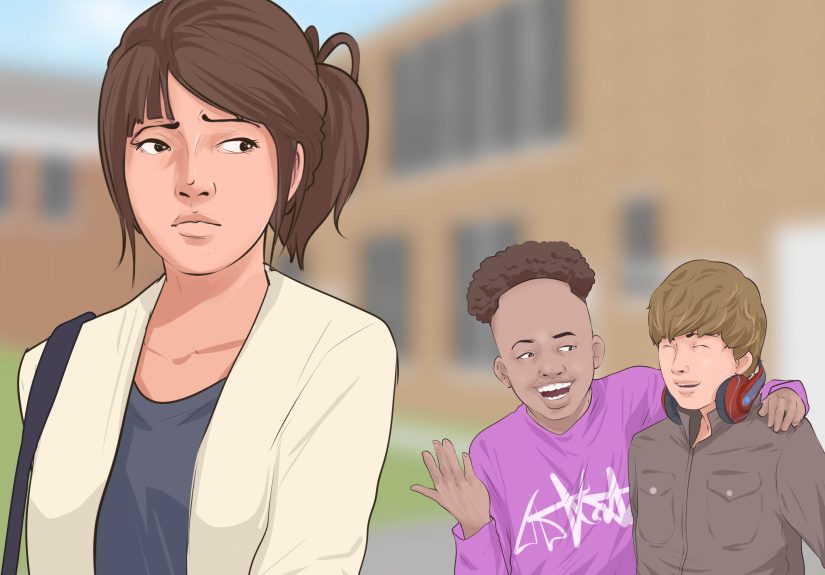
At school (hallway/commentary bully):
Bully: “Nice outfit. Did you dress in the dark?”
You (neutral): “Okay.” (Keep walking.)
The bully wanted a performance. You handed them a commercial break.
Online (comment bait):
If it’s a troll or cyberbullying message, the most powerful move is often no response. Silence is unbelievably boring to someone who showed up for a fight.
Workplace (snide coworker):
Coworker: “Wow, you’re really taking your time, huh?”
You: “I’ll have the draft by 3.” (Return to work.)
You didn’t defend your worth. You stated the deliverable. That’s grown-up boring.
What ruins grey rocking fast
- Explaining. (“Here’s why what you said hurt me…”) That’s emotionally rich content. They’ll subscribe.
- Correcting every detail. Bullies don’t want accuracy. They want airtime.
- Trying to win. If “winning” requires ongoing contact, the bully already got the prize: your attention.
Safety note: Grey rocking is a boundary tool, not a magic shield. If there’s a threat of physical harm, stalking, coercion, or severe harassment, don’t try to “bore” your way through itget help immediately from trusted adults, school staff, workplace leadership/HR, or emergency services depending on the situation.
2) Use Assertive Boundaries: Stop–Walk–Talk (and Yes, Adults Can Use It Too)
If grey rock is “be boring,” assertive boundaries are “be boring and clear.” You’re not insulting back. You’re not pleading. You’re calmly signaling: This behavior doesn’t work on me, and it doesn’t continue.
One popular structure taught to kids is Stop–Walk–Talk: say stop, walk away, and talk to a trusted adult. It’s simple because it works under stressyour brain can follow three steps even when your feelings are doing parkour.
Step 1: Stop (one firm sentence)
Your “Stop” is not a debate. It’s a sign on a door: “Closed.”
- School: “Stop. Don’t talk to me like that.”
- Work: “Don’t speak to me that way. Keep it professional.”
- Online: “Do not contact me again.” (Then block/report.)
Pro tip: Use “I” statements sparingly here. “I feel hurt” can be valid, but it can also feed a bully. Try behavior-focused language: “Don’t do that.” “Not okay.” “Enough.”
Step 2: Walk (remove your presence, remove the payoff)
Walking away is not weak; it’s strategic. Bullies want an audience and a reaction. You deprive them of both. Walk to a place with people aroundfriends, a teacher, a supervisor, the front desk, the break room.
Step 3: Talk (recruit adults, allies, systems)
Reporting is where “boring” becomes powerful. Once you involve a responsible adult or formal process, the bully’s behavior is no longer a private little show. It becomes a documented problem with consequences.
Body language that says “boring and unbothered” (even if you’re not)
- Feet planted, shoulders relaxed. Not puffed up, not shrinking.
- Chin level, eyes forward. You can look at them brieflythen look away and exit.
- No nervous smile. Smiling can read as “this is working, keep going.”
- Slow your pace. Rushing looks rattled. Calm movement looks in control.
Specific examples: assertive without escalating
Example A: The “nickname” bully
Bully: “Here comes Crybaby.”
You: “Stop. Don’t call me that.” (Walk away.)
If it repeats: “I told you to stop. I’m telling the counselor.” (Then do it.)
Example B: The meeting interrupter
Coworker: “Let’s move onthis is pointless.”
You: “I’ll finish my point, then we can move on.”
If it continues: “Please don’t interrupt. If it keeps happening, I’ll ask the manager to step in.”
A secret most bullies hate: rehearsal. Practice your one-liners out loud. When the moment hits, your mouth will default to what you’ve trainednot what your nervous system improvises.
3) Starve the Bully’s Access: Allies, Evidence, and the “Boring Paper Trail”
Some bullies don’t quit because you said the perfect sentence. They quit because the situation stops being convenient. That’s where allies, documentation, and reporting turn your life from “target” to “administrative headache.”
If a bully can’t reach you easily, can’t isolate you, and can’t deny what happened, the fun drains out fast.
Build an “access filter” (school, work, online)
- Change the geography: sit near supportive peers, take routes with adults around, avoid isolated spaces.
- Change the timing: leave class/work with a buddy, arrive a minute late to avoid hallway ambushes.
- Change the channel: switch to email/chat with a manager copied when appropriate; limit 1:1 contact.
- Use platform tools: block, mute, restrict, report. Don’t “keep watching” for entertainmentit’s not Netflix.
Keep evidence (without turning into a full-time detective)
For cyberbullying and ongoing harassment, evidence is your best boring weapon. You don’t need a 40-page novel. You need clean, factual records.
- Screenshot messages (include usernames and timestamps when possible).
- Write a short log: date, time, location, what happened, who saw it, how you responded.
- Save emails/chats in a secure place.
- Don’t engage back. Evidence is stronger when you’re not trading punches in writing.
Use the right escalation ladder
“Tell an adult” can sound childishuntil you realize adults control the rules, the consequences, and the access. The key is escalating to the right person, the right way.
- School: teacher → counselor → principal/administrator. Bring your log. Be specific: “This happened three times this week.”
- Work: manager → HR → ethics hotline (if available). Stick to observable behavior and impacts on work.
- Online: platform report tools → school/work policies (if classmates/coworkers) → law enforcement if credible threats.
Workplace note: “Bullying” isn’t always illegal by itself, but it can violate company policy and can cross legal lines if it involves protected characteristics, threats, stalking, or severe harassment. If you’re unsure, document and ask HR (or an employment attorney) what options exist in your state and workplace.
Recruit bystanders (without asking them to be superheroes)
Bullies love an audiencebut audiences can also shut the show down. Supportive peers can:
- Stand near you and change the social math.
- Redirect: “We’re leaving.” “Come on, let’s go.”
- Back you up later as witnesses when you report.
- Include you in groups and activities so you’re less isolated.
The goal isn’t to start a bigger conflict. It’s to make bullying socially awkward, low-reward, and widely visible. Nothing kills a bully’s enthusiasm like accountability.
When ignoring is NOT the move
“Just ignore it” is advice that works sometimesand fails loudly other times. Don’t rely on boredom tactics if:
- There are threats of physical harm (to you or someone else).
- The bullying involves sexual harassment, stalking, extortion, or hate-based targeting.
- You’re being isolated or controlled in ways that feel unsafe.
- The bully has access to weapons, or the situation is escalating.
In those cases, prioritize safety: get to a safe place, contact trusted adults/supervisors, use emergency services if needed, and involve school/workplace systems immediately. Your job is not to “handle it alone.” Your job is to be safe.
Conclusion: Your new superpower is being un-entertaining
Making a bully bored isn’t about becoming a doormat. It’s about becoming a strategist. You remove the payoff (grey rock), you set a clear boundary (Stop–Walk–Talk), and you cut off access with allies and documentation.
And here’s the best part: these skills don’t just help with bullying. They help with obnoxious coworkers, drama-hungry group chats, and that one relative who thinks Thanksgiving is a competitive sport.
Experience Notes: of “What People Learn the Hard Way”
I can’t claim personal life stories, but I can share patterns people commonly reportstudents, parents, educators, and employeesabout what actually changes the day-to-day experience of being targeted. These are the “oh, that worked” moments that show up again and again.
1) The moment someone stopped “performing”
A middle-schooler describes how the teasing always got worse when they defended themselves with speeches. The bully would smirk, because the speech was proof the buttons worked. The turning point wasn’t a clever comeback. It was a calm “Okay” plus a slow walk to a teacher’s doorway. The bully tried a few more linesthen lost steam. Not instantly. Not magically. But noticeably. The student later said it felt weird at first, like quitting sugar: your brain expects the spike. After a week of consistent boring responses, the bully started scanning for a different target who would react on cue.
2) The “one sentence” that changed a workplace dynamic
A junior employee talks about a coworker who loved undercutting them in meetings. At first, the employee responded with nervous laughter and long explanations. The coworker kept going. Then the employee practiced one line: “Please don’t interruptlet me finish.” They said it the same way every time: neutral tone, no sarcasm, no apology. The coworker still tested the boundary, but the payoff disappeared. What made the biggest difference wasn’t the sentence aloneit was the follow-through. When interruptions continued, the employee documented two incidents and asked the manager for a meeting, focusing on behavior and impact: missed information, slowed decisions, team tension. The issue became “a process problem” instead of “a personality war,” and managers are far more willing to solve process problems.
3) The power of “boring receipts” in cyberbullying
A high school student describes receiving nasty DMs and group chat pile-ons. Their first instinct was to respond fast, defend themselves, and post screenshots publicly. That created a bigger storm. The second approach was quieter and more effective: screenshot everything, stop replying, block where possible, and bring a clean timeline to a counselor. The counselor didn’t have to guess or interpret. The evidence was clear, and school staff could address it as repeated behavior with specific dates and accounts. The student said the most satisfying part wasn’t revengeit was the sudden boredom on the bully’s side when the target stopped reacting and adults started asking questions.
4) The unexpected win: friends who “hovered”
People often underestimate how much bullying depends on isolation. Several students describe a simple shift: friends started walking them to class, sitting with them at lunch, or just being nearby. The bully didn’t stop because they became kinder overnight. The bully stopped because the scene changed. It’s harder to play “dominant” when you’re outnumbered by calm people who are unimpressed and willing to be witnesses. One student called it “social sprinkler system energy”not aggressive, just present enough that nothing could catch fire.
The thread through all these stories is consistency. The first time you grey rock, your heart might race. The first time you say “Stop,” your voice may wobble. That’s normal. Skills feel awkward before they feel natural. If you keep responses boring, boundaries clear, and support systems involved, you’re not just hoping the bully gets boredyou’re engineering it.