Table of Contents >> Show >> Hide
- Before You Play: A 3-Minute Hamster Safety Checklist
- Way #1: Gentle Handling Games (Bonding Without the Bite-Olympics)
- Way #2: The Playpen Adventure (A Mini Theme Park That’s Actually Safe)
- Way #3: Brain Games and Training (Yes, Your Hamster Can Learn Stuff)
- Common Questions (Because Hamsters Don’t Come With Manuals)
- Conclusion: Keep It Safe, Keep It Fun, Keep It Hamster
- Playtime Experiences: Stories, Lessons, and “Oh Wow, They’re Fast” Moments
If you’ve ever watched a hamster sprint on a wheel like it’s late for an appointment, you already know one thing: these tiny roommates are powered by pure drama and curiosity. The good news? You don’t need a hamster-sized amusement park (though… respect if you build one). You just need safe, simple games that match how hamsters naturally behave: exploring, foraging, digging, hiding, and occasionally judging you from behind a pile of bedding.
This guide covers three genuinely fun, hamster-approved ways to playwithout stressing your pet out or turning your living room into an unsupervised escape room. You’ll get step-by-step ideas, safety guardrails, and specific examples that work for both Syrian hamsters and dwarf varieties. Bonus: no keyword-stuffed nonsense and no “buy 47 gadgets” energy. Let’s play.
Before You Play: A 3-Minute Hamster Safety Checklist
1) Pick the right time (aka: don’t wake the burrito)
Hamsters are typically most active in the evening and at night. Trying to play with a sleepy hamster is like asking someone to do cardio during a nap: you might get a grumpy reaction (and yes, hamsters can bite when startled). Wait until your hamster wakes up on their own and is already moving around.
2) Wash hands and remove strong smells
Wash your hands before and after handling. Besides basic hygiene, it helps avoid confusing scentsyour hamster’s nose is basically their GPS. Skip scented lotions or food smells on your fingers unless you want to become a suspiciously delicious “snack option.”
3) Watch for “nope” signals
A relaxed hamster explores, sniffs, and may accept treats. A stressed hamster may freeze, dart wildly, chatter teeth, flatten ears, or try to hide immediately. If your hamster looks overwhelmed, shrink the session or stop and try again later. “Short and positive” beats “long and terrifying.”
Way #1: Gentle Handling Games (Bonding Without the Bite-Olympics)
This first “way to play” is less about toys and more about building trust through tiny games your hamster can opt into. Think of it as friendship with snacks. The goal is to let your hamster choose interaction, not be “captured for cuddles.” (Hamsters did not sign a cuddle contract. They signed a foraging contract.)
Set up: the “safe transfer” method
- Use a scoop: a mug, small box, or a clean container works great for nervous hamsters.
- Move low: always handle close to the floor or over a soft surface in case of a wiggle-jump.
- Support the whole body: aim for a gentle “cup” hold instead of dangling your hamster in midair.
Game idea A: The Treat Trail Hand Walk
Place your hand flat in the enclosure (or in a playpenmore on that soon) and lay a tiny treat trail leading onto your palm. Your job: be a calm, warm piece of furniture. Your hamster’s job: investigate and decide if you’re trustworthy.
- Start with the treat near your fingertips, not in the center of your palm.
- When your hamster steps onto your hand, don’t liftjust let them walk off again.
- Repeat for 3–5 minutes. End while it’s still going well.
Game idea B: “Elevator Ride” (the short-distance confidence builder)
Once your hamster reliably climbs onto your hand, try a tiny liftone inch, two seconds. Then set them back down. That’s it. Congratulations, you have invented a hamster ride that costs $0 and meets OSHA standards (mostly).
Gradually increase height only if your hamster stays relaxed. If they tense up or scramble, you went too fast. Think “Netflix buffering,” not “roller coaster launch.”
Game idea C: The “Step-Up” Repeat
In a safe area, place one hand in front of your hamster and gently block forward movement with the other hand behind (not chasing, just guiding). Many hamsters will step onto the front hand to keep moving. Reward, then let them step off. This can turn into a simple routine that makes future handling much easier.
Pro tips for Way #1
- Keep sessions short: 5–10 minutes is plenty for beginners.
- Use high-value treats: tiny bits of safe foods beat giant portions. Think “sprinkle,” not “buffet.”
- Don’t grab from above: it can feel predatory. Approach from the side when possible.
- Kids need supervision: hamsters can be startled easily, so an adult should be the playtime manager.
Way #2: The Playpen Adventure (A Mini Theme Park That’s Actually Safe)
If your hamster had a dating profile, “exploring new spaces” would be in the bio. A playpen (or secure, escape-proof area) gives your hamster room to roam and lets you “play together” without constant handling. It’s also a great alternative to risky exercise gadgets.
Playpen basics (aka: how to avoid The Great Hamster Escape)
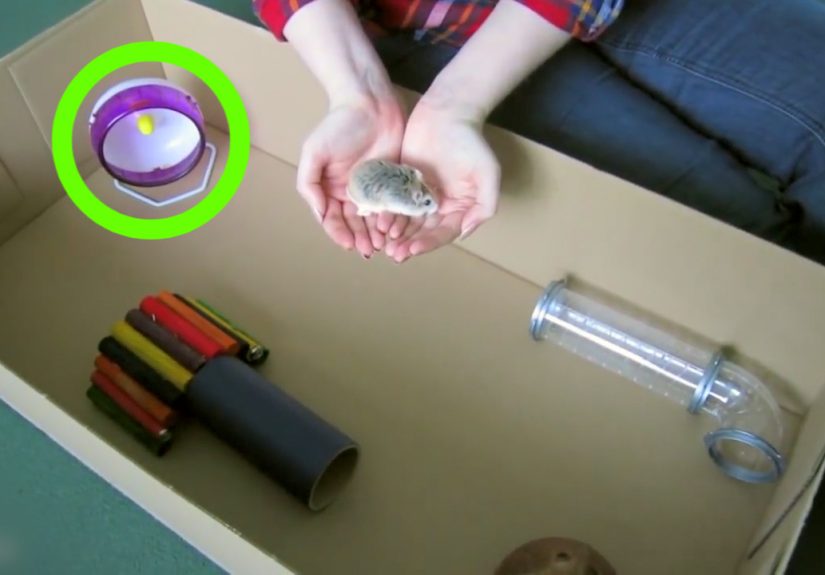
- Choose a contained space: a small animal playpen, a bathtub (dry and clean), or a large storage bin.
- Remove hazards: cords, gaps under furniture, houseplants, sticky tape, and anything chewable that shouldn’t be chewed.
- Supervise the whole time: hamsters can disappear faster than your motivation on leg day.
Adventure build A: DIY Tunnel City
Hamsters love moving through tunnels because it feels safe and natural. Create a “tunnel district” using: cardboard tubes, small boxes with doorways, paper bags (no handles), and wooden tunnels designed for small pets. Arrange them like a little neighborhood with multiple exits so your hamster never feels trapped.
Adventure build B: The Foraging Scatter Hunt
Sprinkle a small portion of your hamster’s food (or a few treats) around the playpen, tucked under cardboard flaps or inside crumpled paper. This turns “playtime” into a natural foraging missionmentally stimulating and genuinely fun.
- Hide food in 6–10 micro-spots instead of one big pile.
- Use easy hides at first, then make it trickier as your hamster learns the game.
- End the session with a “jackpot” find so your hamster leaves on a win.
Adventure build C: The Dig Box (the closest thing to hamster bliss)
Many hamsters love digging and burrowing. A dig box is a container filled with a safe digging material (for example, clean paper-based bedding or other hamster-safe substrate recommended by reputable care guides). Add a few hidden treats or seeds to encourage natural digging and sniffing.
Keep it dry, avoid anything dusty or strongly scented, and don’t use materials that could tangle around tiny legs. When in doubt, choose simple, hamster-specific bedding products and keep the box shallow enough for easy exits.
Make it interactive: “You are the quest-giver”
In Way #2, you play by rearranging the environment while your hamster explores. Try these low-stress interactions:
- Bridge hand: place your hand as a “bridge” between two boxes and let your hamster decide to cross.
- New room unlocked: add a fresh box mid-session and watch curiosity kick in.
- Gentle narration: talk softlyyour hamster will learn your voice as part of the safe routine.
What about hamster balls?
Many pet care experts and veterinary-informed resources advise against hamster exercise balls due to risks like stress, poor ventilation, trapped toes, collisions, and overheating. A supervised playpen setup offers similar “out of cage” exercise while allowing your hamster to stop, hide, and choose where to gokey ingredients in feeling safe.
Way #3: Brain Games and Training (Yes, Your Hamster Can Learn Stuff)
Hamsters aren’t here to do your taxes, but they can absolutely learn simple behaviorsespecially if you use tiny treats and keep sessions short. Brain games are fantastic because they enrich your hamster without requiring a huge space or constant handling. Bonus: you’ll feel like a wizard.
Training rule #1: Keep it ridiculously short
Aim for 2–5 minutes. End early. The secret sauce is consistency, not marathon lessons.
Game idea A: Target Training (the gateway game)
Target training means teaching your hamster to touch a safe target (like a spoon tip or a chopstick end) with their nose. Here’s the simplest version:
- Hold the target a short distance away (1–2 inches).
- When your hamster sniffs or taps it, immediately reward with a tiny treat.
- Repeat 5–10 times, then stop.
Over time, your hamster will follow the target a few stepsgreat for guiding them into a carrier, onto your hand, or away from a suspicious corner they’re trying to remodel with their teeth.
Game idea B: The Puzzle Cup Shuffle
Place three small cups upside down. Hide a treat under one cup while your hamster watches (or sort of watcheshamsters rely more on scent than eyesight). Let them sniff and investigate until they find the treat. Start obvious. Then make it slightly harder by rubbing a tiny bit of treat scent on the other cups so your hamster has to work for it.
Game idea C: “Sniffari” Scent Trail
Drag a tiny piece of a safe treat along a short path in the playpen (or place micro-crumbs along the route). Lead it into a tunnel, around a box, and to a “treasure spot.” This taps into natural scent-following behavior and keeps your hamster moving and thinking.
Game idea D: Build-a-Puzzle Feeder
Turn dinner into a game. Put some pellets or seed mix into:
- a cardboard tube folded at both ends (easy “rip to win”)
- a small box with a few paper layers inside (dig-and-search)
- a crumpled paper ball with a couple of pieces tucked inside (sniff-and-unfold)
This is classic hamster enrichment: chewing, sniffing, foraging, and problem-solving in one adorable package.
Training safety notes
- Don’t overfeed treats: keep rewards tiny, and use part of the daily ration as “training pay.”
- Avoid stressful restraint: training should feel like a choice, not a wrestling match.
- End on a win: one easy success at the end builds confidence for next time.
Common Questions (Because Hamsters Don’t Come With Manuals)
How long should playtime be?
For most hamsters, 10–20 minutes of supervised playpen time is plenty, especially at first. Handling games and training sessions can be even shorter. If your hamster is relaxed and engaged, you can gradually extend playtime. If they seem frantic or exhausted, scale back.
What if my hamster doesn’t want to play?
That’s normalespecially during the first couple weeks in a new home. Start with low-pressure interaction: sit nearby, talk softly, and offer treats. Some hamsters warm up quickly; others take time. The secret is patience plus consistency, not forcing it.
Is it okay to let my hamster free-roam the house?
Generally, a contained play area is safer. Homes have too many hazards: tiny gaps, cords, other pets, and mystery crumbs your hamster will absolutely try to taste-test. A playpen gives freedom with boundarieslike a tiny, fuzzy national park.
Conclusion: Keep It Safe, Keep It Fun, Keep It Hamster
Playing with a hamster isn’t about making them do tricks on command or posing them for photos like a pocket-sized model who’s behind on rent. It’s about meeting them where they are: curious, scent-driven, easily startled, and wildly motivated by snacks. If you focus on choice-based interaction (Way #1), enriching exploration (Way #2), and short brain games (Way #3), you’ll build trust and make your hamster’s life more interestingwithout stress.
And if your hamster ever looks at you like, “Thanks, but I’d rather reorganize my bedding,” congratulations: you have a healthy hamster with opinions.
Playtime Experiences: Stories, Lessons, and “Oh Wow, They’re Fast” Moments
To make these ideas feel real, here are the kinds of playtime experiences hamster owners commonly run intoplus what they teach you about your pet’s personality. Think of them as the hamster version of travel stories: short, memorable, and occasionally chaotic.
1) The “I Love You… From Over Here” Hamster
A lot of people expect instant bonding. Then they meet a hamster whose favorite hobby is politely ignoring them while shoving bedding into a corner like they’re training for an interior design show. If this is your hamster, Way #2 (playpen exploration) usually works best first. Sit nearby, offer a treat, and let your hamster choose contact. Over time, that “I’m just here for the snacks” vibe can turn into “Okay fine, I’ll climb on your hand… briefly… for business reasons.”
2) The “Snack Attorney” Negotiation Phase
Many hamsters go through a stage where they’ll only cooperate if payment is immediate, fair, and frequent. This is not greed. This is a tiny animal learning that humans can be trusted. The trick is to use tiny rewards and end sessions early, before your hamster gets overwhelmed. Owners who succeed here tend to treat play like a series of mini victories: one calm step onto a hand, one gentle lift, one successful target touchthen done. That’s how you avoid turning “bonding” into “stressful hamster politics.”
3) The First Dig Box Discovery
When a hamster discovers a dig box, you often see an instant personality upgrade: sniff-sniff, paw-paw, dramatic dive, then a satisfied pause like they’ve unlocked a secret level. Owners usually learn two things fast: (a) digging is not optional in a hamster’s heart, and (b) any substrate will end up everywhere. The best response is to embrace the mess strategically: put a mat under the playpen, keep the dig box container sturdy, and remember that this kind of play is genuinely enrichinglike letting a kid build with blocks instead of scrolling a phone.
4) The “Tunnel Engineer” With Strong Opinions
Some hamsters don’t just use tunnelsthey redesign them. You set up a neat tunnel line, and your hamster immediately relocates it, flips a box entrance, and turns “organized maze” into “modern abstract chaos.” This is actually great. It means your hamster feels safe enough to explore and manipulate the environment. The lesson here is to build playpen layouts that can be rearranged without collapsing. Use multiple exits, avoid tall structures, and give your hamster “construction materials” like small boxes and paper to push around. You’re basically funding a tiny home renovation.
5) The Great Playpen Sprint (and why short sessions win)
Almost every hamster owner has seen it: the sudden sprint that looks like your hamster just remembered an appointment. This can happen when a hamster is excitedor when they’re a little overwhelmed. The difference is in the body language: curious sprinting includes pausing to sniff and investigate; stressed sprinting looks frantic and nonstop. The safest move is to keep early playtimes short and provide plenty of hideouts so your hamster can reset. Over time, many hamsters learn the playpen routine and move from “zoom mode” into “explorer mode.”
6) The Quiet Win: When Your Hamster Chooses You
One of the best “playtime moments” is subtle: your hamster climbs onto your hand without being lured, pauses, and calmly sniffs. It’s not flashy. It won’t go viral. But it’s huge. It means your hamster has learned that you’re part of the safe environmentnot a random giant hand of destiny. These moments usually come from repeating the basics: consistent timing (evenings), gentle movements, and play that respects choice. Hamster trust is earned in small payments, not one big dramatic purchase.