Table of Contents >> Show >> Hide
- Why SaaStr Podcast #420 Still Matters
- What Product-Led Growth Actually Means (Without the Buzzword Fog)
- The Gainsight Angle: Product Experience Is the Growth Strategy
- The Trial Experience: Where the Art and Science Meet
- PQLs: The Metric That Makes PLG Actionable
- The PLG Operating System: A Practical Framework for SaaS Teams
- Common PLG Mistakes Teams Make After Listening to One Podcast Episode
- Final Takeaway: What SaaStr Podcast #420 Gets Exactly Right
- Experience-Based Add-On (500+ Words): What PLG Feels Like in Practice
- Conclusion
If product-led growth (PLG) were a movie, too many SaaS teams would cast it as magic. Add a free trial, sprinkle in a tooltip, whisper “self-serve” three times, andpoofARR appears. If only.
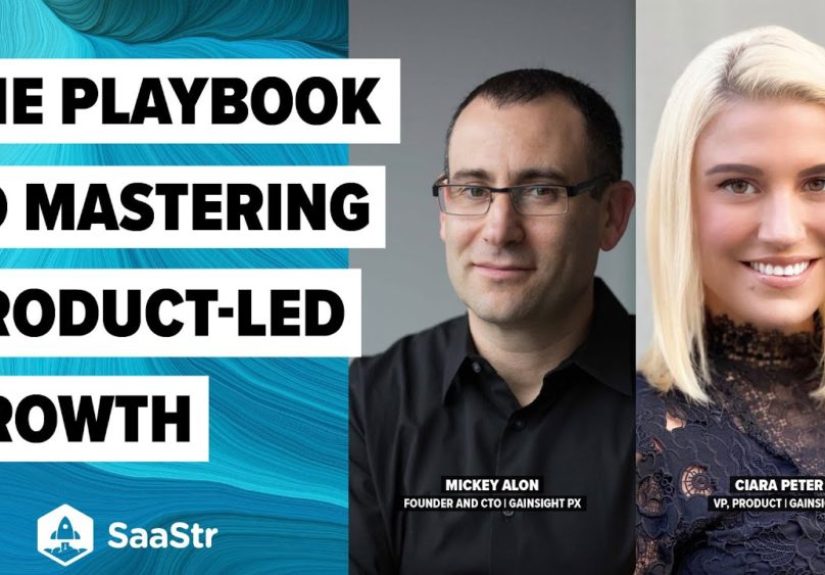
SaaStr Podcast #420: Mastering the Art and Science of Product-Led Growth With Gainsight is a useful reality check. In this episode, Gainsight leaders Ciara Peter and Mickey Alon unpack a smarter view of PLG: yes, great product experience drives growth, but the best teams treat PLG as both an art (customer empathy, journey design, messaging) and a science (behavioral data, activation metrics, experimentation, PQLs).
This article breaks down the episode’s key ideas, expands them with modern PLG best practices, and translates the conversation into an actionable framework for SaaS teams. The tone is practical, the examples are real, and the goal is simple: help you build a product-led growth motion that feels less like guesswork and more like a repeatable engine.
Why SaaStr Podcast #420 Still Matters
Even though the SaaStr episode was published in 2021, the core lessons feel very current. Buyers still want to experience value before talking to sales. End users still influence (and often drive) buying decisions. And product experience still shapes brand perception more than many companies admit.
In other words, your onboarding flow is no longer “just onboarding.” It is marketing, sales enablement, customer success, and sometimes your best account executiveminus the golf outings.
The episode’s central thesis in plain English
Gainsight’s perspective is refreshingly grounded: PLG is not merely a pricing model or a free-trial checkbox. It is a go-to-market strategy in which the product becomes the primary vehicle for acquisition, conversion, retention, and expansion. That requires intentional design of the trial experience, strong data discipline, and a cross-functional growth team focused on post-sign-up outcomes.
What Product-Led Growth Actually Means (Without the Buzzword Fog)
Let’s define PLG in a way your entire team can use. Product-led growth is a growth motion where the product itself does the heavy lifting across the customer journeyespecially in helping users discover value quickly, adopt core workflows, and expand usage over time.
The best PLG strategies share a few traits:
- Fast time-to-value: Users reach an “aha” moment quickly.
- Self-serve momentum: People can try, learn, and progress without waiting for a human.
- Behavior-driven decisions: Teams optimize based on usage data, not hallway opinions.
- Cross-functional ownership: Product, growth, marketing, sales, and success align around user outcomes.
- Expansion by value: Revenue grows as usage deepens, not just because a rep sent a well-timed email.
Notice what’s not on the list: “launch a freemium plan and hope.” Freemium can support PLG, but it is not PLG by itself. A confusing product with a free tier is still just a confusing productnow available at no charge.
The Gainsight Angle: Product Experience Is the Growth Strategy
One of the strongest themes in the podcast is that product experience and business growth are tightly linked. This is where Gainsight’s product experience philosophy shows up clearly: if you can understand what users do (and don’t do), guide them in-app, and reduce friction in key workflows, you can improve adoption, retention, and expansion.
That sounds obvious until you look at how many teams still operate. Marketing optimizes top-of-funnel. Product optimizes feature releases. Sales optimizes pipeline. Customer success optimizes renewals. Everyone is busy. Nobody owns the user’s first 30 minutes inside the product.
Podcast #420 argues that this gap is expensive.
Why buyer expectations changed the rules
The episode highlights a shift that PLG teams ignore at their own peril: B2B buyers increasingly expect a “try before you buy” experience, care deeply about ease of use, and judge products based on time-to-value. In many categories, the end user is no longer a passive participantthey are the catalyst for adoption and internal advocacy.
Translation: if your product needs a 45-minute sales demo just to prove it can create a task, upload a file, or trigger a workflow… your competitors are already inviting your users to dinner.
The Trial Experience: Where the Art and Science Meet
A standout section of the SaaStr episode is the discussion of free trials. Gainsight’s advice is sharp: a trial should not be treated as a side project or a “growth experiment” running in the corner while the main GTM strategy happens elsewhere. The trial is part of the GTM strategy.
According to the episode, the trial should do three jobs at once:
- Qualify prospects (not just collect signups)
- Demonstrate value (not just expose features)
- Create sales opportunities where appropriate
1) Mind the value gap
The “value gap” is the distance between a user signing up and a user actually experiencing a meaningful outcome. Great PLG teams obsess over shrinking this gap. Weak PLG teams celebrate signup spikes while users quietly bounce two minutes later.
If your trial flow says, “Welcome! Here are 37 things you can do,” that is not onboarding. That is a scavenger hunt.
2) Provide specific instructions (not vague inspiration)
Gainsight’s episode summary emphasizes clear in-product guidance and setting expectations. This is one of the most underappreciated PLG skills. Users don’t need your entire product tour on day onethey need the next best action.
Effective trial guidance usually looks like:
- A short setup checklist tied to the user’s job-to-be-done
- Contextual tooltips at moments of friction
- Templates or sample data to reduce blank-screen anxiety
- Progress markers that show users they are moving toward value
- In-app prompts triggered by behavior, not random timing
3) Offer accessible knowledge and fast feedback paths
Another podcast takeaway: make it easy for users to find help and give feedback during the trial. That means knowledge base access, in-app support entry points, and low-friction ways to ask questions.
PLG does not mean “no humans allowed.” It means users can move forward without a mandatory human. Helpful support accelerates PLG. Missing support kills it.
4) Test wisely during trials
This is such a good point, and frankly, it should be tattooed on every growth team backlog (temporary tattoo is fine). The episode warns against testing core workflows or making dramatic changes during trials in ways that disrupt the path to value.
Experimentation matters, but trial-stage experiments need guardrails:
- Protect the core activation path
- Test messaging, sequencing, prompts, and guidance before testing essential UX foundations
- Measure downstream impact (activation, retention, conversion), not just clicks
- Document learnings so teams don’t repeat failed experiments six months later with a new slide deck title
PQLs: The Metric That Makes PLG Actionable
The podcast summary calls out the need for a dedicated growth team focused on user acquisition and PQLs (Product Qualified Leads). This is a crucial bridge between product-led behavior and revenue outcomes.
A PQL is not just “someone who signed up.” It is a user or account that has demonstrated meaningful product value and shows signals associated with a higher likelihood to buy, expand, or engage with sales.
How to define PQLs without creating nonsense metrics
Start simple, then mature over time. Early-stage teams often begin with rough thresholds (for example, multiple logins, activation of a key feature, completion of a setup step). More advanced teams define PQLs around evidence of value realization and recurring engagement.
A better PQL framework usually combines:
- Activation signals: User completed the core setup and first success action
- Engagement signals: Repeated usage over a meaningful period
- Breadth/depth signals: Adoption of multiple valuable features
- Account signals: Team invites, collaboration behavior, workspace growth
- Commercial fit signals: ICP match, use case, company size, role relevance
The important part is alignment. Product, marketing, sales, and success should agree on what counts as “qualified by product behavior.” If marketing chases raw trial volume while sales only trusts enterprise demos, your PLG motion becomes a family group chat with 47 unread messages and zero decisions.
The PLG Operating System: A Practical Framework for SaaS Teams
If you want to apply the Gainsight + SaaStr Podcast #420 lessons in a real business, treat PLG as an operating system, not a campaign. Here’s a practical structure.
Layer 1: Journey design (the art)
- Define your primary user personas and jobs-to-be-done
- Map the first-value journey for each persona
- Create persona-specific onboarding paths
- Write in-product copy that is specific, helpful, and calm
- Design “next action” nudges that reduce decision fatigue
Layer 2: Behavioral instrumentation (the science)
- Track core events tied to activation, engagement, and monetization
- Build funnels for signup → setup → activation → repeat usage → conversion
- Segment by persona, acquisition source, and account type
- Identify friction points and drop-off moments
- Measure time-to-value and time-to-first-key-action
Layer 3: In-app engagement and lifecycle orchestration
- Use guided walkthroughs and checklists for early activation
- Trigger contextual prompts when users stall or skip a critical step
- Use lifecycle emails to reinforce progress, not just push generic reminders
- Collect feedback in-app where the experience happens
- Route high-value PQLs to sales with behavioral context attached
Layer 4: Experimentation with guardrails
- Prioritize tests that reduce friction or clarify value
- Protect core workflows during active trials
- Run experiments long enough to observe activation and retention effects
- Review experiment outcomes cross-functionally
- Keep a knowledge log of wins, losses, and weird surprises
Layer 5: Expansion and hybrid monetization
Modern PLG is often hybrid. The product drives adoption and early value, while sales and success help larger accounts expand. This is not “cheating” on PLG. It is smart go-to-market design.
In fact, many strong B2B SaaS companies use PLG to seed accounts and sales-assisted motions to scale them. Product-led growth and sales-led growth can complement each other when the handoff is based on real usage signals.
Common PLG Mistakes Teams Make After Listening to One Podcast Episode
(No shade. We’ve all done the “I listened to 43 minutes and now I’m starting a transformation program” thing.)
Mistake #1: Confusing signups with success
Signups are interesting. Activation is meaningful. Retention pays the bills.
Mistake #2: Building one generic trial for everyone
Different personas need different paths to value. A PM, analyst, and admin should not be forced through the same onboarding maze.
Mistake #3: No dedicated growth ownership
SaaStr Podcast #420 is explicit here: a dedicated growth team matters. When “growth” is everyone’s side quest, it becomes nobody’s weekly priority.
Mistake #4: Over-testing the wrong things
Testing core workflows during trials can damage user trust and distort results. Optimize the path to value first; get clever later.
Mistake #5: Treating PLG as anti-sales
PLG is anti-friction, not anti-sales. The best teams let the product create momentum, then deploy sales where humans add real value.
Final Takeaway: What SaaStr Podcast #420 Gets Exactly Right
The biggest lesson from SaaStr Podcast #420: Mastering the Art and Science of Product-Led Growth With Gainsight is this: PLG wins when product experience is intentionally engineered as a growth system.
Not just “nice UX.” Not just “free trial.” Not just “we added tooltips.”
Real PLG combines:
- Clear value delivery
- Data-driven iteration
- Cross-functional alignment
- Thoughtful experimentation
- PQL-based decision-making
- A customer experience that earns expansion
In short: make the product the star, but give it a good script, a great editor, and a metrics dashboard.
Experience-Based Add-On (500+ Words): What PLG Feels Like in Practice
Teams often ask what product-led growth looks like day to day, beyond podcast summaries and conference slides. The honest answer is: PLG feels less like a dramatic rebrand and more like a long series of smart, slightly unglamorous improvements that compound.
Imagine a SaaS company that sells workflow software to operations teams. They launch a free trial and get plenty of traffic, but trial-to-paid conversion is weak. The first reaction is usually to blame pricing, lead quality, or “market conditions.” Sometimes those are real issues. But often, the actual problem is simpler: new users are not reaching value fast enough.
In a product-led mindset, the team stops arguing in abstracts and starts mapping the first 15 minutes of the user experience. Where do users hesitate? Which setup step takes too long? Which screen causes confusion? Which feature do activated users use first that non-activated users ignore? Suddenly, PLG becomes tangible. It is no longer a strategy slogan; it is a sequence of decisions.
One common experience is discovering that “feature education” was overbuilt while “outcome guidance” was underbuilt. Teams proudly ship a polished onboarding tour that explains every icon, but users still churn because nobody showed them how to accomplish the one thing they came to do. When this gets fixedusually with a checklist, better defaults, sample templates, and contextual promptsactivation improves. Not always overnight. But enough to prove the direction is correct.
Another frequent PLG lesson is how powerful shared metrics can be. Before PLG, marketing may report signup volume, product reports feature adoption, and sales reports pipeline, with very little connection between them. After a company aligns around activation rate, time-to-value, and PQL thresholds, conversations change. Teams start asking better questions: Which acquisition sources produce the fastest activation? Which onboarding paths create more PQLs? Which behaviors predict expansion? The organization becomes more coherent.
There is also an emotional side to PLG that people do not talk about enough. It requires humility. Product teams have to accept that users do not behave like internal testers. Growth teams have to accept that not everything worth measuring moves fast. Sales teams have to accept that product signals can be stronger than form fills. And leadership has to accept that sustainable PLG is built through iteration, not one heroic launch.
The good news is that when PLG starts working, the effects are obvious. Users ask better questions because they have already experienced value. Sales conversations become more specific because reps can see real usage patterns. Customer success spends less time rescuing confused accounts and more time driving expansion. Product teams prioritize based on evidence instead of volume from the loudest Slack channel. It feels like the business finally speaks one language.
That is why the Gainsight conversation in SaaStr Podcast #420 still resonates. It frames PLG as both art and scienceand that is exactly how it feels in real teams. You need empathy, storytelling, and experience design. You also need instrumentation, metrics, and disciplined experimentation. Ignore either side, and growth becomes fragile. Build both, and your product starts doing what every SaaS company wants it to do: earn trust quickly, prove value clearly, and create expansion naturally.
Conclusion
If you are building a SaaS growth strategy in 2026, the lesson from this episode is not “go all-in on self-serve and fire everyone.” The lesson is more useful: design a product experience that creates value fast, measure what signals real value, and align your teams around those signals. That is the path to durable product-led growth.