Table of Contents >> Show >> Hide
- Why These Funny Newborn Photo Comparisons Work So Well
- What Newborns Actually Look Like in Real Life
- The Gap Between Birth Announcements and Postpartum Reality
- Why Parents Love Sharing the “Before” Alongside the “After”
- What These Viral Photos Reveal About Beauty, Honesty, and Parenting Culture
- If You Are Planning a Birth Announcement, Here’s the Real Secret
- Common Parent Experiences Behind These Viral Baby Photos
- Final Thoughts
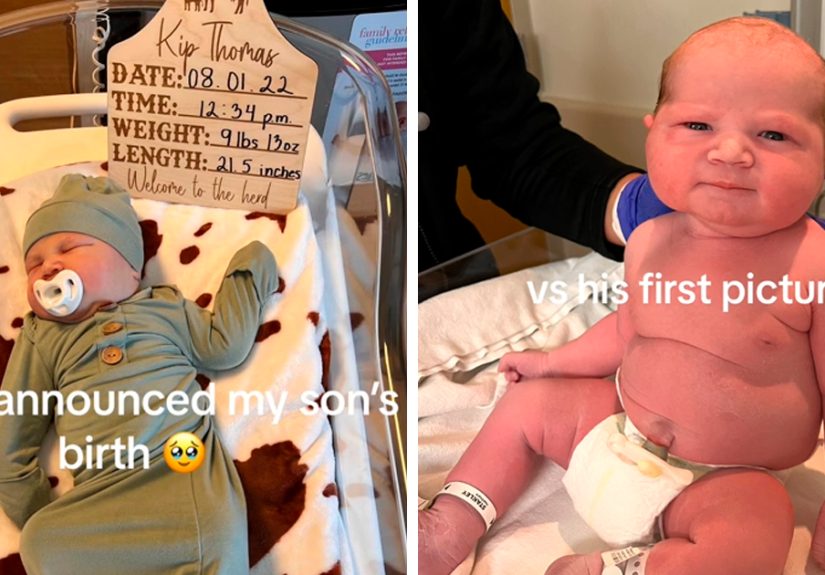
There are two kinds of baby photos on the internet. First, there is the polished birth announcement: soft lighting, tiny knit hat, sleepy smile, tasteful blanket, and a caption that practically smells like fresh laundry. Then there is the actual first-look newborn photo: squished face, dramatic expression, slightly puffy eyelids, and the unmistakable vibe of someone who did not agree to leave their studio apartment yet. Put those two images side by side, and suddenly the internet has a comedy classic.
That is exactly why posts built around baby birth announcement photos vs. reality hit so hard. They are funny, yes, but they are also weirdly comforting. Parents see them and think, “Ah, excellent. So my child did not arrive looking like a greeting card angel either.” In a digital world filled with curated parenting content, these before-and-after newborn comparisons cut through the performance and give readers something refreshingly rare: honesty with a diaper bag.
This article looks at why these viral newborn photo roundups resonate, what newborns actually tend to look like in their earliest moments, and why the messier reality of birth often makes the sweetest story. Because the truth is simple: the glossy announcement picture is usually the sequel, not the opening scene.
Why These Funny Newborn Photo Comparisons Work So Well
The appeal of a post like “35 Parents Share Pics They Used To Announce Their Baby’s Birth Vs. What They Actually Looked Like” is not just the visual punchline. It is the emotional contrast. On one side, you get the social media version of the story: serene, polished, adorable, and ready for relatives to comment, “Perfection!” On the other side, you get the raw version: a real baby in real time, fresh from birth, looking a little stunned, a little crumpled, and occasionally like a tiny old man who is already disappointed in the economy.
That contrast reflects something bigger about modern parenting culture. Birth announcement ideas have become mini branding exercises. Parents choose outfits, props, captions, fonts, color palettes, and photo filters. None of that is wrong. It is fun, creative, and often genuinely heartfelt. But the highly curated nature of online sharing can create the impression that babies arrive camera-ready, parents feel instantly composed, and everything from labor to swaddling unfolds like a premium ad campaign. Reality, meanwhile, often arrives sweaty, sleep-deprived, and asking where the burp cloth went.
The funniest newborn comparison posts work because they restore balance. They remind readers that there is nothing wrong with wanting a beautiful announcement photo, but there is also nothing wrong with the pre-glamour stage. In fact, that chaotic stage is half the charm. The polished photo says, “Welcome to the world.” The real photo says, “This was a dramatic entrance, and everyone involved deserves a snack.”
What Newborns Actually Look Like in Real Life
One reason these viral posts land so well is that they are medically believable. Newborns are adorable, but they are often not immediately adorable in the way greeting-card culture suggests. They have just completed one of the most intense physical transitions imaginable, and their appearance can reflect that.
1. The “Why Does My Baby Look Like a Tiny Wrestler?” Phase
Many newborns arrive with puffy features, temporary swelling, wrinkly skin, and a head shape that looks less “storybook cherub” and more “worked very hard to get here.” That is normal. Babies born vaginally can have a temporarily cone-shaped or misshapen head because the skull is designed to mold during birth. That means the baby in the first raw photo may look dramatically different from the baby in the carefully chosen birth announcement taken days later.
Parents who compare those two photos are not exposing some cosmic betrayal. They are documenting biology. Newborn appearance changes fast. The face softens. The swelling goes down. The skin tone evens out. Suddenly the child who looked like a grumpy philosopher after a long red-eye flight now looks like a tiny cloud in a bamboo sleeper.
2. Skin That Has Absolutely Been Through Something
Newborn photos taken right after birth may show red, purple, blotchy, flaky, or peeling skin. Some babies still have vernix, that creamy coating that protected the skin before birth. Some have fine body hair called lanugo. Some have tiny bumps, baby acne, or harmless rashes that send first-time parents into a search spiral at 2:13 a.m. In other words, your baby’s debut may be less “airbrushed cherub” and more “very small person with a surprising amount of texture.”
And yet that is exactly why the reality photos are so funny and memorable. They show that newborn beauty is not always polished beauty. Sometimes it is raw, odd, expressive, and hilariously human. Babies do not know they are supposed to be soft-focus icons. They are busy blinking, stretching, and trying to figure out why the room is so bright.
3. The Face of a Person Who Did Not Approve This Schedule
Then there are the expressions. If you have ever seen a newborn appear deeply suspicious, slightly offended, or spiritually exhausted, congratulations: you have witnessed peak realism. Many of the best real baby photos are funny not because the baby looks bad, but because the baby looks weirdly opinionated. One seems to be judging the lighting. Another looks like they have seen taxes. A third appears ready to file a formal complaint.
These expressions are gold for parents because they create instant family lore. The cleaned-up announcement image may frame the baby as sweet, calm, and angelic. The original delivery-room photo tells the better story: “Here is the exact face she made when introduced to air conditioning.” That is not a flaw in the narrative. That is the narrative.
The Gap Between Birth Announcements and Postpartum Reality
The baby is not the only one experiencing a difference between presentation and reality. Parents are, too. A polished announcement may show joy, calm, and perfect lighting. Off camera, there is often recovery, exhaustion, feeding schedules, hospital bracelets, disposable underwear, cold coffee, and the dawning realization that nobody really explained how often a newborn eats.
That is why these comparison posts resonate beyond comedy. They quietly push back against the pressure to make parenthood look effortless. The internet loves a clean reveal. Real life loves a plot twist. Birth announcements freeze a beautiful moment, but they do not capture the full texture of early parenthood, and they are not supposed to. The trouble starts when viewers confuse the highlight reel for the whole movie.
For many readers, seeing newborn reality represented with humor is a relief. It says you can adore your baby without pretending the first days were photogenic. It says your child can be the love of your life and still look like a startled raisin in the first hospital photo. It says you can be overwhelmed, tender, exhausted, proud, and amused all at once. That is not bad parenting. That is the full package.
Why Parents Love Sharing the “Before” Alongside the “After”
There is also something deeply satisfying about the transformation arc. The first image captures the raw arrival. The second image captures the baby after a little settling, a little feeding, a little warming up, and maybe a nap long enough to stop looking personally offended by existence. That side-by-side comparison gives parents the chance to tell a tiny visual story.
It also builds community. When one parent posts an honest comparison, other parents pile in with their own. Suddenly the comments become a support group disguised as a comedy club. One parent says their son looked like an angry sweet potato. Another says their daughter arrived with “accountant energy.” A third uploads a picture that can only be described as “Victorian ghost baby, but in a lovable way.” Everyone laughs, and everyone feels a little less alone.
That collective humor matters. Parenting can be intense, especially in the first days. Shared laughter does not erase the hard parts, but it makes them easier to carry. Funny baby announcement photos are not just entertainment; they are tiny social signals that say, “Yes, this was wild for us too.”
What These Viral Photos Reveal About Beauty, Honesty, and Parenting Culture
At a deeper level, these posts expose an interesting truth about beauty. The most memorable baby photos are not always the technically perfect ones. Often, the images people treasure most are the ones packed with personality. The yawn. The squint. The cranky frown. The gloriously awkward angle. The hospital blanket that looks like it was chosen by committee in 1987. Those details give the moment weight.
That is why the “announcement vs. what they actually looked like” format feels so satisfying. It challenges the idea that only polished images deserve to be shared. It creates room for a fuller, more human version of memory-making. It lets parents celebrate both the beautiful image and the bizarre one. In fact, the bizarre one is often the family favorite years later.
There is also an unspoken kindness in the trend. Instead of mocking babies, these posts usually celebrate the shock of transition. Of course a newborn may look rumpled, swollen, or dramatically unimpressed. Birth is not a spa checkout. These images normalize that reality and make room for parents to laugh without shame.
If You Are Planning a Birth Announcement, Here’s the Real Secret
If this trend teaches anything, it is that the best birth announcement is the one that feels true to your family. Maybe you want the polished swaddle photo with the elegant name card. Great. Maybe you want the hilariously honest first-face photo that looks like your baby is already tired of everyone. Also great. Maybe you want both, and honestly, that is the winning strategy.
The polished photo captures aspiration. The messy one captures reality. Together, they tell the full story of arrival: the beauty, the absurdity, the vulnerability, the love, and the slightly chaotic beginning of a brand-new life. That combination tends to resonate more than perfection ever could.
So if your baby did not emerge looking like a magazine cover, welcome to the club. The club is enormous, very tired, and emotionally attached to at least one photo in which their newborn resembles a tiny grandpa. That does not make the moment less beautiful. It makes it more believable.
Common Parent Experiences Behind These Viral Baby Photos
Across parenting communities, medical guidance, and first-person stories, the same real-life experiences appear again and again. Parents often spend months imagining one cinematic moment: the baby arrives, everyone cries beautifully, and the first picture is frame-worthy on the spot. Then the birth actually happens, and the true first image is usually much more chaotic. One parent is crying, another is squinting from lack of sleep, a nurse is adjusting a blanket, and the baby looks like they just finished a difficult negotiation. That disconnect between expectation and reality is exactly why these side-by-side posts feel so familiar.
Another common experience is how fast newborn appearance changes. Parents are often startled that the baby from hour one does not look quite like the baby from day three, and definitely not like the baby from week two. The swelling settles. The skin looks less blotchy. The facial features soften. The eyes open more. The baby begins to look less like a suspicious potato and more like the child everyone imagined during pregnancy. For families, that quick transformation can feel both funny and emotional. The “actual first look” photo becomes a snapshot of transition, while the announcement image becomes the version they are ready to show the wider world.
Many parents also talk about the strange pressure to make early parenthood look graceful. Social media has trained people to expect tidy reveals, cute captions, coordinated outfits, and a baby who appears to have already hired a stylist. But the lived experience is usually far more practical: feeding every couple of hours, trying to decode cries, watching diaper counts, learning how to swaddle, and realizing that time no longer moves in a straight line. In that setting, the honest newborn photo can feel almost rebellious. It says, “This is what the beginning really looked like, and it was messy and wonderful.”
Humor plays a huge role in how parents remember those first days. What felt intense in the moment often becomes hilarious in retrospect. The baby who looked grumpy becomes “the CEO photo.” The baby with the dramatic conehead becomes “the little peanut era.” The puffy-eyed expression becomes the face printed on a family mug five years later. Parents do not just share these images because they are funny; they share them because humor helps preserve the emotional truth of the moment. Love and absurdity arrive together in the newborn stage, and those photos prove it.
In the end, the experience behind this topic is not really about whether babies look glamorous at birth. It is about the gap between fantasy and reality, and how often reality turns out to be more lovable. The perfect announcement photo may be the image that gets posted. The weird, wonderful, utterly unfiltered first photo is usually the one that becomes family legend.
Final Thoughts
The reason people cannot stop clicking on posts about parents sharing baby announcement photos vs. what their newborns actually looked like is simple: the format is funny, but the truth underneath it is tender. These images remind us that newborn life does not begin in perfect lighting. It begins in motion, noise, surprise, recovery, and awe. It begins with strange expressions, hospital blankets, and the kind of love that arrives before the photo editing ever does.
And maybe that is the real lesson. A polished birth announcement is lovely. A real first-look newborn photo is unforgettable. Put them together, and you get something even better than perfection: a story people recognize instantly because it feels like real life.