Table of Contents >> Show >> Hide
- The Human Need to Count Came First
- The Abacus: The Original Portable Calculator
- Logarithms: Turning Hard Problems into Easier Ones
- Napier’s Bones: Multiplication with a Side of Theater
- The Slide Rule: Engineering in Your Pocket
- Mechanical Calculators: When Arithmetic Got Gears
- Charles Babbage and the Dream of Automatic Calculation
- Human Computers: The People Behind the Numbers
- The Mathematical Tables Project: Big Data with Pencils
- Punched Cards and the Census: Counting a Nation by Machine
- ENIAC and the Turning Point
- What We Lost When Calculation Became Invisible
- What We Gained from Going Digital
- Lessons from Pre-Digital Calculation for Modern Life
- Experiences Related to Calculation Before We Went Digital
- Conclusion
Before phones could split a restaurant bill, before spreadsheets calmly swallowed a year’s worth of invoices, and before a calculator app lived in every pocket like a tiny accountant with no lunch break, calculation was physical, noisy, slow, and surprisingly clever. People counted with stones, beads, marks, tables, gears, cranks, rulers, and, very often, other people. The history of calculation before digital technology is not just a museum shelf full of wooden frames and brass wheels. It is the story of how humans tried to make thinking portable.
“Calculation before we went digital” sounds like a dusty phrase, but it describes the invisible scaffolding beneath modern life. Navigation, taxation, astronomy, engineering, insurance, banking, architecture, artillery, census-taking, and spaceflight all depended on reliable arithmetic long before silicon chips began doing the heavy lifting. The tools were slower, yes. They also forced users to understand scale, approximation, error, and method. In other words, old calculation did not simply produce answers; it trained judgment.
This article walks through the fascinating world of pre-digital calculation: abacuses, logarithms, slide rules, mechanical calculators, mathematical tables, punched cards, and the human computers who proved that “computer” was once a job title, not a machine. Bring a pencil. No charging cable required.
The Human Need to Count Came First
Long before anyone worried about battery percentage, people needed to count animals, grain, land, taxes, debts, stars, distance, and time. Early calculation was practical. It answered questions like: How much do I owe? How far can this ship travel? How many bricks will this wall need? How much food survives the winter if Uncle Frank keeps snacking like a raccoon in trousers?
The earliest counting aids were simple: fingers, tally marks, pebbles, knots, and tokens. These tools mattered because they moved numbers out of memory and into the physical world. Once a number could be represented by an object or mark, it could be checked, shared, stored, and disputed. That last part is important. Civilization advanced partly because someone could point to a mark and say, “No, Harold, you borrowed seven sheep, not five.”
The Abacus: The Original Portable Calculator
The abacus is one of the most enduring calculating devices in human history. It uses beads or counters arranged on rods or grooves to represent numbers. By moving beads according to established rules, users can add, subtract, multiply, divide, and even handle more advanced operations with practice.
What makes the abacus brilliant is not that it replaces thinking. It organizes thinking. Each bead has a place value, so the user sees number structure directly. Carrying and borrowing become physical actions rather than abstract rules hiding in a workbook. This is why abacus training can still be powerful for mental math: the device builds a visual and tactile model of arithmetic.
The abacus also reminds us that a good technology does not need electricity to be fast. In skilled hands, it can be astonishingly efficient. It is quiet, durable, inexpensive, and immune to software updates. Try saying that about your laptop after it restarts during a meeting.
Logarithms: Turning Hard Problems into Easier Ones
For centuries, multiplication, division, roots, and powers were major obstacles in science, surveying, navigation, and engineering. Then logarithms changed the game. Introduced in the early 17th century, logarithms allowed people to turn multiplication into addition and division into subtraction. That may sound like a math teacher’s idea of a party trick, but it was revolutionary.
Imagine an astronomer working with enormous numbers or a navigator trying to calculate position at sea. Without digital tools, each difficult multiplication could consume valuable time and invite mistakes. Logarithm tables reduced the burden. A user looked up numbers in printed tables, performed simpler arithmetic, and then converted the result back. It was not instant, but it was much faster than grinding through every operation by hand.
Why Tables Were a Big Deal
Mathematical tables were the search engines of pre-digital calculation. Need a sine value? Check the table. Need a logarithm? Check the table. Need a square root? Check the table. These books were carefully compiled, printed, checked, and used by scientists, engineers, navigators, and students.
The catch, naturally, was accuracy. A single printing error could spread wrong answers through many calculations. That is why table-making became a serious intellectual industry. Teams checked results, compared entries, and developed procedures to catch mistakes. Before digital databases, trust came from disciplined repetition.
Napier’s Bones: Multiplication with a Side of Theater
John Napier, better known for logarithms, also introduced a physical calculating aid known as Napier’s bones. These were rods marked with multiplication values. By arranging the rods for a number and reading diagonals, users could perform multiplication more efficiently.
Napier’s bones look almost magical at first glance: a handful of marked sticks transforming a dreaded multiplication problem into a pattern-reading exercise. But the magic is really structure. The rods break multiplication into partial products and organize the carrying process. They do not eliminate arithmetic; they tame it.
This is a recurring theme in the history of calculation before digital devices. Great tools did not always solve the whole problem. They made the problem easier to manage, one step at a time.
The Slide Rule: Engineering in Your Pocket
The slide rule may be the most iconic pre-digital calculating tool of the modern scientific age. It looks like a ruler with moving scales, but it is really a compact analog computer. By aligning logarithmic scales, users could multiply, divide, calculate powers and roots, and work with trigonometric functions.
From the late 19th century into the 20th century, slide rules were essential for engineers, scientists, electricians, pilots, architects, and students. Bridges, aircraft, factories, and space-age hardware were designed by people who knew how to read a sliding scale and estimate the decimal point. The slide rule did not usually give long exact decimals. Instead, it gave useful precision and forced the user to understand magnitude.
The Secret Skill: Knowing Where the Decimal Goes
A slide rule might tell you that the answer begins with 3.72, but it often leaves you to decide whether the result is 0.372, 37.2, or 3,720. That sounds like a flaw, but it was also a strength. Users had to estimate mentally before trusting the result. They developed number sense. A calculator can return nonsense with perfect confidence if you enter nonsense. A slide rule quietly asks, “Are you sure you know what neighborhood this answer lives in?”
That habit of estimation is one reason old-school engineers often speak fondly of slide rules. They were not just calculating devices; they were thinking devices.
Mechanical Calculators: When Arithmetic Got Gears
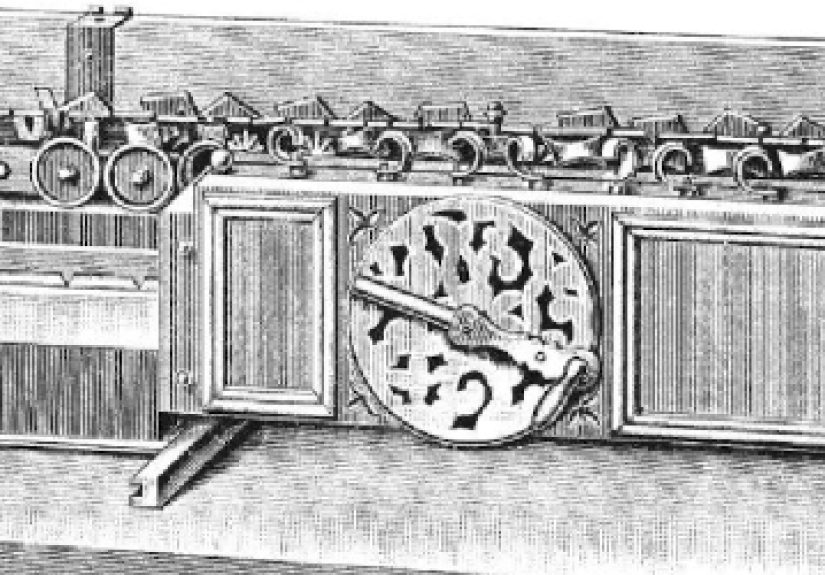
The dream of mechanical calculation is old: build a machine that can add, subtract, multiply, or divide with less human effort. In the 17th century, Blaise Pascal created the Pascaline, a gear-driven adding machine designed partly to help with tax calculations. Gottfried Wilhelm Leibniz later developed a stepped-drum mechanism that influenced future mechanical calculators.
These early machines were marvels of precision, but they were not simple consumer gadgets. They required craftsmanship, maintenance, and money. Still, they introduced a powerful idea: arithmetic could be embodied in a machine. Carrying digits, once a mental operation, could become a mechanical action inside interlocking wheels.
By the 19th and early 20th centuries, mechanical calculators became more practical. Desk calculators, adding machines, comptometers, and cash registers appeared in offices, banks, shops, and government agencies. They clicked, clacked, rang bells, printed totals, and made clerical work faster. The office became a landscape of paper, ink, keys, levers, and people who could operate machines at impressive speed.
The Sound of Office Arithmetic
Pre-digital calculation was not silent. It had a soundtrack: keys snapping, gears turning, handles cranking, paper rolls advancing, bells chiming, and supervisors asking whether the totals were ready yet. If modern computing hums, mechanical calculation rattled. It made labor audible.
Charles Babbage and the Dream of Automatic Calculation
Charles Babbage imagined machines that could do more than help with arithmetic. His Difference Engine was designed to produce mathematical tables automatically using the method of finite differences. His later Analytical Engine was even more ambitious, containing ideas that resemble modern computing concepts: memory, processing, and instructions.
Babbage’s machines were not completed in his lifetime as full working systems, but the ambition mattered. He saw that errors in hand-produced tables were costly. If a machine could reliably calculate and print tables, it could reduce human error and speed scientific work. That vision sits directly on the road toward digital computing, even though it belonged to an age of brass, steam, and Victorian patience.
Human Computers: The People Behind the Numbers
Before “computer” meant a device, it meant a person who computed. Human computers were employed by observatories, universities, government agencies, laboratories, and military organizations. Their work involved repetitive but highly important calculation: astronomical tables, ballistics, engineering data, navigation charts, and later aerospace mathematics.
Many human computers were women. In some institutions, women were hired because they were educated, skilled in mathematics, and paid less than men in comparable technical roles. That history contains both achievement and inequality. Women performed essential mathematical labor while often receiving limited recognition, lower status, and fewer opportunities for advancement.
At Harvard Observatory, women known as “computers” helped classify stars and process astronomical data. At NASA and its predecessor organizations, women mathematicians calculated trajectories, flight paths, and mission data. Their work helped move aeronautics and space exploration forward. The modern public knows some of this story through the history of Katherine Johnson, Dorothy Vaughan, Mary Jackson, and other brilliant figures whose calculations supported major American space missions.
Why Human Computers Mattered
Human computers were not merely doing “basic math.” They were part of organized systems of calculation. A complex problem could be broken into smaller steps, distributed among workers, checked by others, and assembled into a final result. This process resembles later programming workflows: define the problem, divide the labor, follow procedures, verify outputs, and correct errors.
In a very real sense, the culture of computing existed before electronic computers. The machine inherited methods that people had already developed.
The Mathematical Tables Project: Big Data with Pencils
During the 20th century, the Mathematical Tables Project became one of the largest organized human computing efforts in the United States. It employed hundreds of people to create tables for functions such as logarithms, trigonometric values, exponentials, and other scientific needs. Workers followed carefully designed procedures, and results were checked to reduce errors.
This kind of project shows how serious pre-digital calculation could be. It was not a lone genius scribbling on a napkin. It was a production system. Managers planned methods. Computers performed steps. Checkers verified answers. Editors prepared tables for publication. The final product helped scientists, engineers, and government workers calculate more quickly and reliably.
Punched Cards and the Census: Counting a Nation by Machine
As populations grew, governments faced a calculation problem of enormous scale. The U.S. Census had to process huge amounts of data, and manual tabulation became painfully slow. Herman Hollerith developed an electromechanical tabulating system using punched cards to help process the 1890 U.S. Census.
Each card represented information through holes punched in specific positions. Machines read the holes and updated counters. This was not digital computing in the modern electronic sense, but it was a huge step toward machine-readable data processing. It showed that information could be encoded, sorted, counted, and analyzed faster with machines than with hand tallying alone.
Punched cards later became central to business computing, government data processing, and early computer programming. They are a bridge between physical calculation and electronic information systems. They also gave humanity one of its most dramatic office experiences: dropping a stack of carefully ordered cards and discovering new levels of emotional maturity.
ENIAC and the Turning Point
By the 1940s, electronic digital computing began to change the meaning of calculation. ENIAC, developed at the University of Pennsylvania and announced in 1946, was designed to perform mathematical tasks at electronic speed. It was enormous, expensive, and complex, but it revealed a new future: calculation could happen thousands of times faster than with mechanical or manual methods.
Even then, the transition was not instant. Early electronic computers still depended on people who understood mathematics, wiring, logic, tables, and procedures. Many early programmers came from the ranks of human computers. The digital age did not erase pre-digital skill overnight. It absorbed it.
What We Lost When Calculation Became Invisible
Digital tools gave us speed, convenience, and scale. Nobody wants to calculate a mortgage amortization table by hand for fun, unless they have either a heroic attention span or a suspiciously quiet weekend. But something changed when calculation became invisible.
Pre-digital calculation made effort visible. You could see the beads move, the ruler slide, the crank turn, the table open, the pencil marks accumulate. Errors had trails. Work had texture. Users often understood the relationship between input, method, and output because they had to participate in every step.
Today, answers arrive instantly. That is wonderful, but it can weaken number sense. A spreadsheet may produce a beautiful total from a broken formula. A calculator may accept a misplaced decimal. An app may simplify a process so thoroughly that the user no longer understands what is being calculated. Speed is not the same as comprehension.
What We Gained from Going Digital
Of course, digital calculation transformed the world for good reasons. It made complex modeling possible. It accelerated science, medicine, engineering, logistics, finance, weather forecasting, communication, and design. It reduced repetitive clerical labor and opened new fields of research. Tasks that once required rooms of people and weeks of work can now happen in seconds.
The point is not that old tools were better. The point is that old tools taught lessons modern users still need: estimate first, check assumptions, understand units, verify results, and respect the possibility of error. The best digital thinkers carry pre-digital habits into digital environments.
Lessons from Pre-Digital Calculation for Modern Life
1. Estimation Is Still a Superpower
Before trusting a digital answer, ask whether it makes sense. If a grocery discount turns a $40 basket into $4,000, the software is not being generous. Something went wrong. Estimation catches nonsense early.
2. Tools Shape Thought
An abacus encourages place-value thinking. A slide rule encourages scale awareness. A spreadsheet encourages tabular logic. Every tool teaches habits. Choose tools carefully and learn what they hide.
3. Speed Needs Verification
Fast wrong answers are still wrong. Pre-digital calculation built checking into the workflow because errors were expected. Modern work should do the same.
4. People Remain Part of the System
Even the most advanced software depends on human judgment. Someone defines the problem, selects the data, interprets the output, and acts on the result. The human computer never disappeared completely; the role changed.
Experiences Related to Calculation Before We Went Digital
To understand calculation before we went digital, imagine a classroom, office, workshop, or kitchen where every answer requires contact with the physical world. There is no glowing screen, no undo button, no helpful app politely guessing what you meant. There is paper, a pencil, a ruler, a table of values, maybe a mechanical adding machine, and the quiet pressure of getting it right.
One common experience was the ritual of longhand arithmetic. Students learned to stack numbers carefully, line up decimal points, carry digits, borrow across columns, and check the result by reversing the operation. It could be tedious, but it built a strong sense of number structure. A child who repeatedly added columns by hand learned that place value was not decorative. Move a digit one column to the left, and everything changes. That lesson stays useful long after the worksheet disappears.
Another experience belonged to engineers and technical students using slide rules. A slide rule did not hand over an answer with ten decimal places. It required the user to set scales, read marks, and decide the correct order of magnitude. The process rewarded attention. If the answer seemed too large or too small, the user had to pause and rethink. That pause was valuable. It trained people not to worship the tool. It made calculation a conversation between device and judgment.
Office workers had a different relationship with calculation. In banks, shops, insurance firms, and government departments, adding machines and mechanical calculators turned arithmetic into a rhythm. Operators developed speed through repetition. Their fingers knew the keys. Their ears recognized the sound of the machine. Totals were printed on paper tape, reviewed, attached, filed, and sometimes argued over by managers who treated a misplaced digit like a small household fire.
Families also practiced pre-digital calculation in everyday ways. Grocery budgets were added on paper. Fuel mileage was estimated manually. Home improvement projects required measuring boards, calculating square footage, and buying enough paint without accidentally preparing to coat the entire neighborhood. Parents balanced checkbooks line by line. Small businesses calculated payroll, inventory, taxes, and invoices without cloud software. The math was not always elegant, but it was intimate. People touched their numbers.
There was also patience in the process. Looking up logarithms or trigonometric values in a table required careful reading. Users learned to interpolate between entries, watch units, and keep notes. Mistakes were annoying, but they were often visible. A smudged digit, a crossed-out line, a suspicious subtotalthese were clues. In digital work, mistakes can hide inside formulas or settings. In pre-digital work, mistakes often left footprints.
The most powerful experience, however, may have been collaboration. Large calculation projects depended on teams. One person designed the method, others computed partial results, others checked them, and still others prepared final tables or reports. That workflow appears old-fashioned, but it resembles modern data work more than we might think. Today we have analysts, reviewers, engineers, software tools, and quality checks. The speed changed. The need for trust did not.
Looking back, calculation before we went digital was slower and less convenient, but it was not primitive. It was disciplined, inventive, and deeply human. It taught people to estimate, verify, document, and respect numbers. Those habits remain essential. The next time a calculator app instantly solves a problem, it is worth remembering the beads, bones, tables, rulers, cranks, cards, and people who made that instant answer possible.
Conclusion
Calculation before we went digital was not a single invention but a long chain of human ingenuity. The abacus made place value visible. Logarithms and tables turned painful operations into manageable steps. Slide rules gave engineers portable power. Mechanical calculators brought gears into offices. Punched cards helped governments process information at scale. Human computers turned disciplined teamwork into scientific progress.
The digital age made calculation faster than earlier generations could have imagined, but the older world still has something to teach us. Good calculation is not only about getting an answer. It is about understanding the method, checking the scale, catching errors, and knowing when a result deserves trust. In that sense, the smartest modern users are not those who abandoned pre-digital habits. They are the ones who carried the best of them forward.