Table of Contents >> Show >> Hide
- Quick Comparison: Best Solar Phone Chargers of 2024
- How to Choose a Solar Phone Charger in 2024
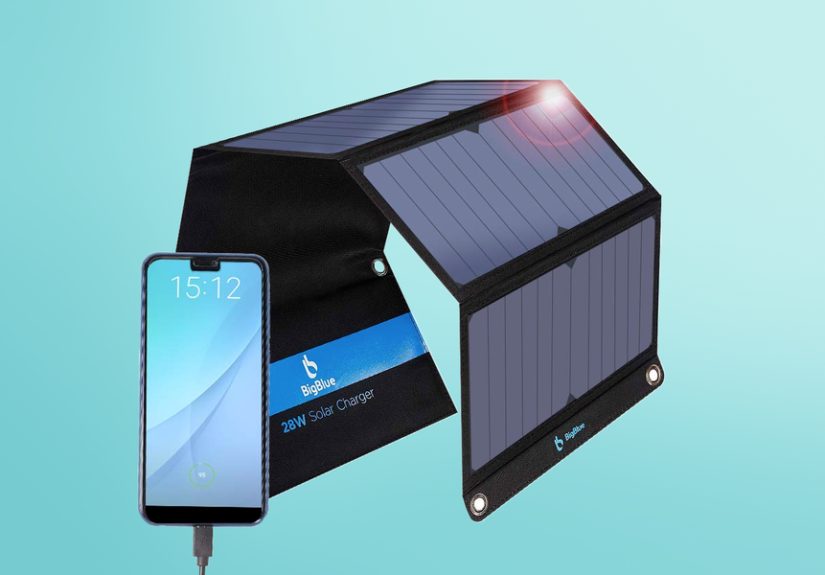
- 1. BigBlue SolarPowa 28: Best Overall Solar Phone Charger
- 2. BioLite SolarPanel 10+: Best for Backpackers and Casual Campers
- 3. Goal Zero Nomad 10: Best Simple and Rugged Solar Charger
- 4. SunJack 25W Portable Solar Charger: Best Emergency-Ready Kit
- Solar Phone Charger Buying Tips
- Which Solar Phone Charger Should You Buy?
- Real-World Experience: What It Is Actually Like Using Solar Phone Chargers
- Conclusion
There is a particular kind of modern panic that happens when your phone hits 4% battery and the nearest wall outlet is somewhere between “not here” and “good luck, pioneer.” That is where a good solar phone charger earns its keep. Whether you are camping, hiking, road-tripping, preparing for storm season, or simply trying to keep your phone alive at a sunny beach day, the best solar phone chargers of 2024 can turn daylight into usable power without requiring you to wrestle a gas generator into your backpack.
But let’s be clear: solar phone chargers are not magic rectangles. They do not refill a phone in five minutes while dangling lazily from a backpack in cloudy weather. The good ones work best in direct sun, with the panel angled properly, and often paired with a power bank so you can store energy instead of trying to charge your phone directly under unpredictable sunlight. Think of them less like a wall outlet and more like a patient outdoor teammate who performs beautifully when you treat it right.
For this guide, the focus is on portable solar chargers that make sense for phones first: compact foldable panels, USB outputs, durable construction, reasonable weight, and practical charging performance. The four picks below are based on real specifications, user needs, and the kind of field practicality that matters when your phone is your map, camera, flashlight, emergency contact system, and, let’s be honest, your portable snack-research machine.
Quick Comparison: Best Solar Phone Chargers of 2024
| Rank | Solar Phone Charger | Best For | Key Strength |
|---|---|---|---|
| 1 | BigBlue SolarPowa 28 | Best overall solar phone charger | Strong 28W output, foldable design, multiple USB ports |
| 2 | BioLite SolarPanel 10+ | Best for backpackers and casual campers | Built-in battery, sundial, adjustable kickstand |
| 3 | Goal Zero Nomad 10 | Best simple, rugged pick | Trusted brand, compact 10W panel, easy setup |
| 4 | SunJack 25W Portable Solar Charger | Best emergency-ready kit | 25W panel, rugged ETFE build, often bundled with power banks |
How to Choose a Solar Phone Charger in 2024
Before buying a portable solar phone charger, pay attention to four things: wattage, ports, weight, and whether it includes a battery. Wattage tells you the panel’s potential output in ideal sunlight. A 10W panel can work for slow and steady phone charging, while 20W to 30W panels usually feel more useful for daily outdoor use. Larger panels can charge faster, but they also take up more space in a pack.
Ports matter because newer phones, tablets, and power banks increasingly rely on USB-C. A charger with only USB-A may still work, but USB-C support gives you more flexibility. Weight is equally important. A larger solar panel may look impressive on paper, but if it feels like carrying a folding patio table, you will probably leave it at home. Finally, consider whether the charger has a built-in battery. Panels with built-in storage are convenient, but many outdoor users prefer pairing a solar panel with a separate, high-quality power bank. That way, the panel can collect energy during the day while your phone charges safely later in the shade.
1. BigBlue SolarPowa 28: Best Overall Solar Phone Charger
The BigBlue SolarPowa 28 earns the top spot because it strikes the best balance between charging power, portability, and value. With a rated output around 28 watts, it offers more practical solar capacity than tiny emergency panels while remaining compact enough for camping, hiking, beach days, and road trips. It folds into a packable shape, opens wide to catch sunlight, and usually provides multiple USB outputs for charging phones, power banks, earbuds, GPS devices, or a small camp lantern.
Why It Stands Out
The biggest advantage of the BigBlue SolarPowa 28 is that it has enough panel area to be useful in real outdoor conditions. Smaller solar phone chargers may technically work, but their output can feel painfully slow unless the sun is perfect. A 28W folding panel gives you more breathing room. That does not mean you will always get the full rated wattageportable solar panels rarely hit laboratory numbers in the fieldbut it does mean you have a better chance of collecting meaningful energy during a sunny afternoon.
Another reason BigBlue is popular is its straightforward design. You unfold it, aim it at the sun, plug in your device or battery pack, and let the panel do its job. Some versions include a digital ammeter so you can see charging current, which is helpful for adjusting the angle. If the number drops, move the panel. If the number rises, congratulations, you are now negotiating with the sun like a tiny energy farmer.
Best Use Cases
The BigBlue SolarPowa 28 is best for campers, hikers who do not mind a little extra pack weight, van travelers, festival-goers, and anyone who wants a reliable portable solar charger for phones without jumping into full power-station territory. It is especially useful when paired with a 10,000mAh or 20,000mAh power bank. Charge the battery bank in sunlight during the day, then use the bank to charge your phone at night. This setup is more efficient and safer than leaving your phone baking in direct sun.
Potential Drawbacks
The main drawback is size. The BigBlue is portable, but it is not pocket-sized. It also needs direct sunlight and thoughtful positioning to perform well. If you plan to strap it to a backpack and hike under trees all day, do not expect miracles. Solar charging works best when the panel is stationary, angled toward the sun, and not shaded by branches, clouds, elbows, dogs, picnic baskets, or your friend named Kevin who always stands exactly where he should not.
2. BioLite SolarPanel 10+: Best for Backpackers and Casual Campers
The BioLite SolarPanel 10+ is a smart, elegant option for people who want solar charging without carrying a huge folding panel. It has a 10W solar panel, an integrated battery of about 3,200mAh, a built-in sundial for alignment, and a 360-degree kickstand that makes it easy to position on uneven ground. It is not the fastest solar phone charger on this list, but it may be the friendliest.
Why It Stands Out
BioLite understands that most people do not want to perform trigonometry at a campsite. The built-in sundial helps you angle the panel toward the sun, which improves real-world charging. The integrated battery is also useful because it lets the panel store some energy instead of forcing you to connect your phone immediately. For weekend trips, day hikes, and lightweight camping, that convenience matters.
The SolarPanel 10+ is also compact enough for travelers who value space. It works well for topping off a phone, headlamp, fitness tracker, or small USB device. It is not designed to run a laptop or power an entire campsite, and that is perfectly fine. Not every solar charger needs to act like it is auditioning to power a moon base.
Best Use Cases
Choose the BioLite SolarPanel 10+ if you want a small solar phone charger for backpacking, casual camping, emergency kits, and sunny day trips. It is ideal for users who prefer simplicity and do not need the faster output of a larger 25W or 28W panel. The built-in battery makes it especially appealing for people who want an all-in-one solution.
Potential Drawbacks
The 10W output is modest. In strong sun, it can be useful; in cloudy conditions, it can feel slow. The built-in battery is convenient, but it is not large enough to replace a full-size power bank. If your phone has a large battery or you need multiple recharges, bring an additional external battery pack.
3. Goal Zero Nomad 10: Best Simple and Rugged Solar Charger
Goal Zero has long been one of the most recognizable names in portable power, and the Nomad 10 is a compact solar panel designed for small devices. It offers a 10W rated solar output, a USB port for phones and small electronics, and a foldable form factor that is easy to pack. It is not flashy, but it is dependableand sometimes dependable is exactly what you want when your phone is at 7% and the weather app is your only clue that rain is coming.
Why It Stands Out
The Nomad 10 is simple. There are no confusing extras, no over-the-top claims, and no need to carry a manual the size of a cookbook. Open it, angle it with the kickstand, connect your device or power bank, and start charging. Goal Zero also has a strong ecosystem of compatible power banks and portable power products, which makes the Nomad 10 attractive if you already own or plan to buy other gear from the brand.
Its compact size makes it easier to bring along than larger solar panels. For emergency bags, road-trip kits, and light-duty outdoor use, that portability is valuable. A solar charger sitting at home because it is too bulky does not help anyone. A smaller panel you actually pack is often the better choice.
Best Use Cases
The Goal Zero Nomad 10 is best for minimalists, travelers, day hikers, and preparedness-minded users who want a rugged solar charger for basic phone charging. It is also a good option for people who want to charge a power bank slowly throughout the day rather than rely on direct phone charging.
Potential Drawbacks
Like the BioLite, the Nomad 10 has limited wattage. It is practical for small electronics but not ideal for heavy phone use, multiple devices, or cloudy weather. It also does not offer the same multi-port flexibility as some larger panels. If your priority is faster charging, the BigBlue or SunJack will be more satisfying.
4. SunJack 25W Portable Solar Charger: Best Emergency-Ready Kit
The SunJack 25W Portable Solar Charger is a rugged foldable panel designed for people who want a more complete off-grid charging setup. It typically features a 25W monocrystalline panel, USB outputs, durable ETFE construction, and in some bundles, two 10,000mAh power banks. That combination makes it especially useful for emergency preparedness, storm kits, camping, and longer trips where power access may be uncertain.
Why It Stands Out
The SunJack’s biggest selling point is its practical emergency value. A 25W panel gives you stronger charging potential than 10W models, while the included power banks in some kits help solve one of solar charging’s biggest problems: the sun does not follow your schedule. With a battery bank, you can collect power during the day and charge your phone later when it is cooler, safer, and more convenient.
The rugged construction also makes sense for outdoor users. Solar phone chargers live a hard life. They get unfolded on rocks, tossed into cars, leaned against picnic tables, and occasionally treated like a placemat by someone who does not understand technology or boundaries. A durable outer layer and weather-conscious design are not luxuries; they are survival traits.
Best Use Cases
The SunJack 25W is best for emergency kits, camping groups, road travelers, and people who want a solar charger that can support more than one device over time. It is also a strong choice for users who like the idea of buying a ready-made solar charging kit instead of mixing and matching panels and power banks separately.
Potential Drawbacks
The main tradeoff is weight and bulk, especially if you carry the included batteries. It is portable, but it is less minimalist than the BioLite or Goal Zero options. For ultralight backpackers, that may be too much. For car camping or emergency backup, however, the added weight is easier to justify.
Solar Phone Charger Buying Tips
Use a Power Bank Whenever Possible
The smartest way to use a solar phone charger is to charge a power bank first, then charge your phone from the power bank. Direct sunlight can heat up your phone, and heat is not friendly to lithium-ion batteries. A separate power bank lets the solar panel sit in the sun while your phone stays cool in a tent, bag, or shaded spot.
Angle Matters More Than People Think
A solar panel lying flat may work, but it usually performs better when angled toward the sun. Adjust the panel every hour or two if you can. Even a small improvement in alignment can make a noticeable difference in charging speed.
Do Not Trust Tiny Solar Power Banks as Your Main Charger
Many small power banks have a solar panel glued to one side. They look convenient, but that tiny panel usually charges very slowly. They can be useful in emergencies, but they should not be confused with a real foldable solar charger. If solar charging matters, panel size matters.
Check Airline Rules Before Flying
If your solar charging setup includes lithium-ion power banks, pack them in carry-on luggage, not checked baggage. Most portable power banks are allowed only in the cabin, and airline rules can vary. Always check the watt-hour rating and current airline guidance before traveling.
Which Solar Phone Charger Should You Buy?
If you want the best all-around solar phone charger of 2024, choose the BigBlue SolarPowa 28. It has the right mix of output, portability, and real-world usefulness. If you want something compact and easy for weekend trips, the BioLite SolarPanel 10+ is the most user-friendly choice. If you prefer a simple, rugged panel from a trusted portable-power brand, the Goal Zero Nomad 10 is a safe bet. If you are building an emergency kit or want a more complete solar charging package, the SunJack 25W is the strongest pick.
The best solar charger is not always the biggest or most expensive one. It is the one you will actually carry, set up correctly, and pair with the right battery. Solar charging rewards patience and planning. Treat it like a mini power system, not a miracle gadget, and it can keep your phone alive when outlets disappear.
Real-World Experience: What It Is Actually Like Using Solar Phone Chargers
Using a solar phone charger sounds glamorous until you realize that the sun has a personality. Some days it is generous, bright, and cooperative. Other days it hides behind clouds like it has unpaid bills. The first real lesson is that solar charging works best when you plan around the sun instead of expecting the sun to plan around you.
On a camping trip, the most practical routine is simple: unfold the panel after breakfast, place it where it will get direct sunlight, connect a power bank, and leave it alone while you do camp things. That might mean making coffee, pretending you know how to start a fire, or walking around with a mug in your hand because camping somehow makes everyone a philosopher. By lunch, a good panel may have added useful energy to your battery bank. By late afternoon, you may have enough stored power to recharge your phone, headlamp, or earbuds.
Direct phone charging can work, but it is not always ideal. Phones heat up quickly in sunlight, especially dark-colored phones in cases. Once a phone gets too hot, it may slow charging or stop entirely. That is why experienced users often keep the phone in the shade and let a power bank take the solar input. Later, the phone charges from the power bank in a cooler, more controlled way. It is less dramatic, but your battery will appreciate the spa treatment.
Another real-world lesson: shade is sneaky. A tiny shadow across one panel section can reduce output more than expected. Tree branches, tent lines, clouds, and people walking by can all interrupt charging. If your panel has a charge indicator or ammeter, it becomes almost addictive to watch the output change as you move the panel. Suddenly, you are not just campingyou are optimizing. Congratulations, you have become the person adjusting a solar panel every 20 minutes while saying, “Actually, the angle matters.”
For road trips, solar chargers are easier to manage. You can spread a panel on a picnic table, dashboard area when safe and parked, or campsite surface while using a battery bank as storage. For beach days, they are useful but need protection from sand, water, and overheating devices. For emergency kits, they are excellent as long as you test them before you need them. The worst time to learn how your charger works is during a power outage when your phone is low, the flashlight is missing, and everyone in the house is asking whether the Wi-Fi is coming back.
The final experience-based takeaway is this: solar phone chargers are best when they are part of a system. A foldable panel, a reliable power bank, the right cables, and basic sun awareness can make a huge difference. Do not wait until your phone hits 3%. Start charging early. Keep cables organized. Avoid leaving batteries in extreme heat. And remember that solar charging is slower than a wall outlet, but far more impressive when the wall outlet is 40 miles away.
Conclusion
The best solar phone chargers of 2024 prove that portable solar power is no longer just a niche gadget for hardcore survivalists with 17 knives and a suspicious number of carabiners. Today’s top models are practical, compact, and genuinely useful for camping, hiking, travel, and emergency preparedness. The BigBlue SolarPowa 28 is the best overall choice for most users because it offers strong output and good portability. The BioLite SolarPanel 10+ is ideal for casual campers who want a smart, simple design with built-in storage. The Goal Zero Nomad 10 is a rugged, minimalist option from a trusted brand. The SunJack 25W is the best fit for emergency kits and users who want a more complete solar charging setup.
Still, expectations matter. A solar charger is not a replacement for every outlet in your life. It is a backup, a travel companion, and a quiet little insurance policy against the dreaded dead-phone spiral. Choose the right size, pair it with a quality power bank, aim it properly, and give it sunlight. Do that, and your phone has a much better chance of surviving your next adventurewhether that adventure is a mountain trail, a weekend campground, or a suspiciously long backyard barbecue.
Note: This article is written for web publication and summarizes real product information from reputable U.S. review, retail, outdoor, safety, and manufacturer sources. Product prices, availability, and exact specifications may change, so readers should verify current details before buying.