Table of Contents >> Show >> Hide
- Before You Start: A Few Ground Rules for a Respectful Look
- Way 1: Make a Sari-Inspired Outfit
- Way 2: Make a Salwar Kameez Outfit
- Way 3: Make a Lehenga Choli Outfit
- Way 4: Make a Kurta-Pajama or Sherwani-Inspired Outfit
- How to Choose the Best Version for Your Event
- Common Mistakes to Avoid
- Experiences Related to Making an Indian Costume
- Conclusion
Note: This article uses “Indian costume” to mean a respectful outfit inspired by traditional Indian clothing from India, not a stereotype.
If you searched for “4 ways to make an Indian costume,” here is the best modern answer: make an outfit inspired by real Indian clothing, not a cartoon version of it. That means soft fabrics, thoughtful draping, simple silhouettes, and accessories that feel elegant instead of theatrical. In other words, less party-store panic, more actual style.
India has many clothing traditions, so there is no single “Indian costume” that covers everyone, everywhere, all at once. The smartest approach is to choose one recognizable outfit style and build it with pieces you can sew, pin, borrow, thrift, or improvise from your own closet. This article walks you through four practical options: a sari-inspired outfit, a salwar kameez look, a lehenga choli set, and a kurta-pajama outfit. Each one can be made on a budget, styled for a school event, a themed party, a stage performance, or a cultural celebration where modesty and respect matter.
You do not need a fashion degree, a Bollywood costume truck, or a magical auntie with a drawer full of gold bangles. You mostly need fabric, a few basic garments, safety pins, a measuring tape, and the ability to say, “I can totally make this work,” while staring at a scarf like it personally offended you.
Before You Start: A Few Ground Rules for a Respectful Look
Before making your outfit, decide what kind of event this is. If it is a cultural celebration, wedding-related event, or school program, keep the styling tasteful and avoid turning traditional clothing into a joke. Skip fake “tribal” props, novelty accents, random bindis used as punch lines, or anything meant to parody Indian people. The goal is to appreciate the clothing, not perform a stereotype.
Here are a few style basics that help every version of this project:
- Choose flowing fabrics such as chiffon, georgette, rayon, cotton blends, satin, or lightweight polyester.
- Use rich jewel tones like emerald, magenta, royal blue, mustard, maroon, or gold.
- Add trim sparingly: metallic ribbon, embroidered borders, mirror trim, or delicate beading go a long way.
- Prioritize fit and drape over heavy decoration. A clean silhouette always looks more convincing than a fabric explosion.
- Comfort matters. If you cannot sit, walk, or breathe, the outfit is not finished. It is a fabric hostage situation.
Way 1: Make a Sari-Inspired Outfit
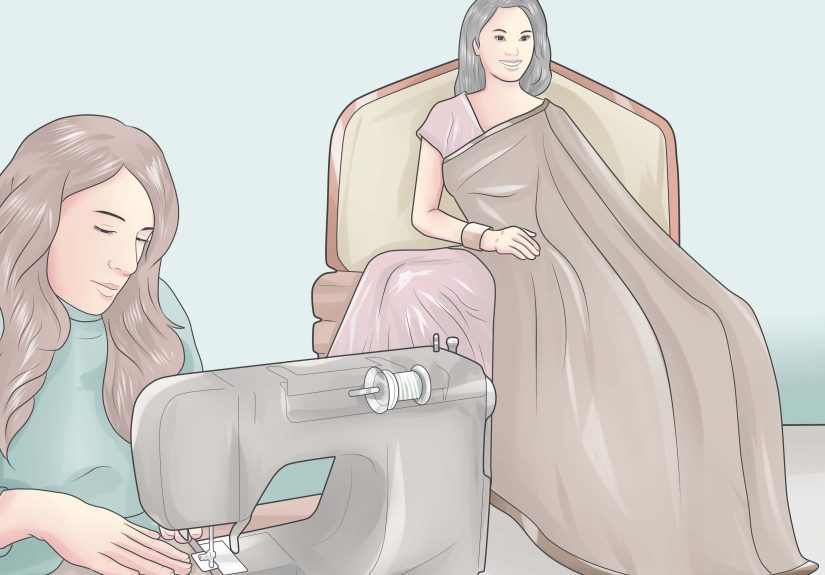
A sari-inspired outfit is the most iconic option and also the one that looks the most impressive with the least actual sewing. The magic is in the drape. A sari-style look is built from three main parts: a long length of fabric, a fitted blouse or cropped top, and a skirt or petticoat underneath to anchor the wrap.
What You Need
- 5 to 7 yards of lightweight fabric
- A fitted blouse, short-sleeve top, or plain crop top
- A long skirt, underskirt, or elastic-waist maxi skirt
- Safety pins
- Optional trim, earrings, bangles, and flat sandals
How to Make It
Start with your blouse and long skirt. The skirt should fit snugly at the waist, because this is what holds the draped fabric in place. Take your fabric and tuck one plain end into the waistband at your right side. Wrap it once around your waist. Then create neat pleats in the front, tuck those pleats into the waistband, and bring the remaining fabric around your body and over your left shoulder. That draped end is the pallu, and yes, it deserves to look dramatic.
If your fabric has no decorated border, sew or glue metallic ribbon along one long edge before draping. This instantly makes the outfit look more finished. You can also use a curtain panel, a long table runner with an elegant border, or a wide scarf layered over matching fabric to create the illusion of a traditional sari. For the blouse, a fitted solid-color top works well, especially if the neckline is simple and the sleeves are short.
Why This Works
A sari-inspired outfit looks graceful, grown-up, and visually authentic when the fabric flows well. It is perfect for someone who wants a classic Indian-inspired look without constructing a fully stitched garment. It also photographs beautifully, which is important because if you spent 40 minutes making front pleats, those pleats deserve witnesses.
Best Styling Tips
- Pin the shoulder drape to your blouse so it does not slide off mid-event.
- Wear the shoes you plan to use before adjusting the length.
- Keep jewelry balanced: statement earrings and bangles are enough.
- Choose one focal point, either a bold fabric or bold accessories, not both fighting for custody of the look.
Way 2: Make a Salwar Kameez Outfit
If you want something easier to move in than a sari, make a salwar kameez-inspired outfit. This style usually includes loose pants, a tunic, and a long scarf or dupatta. It is practical, elegant, and beginner-friendly. In the world of DIY outfits, this is the reliable friend who shows up on time and remembers the tape.
What You Need
- Loose tapered pants, leggings, or pajama pants
- A knee-length tunic, long blouse, or oversized shirt
- A long scarf or shawl for the dupatta
- Trim, ribbon, or embroidery patches
- Thread, fabric glue, or a sewing machine
How to Make It
Choose slim or slightly loose pants in a solid color. Traditional salwar pants are roomier, but for a costume-inspired outfit, tapered joggers or soft pajama pants can still create the right silhouette. Next, pick a tunic-length top that falls above the knee or around mid-thigh. If it is too plain, add gold trim along the neckline, sleeve edges, and hem. Side slits can be cut and hemmed if you want the tunic to move more like a kameez.
Then add the dupatta. A long scarf instantly transforms the outfit. Drape it evenly over both shoulders, or let one end fall longer than the other. You can even lightly pin it in place if the event involves lots of movement. Chiffon, net, organza, or soft rayon all work well. If your scarf is plain, add a narrow decorative trim to the borders.
Why This Works
This is one of the easiest Indian outfit styles to recreate with store-bought basics. It is comfortable, modest, and flattering on many body types. It also works well for school performances, Diwali events, family functions, or themed presentations where you need to walk around without babysitting six yards of fabric.
Best Styling Tips
- Match the tunic and pants if you want a polished look.
- Use contrast in the dupatta for color and movement.
- Add simple jhumka-style earrings and flat sandals.
- Braid your hair or wear it in soft waves for an effortless finish.
Way 3: Make a Lehenga Choli Outfit
A lehenga choli-inspired outfit is the festive option. It usually includes a long flared skirt, a fitted blouse or choli, and a dupatta. This is the look for when you want to feel like the human version of celebration. It is bright, twirly, and not at all shy.
What You Need
- A full maxi skirt or circle skirt
- A fitted blouse, crop top, or short embroidered top
- A long dupatta or sheer scarf
- Decorative trim, sequins, mirror tape, or appliqués
- A waistband tie or hidden elastic if making the skirt from scratch
How to Make It
Start with the skirt. A full skirt in satin, brocade, cotton, or even layered tulle can mimic a lehenga silhouette. If you are sewing it yourself, a basic gathered skirt or circle skirt pattern works well. Add trim around the hem for a more traditional finish. Next, pair it with a fitted top. A solid crop top can be upgraded with embroidered patches, metallic edging, or beadwork around the neckline.
The dupatta completes the outfit. You can drape it over one shoulder, across both arms, or diagonally across the torso and pin it near the waist. Sheer fabrics work especially well here because they add movement without making the outfit feel bulky. If you want a more bridal-inspired effect, choose richer colors like deep red, plum, emerald, or navy with gold accents. If you want a lighter festive look, go for blush pink, turquoise, saffron, or lavender.
Why This Works
The lehenga choli look is ideal for celebrations because it feels dressy without being too hard to assemble. It is also one of the easiest ways to build an Indian-inspired outfit from familiar Western garments. A maxi skirt and a fitted top are already halfway there; the rest is styling, drape, and details.
Best Styling Tips
- Make sure the skirt sits securely at the waist.
- Use one embellished piece and keep the rest cleaner for balance.
- Add bangles, earrings, and maybe a small clutch.
- Do a spin test before leaving the house. Fashion should twirl, not betray.
Way 4: Make a Kurta-Pajama or Sherwani-Inspired Outfit
If you want a more tailored look, a kurta-pajama outfit is a great choice. This style is common for men and can also be adapted in unisex ways for stagewear or themed events. It is built around a long tunic-style top and straight or narrow pants. For a more formal version, layer a sherwani-style coat over the kurta.
What You Need
- A long tunic, knee-length shirt, or straight kurta-style top
- Narrow pants, slim trousers, or pajama-style bottoms
- Optional vest or long open-front coat for a sherwani effect
- Buttons, braid trim, or embroidery tape
- Loafers, sandals, or simple flats
How to Make It
Find a long shirt or tunic with a straight shape. A mandarin collar is ideal, but a simple banded neckline also works. Add decorative buttons down the placket or trim around the collar and cuffs. Pair it with narrow pants in a matching or neutral color. White, cream, beige, navy, black, and jewel tones all work beautifully.
To make it more formal, layer a structured vest or a long coat over the kurta to echo the look of a sherwani. Choose fabrics with a little weight, like jacquard, brocade-look polyester, or cotton with subtle texture. This outfit does not require much draping, which makes it one of the easiest options for beginners or for anyone who wants to look sharp without learning advanced fabric engineering in a hallway mirror.
Why This Works
A kurta-pajama outfit is clean, comfortable, and polished. It is especially useful for cultural programs, wedding guest attire, school events, or stage performances where mobility matters. It also feels less costume-like and more like real occasionwear, which is exactly what makes it successful.
Best Styling Tips
- Keep the fit tailored but not tight.
- Use clean lines and one or two decorative details.
- Add a pocket square, stole, or simple watch for a refined finish.
- Do not overload the outfit with props. The silhouette should do the talking.
How to Choose the Best Version for Your Event
Still deciding? Here is the easy breakdown. Choose the sari-inspired look if you want maximum elegance and visual impact. Choose the salwar kameez if comfort and movement are your top priorities. Choose the lehenga choli if the event is festive and you want something colorful and celebratory. Choose the kurta-pajama if you prefer a structured, streamlined outfit that is simple to make and easy to wear.
Color can also guide your choice. Rich reds, golds, blues, and greens create a traditional festive mood. Pastels feel softer and more modern. Cotton prints are great for daytime or casual events, while satins, brocades, and embellished borders feel dressier. No matter which style you choose, neat finishing will matter more than expensive materials. Clean hems, secure pins, and a thoughtful scarf placement can make a budget outfit look polished.
Common Mistakes to Avoid
- Using stiff fabric that refuses to drape and behaves like a cardboard opinion.
- Adding too many flashy trims at once.
- Choosing tops that are too loose or skirts that do not stay at the waist.
- Treating the outfit like a joke instead of real clothing.
- Forgetting to test movement, especially stairs, sitting, and walking.
Experiences Related to Making an Indian Costume
One of the most interesting things about making an Indian-inspired outfit is how quickly people realize that the details matter more than they expected. At first, many beginners think the project will be all about bright fabric and jewelry. Then they try on the outfit and discover that the real secret is balance. A scarf that is draped well can completely elevate a simple tunic and pants. A skirt with the right amount of flare can look twice as expensive as it really is. Even the way fabric moves when you walk changes the entire feeling of the outfit.
People who make a sari-inspired look for the first time usually talk about the learning curve. The first drape may look messy. The second one looks better. By the third try, the pleats start cooperating and the shoulder drape begins to fall in a way that feels elegant instead of chaotic. What starts as “Why is this fabric fighting me?” often turns into real admiration for how skillful draped clothing can be. It also gives people a deeper appreciation for the craftsmanship behind garments that may seem simple until you try to wear them properly.
Those who choose a salwar kameez-style outfit often say it becomes their favorite because of comfort. It is easy to walk in, easy to sit in, and easy to adapt using clothes they already own. A plain long tunic suddenly becomes special when paired with the right scarf and trim. For school events or community celebrations, this style tends to feel approachable and practical. It looks polished without requiring constant adjustment, which is a blessing if the event includes dancing, helping with decorations, or chasing a child who has mysteriously vanished near the dessert table.
The lehenga choli experience is usually all about confidence. Something about a full skirt, a fitted top, and a flowing dupatta changes posture immediately. People stand straighter. They smile more. They start testing how the skirt moves when they turn. It feels festive in a way that is hard to fake. Many people also enjoy customizing this version the most, because there is room to play with color, trim, embroidery, and accessories while still keeping the silhouette recognizable.
The kurta-pajama route creates a different kind of satisfaction. It feels clean, sharp, and wearable. For many, this is the easiest way to look dressed up without feeling overdone. A long tunic with narrow pants and simple embellishment can work for cultural nights, performances, and formal gatherings. People often say they like how polished it feels with relatively little effort.
Across all four styles, the most meaningful experience is usually the same: people stop thinking of the outfit as a “costume” and start seeing it as clothing with history, intention, and beauty. That shift changes everything. It affects how the outfit is made, how it is worn, and how others respond to it. And honestly, that is the best possible upgrade any DIY project can get.
Conclusion
If you want to make an Indian costume in a way that feels stylish, respectful, and realistic, start with actual Indian clothing silhouettes. A sari-inspired outfit gives you drama and elegance. A salwar kameez offers comfort and practicality. A lehenga choli brings festive energy. A kurta-pajama delivers a polished, tailored finish. The best version is not the one with the most sequins. It is the one that fits well, moves well, and honors the clothing that inspired it.
Make it simple. Make it thoughtful. And if a safety pin ends up saving the whole outfit, just consider that your unofficial co-designer.