Table of Contents >> Show >> Hide
- Why Hotel Lobby Bathrooms Feel Like a Secret Superpower
- The Real Reason This Feels So Awesome: Public Bathrooms Are Hard to Find
- Why Hotels Often Win the Bathroom Lottery
- Is It Okay to Use a Hotel Lobby Bathroom If You Are Not a Guest?
- The Unwritten Rules of Hotel Bathroom Etiquette
- How to Find a Good Bathroom When You Are Walking Around
- Why This Tiny Convenience Improves the Whole Day
- The Comedy of the Hotel Bathroom Quest
- Health and Hygiene Still Matter
- What Hotel Bathrooms Teach Us About Better Cities
- Extra Experiences: The Joy, Strategy, and Tiny Drama of the Hotel Lobby Bathroom
- Conclusion
There are many tiny miracles in modern life: finding a parking spot directly in front of the restaurant, peeling a sticker off without leaving glue shrapnel, and discovering that your phone battery is at 12% instead of 2%. But few everyday victories feel as instantly heroic as spotting a hotel lobby bathroom when you are out walking around and your bladder has started composing a farewell speech.
That is the spirit behind “#970 Using hotel lobby bathrooms when you’re out walking around – 1000 Awesome Things.” It celebrates a small but deeply relatable moment: you are exploring a city, wandering between shops, sightseeing, meeting friends, or pretending your “quick walk” did not accidentally become a five-mile expedition, and suddenly you need a restroom. Not later. Not after one more block. Now-ish.
Then, like a beige-marble lighthouse, a hotel appears. The lobby doors slide open. The air-conditioning greets you like an old friend. Somewhere past the front desk, beside a tasteful plant that has never known hardship, there it is: a clean, quiet, civilized bathroom. For a few minutes, the world makes sense again.
This article takes that funny little “awesome thing” seriously, but not too seriously. We will look at why hotel lobby bathrooms feel like such a win, how public restroom access became surprisingly complicated in American cities, what good restroom etiquette looks like, and why a clean bathroom can turn an ordinary walk into a story of personal triumph.
Why Hotel Lobby Bathrooms Feel Like a Secret Superpower
Using a hotel lobby bathroom while walking around feels great because it solves several problems at once. First, hotels are usually easy to spot. They have signs, glass doors, doormen, valet stands, flags, planters, or at least that mysterious lobby glow that says, “Someone inside knows where the ice machine is.” Unlike public restrooms hidden in parks, transit stations, or municipal buildings, hotel bathrooms are often located near major streets, attractions, shopping districts, convention centers, and downtown areas.
Second, hotel lobby bathrooms tend to be better maintained than many other options. A hotel is selling comfort, cleanliness, and trust. Even if you are not staying there, the lobby is part of the hotel’s public face. A bad lobby restroom can damage a guest’s impression faster than a slow elevator or a tiny shampoo bottle with the personality of dish soap. Hotels know this, so public-area cleaning often receives regular attention.
Third, there is the vibe. A gas station bathroom says, “Good luck, brave traveler.” A hotel lobby bathroom says, “Please enjoy this flattering mirror and this sink that looks like it has its own investment account.” That difference matters when you are sweaty, tired, and carrying a tote bag full of things you regret buying.
The Real Reason This Feels So Awesome: Public Bathrooms Are Hard to Find
One reason hotel lobby bathrooms feel like treasure is that America does not always make public restroom access easy. In many cities, public toilets are limited, scattered, closed early, seasonal, or hard to locate. That turns a basic human need into a small urban quest. You are not just “looking for a restroom.” You are navigating signs, business policies, security guards, locked doors, purchase requirements, and your own growing sense of dramatic urgency.
Public restroom advocates have long argued that clean, safe, accessible restrooms are not merely conveniences. They affect tourism, local business, walkability, public health, disability access, families with children, older adults, delivery workers, transit riders, and people with medical conditions. The Crohn’s & Colitis Foundation has highlighted how restroom scarcity can be especially difficult for people living with digestive diseases, who may need quick and reliable access. In other words, the bathroom issue is bigger than one person who drank a large iced coffee and got ambitious with a walking tour.
Major cities have started paying more attention. New York City, for example, has public restroom maps and ongoing efforts to expand restroom availability, but the need remains obvious to anyone who has ever walked twenty blocks while mentally ranking every nearby building by “possible bathroom probability.” Public parks, libraries, train stations, plazas, and museums can help, but they are not always nearby or open when you need them.
Why Hotels Often Win the Bathroom Lottery
They Are Built for Guests Who Are Between Places
Hotels are transitional spaces. People arrive, leave, wait for rides, meet colleagues, attend events, check bags, ask questions, and linger in lobbies. Because of this, lobby bathrooms are usually designed for people who are not currently in their rooms. They serve guests checking in, guests checking out, conference attendees, restaurant customers, wedding guests, business travelers, and visitors meeting someone at the property.
That is why a hotel restroom can feel more naturally accessible than a café restroom with a “customers only” sign taped to the door. Hotels are used to foot traffic. The lobby is a buffer zone between the street and the private guest areas. This does not mean every hotel welcomes non-guests to use facilities, but it does explain why hotel lobby bathrooms are often more visible and practical than other options.
They Usually Prioritize Cleanliness
Cleanliness is central to the hotel business. A guest may forgive a boring hallway carpet, but a dirty bathroom? Absolutely not. Hotel brands and hospitality teams understand that public spaces shape trust. Lobby restrooms, elevators, front desks, seating areas, and hallways all contribute to the first impression.
That is why many hotels schedule regular public-area cleaning, restock supplies, disinfect high-touch surfaces, and monitor restrooms throughout the day. A well-run hotel bathroom often has the small luxuries that make a restroom break feel almost spa-like: soap that does not smell like industrial lemon thunder, mirrors without mysterious splash art, actual toilet paper, hooks for bags, working locks, and lighting that does not make you look like you were assembled in a basement laboratory.
They Offer a Moment of Calm
Walking around a busy city can be fun, but it also comes with noise, crowds, weather, traffic, and the occasional sidewalk puddle that raises philosophical questions. A hotel lobby offers instant environmental relief. You step inside and the temperature changes. The street noise softens. There may be music. There may be fresh flowers. There may be a seating area where people look like they know how to fold sweaters properly.
Even if you are only there for three minutes, that pause can reset your day. You wash your hands, adjust your jacket, refill your dignity, and return to the sidewalk as a slightly improved citizen.
Is It Okay to Use a Hotel Lobby Bathroom If You Are Not a Guest?
The honest answer is: it depends. Hotel policies vary by property, city, security concerns, time of day, event schedule, and staff judgment. A large downtown hotel with restaurants, conferences, and a busy lobby may be more relaxed than a small boutique hotel with limited staff and locked facilities. A hotel connected to a bar, restaurant, shopping center, casino, or convention space may expect more non-room foot traffic. A quiet hotel late at night may understandably be stricter.
The best approach is to be respectful. Do not treat the lobby like a public park. Do not wander into restricted guest-only floors, meeting rooms, lounges, pools, gyms, breakfast areas, or back offices. Do not grab complimentary coffee unless it is clearly available to the public. Do not make a mess. Do not turn a restroom visit into a full lifestyle residency with suitcase unpacking, phone charging, and a dramatic sink-based skincare routine.
If the restroom is clearly marked and accessible from the lobby, many people simply use it quickly and quietly. If it is not obvious, ask politely: “Hi, may I use the restroom?” If the answer is no, accept it gracefully. No speech. No debate. No Oscar-worthy monologue about urban infrastructure. Just say thank you and move on.
The Unwritten Rules of Hotel Bathroom Etiquette
Walk In Like a Normal Human
Confidence helps, but there is no need to perform the role of “mysterious international guest with urgent diplomatic plumbing needs.” Just walk in calmly. Hotels see people coming and going all day. Looking nervous can make the moment weirder than it needs to be. You are not robbing a bank. You are seeking porcelain.
Be Quick and Considerate
A lobby bathroom is not your private dressing room. Use it, wash your hands, check that you have not accidentally tucked your shirt into your underwear, and leave. If there is a line, move efficiently. If supplies are low, tell the front desk. If something is broken, mention it politely. Staff usually appreciate helpful information when it is delivered like a normal sentence and not like a courtroom accusation.
Leave It Better Than You Found It
This rule is simple: do not be the reason hotels stop being generous. Flush. Toss paper towels in the bin. Wipe splashes if needed. Do not leave coffee cups, shopping receipts, gum wrappers, or emotional damage behind. A clean exit protects the next person and keeps the informal bathroom ecosystem alive.
Respect Security and Privacy
Hotels have legitimate concerns about guest safety. Some restrooms may require keys, codes, or staff permission. Some may be closed overnight. Some properties may limit access because of past misuse, high traffic, or local security issues. Respect those boundaries. A restroom is important, but so is the safety of guests and employees.
How to Find a Good Bathroom When You Are Walking Around
Hotel lobbies are a strong option, but they are not the only one. The best city walkers develop a mental map of restroom possibilities. Department stores, museums, libraries, public parks, train stations, large bookstores, shopping malls, food halls, university buildings, visitor centers, and city-operated facilities can all be useful. In some cities, official restroom maps or tourism pages list public bathrooms by neighborhood.
Still, hotels remain special because they often sit exactly where walkers need them: near attractions, downtown corridors, waterfronts, airports, sports venues, hospitals, conference centers, and shopping districts. If you are planning a long walk, especially with kids, older relatives, or anyone with a medical condition, it helps to identify possible restroom stops before the walk becomes a bladder-based thriller.
Why This Tiny Convenience Improves the Whole Day
A reliable restroom changes how people experience a city. When bathrooms are easy to find, people walk farther, stay out longer, shop more comfortably, visit parks, use transit, attend festivals, and enjoy neighborhoods without constantly calculating the distance to the nearest emergency option. When bathrooms are scarce, people shorten outings, avoid certain areas, skip drinks, or stay home. That is not just inconvenient; it makes cities less welcoming.
This is why the hotel lobby bathroom has become a beloved unofficial solution. It fills a gap. It gives walkers a little freedom. It lets tourists keep exploring, parents avoid disaster, commuters survive delays, and iced-coffee optimists learn nothing from their choices but recover anyway.
The Comedy of the Hotel Bathroom Quest
Part of the charm of “#970 Using hotel lobby bathrooms when you’re out walking around – 1000 Awesome Things” is that it treats a small bodily need with the grandeur it deserves. Anyone can romanticize sunsets. It takes real honesty to celebrate the relief of finding a clean restroom at the exact moment your internal alarm system switches from “casual reminder” to “red alert.”
There is comedy in the contrast. Outside, you may be a tired pedestrian with sore feet and questionable hydration strategy. Inside, you are suddenly surrounded by marble countertops, framed art, scented soap, and a mirror large enough to show you exactly how the humidity has betrayed your hair. For those three minutes, you are not merely using a bathroom. You are visiting the restroom wing of a tiny urban palace.
And then you step back onto the street refreshed, lighter, and strangely proud. You did not buy anything. You did not download an app. You did not beg a barista for a code. You simply identified the correct building and executed the mission. Not all heroes wear capes. Some just wash their hands for at least 20 seconds and rejoin the walking tour.
Health and Hygiene Still Matter
Even in a beautiful hotel bathroom, good hygiene is not optional. Public restrooms are shared spaces, and shared spaces require common sense. Wash your hands thoroughly with soap and water, especially before eating or touching your face. Use hand sanitizer when soap and water are not available. Avoid placing your phone, bag, or wallet on wet counters or floors. Use a hook when provided. If the restroom has touchless fixtures, enjoy the futuristic luxury and try not to wave at the faucet like you are casting a spell.
Good hygiene protects you and everyone after you. The goal is not to be afraid of public bathrooms. The goal is to use them smartly. A clean hotel restroom plus basic handwashing is one of civilization’s underrated partnerships.
What Hotel Bathrooms Teach Us About Better Cities
The popularity of hotel lobby bathrooms reveals a larger truth: people need dignified places to take care of basic needs. When cities lack enough clean public restrooms, private businesses become unofficial infrastructure. That can help in the short term, but it is not a complete solution. Hotels, cafés, stores, and restaurants have their own responsibilities and limits.
Better public restroom access would benefit everyone: residents, tourists, workers, families, people with disabilities, people with medical needs, and people experiencing homelessness. Clean restrooms are part of walkable, humane urban design. They are as practical as benches, shade, lighting, drinking fountains, and trash cans. A city that invites people to walk should also answer the obvious question: “Great, but where do I go when I need to go?”
Until that future arrives everywhere, hotel lobby bathrooms will remain one of the quiet legends of urban wandering. They are not always guaranteed, and they should never be abused, but when they are available, they can feel like the city has briefly decided to be kind.
Extra Experiences: The Joy, Strategy, and Tiny Drama of the Hotel Lobby Bathroom
Every experienced walker has a bathroom story. Maybe yours happened on a humid July afternoon in Washington, D.C., when the monuments looked majestic but your water bottle had become a personal enemy. Maybe it happened in Chicago, after deep-dish pizza and one heroic refill too many. Maybe it happened in New York, where you discovered that “just a few more blocks” is a phrase invented by people who are not currently negotiating with their bladder.
The hotel lobby bathroom experience usually begins with denial. You tell yourself you are fine. You pass one coffee shop, but the line is too long. You pass a fast-casual restaurant, but the restroom has a keypad and the cashier is busy explaining salad toppings to someone who fears commitment. You pass a park, but the restroom is either closed, seasonal, or located in a mysterious zone apparently reachable only by squirrels.
Then you see the hotel. It may not be fancy, but it has automatic doors and a lobby. That is enough. Your walking pace changes. You become focused. Friends may continue discussing lunch plans, architecture, or whether the museum gift shop was overpriced, but you are operating on a higher frequency now. You have entered restroom radar mode.
The lobby itself feels like a test. The front desk is to the left. A concierge is arranging brochures. Someone in a suit is checking their phone with the confidence of a person who has never had to ask for a bathroom code. You scan for signs. Restrooms. Ballroom. Elevators. Lounge. There it is: a small sign pointing down a hallway. Angels do not sing, because that would be disruptive to guests, but spiritually, yes, there is music.
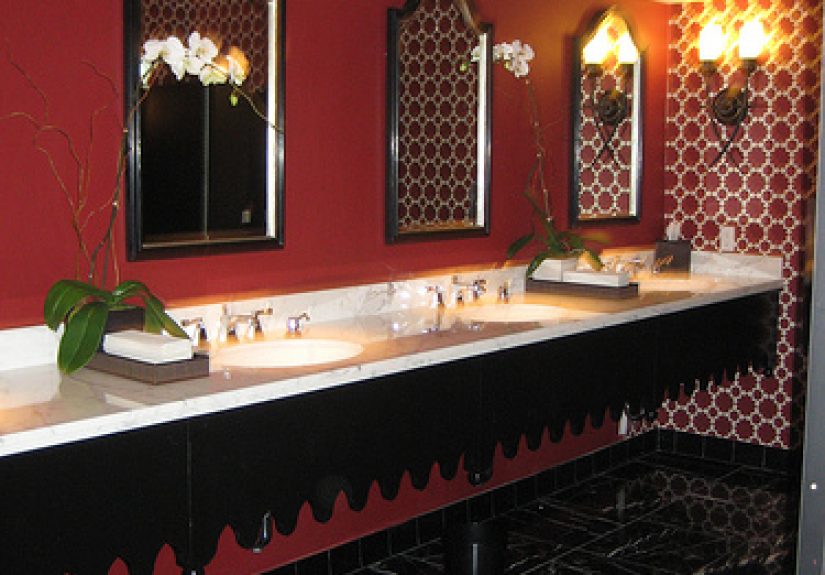
The best hotel lobby bathrooms have personality. Some are all marble and brass, making you feel underdressed for your own reflection. Some are sleek and modern, with sinks so shallow they appear designed by someone who has only heard rumors of water. Some are cozy and old-fashioned, with wallpaper, warm lighting, and a chair that makes you wonder who is scheduling a sit-down meeting in the restroom. Some have hand towels folded like tiny luxury blankets. Some have soap that smells like eucalyptus, citrus, or “rich person forest.”
Then comes the emotional reset. You wash your hands, splash a little water on your face if the day has been dramatic, and look in the mirror. You are still the same person, but improved. Your shoulders relax. Your sightseeing ambition returns. Suddenly the city is charming again. The historic district is not a hostile maze. The shopping street is not a corridor of locked bathrooms. The afternoon is saved.
There is also a social art to it. If you are with friends, one person may become the scout. Another may hold bags. Someone may whisper, “Act natural,” which is the least natural phrase in the English language. Parents become tactical commanders, guiding children through the lobby with the urgency of a space launch. Couples briefly separate and reunite with the relief of explorers who survived different wings of the same expedition.
But the golden rule remains: gratitude. You do not need to announce your victory to the front desk. You do not need to leave a speech in the guest book. Just be respectful. Use the facility properly. Wash your hands. Leave no evidence except perhaps a faint sense that one more pedestrian’s day has been rescued by hospitality architecture.
That is why this topic belongs in the universe of awesome things. It is not glamorous in the usual way. Nobody frames a photo of a restroom sign and hangs it above the fireplace. Yet in the moment, it can be as beautiful as a sunset. It is practical joy. It is urban mercy. It is the small, funny, deeply human relief of finding exactly what you need, exactly when you need it.
So the next time you are out walking around and a hotel lobby bathroom appears at the perfect moment, appreciate it. Appreciate the clean sink, the working lock, the stocked paper, the calm hallway, and the fact that your day did not have to become a tragic tale told in hushed tones. Step back outside refreshed, rejoin the sidewalk, and keep walking. The city is big, your plans are still alive, and somewhere behind you, a hotel bathroom has quietly earned its place among 1000 awesome things.
Conclusion
Using a hotel lobby bathroom when you are out walking around is one of those small modern blessings that feels funny because it is so true. It combines relief, comfort, strategy, cleanliness, and a tiny thrill of discovery. In a country where public restroom access can be limited and inconsistent, hotel lobbies often become unofficial safe harbors for walkers, travelers, parents, shoppers, and anyone who overestimated their beverage capacity.
The key is to use this privilege respectfully. Be polite, be quick, follow hotel rules, and leave the restroom clean for the next person. A hotel bathroom may seem like a small thing, but when you need one, it becomes the most important room in the city.
Note: This article is original, written in standard American English, and designed for web publication without embedded source links or unnecessary citation placeholders.