Table of Contents >> Show >> Hide
- What Are Tonsil Stones, Exactly?
- Before You Start: Safety First
- Way 1: Gargle Tonsil Stones Loose with Warm Salt Water
- Way 2: Use Gentle Water Irrigation (Water Flosser or Oral Irrigator)
- Way 3: Nudge Them Out Carefully with a Soft Cotton Swab
- Way 4: Let the Pros Handle It (Doctor or ENT Removal & Tonsil Surgery)
- How to Prevent Tonsil Stones from Coming Back
- When to See a Doctor or ENT Specialist
- Real-Life Experiences and Practical Tips for Managing Tonsil Stones
- Conclusion
If you’ve ever coughed up a tiny, smelly, white-yellow pebble and thought,
“Wow, my tonsil just laid an egg,” congratulations: you’ve probably met a tonsil stone.
These little guys, called tonsil stones or tonsilloliths, are usually harmless
but they can cause awful bad breath, a weird “something is stuck in my throat” feeling,
and a lot of anxiety when you see them in the mirror.
The good news? There are safe, simple ways to manage and remove tonsil stones at home,
and clear options for when you should let a medical professional take over.
In this guide, we’ll walk through four common methods to remove tonsil stones,
plus prevention tips and real-world experience-based advice to help you feel more in control of your throat again.
Important: This article is for general information and does not replace personalized advice from a doctor or ENT specialist. If you have pain, bleeding, recurrent infections, or trouble swallowing or breathing, seek medical care right away.
What Are Tonsil Stones, Exactly?
Your tonsils are small masses of lymph tissue at the back of your throat.
They have crevices and cryptstiny pockets where bits of food, dead cells, mucus, and bacteria can collect.
Over time, this debris can harden and calcify into small lumps called tonsil stones.
Many people have tiny tonsilloliths and never notice them. Others develop larger stones that can cause:
- Chronic bad breath (halitosis)
- A feeling like something is stuck in the throat
- Sore throat or irritation
- Visible white or yellow bumps on the tonsils
- Occasional difficulty swallowing or a tickling cough
The goal isn’t to make your tonsils perfectly stone-free for life (that’s often unrealistic),
but to manage symptoms safely and reduce how often they show up.
Before You Start: Safety First
Tonsil tissue is soft, delicate, and full of blood vessels. That means aggressive poking or scraping can easily:
- Make your tonsils bleed
- Cause infection
- Increase swelling and soreness
- Make stones more difficult to manage later
Basic safety rules before any tonsil stone removal attempt:
- Never use sharp objects (no pins, tweezers, toothpicks, metal tools, or toothbrush poking).
- Stop immediately if you feel sharp pain, see blood, or start to feel dizzy or short of breath.
- Don’t attempt DIY removal on children. Kids should be evaluated and treated by a doctor.
- Work in good lightinguse a phone flashlight or bathroom mirror, and wash your hands first.
- When in doubt, don’t DIY. If it looks deep, large, or stuck, see a doctor or ENT specialist.
Way 1: Gargle Tonsil Stones Loose with Warm Salt Water
Why gargling helps
Warm salt water gargles are the most low-tech, low-risk strategy.
The warm water helps soothe irritated tissue, and the mechanical action of gargling can gently loosen
small tonsil stones so they dislodge on their own. Salt also helps reduce inflammation and bacteria in the mouth.
How to make a salt water gargle
- Fill a glass with about 8 ounces (240 mL) of warm (not hot) water.
- Stir in 1/4 to 1/2 teaspoon of table salt until fully dissolved.
- Take a sip, tilt your head back, and gargle near the back of your throat for 15–30 seconds.
- Spit out the water. Don’t swallow the salt solution.
- Repeat several times a day, especially after meals and before bed.
Best for
- Small tonsil stones
- People who gag easily with tools in their mouth
- Preventing future stones and reducing bad breath
Don’t expect salt water to pop out a large, deeply wedged stone instantly.
Instead, think of gargling as daily “maintenance” that gradually helps stones loosen and fall out without you
needing to see (or physically remove) every single one.
Way 2: Use Gentle Water Irrigation (Water Flosser or Oral Irrigator)
Why water irrigation works
A water flosser (like a Waterpik) or a dental/oral irrigator can use a steady stream of water to flush debris out of the tonsil crypts.
On a low pressure setting, it can be an effective way to remove tonsil stones without scraping the tissue.
How to use a water flosser for tonsil stones
- Set the device to the lowest pressure to avoid trauma to the tonsils.
- Fill the reservoir with lukewarm water (cold water can be uncomfortable).
- Stand over the sink, lean forward slightly, and open your mouth wide in front of a mirror.
- Gently aim the stream at the surface of the tonsil, not directly into deep pockets.
- Use short, brief bursts. If you see a stone, try directing water just above or beside it, not directly behind it.
- Spit out water and debris as needed. Take breaks to avoid gagging.
Tips:
- Always test the pressure on your hand first. If it feels harsh on your skin, it’s too strong for your tonsils.
- Don’t use a high-pressure dental setting directly on the tonsils.
- If you feel pain or see blood, stop and call your doctor.
Best for
- People comfortable using oral irrigators
- Recurrent tonsil stones that sit near the surface
- Those who want a “hands-off” method instead of swabs
Way 3: Nudge Them Out Carefully with a Soft Cotton Swab
The cotton swab method (with big caution)
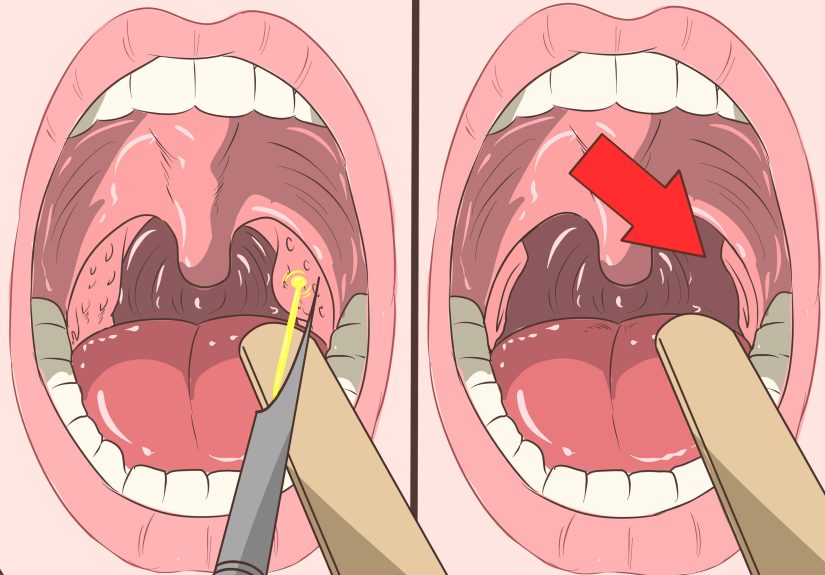
Some people gently use a damp cotton swab to push tonsil stones out when they’re clearly visible,
shallow, and easy to reach. This can workbut it’s also the method most likely to go wrong if you’re too forceful or reach too deep.
Think of this as a “last resort DIY” technique. If you’re nervous, or the stone is far back, skip this and talk to a doctor or ENT.
How to try the cotton swab technique safely
- Wash your hands thoroughly.
- Dampen the tip of a cotton swab with clean water so it’s soft, not dry and scratchy.
- Stand in front of a mirror with good lighting. A phone flashlight can help you see the tonsils clearly.
- Open wide and say “ahh” to move the soft palate up and reveal more of the tonsil area.
-
If you see a small, surface-level stone near the edge of the tonsil, place the cotton swab beside it,
not directly on top of it. -
Gently press inward and slightly upward, as if you’re rolling the stone toward the opening of the crypt and out.
Think “light pressure,” not “digging.” - If the stone pops out, spit it into the sink and rinse your mouth with warm salt water afterward.
When not to use this method
- The stone is deep or not clearly visible.
- You have a strong gag reflex and can’t tolerate touching the area.
- Your tonsils look very red, swollen, or already bleeding.
- You’re trying to do this on a child (don’t).
If you’re pressing and nothing movesor it hurtsstop. A stubborn stone is a job for a professional, not an extreme close-up with a Q-tip.
Way 4: Let the Pros Handle It (Doctor or ENT Removal & Tonsil Surgery)
In-office removal
If your tonsil stones are large, painful, or keep coming back, your regular doctor, dentist, or
ear, nose, and throat (ENT) specialist can often remove them in the office.
They may use special tools, gentle suction, or irrigation under controlled conditions.
Professional removal is usually quick and much safer than repeatedly poking at your tonsils at home.
You also get the benefit of a trained eye looking for infection, abscesses, or other throat problems.
When tonsillectomy becomes an option
In more severe or persistent casesespecially when stones are large, chronic, and tied to repeated infections
an ENT may discuss tonsillectomy (surgical removal of the tonsils).
Tonsillectomy is generally reserved for people who:
- Have frequent or severe tonsil infections
- Grow large or recurring tonsil stones that significantly affect daily life
- Have major issues with sleep, swallowing, or airway obstruction related to the tonsils
It’s a real surgery with downtime and risks, so it’s not the first-line treatment just for a few minor stones
but for some people, it’s the long-term cure.
How to Prevent Tonsil Stones from Coming Back
Even if you master all four removal methods, prevention is easier than constantly playing “tonsil stone whack-a-mole.”
Because stones form from trapped debris and bacteria, focusing on daily habits can help slow them down.
Daily habits that can help
- Brush your teeth twice a day, and floss daily. This reduces the amount of food and bacteria in your mouth before it reaches the tonsils.
- Clean your tongue. A tongue scraper or soft toothbrush helps remove bacterial film from the tongue, which can contribute to bad breath and stones.
- Gargle regularly. Warm salt water or an alcohol-free antibacterial mouthwash can help keep the back of the throat cleaner.
- Stay hydrated. Drinking enough water encourages saliva flow, which naturally cleanses the mouth and throat.
- Quit smoking, if you smoke. Smoking dries out and irritates the mouth and throat, which may make stones more likely.
You might not be able to prevent tonsil stones 100%, especially if your tonsils have deep crypts,
but you can usually decrease how often they appear and how bothersome they are.
When to See a Doctor or ENT Specialist
Most tonsil stones are harmless and more annoying than dangerous. That said, it’s time to get professional help if you notice any of the following:
- Persistent bad breath that doesn’t improve with good oral hygiene
- Ongoing sore throat or the feeling of a lump that doesn’t go away
- Difficulty swallowing or significant pain when swallowing
- Ear pain, especially on the same side as a visible stone
- Red, swollen tonsils or pus, which might mean infection
- Bleeding from the tonsils, especially after you’ve tried to remove a stone
- Fever, feeling very unwell, or trouble breathingthese are urgent signs
A doctor can confirm that tonsil stones are really the cause of your symptoms (and not something more serious),
suggest safe treatment options, and help you decide whether conservative care, in-office removal, or surgery makes the most sense.
Real-Life Experiences and Practical Tips for Managing Tonsil Stones
On paper, tonsil stones sound simple: little calcified bits that you just rinse away. In real life, it can feel a lot messieremotionally and physically. Here are some experience-based insights that reflect what many people go through when dealing with tonsilloliths, and how they adapt over time.
The “mystery bad breath” phase
Many people discover tonsil stones only after chasing down the cause of mysterious bad breath for months or even years. They try everythingstrong mints, expensive mouthwash, tongue scrapers, sugar-free gum, extra brushingyet the odor always seems to come back. One day, they cough, a little white lump appears, and suddenly things make a lot more sense.
If that’s you, it’s normal to feel both relieved (“At least I know what it is!”) and kind of grossed out. A helpful mindset shift is to see tonsil stones as a mechanical problema plumbing issue, not a personal failure. Your tonsils have pockets. Stuff gets caught. You’re not dirty or broken; you just have slightly high-maintenance throat hardware.
Learning your personal triggers
Over time, many people notice patterns. For example, stones might show up more when:
- They’ve been eating more sticky, starchy foods that cling to the mouth.
- They’ve slacked off on flossing or tongue cleaning for a few days.
- Allergy or sinus issues cause extra postnasal drip.
- They’re dehydrated, talking a lot, and their throat stays dry.
Paying attention to these triggers can help you build your own “tonsil-care routine.” Maybe you always gargle with warm salt water after pizza, or you keep a water bottle handy on long workdays to avoid that dry, scratchy feeling.
The gag reflex struggle is real
Almost everyone who tries to remove their own tonsil stones discovers one thing quickly: the gag reflex is no joke. Even if a stone is clearly visible, your body’s automatic reaction may be to slam your mouth shut and cough dramatically the moment a swab gets close.
A few practical tricks people use:
- Practice with water first. Start with gentle gargling and shallow water irrigation before you try to target a specific stone.
- Work in short sessions. Instead of one long, miserable removal attempt, do 10–20 seconds at a time with breaks.
- Breathe through your nose. Slow, steady nasal breathing can calm your reflex a bit.
- Know your limits. If every attempt ends in coughing and full-body drama, it may be a sign to let a doctor help instead of forcing it.
Emotional side: confidence and social anxiety
Tonsil stones aren’t just a physical issuethey can affect how you feel around other people. Chronic bad breath can make you want to lean away in conversations, avoid close-up chats, or overuse mints and gum. Some people become hyperfocused on whether their breath smells, especially in meetings, dates, or group settings.
Working on prevention (good hygiene, regular gargling, staying hydrated) and having a plan for removal can restore a lot of confidence. For some, simply knowing “If another stone shows up, I know what to do” takes the fear down several notches.
If you’re really worried about your breath, you can ask a trusted friend or partner for honest feedbackor talk to a dentist or doctor. Sometimes, professional reassurance that your breath is normal most of the time is as valuable as any mouthwash.
Finding the line between DIY and professional help
Many people start with DIY methods and eventually realize they’re spending a lot of time and energy on their tonsilssometimes daily. If you’re constantly in front of the mirror battling stones, or if your stones are large and painful, that’s a sign to upgrade your strategy.
A doctor or ENT can:
- Confirm that tonsil stones are the real issue (and rule out other conditions).
- Remove stones in a controlled, sterile environment.
- Discuss whether your anatomy and history make you a good candidate for tonsillectomy.
Many people who eventually choose tonsillectomy describe it as “tough for a short time, worth it in the long run”but it’s a very individual decision. What matters is that you know your options and don’t feel stuck in a never-ending cycle of home removals.
Building a realistic, sustainable routine
Finally, the most sustainable approach often looks like this:
- Daily good oral hygiene (brushing, flossing, tongue cleaning).
- Regular gargling with warm salt water, especially after meals.
- Occasional, gentle water irrigation if your doctor says it’s safe for you.
- Reserved use of cotton swabs only when stones are clearly visible, small, and easy to reachif at all.
- Periodic check-ins with a doctor or dentist if stones are frequent or bothersome.
Tonsil stones may never be your favorite topic, but with knowledge, a good routine, and the right medical support when you need it, they don’t have to run your lifeor your breath.
Conclusion
Tonsil stones are common, manageable, anddespite their dramatic smellusually harmless. You have multiple tools to handle them: gargling with warm salt water, using gentle water irrigation, carefully nudging shallow stones with a cotton swab, and calling in the professionals when necessary. Combine those options with solid oral hygiene and smart prevention habits, and you can drastically reduce how much impact tonsilloliths have on your comfort, confidence, and social life.
If your stones are large, recurring, or causing significant pain or worry, don’t just suffer in silence. Talk to your doctor or an ENT specialist, get a clear diagnosis, and work together on a plan that fits your body and your lifestyle.