Table of Contents >> Show >> Hide
- Why Architecture Tattoos Work So Well
- 50 Architecture Tattoos Worth Saving to Your Inspiration Folder Immediately
- How to Choose the Right Architecture Tattoo for You
- Tips for Making an Architecture Tattoo Look Incredible
- A Quick Reality Check Before You Book the Appointment
- What These Tattoos Really Say
- Experiences That Make Architecture Tattoos Hit Even Harder
- Conclusion
- SEO Tags
Some people collect postcards. Some collect coffee-table books. And some look at a cathedral ceiling, a moody brutalist facade, or a perfectly smug Art Deco tower and think, “Yes, that should live on my arm forever.” Honestly? Respect. Architecture tattoos sit in a sweet spot between art, memory, engineering, and personal obsession. They can be romantic, nerdy, elegant, dramatic, and just a little bit extrain the best possible way.
What makes architecture tattoos so irresistible is that they do more than show off a pretty building. They capture how a place feels. A skyline can hold a whole chapter of your life. A tiny archway can remind you of a city where you fell in love, got lost on purpose, or spent three days pretending to understand local transit maps. A blueprint-style tattoo can whisper “I am organized,” even if your junk drawer says otherwise.
Below, you’ll find 50 architecture tattoo ideas that range from sleek and minimal to gloriously dramatic. Some are inspired by famous design movements. Some lean into landmarks, textures, and structural details. Some are playful. Some are deeply sentimental. All of them prove that when good design meets good ink, the results can be spectacular.
Why Architecture Tattoos Work So Well
Architecture tattoos have range. They can be soft and delicate, like a fine-line sketch of a row house or a dreamy watercolor cathedral window. They can also go full cinematic, with towering spires, impossible staircases, or a skyline wrapping around an entire calf. Their biggest strength is versatility. Unlike trend-driven designs that fade faster than your motivation on Monday morning, architecture has timeless built-in structure: balance, rhythm, proportion, contrast, and symbolism.
They also offer meaning without being painfully obvious. A bridge can represent transition. A doorway can symbolize a new chapter. A house can stand for family, grief, belonging, or the weirdly emotional memory of a kitchen with terrible wallpaper and excellent snacks. That emotional flexibility makes architectural tattoo ideas especially powerful for people who want something personal but visually polished.
And let’s be real: architectural forms just look fantastic in tattoo design. Arches flatter the body. Columns create instant vertical drama. Domes, staircases, windows, and geometric facades all translate beautifully into linework, black-and-gray shading, stippling, and even micro-realism. Buildings were made to be admired. Tattoos just give them a second address.
50 Architecture Tattoos Worth Saving to Your Inspiration Folder Immediately
Iconic Landmark Tattoos
- A fine-line skyline band: A clean city skyline around the forearm or ankle feels sleek, modern, and endlessly customizable.
- Your childhood home in micro-realism: Tiny porch, crooked gutter, emotional damageeverything included.
- An Art Deco skyscraper: Think strong vertical lines, symmetry, and old-school glamour with a sharp suit on.
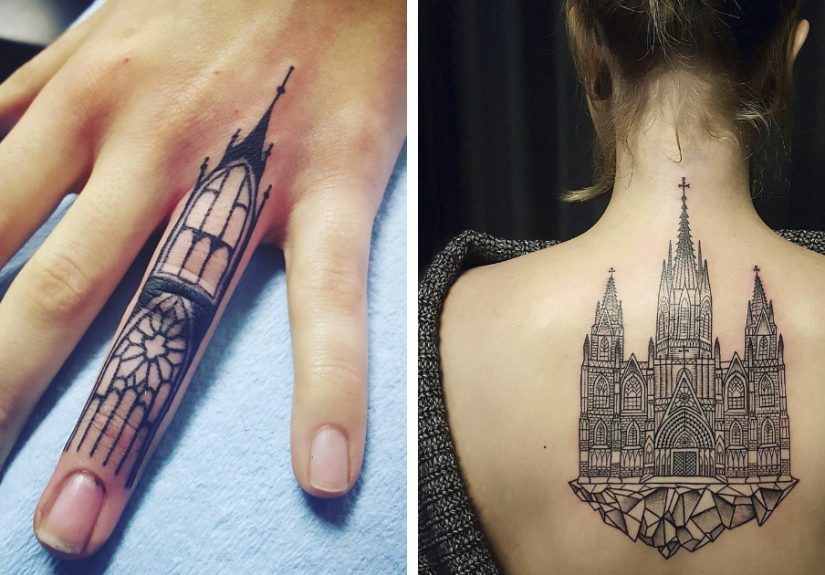
- A Gothic cathedral facade: Perfect for lovers of pointed arches, stained-glass vibes, and elegant drama.
- A Roman arch study: Simple, timeless, and ideal for minimalists who still want historical weight.
- A famous bridge silhouette: Great for symbolizing connection, movement, or a city that changed your life.
- A domed capitol or civic building: Strong, stately, and surprisingly graceful in black ink.
- A winding European streetscape: Row facades, small balconies, and charming windows make for a storybook tattoo.
- A lighthouse with architectural detailing: Equal parts structure and symbolism, especially if you like your tattoos poetic.
- A museum facade you adore: Because some buildings deserve fan art too.
Style-Driven Architecture Tattoos
- A brutalist block composition: Bold concrete shapes, shadowy depth, and zero interest in being cute.
- A Bauhaus-inspired geometric piece: Clean lines, primary-shape energy, and serious design credibility.
- An Art Nouveau doorway: Curves, floral ironwork, and enough elegance to make your wrist feel expensive.
- A midcentury modern house portrait: Flat planes, glass walls, and palm-sprinkled cool.
- A neoclassical column tattoo: Minimal but dramatic, especially on the forearm, spine, or ribcage.
- A Tudor cottage sketch: Storybook charm with timber details and steep rooflines.
- A Mediterranean villa archway: Soft, sun-soaked, and perfect for a more romantic design.
- A Victorian facade: For anyone who believes “too much trim” is not a thing.
- A Japanese pagoda silhouette: Layered, balanced, and striking in a vertical placement.
- A minimal contemporary house outline: Simple geometry, bold confidence, and no visual clutter.
Architectural Detail Tattoos
- A stained-glass window fragment: Gorgeous in color, but equally beautiful in black-and-gray linework.
- An ornate staircase: Especially good for thigh or calf placements where movement adds depth.
- A ceiling medallion or rosette: Decorative, symmetrical, and unexpectedly chic.
- A tiled floor pattern: Ideal for fans of geometry, heritage motifs, and tiny detail work.
- An arched window with shadows: Quiet, moody, and ridiculously elegant.
- A balcony railing study: Delicate ironwork makes an incredible fine-line tattoo.
- A blueprint-style floor plan: Smart, intimate, and perfect for a first home, dream home, or family home.
- A cross-section of a staircase: Minimalist on the surface, secretly very clever underneath.
- A row of columns in perspective: Great for anyone who likes depth and order in their ink.
- A roofline with chimneys and gables: A quiet tattoo with major character.
Architectural Tattoos with a Conceptual Twist
- An impossible staircase: A smart nod to illusion, ambition, and the general chaos of being alive.
- A half-built, half-finished facade: Perfect for representing growth, change, or becoming.
- A ruin wrapped in vines: Equal parts beauty, memory, and glorious decay.
- A city map merged with building outlines: Great for travelers who want place and structure in one design.
- A floating house concept sketch: Whimsical, surreal, and ideal for creative placements.
- A blueprint with handwritten notes: Makes the tattoo feel like a page torn from a design studio notebook.
- A window framing the moon: Architecture meets atmosphere, which is always a strong combo.
- A cutaway room tattoo: A tiny architectural diorama on skin, full of narrative potential.
- A church spire disappearing into clouds: Dramatic without becoming cartoonish.
- A scaffolded building: A surprisingly moving metaphor for reinvention.
Big Statement Pieces
- A sleeve of mixed facades: Brownstone, cathedral, townhouse, museumbasically a neighborhood for your arm.
- A full-back architectural collage: Best for maximalists with patience and a strong relationship with numbing cream discussions.
- A calf tattoo of a narrow alleyway: Perspective work shines here and gives serious depth.
- A rib tattoo of a cathedral nave: Long, vertical, and breathtaking when executed well.
- A wraparound skyline at sunset: Add subtle shading for a cinematic finish.
- A forearm tattoo of a famous train station: Equal parts motion, nostalgia, and structural beauty.
- A shoulder piece built around a rose window: Circular architecture fits this area perfectly.
- A thigh tattoo of a castle ruin: Moody, textured, and unapologetically theatrical.
- A sternum tattoo of mirrored arches: Symmetry lovers, this one is your moment.
- A travel patchwork of favorite buildings: The architectural version of a well-lived passport.
How to Choose the Right Architecture Tattoo for You
Start with meaning before aesthetics. Yes, the aesthetics matterthis is a tattoo, not a tax formbut the strongest architecture tattoos usually come from a real connection. Think about the buildings, cities, and spaces that shaped you. Was it the apartment building where your grandparents lived? The campus library where you practically moved in during finals? The train station where you made a brave decision with terrible coffee in hand? Personal connection gives the design staying power.
Then think about style. If you love precision, blueprints, floor plans, and measured facades might be your thing. If you’re more romantic, look toward Gothic arches, old theaters, European streets, or ornate windows. If your taste runs modern, contemporary houses, brutalist silhouettes, and stark geometric structures can look incredible. The best tattoo doesn’t just match your favorite building. It matches your visual language.
Placement matters too. Long vertical piecesspires, columns, towers, staircaseswork beautifully on the forearm, calf, spine, and ribs. Circular details like domes and rose windows look right at home on shoulders and upper arms. Wider cityscapes shine across the thigh, chest, or outer arm. Architecture is all about scale and proportion, so the body placement should support the design rather than fight it.
Tips for Making an Architecture Tattoo Look Incredible
Pick the right artist
Not every tattoo artist loves technical linework, perspective, or tiny structural detail. Look for someone whose portfolio shows steady lines, crisp blackwork, clean shading, and confidence with architectural forms. If you’re bringing in a building reference, ask whether they can simplify it without flattening its character. That’s where the magic happens.
Don’t overstuff the design
Architecture is detail-rich by nature, but tattoos need breathing room. A good artist can identify the soul of a structurethe arch, the cornice, the silhouette, the rhythm of the windowsand build around that. You do not need every brick. Your skin is not a zoning document.
Use contrast wisely
Fine lines can be beautiful, but pairing them with deeper shadows or negative space often helps the design age better. Architectural tattoos tend to look strongest when they balance precision with simplicity. Think elegance, not visual traffic jam.
A Quick Reality Check Before You Book the Appointment
A gorgeous tattoo still needs practical planning. Eat beforehand. Stay hydrated. Wear clothing that gives your artist easy access to the area. And once the tattoo is done, treat aftercare like part of the artwork, because it is. Follow your artist’s instructions, keep the area clean, use gentle fragrance-free products if recommended, avoid scratching, and don’t soak a fresh tattoo in pools, hot tubs, lakes, or long baths. Protect it from heavy sun exposure while it heals, and get medical advice if redness spreads, pain worsens, or you notice heat, drainage, or other signs of infection.
That advice may not sound glamorous, but neither does turning your dreamy cathedral tattoo into an avoidable skin problem. Architecture deserves preservation. So does your arm.
What These Tattoos Really Say
At their best, architecture tattoos say you notice things. You look up. You study shadows. You care about the shape of a doorway, the curve of a stair, the way a city holds memory in stone and steel. They can signal wanderlust, discipline, nostalgia, artistic taste, technical fascination, or all of the above. They’re for people who understand that buildings are not just objects; they’re containers for human stories.
And that’s what makes this category so compelling. A rose is lovely. A dagger is classic. A snake is eternally cool. But a beautifully inked building? That’s personality with a floor plan.
Experiences That Make Architecture Tattoos Hit Even Harder
There is a very specific kind of feeling that comes from standing in front of a building that completely wrecks your composure. You tell yourself you are a calm, practical adult, and then some absurdly beautiful facade appears in the late afternoon light and suddenly you are whispering, “Look at that cornice,” like you’re in a period drama about zoning laws. That emotional punch is exactly why architecture tattoos resonate so deeply. They preserve not just the structure, but the moment the structure became personal.
Maybe you studied architecture in college and spent sleepless nights hunched over tracing paper, surviving on caffeine and vague optimism. In that case, an architectural tattoo can feel like a badge of endurance. It marks the season of your life when you learned how to see space differentlyhow a staircase guides movement, how windows shape mood, how scale can make a person feel small in a terrifying way or small in a meaningful, awe-filled way. A tattoo of a favorite elevation, section, or hand sketch becomes more than decoration. It becomes evidence that you built a way of thinking.
For travelers, the experience is different but equally powerful. Sometimes a city gets under your skin long before the tattoo needle does. You remember turning a corner in Chicago and seeing a steel-and-glass tower catch the sky just right. Or wandering through New York at dusk, when the older buildings suddenly glow and the fire escapes start looking weirdly poetic. Or finding yourself in a quiet European square at 7 a.m., hearing delivery trucks in the distance while the balconies and shutters look like they are still waking up. You don’t always need the whole skyline tattooed. Sometimes one arch, one roofline, or one window is enough to carry the memory.
Then there are the deeply personal home-based experiences. People often think architecture tattoos have to be grand, famous, or globe-trotting. Not true. Some of the most moving pieces are based on ordinary places: a duplex where your mother raised you, a porch where your grandfather drank coffee every morning, the apartment window where you first felt independent, the church entryway where your family gathered for every major life event. These tattoos work because architecture is emotional infrastructure. It holds birthdays, arguments, reunions, grief, holidays, and quiet Tuesday nights when nothing happened but somehow everything mattered.
The tattoo appointment itself can become part of that meaning. Sitting for an architecture tattoo is a funny combination of tenderness and commitment. You’re asking an artist to translate structure into skin, memory into line, nostalgia into shading. During the session, you might talk about the building nonstop, or sit quietly while the machine hums and your brain replays old rooms, old streets, old versions of yourself. By the time the wrap goes on, the design often feels less like something new and more like something that was waiting for you to catch up with it.
And after it heals, architecture tattoos keep unfolding. People ask about them. You tell stories. You notice that the tattoo changes depending on the light, the same way buildings do. What seemed at first like a design choice starts behaving like a personal archive. That is the magic of these pieces. They are beautiful on the surface, yes, but their real power comes from experience: where you’ve been, what you’ve loved, what you’ve lost, and which places still live in you rent-free.
Conclusion
If you’ve been waiting for a sign to finally book that architecture tattoo, consider this your beautifully drafted permit. Whether you go for a tiny blueprint, a grand cathedral, a brutalist statement piece, or a quiet little sketch of home, the best design will be the one that reflects how you move through the world. Thoughtfully. Curiously. Slightly overexcited about facades.
Architecture tattoos are more than trendy ink. They are memory, design, and identity translated into line and shadow. And when they’re done well, they don’t just look impressive. They feel lived in.