Table of Contents >> Show >> Hide
- Why Living Room Paint Regret Happens So Often
- 1. Cool Gray
- 2. Stark White
- 3. Dusty Blue
- 4. Cool Greige
- 5. Lemon or Sunshine Yellow
- 6. True Orange
- How to Avoid Living Room Paint Regret Before It Starts
- The Bottom Line
- Experience Section: What Living With the Wrong Living Room Paint Actually Feels Like
- SEO Tags
Note: Body-only HTML for direct publishing. Unnecessary source markers have been removed.
Choosing a living room paint color sounds suspiciously easy until you actually do it. You stand in the paint aisle, stare at a wall of tiny chips, whisper “warm but not too warm” like you’re casting a spell, and somehow leave with a gallon of something called Soft Haze that turns your living room into a sad aquarium by 4 p.m.
That is the problem with living room paint: it has to work harder than almost any other color in the house. It needs to look good in morning light, late-afternoon shadows, lamplight, movie-night darkness, and whatever chaos your throw pillows are bringing to the room. It also has to play nicely with flooring, trim, artwork, upholstery, and the deeply personal fact that a living room is where people actually live. This is not a hallway you pass through in six seconds. This is where you drink coffee, host friends, scroll your phone, argue over what to watch, and occasionally judge your own decorating choices a little too harshly.
That’s why certain living room paint colors keep showing up on designers’ regret lists. The pattern is pretty clear: people tend to regret shades that feel too cold, too stark, too intense, or too one-note once they cover four full walls. In other words, the colors that looked dramatic, crisp, or “fun” on a sample card often become flat-out exhausting in real life.
Below are six living room paint colors designers say people regret most often, plus what tends to go wrong and what to try instead if you want a room that feels stylish, warm, and livable for more than one dramatic season of your life.
Why Living Room Paint Regret Happens So Often
Before we get to the color offenders, it helps to understand why paint regret shows up so fast in a living room. First, lighting changes everything. Natural light, bulb temperature, and room orientation can pull a paint color warmer, cooler, brighter, duller, grayer, or weirder than expected. A shade that looked creamy in the store can suddenly read icy. A “calm blue” can go flat and gloomy. A cheerful yellow can bounce so much light around the room that everyone looks like they’re recovering from the flu.
Second, undertones matter more than people think. The main color is only part of the story. A gray might have blue undertones. A white might lean stark and cold. A greige might swing purple, green, or cement-like depending on the floor and the time of day. That’s where a lot of regret is born: not in the color family itself, but in the undertone sneaking up from behind like an uninvited design guest.
Third, living rooms usually need balance. They are supposed to feel comfortable, layered, and welcoming. So colors that are too loud, too chilly, or too visually aggressive tend to wear out their welcome fast. Great living room colors usually have nuance. They feel grounded instead of shouty. They flatter furniture instead of fighting it. Most importantly, they still look good after the novelty wears off.
1. Cool Gray
Why people regret it
There was a long stretch when cool gray was the default answer to every decorating question. Need a neutral? Gray. Want something modern? Gray. Trying to sell a house? Gray. Trying to avoid making a decision? Also gray. The trouble is that a lot of those popular grays were overly cool, flat, and lifeless once they landed in a real living room.
Designers say cool gray often drains warmth from the space, especially when there is not enough contrast from wood, textiles, or layered color. Instead of sophisticated, it can end up reading drab, sterile, or just plain tired. In a room that is supposed to feel cozy and social, that is not exactly a glowing review.
What to use instead
If you still want a neutral living room paint color, go with something warmer and more dimensional. Think mushroom, taupe, stone, putty, or a beige with a little depth. These shades still behave like neutrals, but they make the room feel softer and more lived-in. They also tend to flatter wood floors and upholstered furniture instead of making them look washed out.
2. Stark White
Why people regret it
White seems safe. That is exactly why it gets so many people in trouble. A crisp, bright white can look fantastic in a magazine spread or an airy modern home with perfect natural light. But in an everyday living room, stark white often feels harsh, too reflective, and weirdly unforgiving. Suddenly every scuff mark, drywall seam, dent, and dusty corner gets its own spotlight.
Designers repeatedly warn that cool whites with blue or gray undertones can turn a living room from fresh to freezing. Instead of clean and sophisticated, the room feels bare, cold, and a little like you are waiting for an art installation to arrive. Not all-white rooms are bad, of course, but the wrong white is one of the easiest living room paint mistakes to make.
What to use instead
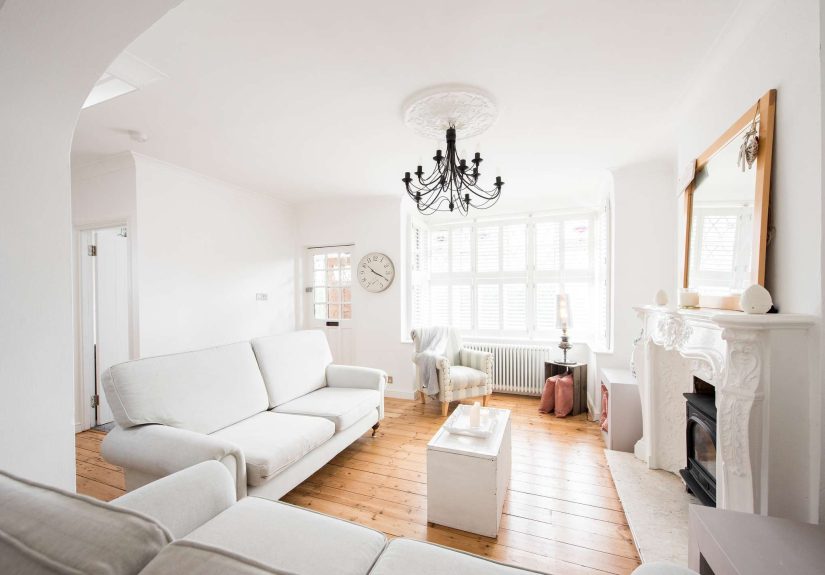
Choose a softer white with creamy, beige, or barely-there warm undertones. The goal is still brightness, but with a pulse. Warm white living room walls can make trim, art, bookshelves, and natural textures look richer and more intentional. Translation: you get the airy look without accidentally recreating the lighting vibe of a dentist’s office.
3. Dusty Blue
Why people regret it
Blue is a beloved color for interiors, and for good reason. The right blue can be classic, moody, elegant, coastal, or cocooning. The wrong blue, however, can make your living room feel dated faster than a chevron rug and a “Live Laugh Love” sign teaming up for one last performance.
Designers often call out dusty blue as a regret color because many versions lean cool, chalky, and one-dimensional. On a small sample, it feels soft. On four walls, it can feel stale, cold, and oddly old-fashioned. In north-facing or underlit rooms, the effect is even more dramatic. Instead of serene, the room may feel sleepy in the wrong way.
What to use instead
If you love blue, look for a version with warmth and depth. A blue with green, gray-brown, or even subtle indigo character usually has better staying power. Rich navy can work beautifully in the right room, and softer blue-greens tend to feel fresher than washed-out dusty blues. The trick is to avoid anything that looks powdery, icy, or too sweet.
4. Cool Greige
Why people regret it
Greige sounds like the perfect compromise. It is gray. It is beige. It is sensible. It is very adult. Unfortunately, some greiges land squarely in the emotional territory of “wet sidewalk.” Designers say cool greige is one of the most commonly regretted living room colors because it often ends up looking bland, sterile, and strangely joyless.
What makes cool greige tricky is that people expect warmth because beige is in the name. But once the gray undertones take over, the room can feel colder than planned. It also tends to shift a lot depending on light, flooring, and nearby finishes, which means the color you thought was balanced can suddenly look muddy, purple, or just tired.
What to use instead
Swap cool greige for warmer taupe, brown-based greige, soft camel, or muted clay-adjacent neutrals. These shades still feel versatile and easy to decorate with, but they give a living room actual atmosphere. Good living room paint should support the room, not suck the personality right out of it.
5. Lemon or Sunshine Yellow
Why people regret it
Yellow is the classic “I want this room to feel happy” choice. In theory, that makes total sense. In practice, bright yellow walls often overshoot the assignment. Designers say bold yellows can feel loud, glaring, cartoonish, and strangely stressful after the initial burst of optimism wears off.
One major issue is reflection. Bright yellow bounces onto furniture, skin tones, artwork, and wood finishes in ways that can feel unflattering and unnatural. The room may start to look less sunny and more like it’s permanently filtered through a giant banana. That’s funny for about six minutes and regrettable for the rest of the lease or mortgage.
What to use instead
If you want warmth, reach for buttercream, wheat, muted ochre, honey, or old-gold tones. These colors still bring sunshine and cheer, but with more depth and much less visual yelling. In a living room, subtle warmth usually ages better than citrus-level enthusiasm.
6. True Orange
Why people regret it
Orange can be beautiful in design, but there is a huge difference between a nuanced earthy orange and a true orange wall that reads like a traffic cone with a mortgage. Designers say people frequently regret orange living room walls because the color can feel overpowering, close in the space, and become surprisingly hard to decorate around.
That is especially true when the orange is too clean, bright, or pumpkin-like. The room starts demanding constant explanation. Every other item in the space suddenly has to either calm it down, match it, or surrender to it. That is a lot of emotional labor to ask from a sofa.
What to use instead
Try terracotta, muted rust, peachy neutral, cinnamon, or a brown-inflected apricot if you want warmth with character. These shades still feel inviting and earthy, but they are easier to layer with wood, cream upholstery, brass, black accents, and textiles. In other words, they act like grown-ups.
How to Avoid Living Room Paint Regret Before It Starts
The best way to avoid regrettable living room paint colors is not to trust the tiny paper chip like it knows your life. Sample the paint on large swatches or peel-and-stick samples. Move them around the room. Look at them in morning light, afternoon light, lamplight, and on the kind of rainy day that makes every room question its own identity.
Also test paint next to your floor, rug, sofa, trim, and wood tones. This matters because the living room never exists in isolation. Even a beautiful color can feel wrong if it fights with the undertones of your furnishings. And do not evaluate a paint color only when the room is empty. A living room with actual furniture will change the way the color reads.
Finally, think about how you want the room to feel, not just what shade is trending. A good living room color should make daily life easier. It should flatter the room when it’s messy, not only when it has been professionally styled and photographed within an inch of its life. Warmth, nuance, and flexibility almost always beat novelty in a room you use all the time.
The Bottom Line
The living room paint colors designers say people regret most have one thing in common: they promise one mood and deliver another. Cool gray promises sophistication and delivers gloom. Stark white promises freshness and delivers chill. Dusty blue promises calm and delivers dated. Cool greige promises balance and delivers boredom. Bright yellow promises cheer and delivers visual noise. True orange promises warmth and delivers overwhelm.
That does not mean these colors are forbidden forever. It just means they are risky choices for a room that needs to feel comfortable, timeless, and easy to live in. The best living room paint colors usually have softness, complexity, and warmth. They leave room for your furniture, lighting, and personality to do some of the heavy lifting. And frankly, that is what a good wall color should do: support the room, not audition for the lead role.
Experience Section: What Living With the Wrong Living Room Paint Actually Feels Like
Ask enough homeowners about living room paint regret, and the stories start sounding hilariously similar. First comes confidence. Then comes the first full wall. Then comes the slow realization that the paint chip was a tiny, deceitful rectangle that did not bother to mention how aggressively it would behave at sunset.
One common experience is the “safe choice” trap. Someone picks cool gray or bright white because it seems neutral, modern, and impossible to mess up. For the first day or two, the room looks clean and freshly painted, which feels like victory. But once the furniture goes back in and normal life resumes, the space starts feeling emotionally undercooked. The sofa looks flat, the wood floors lose warmth, and the room somehow feels both empty and overdesigned at the same time. People often describe this kind of regret in the same way: “I thought it would feel calm, but it feels cold.”
Then there is the opposite type of regret, which usually starts with a brave decision and a Pinterest board full of confidence. This is where bold yellow, orange, or another high-energy shade enters the chat. At first, the room feels exciting. Friends say, “Wow, that’s fun.” The problem usually appears around week three, when the color never stops being fun. Ever. Morning coffee feels loud. Evening TV feels loud. The room starts reflecting onto skin, fabrics, and even white lampshades in ways that make everything look slightly off. Homeowners begin moving accessories around like they are trying to negotiate peace treaties between the wall color and the rest of the room.
Dusty blue and cool greige regrets tend to be subtler but sneakier. These shades rarely cause immediate shock. Instead, they settle in quietly and slowly make the room feel stale. People often say they cannot quite explain why the living room looks tired even though the paint is technically new. That is the undertone issue at work. The room may not look “bad” exactly. It just never looks inviting. The paint starts feeling more like a compromise than a choice.
What is most interesting about these experiences is how quickly people stop blaming themselves and start blaming the room. They swap pillows, buy warmer lamps, bring in wood accents, add art, replace curtains, and move furniture around. Sometimes those changes help. But often the real issue is still on the walls, calmly ruining the vibe while pretending to be neutral.
The good news is that most paint regret is fixable, and the lesson tends to stick. After one bad living room paint choice, people get much smarter. They test larger samples. They check the color at multiple times of day. They pay attention to undertones. They stop chasing a trend and start asking a better question: “Do I want to live with this color when the room is messy, the lighting is weird, and it’s just a normal Tuesday?” That, more than anything, is how better living room colors get chosen.