Table of Contents >> Show >> Hide
- What “bailing on a toboggan” actually means
- Why bailing feels so ridiculously awesome
- The physics of the “oh no” moment
- Safety reality check: you want the story, not the ER bracelet
- So… should you bail? A practical (and very honest) take
- The social magic: “Are you okay?” followed by laughter
- FAQ: Tobogganing, bailing, and staying smart
- Conclusion: the tiny moment that becomes a lifelong memory
- Extra: of “bailing on a toboggan” experiences (because this is where the legend lives)
There are two kinds of winter sledders: the ones who glide down the hill like they’re filming a slow-motion hot cocoa commercial,
and the ones who discovermid-runthat their sled has entered its “creative phase” and is now exploring interpretive dance.
If you’ve ever felt a toboggan start to drift sideways, you already know the punchline: sometimes the most heroic move isn’t steering.
It’s bailing.
That split-second decisionfeet braced, brain yelling, “ABORT MISSION!”is exactly why “bailing on a toboggan” earned its spot as
#688 on 1000 Awesome Things. It’s not awesome because crashing is awesome. It’s awesome because it’s a tiny, ridiculous,
winter-only moment where your instincts, your reflexes, and your dignity all fight in the snow like three raccoons over a French fry.
And somehow, you walk away laughing (and maybe dusting off a snow-packed sleeve like you totally meant to do that).
What “bailing on a toboggan” actually means
“Bailing” is the informal, very human act of jumping off when a ride is going badlylike stepping away from a burning toaster waffle
situation before it becomes a full kitchen documentary. With a toboggan, bailing usually happens when you can’t slow down, can’t steer,
and can clearly see your future includes a tree, a fence, a snowbank with an attitude, orworst of allan audience.
Toboggans are often long, flat sleds built for sliding smoothly over snow. They’re classic, nostalgic, and perfect for piling on friends,
siblings, and at least one kid who keeps insisting “we can totally fit one more.” The catch? Compared to steerable sleds, many toboggans
are harder to controlespecially on icy runs or crowded hillsso when things go sideways, they can go literally sideways.
A quick word-nerd detour (because winter fun can have footnotes)
The word “toboggan” traveled into English through Canadian French and ultimately traces back to an Algonquian origin tied to the idea of
dragging something over snow. Which is fitting, because if you’ve ever tried to haul a toboggan uphill while wearing mittens that turn
your hands into cartoon paws, you know “dragging” is the main event.
Why bailing feels so ridiculously awesome
Let’s be honest: the best stories rarely start with “and then everything went exactly as planned.” Bailing on a toboggan is awesome because
it’s a perfect storm of:
- Adrenaline your heart does a little drum solo as gravity clocks in for overtime.
- Instant decision-making you don’t workshop the choice. You don’t form a committee. You bail.
- Comedy the snow is basically nature’s blooper reel.
- Relief the moment you stop sliding, your brain throws confetti: “We’re alive. Nice work, team.”
- Legend-building your friends will remember this longer than any group chat argument about pizza toppings.
It’s also a rare kind of “awesome” that’s impossible to fake. You can’t schedule it. You can’t buy it online (thank goodness).
You can only earn it the old-fashioned way: by doing something fun, losing control, and then saving yourself with a move that feels
like a stuntexcept it’s you, and your stunt coordinator is panic.
The physics of the “oh no” moment
A toboggan run is basically a friendly science lesson delivered at 20 miles per hour (sometimes more, depending on the hill, the snow,
and how much your sled believes in its own potential). Here’s what’s happening when the ride starts to misbehave:
1) Gravity is doing its job
Downhill means your weight pulls you forward. The steeper the hill, the stronger the pull. Snow conditions matter too:
fresh powder adds friction and slows you down; packed snow is faster; and ice is basically a slip-n-slide with a PhD.
2) Steering isn’t guaranteed
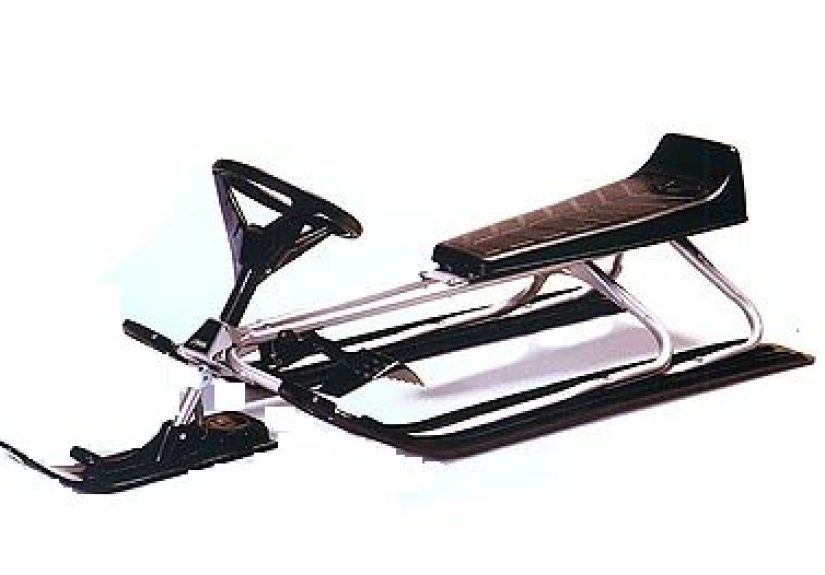
Steerable sleds often have runners and a mechanism (or at least a shape) that helps you guide the direction. Many toboggans, discs,
and tubes don’t offer that same control. If your sled starts drifting, you may be more passenger than pilot.
3) Weight distribution changes everything
If the front is too light, the sled can fishtail. If everyone leans at once, the sled can skid. If someone shifts suddenlylike when a
younger sibling spots a “cool ramp” and throws their whole body to the leftyour path can change instantly.
In other words: sometimes you’re not “bad at sledding.” Sometimes physics is just running the show, and your toboggan is freelancing.
Safety reality check: you want the story, not the ER bracelet
“Bailing on a toboggan” is funny in memory, but injuries from sledding are very real. U.S. safety and medical organizations consistently
point to the same big risk factors: collisions with fixed objects (trees, poles, fences), sledding near roads or parking lots, riding
headfirst, and using equipment that’s hard to steer. Head and neck injuries are a major concern, especially for kids.
The goal is simple: reduce the chances you’ll ever need to bail. Because the best bail is the one that never happens.
Smart sledding setup (the stuff that keeps “awesome” from turning into “ambulance”)
- Pick the right hill: wide, open, and free of obstaclesespecially at the bottom, where most runs get spicy.
- Avoid roads and traffic areas: sledding should never end in a street, driveway, parking lot, or any “moving car” zone.
- Skip frozen ponds and waterways: ice can be unpredictable and the risk is not worth the bragging rights.
- Go feet-first, sitting up: it’s safer and gives you a fighting chance to steer or stop.
- Consider a helmet: there isn’t a helmet made specifically for sledding, but many experts say wearing a properly fitted helmet is better than none.
- Supervision and spacing: one rider at a time on the main track, and walk up the sidenever up the middle like you’re volunteering as a human speed bump.
- Choose controllable gear: steerable sleds with runners and braking features typically offer more control than flat sheets, discs, tubes, and many traditional toboggans.
None of this is meant to drain the fun. It’s meant to protect the funlike putting a lid on a smoothie before you shake it.
Same joy, fewer stains.
So… should you bail? A practical (and very honest) take
If you’re reading this hoping for a secret ninja technique called “The Perfect Bail,” here’s the truth: the safest plan is to avoid
conditions that make bailing necessary. But in real life, people do find themselves in a “we’re headed for something solid” scenario.
When that happens, the least-bad option is often the one that reduces impact and gets you away from the sled’s path.
If you ever feel forced into a last-second bail, keep these principles in mind
- Go to the side, not forward: avoid launching into the direction you’re already traveling.
- Protect your head and neck: tuck your chin slightly and keep your arms in a position that doesn’t invite wrist injuries.
- Try to roll rather than “stick”: sudden stops can hurt; a controlled tumble is often less punishing than a hard plant.
- Get clear of the sled: a toboggan can keep sliding after you’re off. Don’t become the sequel to your own crash.
- Stop the run if visibility is bad: dusk, storms, and crowded hills turn minor mistakes into major collisions.
This isn’t medical advice, and it’s not a dare. Think of it as common-sense winter risk management with a side of humor:
if your hill requires “advanced bailing,” congratulationsyou’ve discovered a hill you shouldn’t be sledding on.
The social magic: “Are you okay?” followed by laughter
Part of why #688 lands so well is the shared choreography of it all. Someone wipes out. Everyone gasps. Then the person pops up,
does the quick limb inventory, and announces, “I’m fine!” in the exact tone that means “I am mostly fine and also my pride
has taken a direct hit.”
The hill becomes its own little community:
strangers cheering for good runs,
kids negotiating turn-taking with the intensity of contract lawyers,
parents acting as part referee, part weather app, part “please don’t aim for the mailbox.”
And when someone bails, there’s an unspoken respect in the airbecause everyone understands that moment of deciding between
“ride it out” and “save the mission.” It’s a tiny act of courage wrapped in snow pants.
FAQ: Tobogganing, bailing, and staying smart
Is a toboggan safer than other sleds?
It depends on the design and where you ride. Many safety experts favor sleds with steering and braking features because they provide
more control than traditional toboggans, discs, or tubes. Control matters most on fast or crowded hills.
Do kids really need helmets for sledding?
Many pediatric and safety organizations encourage considering a properly fitted helmet for sledding, especially for kids, because
head injuries are a major concern. There’s no perfect “sledding helmet,” but a certified helmet designed for other activities can
be better than noneprovided it fits correctly and is used appropriately.
What’s the biggest cause of sledding injuries?
Collisions are a common culpritespecially hitting fixed objects like trees, poles, fences, or parked cars, or crashing into other sledders.
Choosing an open hill with a long, flat runoff area at the bottom reduces risk dramatically.
What should I do after a hard fall?
Take a moment before you jump back in line. Check for dizziness, headache, neck pain, or numbness. If anything feels off,
stop sledding and get checked out. Winter fun is great, but your brain is not a spare part.
Conclusion: the tiny moment that becomes a lifelong memory
“Bailing on a toboggan” is one of those oddly perfect slices of life: a winter-only plot twist where you’re part athlete,
part comedian, and part human snowball. It’s awesome because it’s realbecause it’s a story you can’t manufacture, only collect.
And that’s the spirit behind 1000 Awesome Things: noticing how the smallest moments, even the chaotic ones, can spark joy.
Just remember: the best version of #688 ends with laughter, not bandages. Pick a safe hill, use controllable gear when you can,
protect your head, and keep the run clear. Then go earn the kind of winter memory that makes you grin in July.
Extra: of “bailing on a toboggan” experiences (because this is where the legend lives)
The first time you bail, it rarely feels cinematic. It feels like your brain hit a big red button labeled “NOPE.” For me, the classic
setup is always the same: you start confident, you start fast, and then the sled decides to audition for a figure skating routine.
The front swings left. Someone behind you laughs a little too early. Your gloves grip the sides like that will magically summon brakes.
Then your eyes lock onto a tree that’s minding its own business, and you realize: “We are about to have a conversation with bark.”
You hop off to the side, hit the snow, roll once, and stand up with your arms out like you meant to dismount there. Ten out of ten,
would dramatically pretend I planned it again.
Another kind of bail happens in groupswhen a toboggan is overloaded with friends and optimism. Everyone’s stacked like winter-themed
Jenga: one kid in front, two behind, one person half sitting on someone else’s boot, and a brave soul clinging to the back like a cape.
The run begins with screaming (the fun kind), then shifts into screaming (the “this is going too fast” kind). When the sled starts to
drift, group logic falls apart immediately. One person leans right. Another leans left. The sled responds by going straight into chaos.
That’s when bailing becomes contagious: first one person jumps off, then another, and suddenly the toboggan is a runaway cafeteria tray
with no passengers and a lot of confidence. Everyone ends up in the snow, laughing so hard they can’t get their scarves back on.
It’s like a failed heist where nobody stole anything except dignity.
Then there’s the adult bailthe one that arrives years after you assumed you’d aged out of this nonsense. You go sledding “for the kids,”
which is a well-known lie. You sit down, you push off, and instantly remember that gravity does not care about your taxes, your inbox,
or your lower back. The hill feels faster than it did when you were ten because now you have responsibilities and a much clearer sense
of consequences. When the sled veers, you don’t just bail for yourselfyou bail for the storyline. You’re not trying to be a headline.
You pop off to the side, slide to a stop, and stand up with the careful dignity of someone exiting a very small, very rude elevator.
The kids cheer anyway. You pretend you did it to “show them how to be safe,” and they pretend to believe you.
The best part of these experiences isn’t the fall. It’s the after-moment: brushing snow off your jacket, doing a quick “all limbs present”
check, and sharing that look with everyone else on the hillthe look that says, “Okay, that was terrifying… but also kind of incredible.”
That’s why #688 sticks. It’s a tiny winter drama that ends with laughter, a story, and the warm glow of knowing you survived your own
toboggan’s character arc.