Table of Contents >> Show >> Hide
Toronto has a skyline, a lakefront, a basketball team with championship memories, a public transit system that inspires group therapy, and a slang dictionary so lively it deserves its own condo. If you have ever heard someone say, “Mans are marved, fam, let’s reach,” and wondered whether you accidentally opened a secret app update for English, welcome to the world of Toronto slang.
Toronto slang is not random internet noise. It is a living mix of Canadian English, Jamaican Patois, Somali, Arabic, Caribbean speech, hip-hop culture, neighborhood identity, and the quick humor of people who can complain about the TTC and still proudly call the city home. It is especially tied to the Greater Toronto Area, often called the GTA, and to younger speakers who use language as a badge of culture, friendship, rhythm, and local pride.
This guide breaks down more than 70 Toronto slang words and phrases with simple meanings, examples, and context. Some words are playful, some are everyday, and a few are best understood rather than copied. The goal is not to cosplay as a Toronto mans after reading one article. The goal is to understand the language, respect the culture behind it, and avoid looking like a confused tourist at Union Station holding a Presto card upside down.
What Makes Toronto Slang Different?
Toronto slang is often connected to Multicultural Toronto English, a local way of speaking shaped by the city’s enormous diversity. Toronto is one of the most multicultural cities in the world, and that diversity shows up in food, music, neighborhoods, comedy, sports, and language. The slang is not just “Canadian slang with a Drake filter.” It has its own sound, vocabulary, and social meaning.
Many Toronto slang words come from Jamaican Patois, including terms like “wagwan,” “ting,” “yute,” and “pree.” Somali and Arabic influence also appear in words such as “wallahi,” “akhi,” and “warya.” Then there are classic Canadian terms like “Timmies,” “toque,” “loonie,” and “pop,” plus Toronto-specific labels like “the 6ix,” “T-Dot,” “Scarbs,” and “Sauga.” Put them together and you get a language blend as layered as a late-night shawarma order.
70+ Toronto Slang Words and Phrases
Toronto Identity and Place Slang
- The 6ix A nickname for Toronto, popularized in music and culture. Example: “Summer in the 6ix hits different.”
- T-Dot An older nickname for Toronto. Example: “I grew up in T-Dot.”
- T.O. Short for Toronto. Example: “I’m heading to T.O. this weekend.”
- GTA Greater Toronto Area, including Toronto and surrounding regions. Example: “Traffic in the GTA is not for the weak.”
- 416 Toronto’s classic area code, often used as city shorthand. Example: “That’s real 416 energy.”
- 647 Another Toronto area code used in local identity. Example: “647 number but still downtown every day.”
- 905 Suburban GTA areas around Toronto. Example: “He says he’s from Toronto, but he’s 905.”
- Scarbs Short for Scarborough. Example: “Best food run? Scarbs, easy.”
- Sauga Short for Mississauga. Example: “I’m in Sauga tonight.”
- North York A Toronto district often used as a local identity marker. Example: “North York mans know the route.”
- Downtown core Central Toronto. Example: “The downtown core is packed after work.”
- The PATH Toronto’s underground pedestrian network. Example: “I got lost in the PATH for 20 minutes.”
- The TTC Toronto Transit Commission, the city’s public transit system. Example: “The TTC was moving slow today.”
- Presto The transit fare card used across Toronto-area systems. Example: “Don’t forget to tap your Presto.”
- Trawna A casual pronunciation of Toronto. Example: “Welcome to Trawna, where every season is construction season.”
People, Friends, and Social Circles
- Mans Can mean I, me, we, people, or a guy, depending on context. Example: “Mans are tired” can mean “I’m tired.”
- Mandem A group of guys or close friends. Example: “The mandem are linking later.”
- Fam Friend, close person, or general address. Example: “Relax, fam.”
- B Short for bro or buddy. Example: “What’s good, B?”
- Bro Friend or casual address. Example: “Bro, that line is too long.”
- Bredren Brother, close male friend. Example: “That’s my bredren from time.”
- Sistren Sister or close female friend. Example: “She’s my sistren, always solid.”
- Yute Young person. Example: “These yutes are loud on the bus.”
- Waste yute A rude way to call someone immature or useless. Use carefully. Example: “Don’t act like a waste yute.”
- Wasteman A man seen as lazy, immature, or unreliable. Use carefully. Example: “He bailed again? Wasteman behavior.”
- Ting A thing, situation, or sometimes a person someone is interested in. Example: “That’s a serious ting.”
- Gyal Girl or woman, from Caribbean speech. Use respectfully. Example: “She’s a smart gyal.”
- Akhi Brother or close friend, from Arabic. Example: “Respect, akhi.”
- Abti Uncle, from Somali usage. Example: “Ask abti, he knows everyone.”
- Warya A Somali-influenced way to call or address a guy. Example: “Warya, where are you going?”
Greetings, Reactions, and Conversation Fillers
- Wagwan What’s going on? A greeting from Jamaican Patois. Example: “Wagwan, fam?”
- What you saying? What are you up to? How are you? Example: “What you saying tonight?”
- Ahlie Right? Am I lying? Used for agreement or confirmation. Example: “That pizza was elite, ahlie?”
- Wallahi I swear to God. Use respectfully because it has religious meaning. Example: “Wallahi, I left on time.”
- Say less I understand; no need to explain more. Example: “Meet at seven?” “Say less.”
- Seen Understood, got it. Example: “Meet outside the station.” “Seen.”
- Zeen Another version of “seen.” Example: “Zeen, I’ll be there.”
- Dun know You already know; of course. Example: “Best patties in the city?” “Dun know.”
- Bless up Greeting, goodbye, or expression of respect. Example: “Bless up, see you later.”
- Haye haye Alright, okay, or an excited ad-lib. Example: “Haye haye, we made it.”
- Gheez Expression of surprise or hype. Example: “Gheez, that jacket is clean.”
- Yo guy A greeting or attention-getter. Example: “Yo guy, you coming?”
- Real talk Honestly; seriously. Example: “Real talk, that was the best meal all week.”
- No cap No lie; for real. Example: “That was the best concert, no cap.”
- Cap A lie or exaggeration. Example: “You walked from Scarbs to downtown? Cap.”
Actions and Plans
- Reach Come over, arrive, or show up. Example: “Reach the spot at eight.”
- Link Meet up. Example: “Let’s link after class.”
- Pull up Come by or arrive. Example: “Pull up when you’re free.”
- Come through Visit or attend. Example: “Come through after dinner.”
- Fawad Come or go somewhere. Example: “Fawad to the park.”
- Cut Leave. Example: “This place is packed. Let’s cut.”
- Scoop Pick someone up or get a ride. Example: “Can you scoop me at the station?”
- Run me Give me or hand me. Example: “Run me that charger.”
- Send Pass or send something. Example: “Send the address.”
- Pree Look at, notice, or pay attention to. Example: “Pree the weather before you leave.”
- Y-pree What are you looking at? What are you up to? Example: “Y-pree, fam?”
- Lowe it Leave it alone, allow it, or forget it. Example: “Lowe it, it’s not worth arguing.”
- Nize it Be quiet or stop talking. It can sound harsh. Example: “Nize it, the movie started.”
- Keep six Watch your back or stay alert. Example: “Keep six when you’re walking in that crowd.”
- From time For a long time; since way back. Example: “I’ve known her from time.”
Feelings, Reactions, and Descriptions
- Marved Very hungry. Example: “I’m marved. Let’s eat now.”
- Cheesed Angry, annoyed, or irritated. Example: “I’m cheesed the train got delayed.”
- Amped Excited or energized. Example: “I’m amped for the game.”
- Gassed Overly confident or hyped up by attention. Example: “He got one compliment and now he’s gassed.”
- Extra Doing too much. Example: “That reaction was extra.”
- Bare A lot of or many. Example: “There were bare people downtown.”
- Proper Good, correct, or impressive. Example: “That was a proper meal.”
- Lit Fun, exciting, or lively. Example: “The festival was lit.”
- Fire Excellent or stylish. Example: “Those shoes are fire.”
- Sick Cool or impressive. Example: “That view from the island is sick.”
- Clutch Helpful at the perfect moment. Example: “That umbrella was clutch.”
- Sus Suspicious or questionable. Example: “That excuse sounds sus.”
- Arms Mean, unfair, or harsh. Example: “That comment was arms.”
- Bout it Interested or willing. Example: “Late-night noodles?” “I’m bout it.”
- Mossing Hanging out or relaxing. Example: “Just mossing at home.”
- Sav Someone bold, wild, or fearless. Example: “She went outside in that snowstorm? Sav.”
Canadian Slang You Will Hear in Toronto Too
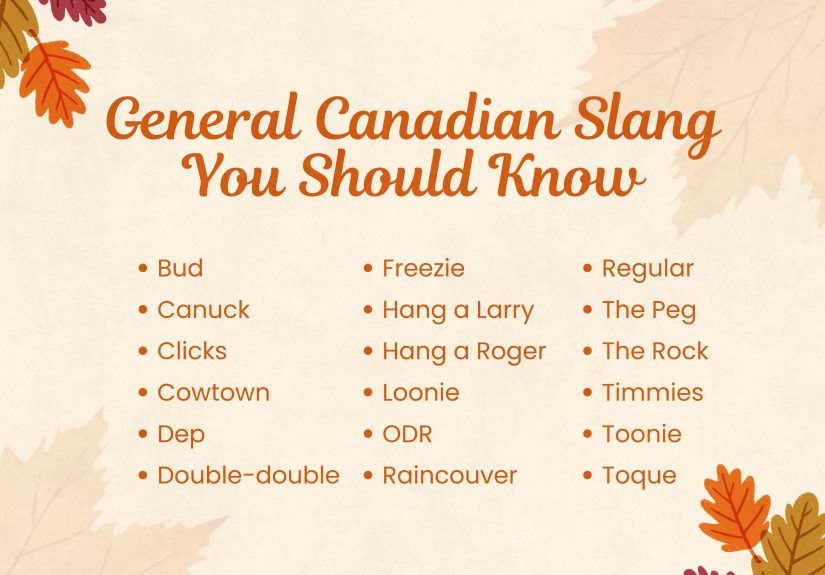
- Timmies Tim Hortons, the coffee chain. Example: “Let’s stop at Timmies.”
- Double-double Coffee with two creams and two sugars. Example: “I’ll grab a double-double.”
- Timbits Donut holes from Tim Hortons. Example: “Bring Timbits for the meeting.”
- Pop Soda. Example: “Do you want orange pop?”
- Loonie Canadian one-dollar coin. Example: “I found a loonie in my bag.”
- Toonie Canadian two-dollar coin. Example: “The locker costs a toonie.”
- Toque Winter hat or beanie. Example: “Wear a toque; it’s freezing.”
- Runners Sneakers or athletic shoes. Example: “Bring runners for the walk.”
- Washroom Bathroom or restroom. Example: “Where’s the washroom?”
- Hydro Electricity or electric bill. Example: “Hydro went up this month.”
- Klicks Kilometers. Example: “It’s only a few klicks away.”
- Eh A classic Canadian tag meaning “right?” or “don’t you think?” Example: “Cold today, eh?”
How to Use Toronto Slang Without Sounding Ridiculous
The first rule of Toronto slang is simple: do not force it. Slang is social. It works best when it grows naturally from the people around you, the neighborhood you are in, and the kind of conversation you are having. If you walk into a coffee shop and announce, “Wagwan, mandem, mans are seeking a double-double,” you may technically be using words from this guide, but spiritually you are wearing a raccoon costume to a job interview.
Start by understanding before imitating. If someone says, “Reach at eight,” you now know they mean “show up at eight.” If a friend says they are “cheesed,” you know they are annoyed. If someone says “say less,” they are not asking you to become mysterious; they are saying they understand. Once you can understand the rhythm, you will naturally know when a phrase fits.
Context also matters. Words like “fam,” “link,” “bare,” “proper,” and “cheesed” are easy to use casually. Words such as “waste yute,” “wasteman,” “nize it,” or “bucktee” can sound rude, insulting, or culturally loaded. They are useful to recognize, but you should be careful about saying them, especially around people you do not know well.
Why Toronto Slang Matters
Slang is not broken English. It is creative English. Toronto slang tells a story about migration, music, comedy, public housing, high schools, basketball courts, group chats, neighborhoods, and families who brought pieces of the Caribbean, East Africa, the Middle East, South Asia, and countless other places into one city. The result is a way of speaking that is funny, quick, emotional, and unmistakably local.
It also shows how cities create identity. Saying “the 6ix” is not just a location tag; it is a cultural signal. Saying “Scarbs” can carry pride, humor, and a whole food map in one syllable. Even complaining about the TTC becomes a local bonding ritual. In Toronto, language is part of the city’s architecture. The CN Tower gets the postcards, but slang gets the group chat.
Real-Life Experience: Learning Toronto Slang in the Wild
The first time you hear Toronto slang in real life, it may feel like your English teacher skipped a chapter. Imagine landing at Pearson, taking transit toward the city, and overhearing someone say, “Mans are marved. Let’s reach Scarbs and grab food.” Your brain may pause at “mans are,” panic politely, and then search for subtitles that do not exist. But after a few days, the pattern starts to click. “Mans” can mean “I.” “Marved” means hungry. “Reach” means arrive. Suddenly the sentence is not a puzzle; it is dinner plans.
A good Toronto slang experience usually starts with food. You might be downtown, tired from walking around the waterfront, when a local friend says, “Say less, I know a proper spot.” That means the decision has been made, and your only job is to follow. Maybe the spot is a Caribbean takeout counter, a shawarma place, a Korean fried chicken shop, a Hakka restaurant in Scarborough, or a late-night diner where everyone seems to know the menu by spiritual instinct. Someone says, “This is fire,” and for once nothing is burning. It means the food is excellent.
Transit teaches another lesson. On the TTC, you may hear “I’m cheesed” after a delay announcement, and you will understand the emotional accuracy immediately. “Cheesed” is not mild annoyance. It is the feeling of being late, cold, hungry, and betrayed by a vehicle you had no choice but to trust. Toronto slang is efficient because city life demands efficiency. Why write a paragraph about your frustration when one word can carry the whole weather forecast?
Neighborhood slang also gives you a map that Google cannot. “Scarbs” is not just Scarborough; it can imply food, community, distance, and pride. “Sauga” is Mississauga, but said by someone who knows the GTA is bigger than downtown Toronto. “905” can be a joke, a boundary, or a friendly accusation. “416” feels more central, older-school, and city-coded. These terms help people locate each other socially, not just geographically.
The biggest lesson is respect. Toronto slang is fun, but it is not a costume. Some words come from communities with deep histories, including Jamaican, Somali, Arabic-speaking, and Black Canadian communities. That means the best way to learn is to listen first. Use simple words naturally, avoid insults unless you fully understand the relationship and setting, and remember that sounding authentic matters less than being respectful. Nobody needs to become a parody of a Toronto mans. Just learn enough to understand the joke, follow the plan, and know when “say less” means the conversation is already finished.
Conclusion
Toronto slang is one of the city’s most entertaining cultural exports. It is fast, expressive, multicultural, and occasionally confusing enough to make a visitor question every English class they ever took. But once you understand the basics, it becomes a window into how Toronto actually sounds: local, global, funny, proud, and always ready to turn a simple sentence into a neighborhood event.
Whether you are planning a trip, moving to the GTA, writing about Canadian culture, or simply trying to decode a viral clip, these 70+ Toronto slang words give you a strong starting point. Learn the meanings, respect the roots, and use the phrases only when they fit. Do that, and you will understand Toronto conversations much better. You may even survive a TTC delay without looking completely lost. No promises, though. The TTC is still the TTC.