Table of Contents >> Show >> Hide
Every few years, television remembers teachers exist. Usually, it does so with swelling music, a big inspirational speech, and the general vibe of “look, a noble adult with dry-erase markers.” Then the credits roll, the audience feels warm for six minutes, and America goes right back to pretending copy paper grows on trees and classrooms can run on appreciation alone.
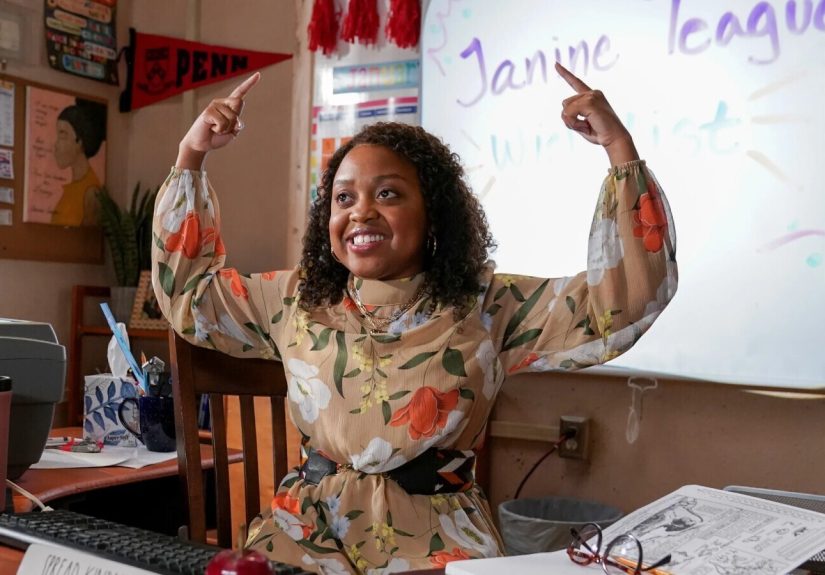
Abbott Elementary did something much sharper. Quinta Brunson made a sitcom that is warm without being corny, funny without being clueless, and political without turning into a lecture wearing a cardigan. In the process, she has done something the real public school system has struggled to do for years: make a huge number of Americans actually pay attention to what teachers need, what underfunded schools look like, and why public education deserves more than applause and a sad little “Teacher Appreciation Week” coupon.
That doesn’t mean a TV comedy has replaced policy. It hasn’t. A half-hour network sitcom cannot rewrite a state budget, fix a broken school funding formula, or magically make every district stop asking teachers to become part educator, part social worker, part office-supply sponsor. But Brunson has done something the system rarely manages well: she made people care at scale. And then, unlike a lot of cultural praise machines, she helped turn that attention into books, supplies, donations, and opportunity.
Why Abbott Elementary Hits So Hard
The show works because Brunson didn’t build it from a distance. She built it from memory. Her mother taught kindergarten in Philadelphia public schools for roughly four decades, and Brunson has said again and again that she knew this world intimately: the mornings, the after-school work, the long hours, the emotional labor, and the almost comic absurdity of being expected to perform miracles with a budget that appears to have been assembled from loose change found in a desk drawer.
That intimacy matters. Abbott Elementary doesn’t feel like a show written by people who once passed a school building and thought, “Huh, interesting architecture.” It feels observed. The teachers are not flattened into saints or punch lines. They are funny, petty, brilliant, tired, generous, territorial, idealistic, and occasionally one inconvenience away from turning a faculty meeting into a hostage situation. In other words, they read like actual adults who work in schools.
Brunson also grounded the show in educator experience behind the scenes. That choice shows up in the texture of the series. The jokes are good, but the details are better: the wish lists, the improvised fixes, the weirdly intense printer drama, the side hustle energy, the way every tiny victory feels larger in a building where resources are always one step behind necessity. Public school teachers recognized themselves because the show treated their lives like real lives, not educational wallpaper.
And timing helped. Abbott Elementary arrived during a moment when education had become a national shouting match. Teachers were suddenly at the center of debates over reopening, curriculum, school safety, burnout, staffing, and community expectations. Brunson didn’t invent public concern over education. She gave it a human face and a sharper vocabulary. She translated policy failure into stories people wanted to watch.
She Made Public School Problems Understandable
Underfunding became more than an abstract headline
One of the hardest things about school inequity is that it often sounds boring until you’re living inside it. “Facilities backlog” does not exactly trend. Neither does “unreimbursed classroom spending.” The public education crisis is full of phrases that sound like they were written by a committee trapped in a beige conference room.
Brunson’s great trick was to turn those dry phrases into emotionally legible comedy. A broken light is not just a broken light in Abbott Elementary; it is a symbol of a system that asks children and teachers to adjust to nonsense forever. Missing supplies are not just missing supplies; they are proof that the people doing the most important daily work are often expected to finance it themselves. Bureaucratic neglect becomes visible when you see smart, caring adults constantly forced to improvise around it.
And the real data behind that joke is not exactly cute. Public school teachers have long spent their own money on classroom materials. Federal data showed that roughly 94.8% of public school teachers spent personal money on classroom supplies in the 2019–20 school year, with an average of $445 spent across all public school teachers. More recent educator reporting has suggested the burden rose even higher after the pandemic. That means the show’s supply jokes land because they are not really jokes. They are translations.
The same goes for staffing and stress. National data released in late 2024 showed that 74% of public schools said they had difficulty filling at least one teaching vacancy with a fully certified teacher at the start of the 2024–25 school year. RAND’s 2024 teacher well-being findings also underscored what educators already knew in their bones: stress, burnout, long hours, low pay, and student-behavior challenges remain defining features of the job. So when Abbott Elementary shows teachers trying to do ten jobs at once while keeping their dignity intact, it isn’t exaggerating so much as tidying the mess into a format America can tolerate before bed.
It gave Black educators the visibility they rarely get
Another reason the show feels fresh is that it treats a predominantly Black public school as normal rather than exceptional. That sounds simple, but television has not always been great at this. Brunson drew from her own Philadelphia experience, where Black teachers were a central part of her educational world. On-screen, that produces something both specific and generous: a school community where Black educators are not side characters in someone else’s institutional drama. They are the center of it.
That matters culturally, but it also matters educationally. Representation in schools is not a cosmetic issue. It shapes mentorship, belonging, expectation, and memory. Abbott Elementary understands that without turning every scene into a public-service announcement. It lets that truth live inside character, community, and humor. The result is a show that reflects real public schools more honestly than many prestige dramas reflect anything at all.
Then Brunson Did Something Even Rarer: She Helped for Real
Plenty of people make “important” art and then stop at the important part. Brunson and the people around Abbott Elementary pushed further. This is the point where the title of this article earns its lunch money.
Early in the show’s run, Brunson said she redirected some of the series’ marketing money toward supplies for teachers. That is such a wonderfully revealing move because it cuts right through the usual entertainment logic. Instead of spending every last dollar making sure you cannot escape a billboard, she pushed money toward people who actually needed glue sticks, books, and working classroom basics. That is not a structural solution, but it is the kind of practical thinking many teachers wish more institutions would attempt before inventing another poster campaign.
The real-world support did not stop there. The show and its partners backed free Scholastic book fairs at underfunded schools, with students receiving books and teachers getting books for their classrooms. There were also direct school-supply donations in Philadelphia, including an effort that delivered tens of thousands of dollars’ worth of materials to local schools. Later, a DonorsChoose initiative tied to Abbott Elementary aimed to help generate up to $1 million for public school classrooms.
That pattern matters more than any single campaign. Brunson didn’t just make a show about public schools. She helped create a mini support ecosystem around the show. In a media landscape where “raising awareness” is often code for “we made a hashtag and called it service,” that is refreshingly concrete.
And the giving kept evolving. In Philadelphia, Brunson later backed a field trip fund designed to help public school students access out-of-classroom learning experiences. That detail is especially revealing because field trips are often treated like cute extras. They are not. They are memory-makers, confidence-builders, and sometimes the first time a child realizes the city belongs to them, too. If a student’s world expands because a bus fee is finally covered, that is not fluff. That is educational access with better scenery.
What the Real Public School System Couldn’t Do
It couldn’t make the public care this efficiently
School systems are often asked to defend themselves in the driest language imaginable. They issue reports. They release budgets. They warn about shortfalls. They hold hearings. Then half the public hears “funding inequity” and mentally drifts toward snacks.
Brunson did what policy documents rarely do: she gave people a reason to feel the problem. She made viewers laugh, then recognize the laugh, then feel a little guilty for laughing because, oh right, that teacher buying her own supplies is not just a setup for a joke. That is Tuesday.
That emotional conversion is powerful. A lot of Americans know public schools are under pressure in the same vague way they know vegetables are important. But Abbott Elementary made the pressures vivid. It showed how underfunding distorts everything from morale to classroom atmosphere to student opportunity. It made educational neglect legible to audiences who may never read a state adequacy report and definitely are not spending their Friday night studying district procurement failures.
It restored dignity without making teachers superhuman
One of the weirdest habits in American culture is that we often respect teachers most when we portray them as exhausted angels. Brunson sidesteps that trap. Her characters are capable, but they are also irritated, competitive, goofy, selfish, loving, chaotic, and fully human. That is not disrespect. It is dignity.
Teachers do not need more mythology. They need more support. By refusing to portray them as morally purified martyrs, Abbott Elementary does something more useful than flattery: it insists their work is valuable because they are skilled people doing essential labor, not because they have transcended ordinary humanity and now float through the halls dispensing wisdom and sanitizer.
This shift in tone matters because pity burns out fast. Respect lasts longer. A pity-based politics gives you one emotional speech and a mug that says “Teach, Love, Inspire.” A respect-based politics asks harder questions: Why are these professionals paying for basics? Why are their buildings crumbling? Why are vacancies so hard to fill? Why does society demand endless resilience from people it underpays?
She built cultural momentum that policy never manages alone
There is a reason lawmakers, advocates, parents, and journalists all care about cultural narratives even when they pretend not to. Stories shape what the public thinks is normal, urgent, fixable, or shameful. Brunson changed the story.
Before Abbott Elementary, public school teachers were often discussed as symbols in political fights. After Abbott, they were back in the popular imagination as workers, mentors, neighborhood anchors, and deeply funny people surviving unreasonable circumstances. That is not a small achievement. It is narrative infrastructure.
In Pennsylvania, where the show is rooted, funding inequity has not been theoretical. The state has wrestled with a multibillion-dollar adequacy gap for poorer districts, and Philadelphia’s school infrastructure needs have long been staggering. In that context, Brunson’s work feels almost mischievously effective. She did not wait for the system to become eloquent. She built the eloquence herself.
But Let’s Not Let the State Off the Hook
Here is the part where the applause should stop just long enough for reality to clear its throat: Quinta Brunson is not supposed to have to do this.
A celebrity redirecting marketing funds is admirable. A network-backed show helping classrooms is admirable. A field trip fund is admirable. But none of those things should be mistaken for a functioning public education system. They are evidence of generosity. They are also evidence of a vacuum.
Public schools should not depend on a sitcom’s halo effect to get books, supplies, and experiences into students’ hands. Teachers should not need a viral wishlist, a nonprofit code, or a benevolent entertainment machine to patch holes that stable public investment should have covered in the first place. If anything, Brunson’s success throws the system’s failure into harsher light. When a comedy can move faster than policy, that is charming for television and embarrassing for government.
So yes, Brunson is doing what the real public school system couldn’t. She is creating attention, affection, urgency, and tangible support. But she is also exposing what the system still refuses to do consistently: fund schools fairly, maintain buildings responsibly, pay educators adequately, and stop treating public school survival as a test of how much sacrifice teachers can absorb before they finally tap out.
What This Feels Like for People Who Know Public School Life
There is another reason Abbott Elementary lands so deeply, and it has less to do with ratings than recognition. If you grew up in or around public schools, the show can feel less like entertainment and more like somebody finally found the right camera angle on your childhood.
Maybe you remember the teacher who kept crackers in a drawer because somebody always came to school hungry. Maybe you remember a classroom library held together by hand-me-down paperbacks, a fan that sounded like it was protesting labor conditions, or a bulletin board so beautifully arranged it was obvious some adult had stayed way too late making it look magical. Kids notice more than adults think. They notice who is trying. They notice who stays. They notice when a teacher spends money they absolutely should not have had to spend.
For people raised by educators, the experience is even more specific. You know the kitchen-table grading. You know the stack of school papers in the car. You know the weird family silence that means Mom or Dad is still mentally at work even though technically everyone is home. You know that “summer break” is often a myth told by people who have never seen a teacher reorganize an entire year of life in July. Watching Brunson build comedy from that reality feels validating because it says: this labor was never invisible, only ignored.
For Black viewers, the experience can carry another layer. Seeing a school staffed by Black educators, led by Black excellence, and shaped by neighborhood specificity does not just feel accurate; it feels restorative. So much television acts as if authenticity must be translated before mainstream audiences can understand it. Abbott Elementary refuses that assumption. It trusts the world enough to be itself.
And for teachers watching now, the show often seems to produce a rare feeling: relief. Not because it solves their problems, but because it acknowledges them without flattening them into misery. Teachers have had enough grim realism to last several lifetimes. What Brunson offers is different. She says the work is hard, the system is unfair, the people are overextended, and somehow there is still room for joy, pettiness, friendship, hope, and jokes about hallway nonsense. That combination is not trivial. It is survival.
The emotional experience of Abbott Elementary is not “school is perfect.” It is “school is worth fighting for.” That distinction is why the series resonates so widely. It does not sell fantasy. It sells recognition with a pulse.
Final Bell
Quinta Brunson’s biggest achievement is not merely that she made a beloved comedy. It is that she made public school teachers culturally visible in a way that feels affectionate, specific, and impossible to shrug off. Then she used the show’s success to push real support toward classrooms. That combination of storytelling and material help is exactly why this whole phenomenon feels bigger than television.
The real public school system could not make enough people care soon enough. It could not stop teachers from subsidizing their own classrooms. It could not consistently protect underfunded schools from being asked to perform miracles on discount settings. Brunson did not fix those failures. But she exposed them, humanized them, and, in several meaningful ways, interrupted them.
That is the real lesson of Abbott Elementary. Public schools do not just need funding formulas, legal victories, and staffing plans. They need cultural champions who can make the country see them clearly. Brunson has done that with punch lines, heart, and better instincts than a lot of policymakers have shown in years.
The hope, of course, is that one day teachers will not need a hit sitcom to get the basics. Until then, Quinta Brunson has managed something remarkable: she made America laugh at the absurdity of public school neglect, and then she made it just a little harder to ignore.