Table of Contents >> Show >> Hide
- The ~15% Founder-CEO Benchmark: What It Means (and What It Doesn’t)
- How Founders Go from 100% to ~15% Without Anyone “Stealing” Anything
- Step 1: The Seed Stage (a.k.a. “We have a product and a mild panic disorder”)
- Step 2: Series A (the Option Pool Shuffle enters the chat)
- Step 3: Series B and Beyond (compounding dilution, compounding company value)
- Step 4: Late Stage Liquidity (a.k.a. “Everyone wants to buy a house before IPO”)
- Step 5: The IPO Itself (yes, it’s also dilution)
- Why Most Co-Founders Aren’t Equal (And Why That’s Often Healthy)
- When Equal Splits Actually Work (and When They Don’t)
- Ownership vs Control: The Part Everyone Learns Too Late
- A Practical Playbook for Founders (So Equity Doesn’t Turn into Emotional Debt)
- What Should You Take Away From the ~15% Benchmark?
- Founder Field Notes: of “Yep, That’s How It Really Feels”
There are two startup myths that refuse to die: (1) “Founders keep most of the company,” and (2) “If we’re co-founders, it should be 50/50.” Both myths are comforting. Both are usually wrong. And neither is a moral failurejust a sign you haven’t stared long enough into the fluorescent glow of a cap table.
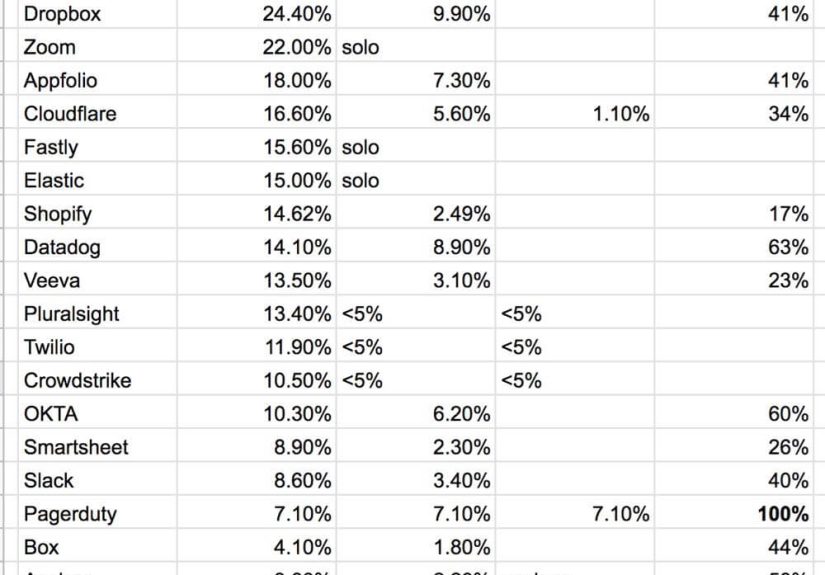
When top SaaS companies finally ring the bell, the founder-CEO often owns something like ~15% at IPO (sometimes more, often less). Meanwhile, in most of those same companies, the biggest co-founders are not equal ownersand that’s not only common, it’s often the most rational outcome.
This “UPDATED” take isn’t about telling you what’s “fair.” It’s about giving you a realistic benchmarkso you can make smarter choices about equity splits, dilution, and incentives without turning your founding team into a slow-motion group project disaster.
The ~15% Founder-CEO Benchmark: What It Means (and What It Doesn’t)
Let’s treat “Founder-CEO owns ~15% at IPO” like a speed limit sign. It tells you what’s typical on that road, not what your car must do. Founder ownership at IPO can vary based on:
- How long you stay private (more years can mean more rounds, more dilution, more secondary, more everything).
- How aggressively you fundraise (capital is fuel; fuel isn’t free).
- How big your option pool is (the “silent slice” of the pie).
- Whether the founder-CEO gets “refresh” grants (common at later stages to retain the CEO).
- Founder vs non-founder CEO (ownership tends to be meaningfully higher for founder-CEOs).
So why does ~15% show up so often? Because startups start at 100% founder-owned and then spend the next 7–12 years trading ownership for:
- capital (investors),
- talent (option pool),
- time (later-stage liquidity),
- and occasionally sanity (also known as “experienced executives”).
In other words: if your company becomes huge, your percentage can shrink while your actual value grows. That’s not a glitchit’s the business model.
How Founders Go from 100% to ~15% Without Anyone “Stealing” Anything
Most dilution is not villainous. It’s arithmetic. Here’s a simplified, very realistic journey for a venture-backed SaaS company:
Step 1: The Seed Stage (a.k.a. “We have a product and a mild panic disorder”)
You start at 100%. Then you raise seed money, maybe add an option pool for early hires, and suddenly the founding team collectively owns a lot less. In many venture journeys, the biggest percentage drops happen earlywhen valuations are lower and the option pool is being built out.
Translation: early money can be the most expensive money you take. Not because investors are evil, but because your company is still mostly potential.
Step 2: Series A (the Option Pool Shuffle enters the chat)
Investors frequently ask for a larger option pool before the round closes. If that pool is calculated in a way that effectively comes out of existing holders, it can reduce founder ownership more than founders expecteven when the headline valuation looks great.
Founders who negotiate the pool thoughtfully tend to protect ownership without under-incentivizing hires. The key move is to budget the hires you actually need over the next 12–24 months and size the pool to reality, not vibes.
Step 3: Series B and Beyond (compounding dilution, compounding company value)
By the time you’ve raised multiple rounds, the founding team’s collective stake can fall dramatically, especially if the company raises a lot of capital, stays private longer, or repeatedly refreshes the option pool to keep hiring competitive talent.
Convertible instruments can also stack up (SAFEs, notes), converting later and nudging the cap table in ways that feel like confettiuntil you realize it’s confetti made of your percentage points.
Step 4: Late Stage Liquidity (a.k.a. “Everyone wants to buy a house before IPO”)
As more companies remain private longer, tender offers and secondary sales have become common ways to provide partial liquidity to employees and early investors. That liquidity can be healthybut it can also change the ownership picture and the psychology of “how much is enough.”
Step 5: The IPO Itself (yes, it’s also dilution)
An IPO typically issues new shares (unless it’s structured differently), which dilutes existing holders. It’s often smaller dilution than early rounds, but it’s still dilution. Public investors are buying into the company’s next chapterand they’re not paying in compliments.
The punchline: by the time a SaaS company reaches IPO, it’s very plausible that the founder-CEO owns around the low-to-mid teens, while the founding team as a whole might own something like the low-to-mid twenties (including smaller co-founders who may not show up as major holders publicly).
Why Most Co-Founders Aren’t Equal (And Why That’s Often Healthy)
Equal splits feel clean. Like matching socks. Like a spreadsheet that doesn’t judge you. But startups are not clean. And co-founder contributions are rarely symmetrical across time.
Here are common reasons co-founder stakes divergeeven among strong, respectful teams:
1) Commitment isn’t always equal
If one founder goes all-in full-time with no salary while another transitions slowly, the risk profile differs. Equity often reflects risk.
2) The CEO role is a forever job (even on weekends you “rest”)
In many SaaS companies, the CEO becomes the long-term integrator: recruiting, fundraising, strategy, board management, culture, crisis cleanup, and being the person who says “we’re fine” while quietly Googling “how to fix churn” at 2 a.m.
It’s common for later-stage boards to grant additional equity to a CEOsometimes even if they were already a founderspecifically to retain them through scale-up and IPO. That can widen the gap between founders over time.
3) Skill sets can be non-substitutable
If one founder owns the product and engineering vision while another owns enterprise go-to-market (or vice versa), the split can be close. But if one founder’s role is closer to advisory, part-time, or replaceable, the split often isn’t closeand shouldn’t pretend to be.
4) Equality and fairness aren’t synonyms
Research and investor pattern-matching suggest that “perfectly equal” can sometimes signal that founders avoided hard conversations (or can’t negotiate internally). That doesn’t mean equal splits are bad. It means investors read cap tables like tea leavesoften unfairly, often confidently, and sometimes correctly.
A practical takeaway many experienced founders arrive at: it’s okay if the default is closer to 2:1 than 1:1, as long as everyone feels respected, motivated, and protected by good governance and vesting.
When Equal Splits Actually Work (and When They Don’t)
Equal splits tend to work best when:
- Founders have a long, high-trust relationship.
- Workload, risk, and role-criticality are genuinely similar.
- There’s a clear tie-break mechanism (board structure, voting agreements, or an agreed decision process).
- There is strong vesting (so the split remains earned, not merely granted).
Unequal splits tend to work best when they are:
- explained (not hand-waved),
- paired with vesting (so commitment stays aligned),
- paired with role clarity (so expectations match ownership),
- paired with respect (because resentment is expensive).
The dangerous zone isn’t “equal” or “unequal.” The dangerous zone is: “We decided in 20 minutes to avoid conflict.” Conflict delayed is conflict compounded.
Ownership vs Control: The Part Everyone Learns Too Late
By IPO, many founder-CEOs own a minority of the economic piebut can still maintain meaningful control through governance and voting structure.
Two realities matter here:
1) Board control and protective provisions
Ownership percentage alone does not determine control. Board seats, voting thresholds, and protective provisions can matter as much as (or more than) raw percentage.
2) Dual-class shares are common in high-growth SaaS
Many SaaS companies adopt multi-class share structures as they go public, allowing founders to keep stronger voting power even if their economic ownership is smaller. The market debates whether this is good, but founders use it because it works.
Bottom line: a founder-CEO can own ~15% and still be the decisive voiceif governance was designed intentionally.
A Practical Playbook for Founders (So Equity Doesn’t Turn into Emotional Debt)
1) Split based on future value, not just past effort
Early work matters, but startups are marathons. A split that assumes 8–10 years of aligned execution is usually healthier than a split that “rewards” the first three months like they were a lifetime achievement award.
2) Use vesting like adults
Founder vesting protects everyone. If someone leaves early, they shouldn’t keep a giant chunk of the company they’re no longer building. A standard schedule (often four years with a one-year cliff) is common for a reason: it prevents permanent misalignment.
3) Decide how CEO “extra” equity will work before it happens
If you suspect the CEO role will be heavierand it willtalk early about how later “CEO refresh” grants might be handled. You don’t need exact numbers. You need a shared understanding that the board may create retention incentives and that it’s not automatically a betrayal.
4) Model dilution early and update it often
Great founders track product metrics and pipeline. Smart founders also track the cap table like it’s a living organismbecause it is. Model scenarios for:
- option pool refreshes,
- convertibles converting,
- new rounds,
- secondary liquidity,
- IPO dilution.
When you can see how “just one more round” affects you, you negotiate with your eyes open.
5) Aim for motivation, not mathematical purity
The best equity split is the one that keeps the team durable, hungry, and honest. Investors can sense a cap table that was built with clarity. They can also sense one built to avoid awkward conversations.
What Should You Take Away From the ~15% Benchmark?
Use it as a calibration tool:
- If you’re early-stage and assuming you’ll own 60% at IPO, you’re probably underestimating dilution.
- If you’re terrified of dilution and refusing to hire or raise, you may be protecting percentage at the expense of building a meaningful company.
- If your co-founder split is unequal, that’s not automatically “unfair.” The question is whether the logic is solid and the incentives stay aligned over time.
In great SaaS companies, founder outcomes are often the result of intentional tradeoffs: exchanging slices of ownership for the capital and talent required to build something that deserves to be public. If you plan those tradeoffs early, the cap table becomes a toolnot a trauma.
Founder Field Notes: of “Yep, That’s How It Really Feels”
Experience #1: The first time you see your ownership drop, you take it personally. Founders will say, “I just lost 12%!” but what happened is: you issued new shares to bring in resources. The emotional brain hears “loss.” The business brain should hear “trade.” The healthiest teams acknowledge both reactionsthen open the spreadsheet anyway.
Experience #2: Co-founder splits usually stop being “equal” the moment reality shows up. One founder becomes the person who recruits relentlessly. One founder becomes the person who keeps customers from leaving. One founder becomes the person who can pitch investors without spontaneously combusting. Roles sharpen, workloads diverge, and the original symmetry starts to look like a photo from freshman orientation: nostalgic, but not predictive.
Experience #3: The CEO job expands faster than the universe. In year one, “CEO” can mean “person who files the Delaware paperwork.” By year five, it can mean “person who manages a leadership team, a board, investor updates, and a sales org that somehow needs three meetings to schedule one meeting.” It’s common for boards to recognize this with retention equity. Co-founders who understand this early tend to avoid resentment later.
Experience #4: Option pool conversations feel like negotiating with a polite vacuum cleaner. Everyone agrees you need to hire great people. Then you realize the pool often comes out of existing holders. You’ll hear round numbers10%, 15%, 20%as if they were laws of physics. The teams that do best build a hiring plan, price the talent realistically, and argue from math, not superstition.
Experience #5: Secondary liquidity is both relief and a culture test. When a tender offer happens, early employees can finally pay off debt or buy a home. That’s good. But it also changes incentives: some people mentally “cash out” and disengage. The best founders treat liquidity like a programcommunicated clearly, designed carefully, and paired with strong ongoing incentives.
Experience #6: “Fair” is a moving targetso you need principles, not vibes. The cleanest co-founder relationships have explicit principles: how decisions get made, how vesting works, how role changes affect titles and comp, and how the team will handle future equity grants. Without principles, every change becomes a referendum on someone’s worth. That’s exhausting and unnecessary.
Experience #7: The best equity split is the one that survives success. Early on, almost any split can limp along. Success is the stress test. When real money and real power show up, the cap table becomes loud. If your structure keeps everyone motivated and aligned when the stakes are high, you did it righteven if it wasn’t perfectly equal.