Table of Contents >> Show >> Hide
- Why This Combo Works So Well
- Before You Decorate, Make It a Real Bedroom
- Best Built-in Storage Ideas for a Basement Bedroom
- Design Moves That Make the Room Feel Bigger and Brighter
- Storage Planning by Use Case
- Mistakes to Avoid
- Conclusion
- Experiences Related to “Basement Bedroom with Built-in Storage”
A basement bedroom with built-in storage can be one of the smartest upgrades in a house. It adds sleeping space, squeezes more function out of square footage you already own, and finally gives all that random “where do I put this?” stuff a real home. In other words, it turns the basement from a moody concrete afterthought into a hardworking room with actual manners.
But a great basement bedroom is not just a regular bedroom moved downstairs. It has different rules, different risks, and different opportunities. Moisture behaves differently. Natural light is often limited. Ceiling height can feel a little dramatic in all the wrong ways. And storage has to work harder because basement bedrooms often double as guest rooms, teen retreats, office-bedroom hybrids, or overflow sleeping zones when relatives arrive with luggage and opinions.
That is exactly why built-in storage makes so much sense here. Freestanding dressers and bulky wardrobes eat up precious floor space. Built-ins, on the other hand, can hug walls, fill awkward corners, wrap around beds, tuck under stairs, and make a basement bedroom look intentional instead of accidental. The result is a room that feels cleaner, calmer, brighter, and much more valuable.
Why This Combo Works So Well
A basement bedroom already has one big job: feel comfortable enough that nobody thinks, “Nice room, but I’ll sleep on the couch upstairs.” Built-in storage helps solve the biggest basement problem, which is visual clutter. The lower level of a home can easily collect extra blankets, seasonal clothes, sports gear, board games, luggage, and laundry baskets that mysteriously migrate like birds. A wall of built-ins gives those items a destination without making the room feel packed.
There is also a style benefit. Built-in cabinetry, cubbies, drawers, and shelving make a basement room look custom. Even a simple storage wall with lower cabinets and upper shelves can make the room feel finished and expensive. And because basements often have odd dimensions, soffits, support posts, or short stretches of wall that standard furniture never fits quite right, custom or semi-custom storage can turn those quirks into assets.
Think of built-ins as the room’s backstage crew. If they do their job well, the room looks effortless. If they do not, the bedroom starts looking like a yard sale with a duvet.
Before You Decorate, Make It a Real Bedroom
Before paint colors, sconces, or cute baskets enter the chat, the basement bedroom has to be safe and code-conscious. In the United States, a basement sleeping room generally needs proper emergency egress. Common guidelines include a code-compliant egress window or exterior door, minimum opening dimensions, a sill that is not too high off the floor, and a window well sized for escape when applicable. Local requirements vary, so this is not the place for guesswork or “my cousin says it’s fine.”
Prioritize Egress and Escape Routes
If the space is going to be called a bedroom, it usually needs a legal way out in an emergency. That means the layout should never block the egress window with a bed, a giant cabinet, or an overachieving pile of storage bins. Built-in storage should frame the room, not trap it. One of the best design moves is placing low cabinetry under side walls and keeping the egress wall clear or lightly furnished.
Check Ceiling Height Early
Basements feel dramatically better when the ceiling height works. In many cases, habitable basement spaces are expected to have around 7 feet of headroom, though exceptions may apply in existing homes and around beams or ducts. This matters because built-ins can visually lower a room if they are too deep or too dark. In a low basement, slim cabinetry, flat-panel doors, and floor-to-ceiling storage in just one zone usually work better than heavy cabinets wrapping the entire room.
Control Moisture Like You Mean It
A beautiful basement bedroom will not stay beautiful if moisture is ignored. Water intrusion, humidity, condensation, and hidden dampness can wreck drywall, flooring, bedding, and anything stored in cabinets. Before installing built-ins, solve drainage issues, inspect walls, air-seal gaps, and consider a dehumidifier. Keep humidity in a healthy range and avoid trapping dampness behind cabinetry. Built-ins should sit in a room that is dry first, stylish second.
Test for Radon and Think About Air Quality
Because radon levels are often highest in the lowest level of a home, basement bedrooms deserve extra attention. Testing before and after renovation is a smart move, especially if someone will sleep there regularly. Add smoke and carbon monoxide detectors where required, and make sure HVAC supply and return air are planned properly. No one dreams well in a room that feels stale, stuffy, or suspiciously like a gym bag.
Best Built-in Storage Ideas for a Basement Bedroom
Once the room is safe, dry, and legally workable, the fun part begins. The best built-in storage in a basement bedroom is not necessarily the most elaborate. It is the storage that fits the way the room will actually be used.
1. Full Bed Wall with Cabinets
A bed wall is one of the most efficient solutions. Picture a headboard wall with tall cabinets on both sides, overhead cabinetry above, and drawers or floating nightstands integrated into the design. This creates a cozy, hotel-like sleeping zone while replacing the need for bulky furniture. It works especially well in smaller basement bedrooms where every inch matters.
2. Under-Stairs Drawers and Cupboards
If the bedroom sits near the basement stairs, the void under them is prime storage territory. This area can become drawers for extra linens, pull-out bins for shoes, hidden luggage storage, or a compact closet. It is the design equivalent of finding cash in last winter’s coat pocket.
3. Window-Adjacent Low Cabinets
Basement windows are often smaller and set higher on the wall. Low built-ins beneath or beside them preserve light while giving you a place for folded clothes, books, or guest essentials. Keep these cabinets shallow and light-colored to avoid making the room feel boxed in.
4. A Built-in Desk Closet Combo
Many basement bedrooms double as workspaces or homework stations. A smart solution is combining a wardrobe with a small built-in desk, open shelving, and upper cabinets. This creates a room that works for guests, teens, or live-work flexibility without requiring extra furniture.
5. Bench Seating with Hidden Storage
If the bedroom has a niche, alcove, or awkward bump-out, a built-in bench with lift-up storage can be a great use of space. It can hold extra bedding, winter gear, or board games while also acting as a reading nook. Add a cushion, a lamp, and suddenly the basement has personality.
6. Open Shelving Mixed with Closed Cabinets
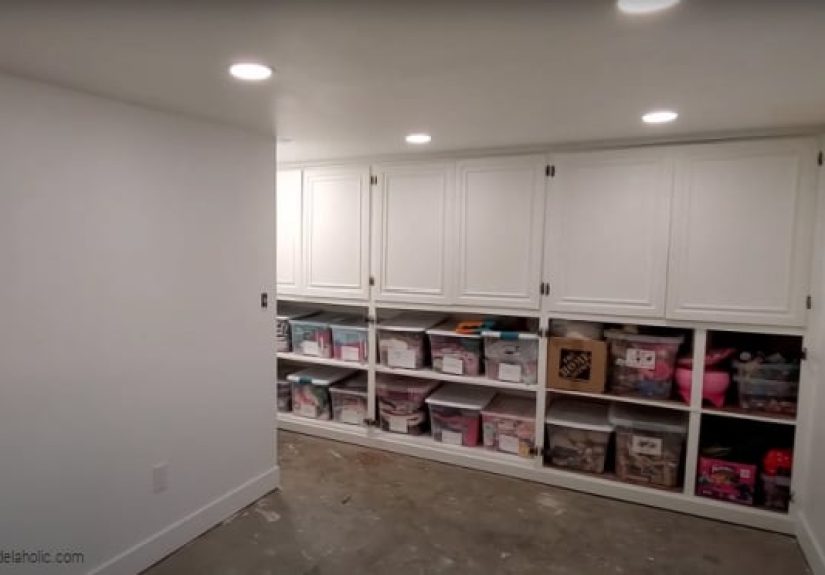
All closed storage can feel heavy in a basement. All open storage can feel messy fast. The sweet spot is usually a mix. Closed base cabinets hide visual clutter, while a few open shelves display books, framed art, or baskets. This combination keeps the room from feeling too utilitarian or too fussy.
Design Moves That Make the Room Feel Bigger and Brighter
Even with brilliant storage, a basement bedroom can still feel like a basement if the finishes are off. The goal is to pull the room upward and outward visually.
Use Light, Warm Colors
Soft whites, warm greiges, muted taupes, pale sage, and dusty blue all work well in basement bedrooms. The trick is warmth. Stark white can feel cold under artificial lighting, while warm neutrals help the room feel comfortable and grounded. Matching the built-ins to the wall color can also reduce visual bulk.
Layer the Lighting
One sad ceiling light is not a lighting plan. Use a combination of recessed lights, sconces, bedside lamps, LED shelf lighting, and under-cabinet lighting if possible. Built-in lighting inside shelves or wardrobes makes storage more functional and adds depth, which is especially helpful in a room with limited daylight.
Choose Storage with Flat, Clean Lines
Simple cabinet fronts, minimal hardware, and streamlined millwork make a basement bedroom feel calmer. Heavy trim, ornate detailing, or oversized cabinet crowns can make the ceiling feel lower. In a basement, less drama is often more luxury.
Keep Floors Clear
One reason built-ins work so well is that they free up floor area. Lean into that advantage. Use wall-mounted sconces instead of table lamps when possible, floating nightstands instead of chunky end tables, and a bed frame with integrated drawers only if it will not crowd the room. Open floor space makes the basement feel more breathable.
Storage Planning by Use Case
Not every basement bedroom needs the same setup. The best storage strategy depends on who will sleep there.
For a Guest Room
Prioritize hanging space, extra linens, a luggage ledge, bedside charging, and a few empty drawers. Guests do not need your entire storage philosophy. They need a place to put a suitcase and find a phone charger without crawling behind furniture.
For a Teen Bedroom
Include closed storage, open shelving, a desk zone, and laundry management. Translation: cabinets for chaos, shelves for personality, and enough outlets for modern life.
For a Small Apartment-Style Suite
Go bigger on built-ins. Combine wardrobe storage, a media wall, shelving, and possibly a compact kitchenette nearby if the layout allows. The room should feel self-sufficient without feeling crammed.
Mistakes to Avoid
- Installing built-ins before solving moisture issues.
- Blocking or crowding the egress window.
- Using deep, dark cabinetry in a low-ceiling room.
- Skipping radon testing because the room “looks fine.”
- Adding only open shelves and expecting clutter to behave itself.
- Choosing trendy storage that does not match how the room is actually used.
The biggest mistake, though, is treating a basement bedroom like a leftover room. When the storage is thoughtful, the safety basics are handled, and the lighting is layered properly, a basement bedroom can feel every bit as polished as a main-floor guest room.
Conclusion
A basement bedroom with built-in storage is not just a clever use of square footage. It is a practical design solution that can make a home more flexible, more organized, and more comfortable. The best versions balance beauty with realism: they solve moisture first, respect code, maximize light, and use built-ins to make every inch count. Done right, the space feels calm, custom, and genuinely livable. Done wrong, it feels like someone put a bed in a storage room and hoped for the best.
If you are planning one, think beyond furniture. Think in zones, walls, niches, and hidden opportunities. The goal is not simply to fit storage into the room. The goal is to make storage part of the room’s architecture so the bedroom feels bigger, cleaner, and easier to live in every single day.
Experiences Related to “Basement Bedroom with Built-in Storage”
One of the most common experiences homeowners describe after finishing a basement bedroom is surprise at how much calmer the room feels once storage is built in instead of added later. At first, many people assume they can furnish the space the same way they would a regular bedroom upstairs: bed, dresser, nightstand, maybe a wardrobe if they are feeling optimistic. Then reality arrives wearing muddy boots. The dresser blocks the walkway, the wardrobe makes the ceiling feel shorter, and the room starts looking like it is apologizing for itself. By contrast, a built-in wall with drawers, cabinets, and open shelving tends to make the room feel settled from day one. The room stops acting like temporary overflow space and starts reading like a real destination.
Guest rooms in basements also reveal something interesting about storage priorities. Guests usually do not need huge closets or endless drawer space. What they appreciate most is convenience: a place to open a suitcase, a shelf for toiletries, hooks for a jacket, an outlet near the bed, and maybe a cabinet for extra blankets. Homeowners who go overboard with decorative furniture often realize later that the room would have functioned better with simple built-ins and more open floor space. The experience is less about giving guests more furniture and more about removing the little annoyances that make a stay feel awkward. Good storage does that quietly. It handles the practical stuff so the room can focus on comfort.
Families using basement bedrooms for teens or young adults often report another pattern: closed storage becomes the hero. Open shelves look great in photos, but in real life they can turn into a museum of hoodies, snack wrappers, chargers, trophies, mystery cords, and one lonely sock. Built-in cabinets with doors create visual order almost instantly, which matters a lot in basements where lighting is already doing the room no favors. A few open shelves for books, framed photos, or décor still help the room feel personal, but too much exposed storage can make the space feel cluttered fast. In actual daily use, the best built-ins are not just pretty; they are forgiving.
There is also a strong emotional side to these projects that people do not always expect. A well-designed basement bedroom often changes how the whole lower level is perceived. Instead of being the place where seasonal bins go to think about their mistakes, the basement starts feeling like part of the home’s real living area. Parents appreciate the extra privacy for guests. Older kids enjoy having a room that feels independent. Homeowners love that the storage finally has boundaries. And almost everyone notices the same thing once the project is complete: when the room is dry, bright enough, and intelligently organized, nobody calls it “just the basement bedroom” anymore. It becomes one of the most useful spaces in the house, which is a pretty impressive glow-up for a part of the home that used to be known mainly for concrete, cobwebs, and holiday decorations.