Table of Contents >> Show >> Hide
- What “Flow” Means in a Kitchen (It’s Not Just Open Concept)
- The Classic “Before” Kitchen: Symptoms of Bad Flow
- The “After” Kitchen: What Changes Create Effortless Flow?
- Before-and-After Layout Examples: Flow Fixes That Actually Work
- How to Plan a Kitchen Remodel for Flow (Step-by-Step)
- Materials and Features That Support Flow (Not Just Looks)
- Common Remodel Mistakes That Kill Flow (Even in a Beautiful Kitchen)
- How to Know Your “After” Kitchen Nailed the Flow
- Conclusion: Flow Is the Real Glow-Up
- Experiences and Lessons from Real Flow-Focused Remodels (Extra )
If your kitchen “works,” but only in the same way a three-way stop works during rush hour, congratulations: you have a layout problem, not a cooking problem. The good news? The most satisfying before-and-after kitchen remodels aren’t just about prettier cabinets or a new backsplash that sparkles like it has its own PR team. They’re about flow the way people, groceries, dishes, and Tuesday-night chaos move through the space without turning into a full-contact sport.
This article breaks down how homeowners go from “Why is the fridge in witness protection?” to a kitchen that feels intuitive. We’ll cover what “flow” actually means, how to diagnose the real bottlenecks, what changes make the biggest difference (even without adding square footage), and how to avoid the classic “brand-new kitchen, same old traffic jam” mistake. Along the way, you’ll see practical layout examples, clear planning steps, and the kind of real-world details that separate a glossy makeover from a kitchen you genuinely want to live in.
What “Flow” Means in a Kitchen (It’s Not Just Open Concept)
“Flow” is the invisible choreography of your kitchen: how easily you can prep, cook, clean, unload groceries, refill a water glass, and sneak a cookie without blocking someone who’s holding a hot pan like it’s a torch in the Olympics. A kitchen with great flow has:
- Clear paths for walking through (traffic lanes) that don’t cut through active work areas.
- Comfortable clearances so cabinet doors, appliance doors, and humans can operate at the same time.
- Smart zoning for prep, cooking, cleanup, and storage so tasks don’t collide.
- Landing zonesplaces to set things down where your hands naturally need them.
- Fewer “dead-end decisions” like having to cross the kitchen three times to build one sandwich.
This is why the best “before and after kitchen remodel” stories usually start with one sentence: “The layout was the problem.” The finishes were just the part that got photographed.
The Classic “Before” Kitchen: Symptoms of Bad Flow
You don’t need a designer to spot a flow issue. Your daily frustrations are already filing a detailed report. Here are the most common “before” pain points that show up in real remodels:
1) The Work Triangle That’s Really a Work Bermuda Triangle
Traditional kitchen planning often references the “work triangle”the relationship between the sink, cooktop/range, and refrigerator. If those three points are too far apart, you rack up steps like a fitness tracker is sponsoring your dinner. If they’re too close, you can’t open anything without apologizing to an appliance.
2) A Peninsula That Acts Like a Bouncer
Peninsulas can be amazinguntil they trap you in a corner or force everyone to funnel through a narrow gap like a theme park queue. In many “before” kitchens, a peninsula blocks the natural route between the kitchen and adjacent spaces, creating a constant shoulder-check situation at dinnertime.
3) The Dishwasher Door of Doom
If opening the dishwasher stops all traffic, you’ve found a flow choke point. The same goes for a fridge door that swings into the main walkway or an oven door that opens into the only safe place to stand.
4) No Landing Space Where You Need It Most
Good flow isn’t just movementit’s movement plus convenient pauses. If there’s nowhere to set groceries near the fridge, nowhere to park a cutting board near prep, or no counter space near the microwave, you end up “temporary stacking” items in weird places. (Yes, the stove is a weird place. Your future self would like a word.)
5) Storage That Ignores Reality
When plates live far from the dishwasher, spices live across the room from the cooktop, and pans are stored in the cabinet that requires a yoga pose to access, you’re not just fighting clutteryou’re fighting your own workflow.
The “After” Kitchen: What Changes Create Effortless Flow?
The best remodels focus on function first. These are the high-impact, real-world changes that consistently improve flow. You don’t need all of them, but you do need the ones that solve your bottlenecks.
1) Separate the Traffic Lane from the Work Zone
Think of your kitchen like a stage. The cook’s route (prep → cook → clean) is the performance. The path people use to pass through is… the audience. When the audience walks onstage mid-show, nobody’s happy.
A flow-forward remodel often rearranges the layout so the main pass-through path stays outside the primary work zone. Practically, this can mean shifting an island, removing a barrier, or relocating a doorway opening so foot traffic doesn’t slice between the sink and stove.
2) Right-Size the Clearances (So You Can Live Like a Human)
Clearance is the unglamorous hero of kitchen remodel flow. When aisles are too tight, the kitchen “works” only if you live alone and never open the oven. When clearances are comfortable, your kitchen feels calmer instantlyeven before the first cabinet goes in.
A common planning approach is to ensure enough room between counters, islands, and appliances so doors open fully and two people can move past each other without negotiating like diplomats. If seating is involved, you’ll also want space for chairs plus the walkway behind them. This is one reason islands often improve flow: you can tailor the clearances around how your household actually moves.
3) Replace “One Triangle” With “Work Zones” (Especially for Busy Homes)
Modern kitchens often function better with zones:
- Prep zone: main counter space, knives, mixing bowls, trash pull-out, prep sink (if you have one).
- Cooking zone: cooktop/range, utensils, oils, spices, sheet pans, pot storage.
- Cleanup zone: sink, dishwasher, dish storage, cleaning supplies, towel hooks.
- Storage zone: pantry, fridge, everyday dishes, kid snack drawer (yes, this is a real thing now).
- Serving/coffee zone: mugs, small appliances, a little counter space that keeps morning traffic out of the cook’s way.
In a “before” kitchen, these functions overlap in ways that create conflict. In an “after,” zones reduce collisions: someone can grab a drink without parking themselves in the prep area like a confused statue.
4) Move the Fridge (Yes, Really)
The refrigerator is often the biggest single object in the room, and it’s used by everyonenot just the cook. If your fridge opens into the main work aisle, it becomes a daily roadblock. Many successful remodels relocate the fridge to a spot that’s easy to access from the kitchen entrance but doesn’t interfere with prep and cooking.
Bonus flow move: give the fridge a “landing zone” right beside it so groceries and leftovers can touch down without a cross-room trek.
5) Upgrade the Peninsula-to-Island Situation (When It Makes Sense)
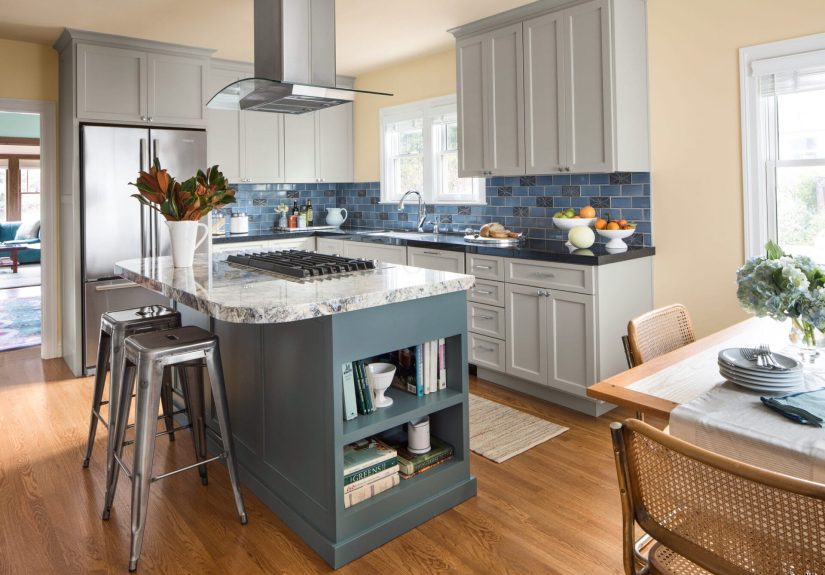
One of the most common before-and-after kitchen remodel shifts is swapping a peninsula for an islandor reshaping the peninsula so it doesn’t block traffic. The goal isn’t “island because Instagram,” it’s “island because people can move.” Islands can improve circulation by creating multiple routes around the workspace and by placing seating where it won’t interrupt the cook’s path.
Before-and-After Layout Examples: Flow Fixes That Actually Work
Example A: The Closed-Off U-Shape That Felt Like a Cul-de-Sac
Before: A U-shaped kitchen with a narrow entry and a peninsula that trapped the cook inside. The dishwasher opened into the only standing space.
After: The peninsula becomes a true island, opening the entry and creating a clear traffic lane behind the island. The sink stays on the perimeter wall for plumbing sanity, while prep space moves to the island with trash pull-out and drawer storage. Result: better kitchen workflow, fewer bottlenecks, and the cook no longer feels like they’re operating a submarine.
Example B: The Galley Kitchen That Was Efficient… Until Humans Arrived
Before: A galley layout with great efficiency but terrible passing room. Two cooks turned dinner into interpretive dance.
After: The remodel keeps the galley’s efficiency but improves flow with smarter storage, better lighting, and strategic appliance placement (like placing the fridge where it doesn’t interrupt the primary prep area). If space allows, widening key pinch points or shifting a pantry cabinet can make the corridor feel dramatically less cramped.
Example C: The “Open Concept” That Still Felt Awkward
Before: A wall came down, but the sink-rang-fridge relationship stayed clunky, and the island was placed like an afterthought.
After: The island is positioned to support prep and serving while keeping the main traffic lane outside the work zone. A dedicated coffee/snack zone pulls non-cooking activity out of the cook’s pathway. Flow improves not because it’s open, but because it’s organized.
How to Plan a Kitchen Remodel for Flow (Step-by-Step)
Step 1: Do a “Day-in-the-Life” Walkthrough
Before you move walls in your imagination, document how you actually use the kitchen: where groceries land, where backpacks accumulate, where you chop, where you plate, and where people stand while asking, “Is it almost ready?” (It’s never almost ready.)
Mark the biggest pain points: door conflicts, tight corners, dead zones, and areas where two people can’t operate at once.
Step 2: Choose Your Layout Strategy
The “best kitchen layout” is the one that matches your space and habits. A one-wall kitchen can be perfect in a condo. A galley can be incredibly efficient. An L-shape plus island can balance cooking and socializing. A U-shape can offer storage galoreif clearances are handled well.
Step 3: Protect the Clearances Like They’re Your Retirement Fund
It’s tempting to oversize an island or cram in extra cabinetry. But flow lives in the empty space. Prioritize comfortable aisles, appliance door swings, and seating clearances. A slightly smaller island with better circulation will feel more luxurious than a massive island that turns your kitchen into an obstacle course.
Step 4: Design Your Zones and “Landing Spots”
Decide where prep happens, where cooking happens, and where cleanup happens. Then add landing spaces: next to the fridge for groceries, near the oven for hot pans, and near the sink for dirty dishes. These little surfaces prevent the kitchen from devolving into a countertop “junk museum.”
Step 5: Make Storage Match the Workflow
Put dish storage near the dishwasher. Put pans near the cooktop. Put knives and cutting boards near prep. If you have kids (or snack-driven adults), consider a lower drawer or cabinet for grab-and-go items to keep traffic out of the main work zone.
Materials and Features That Support Flow (Not Just Looks)
Drawers Over Deep Base Cabinets
Deep drawers reduce bending and digging, making everyday tasks smoother. When your pots and bowls are visible at a glance, your cooking rhythm stays intact.
Thoughtful Lighting
Flow is partly psychological: when the kitchen is bright where you work, it feels easier to move and function. Layered lightingambient plus task lightinghelps prep areas and sinks feel “ready for action,” not like a shadowy mystery zone.
Ventilation That Keeps the Space Comfortable
A kitchen that overheats or traps odors becomes a place people avoid, which ironically increases traffic conflicts when everyone tries to do the same thing at once (like escaping). Good ventilation supports comfort and usability.
Easy-Clean Surfaces in High-Use Zones
When cleanup is easy, your workflow stays cleaner, faster, and less stressful. Durable counters, a practical backsplash behind the range, and a sink setup that fits your habits all contribute to a kitchen that “flows” through the entire daynot just during dinner.
Common Remodel Mistakes That Kill Flow (Even in a Beautiful Kitchen)
- Oversizing the island and shrinking aisles until the kitchen feels cramped.
- Putting seating in the main work aisle so stools become permanent traffic cones.
- Forgetting door swings (fridge, oven, dishwasher) and creating unavoidable collisions.
- Ignoring the “non-cook” traffickids, guests, partners, pets with impeccable timing.
- Storing items far from where they’re used, turning cooking into a scavenger hunt.
How to Know Your “After” Kitchen Nailed the Flow
A flow-friendly kitchen remodel is successful when:
- You can unload groceries without walking a marathon.
- Two people can work without playing “excuse me” ping-pong.
- Someone can grab a drink while you cook, and nobody needs a mediator.
- Cleanup doesn’t feel like a separate hobby you accidentally adopted.
- The kitchen feels calm even when it’s busybecause the layout is doing part of the work for you.
Conclusion: Flow Is the Real Glow-Up
The most dramatic “before and after kitchen remodel” transformations happen when you stop treating the kitchen like a showroom and start treating it like a system. When clearances make sense, zones are intentional, and traffic stays out of the cook’s way, the kitchen becomes easier to useevery day, not just when guests are over.
Go for flow first. Your cabinets will still look great, your counters will still shine, and your kitchen will finally stop feeling like it’s testing your patience as a subscription service.
Experiences and Lessons from Real Flow-Focused Remodels (Extra )
If you read enough before-and-after kitchen remodel stories, you start noticing the same emotional arc. It’s basically a three-act play: Act 1, “We thought we just needed new cabinets.” Act 2, “Wait, why do we hate standing here?” Act 3, “Oh. It was the layout. It was always the layout.”
One of the most common “flow awakenings” happens when homeowners do a simple exercise: they pretend to cook a meal without actually cooking. They mimic taking ingredients out of the fridge, rinsing produce, chopping, stirring, draining pasta, plating, and loading the dishwasher. It sounds sillyuntil you “walk” the route and realize you’ve crossed the same corridor so many times your steps could qualify as a frequent flyer program.
Another recurring experience: the peninsula debate. Plenty of households love a peninsula because it adds storage and gives the kitchen a defined boundary. But in many older homes, that peninsula also becomes a wall you can’t see on the blueprint: it blocks natural movement between the kitchen and dining area, forces traffic through a single narrow opening, and creates a corner where one person always gets trapped. Homeowners who switch to an island often describe the change less like “we renovated” and more like “we stopped bumping into each other.” The funny part is that the room sometimes doesn’t get biggerlife just gets smoother.
There’s also a surprisingly universal moment when people realize that the fridge is not just an appliance; it’s a social hub. Kids open it. Guests open it. You open it to stare into it like the answer to dinner might materialize if you glare long enough. In flow-first remodels, relocating the fridge a few feetoften closer to the entry, sometimes paired with a nearby landing counter can reduce interruptions in the cook’s area. Homeowners regularly report that this one change makes the kitchen feel more “organized,” even if everything else stayed the same.
Busy families tend to love the “zones” approach because it gives people permission to be in the kitchen without being in the way. A small coffee station or beverage drawer can keep morning traffic from colliding with lunch packing. A snack drawer at kid height can prevent the daily chorus of “Can I have” from happening directly behind the person holding a knife. These aren’t luxury upgrades; they’re peace treaties.
Finally, the most satisfying remodel experiences share one practical lesson: it’s worth protecting the boring details. People who prioritize aisle space, appliance clearances, and landing zones end up with kitchens that feel expensive even when the materials are mid-range. Meanwhile, homeowners who chase a massive island at the expense of walkway comfort often end up with a gorgeous kitchen that still feels tenselike everyone’s tiptoeing around the design.
The best “after” kitchens don’t just photograph well. They live well. And once you feel what good flow is like, it’s hard to un-feel it. You’ll walk into other kitchens and think, “Why is this sink so far from literally everything?”and you’ll be right. Your standards will rise. Your shoulders will relax. And your kitchen will finally work with you, not against you.