Table of Contents >> Show >> Hide
- Why Apricot + Pork + Peppers Works (And Why Your Taste Buds Will High-Five You)
- Quick Recipe Snapshot
- Ingredients
- Tools You’ll Want (Because Guessing Isn’t a Cooking Technique)
- Food Safety and Doneness: The Number That Matters
- How to Make Apricot Grilled Pork Tenderloin and Peppers
- Pro Tips for the Best Grilled Pork Tenderloin
- Serving Ideas (Make It a Full, Seriously Good Meal)
- Variations You’ll Want to Try
- FAQ
- Experience Section: What Cooking This Feels Like in Real Life (The Fun Part)
- Conclusion
If your grill could talk, it would politely request two things: pork tenderloin and a sticky-sweet apricot glaze.
This easy dinner is the kind of meal that feels like you planned ahead (you didn’t; I won’t tell), thanks to fast-cooking pork,
smoky charred peppers, and a bright sauce that tastes like summer decided to put on a nice shirt.
This guide walks you through a Best Apricot Grilled Pork Tenderloin and Peppers Recipe with smart upgrades,
foolproof timing, and the “don’t panic” tips that keep tenderloin juicy instead of… politely chewy.
Why Apricot + Pork + Peppers Works (And Why Your Taste Buds Will High-Five You)
Pork tenderloin is lean, mild, and quick to cookbasically the overachiever of the meat case. The downside?
It can dry out if you treat it like a pork shoulder and wander off to “just check one thing” on your phone.
Apricot jam fixes a lot: it brings sweetness, body, and that glossy glaze effect that makes dinner look restaurant-level.
Add vinegar for tang (so it’s not candy-coated pork), and you get a sauce that’s balanced, bright, and grill-friendly.
Meanwhile, peppers and red onion love the grill. The heat concentrates their natural sweetness, the char adds smokiness,
and the texture stays pleasantly tender-crispperfect under sliced pork and extra glaze.
Quick Recipe Snapshot
- Serves: 4
- Total time: About 25–35 minutes (depending on grill heat and tenderloin thickness)
- Skill level: Weeknight-friendly
- Best for: Summer dinners, meal prep, “I should grill more” seasons
Ingredients
The Essentials (Classic Apricot Pork Tenderloin and Peppers)
- 2 small pork tenderloins (about 3/4 lb each), trimmed
- 4 bell peppers (red, yellow, orange, or a mix), quartered and seeded
- 1 red onion, cut into 1/2-inch wedges (keep the root end if you canit helps wedges hold together)
- 1 tablespoon neutral oil (avocado, canola, grapeseed, or light olive oil)
- Kosher salt and black pepper
- 1/4 cup apricot jam (or apricot preserves)
- 2 tablespoons white wine vinegar
Optional Upgrades (Highly Recommended If You Like “Wow”)
- 1 tablespoon Dijon mustard (makes the glaze more savory and complex)
- 1 small garlic clove, finely grated (or 1/2 teaspoon garlic powder)
- Pinch of red pepper flakes or a dash of hot sauce (for a sweet-heat vibe)
- 1 teaspoon smoked paprika (adds gentle smokiness without drama)
- Fresh herbs: thyme, rosemary, or parsley for finishing
Tools You’ll Want (Because Guessing Isn’t a Cooking Technique)
- Outdoor grill (gas or charcoal)
- Tongs and a grill brush
- Small bowl + whisk (or fork) for glaze
- Basting brush or spoon
- Instant-read thermometer (this is your “juicy pork” insurance policy)
Food Safety and Doneness: The Number That Matters
For tender, safe pork tenderloin, cook to an internal temperature of 145°F and then let it rest.
Resting helps juices redistribute and also matters for food safety guidance. If you take away only one thing, let it be:
thermometer > vibes.
How to Make Apricot Grilled Pork Tenderloin and Peppers
Step 1: Preheat the Grill (Set Yourself Up for Success)
Heat your grill to medium-high. If you can, create two zones:
one hotter side for searing and one cooler side to finish cooking gently.
(On a gas grill, leave one burner lower/off; on charcoal, bank coals to one side.)
This helps avoid overcooking while still getting that beautiful exterior.
Step 2: Prep the Veggies
Toss the quartered peppers and onion wedges with the oil and season generously with salt and pepper.
Don’t be shyvegetables need seasoning too. (They have feelings.)
Step 3: Season the Pork
Pat the tenderloins dry. Season all over with salt and pepper.
Want extra flavor? Add smoked paprika or a light spice rubjust don’t go so heavy that the glaze can’t shine.
Step 4: Grill the Peppers and Onion
Place the vegetables on the grill grates over direct heat. Cover and cook, turning occasionally,
until tender with charred edges, about 8–10 minutes.
Move them to a cutting board when done.
Tip: If your grill grates are wide and onion wedges try to make a break for it, use a grill basket or skewers.
Step 5: Grill the Pork (Then Glaze Near the End)
Place the pork tenderloins on the grill. Cover and cook, turning occasionally,
until they’re nicely browned and close to done.
Depending on grill temperature and thickness, this typically takes around 10–15 minutes.
Step 6: Make the Apricot Glaze
In a small bowl, whisk together the apricot jam and white wine vinegar until smooth.
For the “upgrade” glaze, whisk in Dijon and garlic, plus a pinch of red pepper flakes.
The vinegar keeps sweetness in check and helps the glaze cling without tasting heavy.
Step 7: Baste and Finish to Temperature
When the pork is close, start basting with the apricot mixture. Keep the lid closed between turns.
Glaze burns faster than your group chat can change topics, so add it near the end.
Continue grilling and basting until the thickest part of the pork reaches 145°F,
usually 3–6 minutes more once you start glazing.
Step 8: Rest, Slice, and Serve
Transfer pork to a cutting board and let rest for 5–10 minutes.
Meanwhile, coarsely chop the peppers, keep onion wedges as-is (or chop them tooyour call),
and get ready to assemble.
Slice pork on the bias (diagonal slices look fancy with zero extra effort).
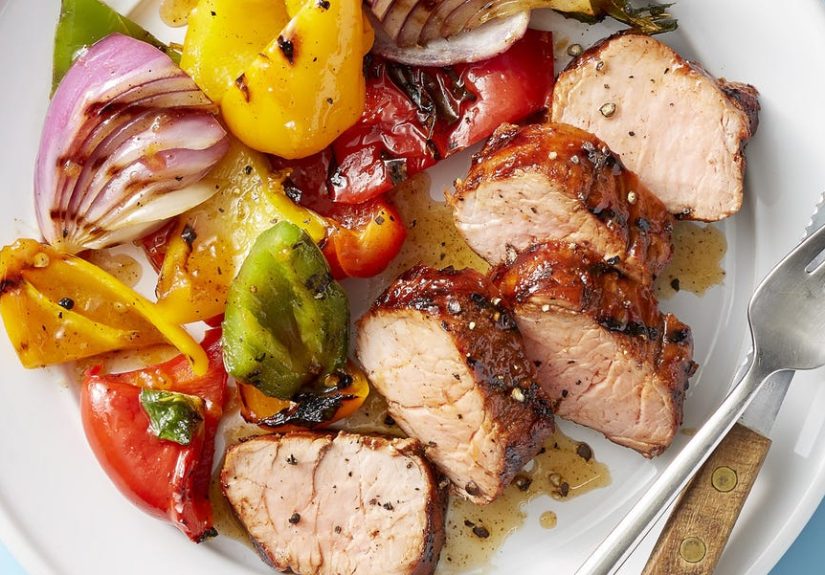
Serve over the grilled peppers and onion. Spoon any remaining glaze over the top.
Pro Tips for the Best Grilled Pork Tenderloin
1) Trim the silver skin
Many tenderloins have a shiny strip of tough connective tissue. Slide a knife under it and remove it.
Your teeth will thank you. Quietly. With relief.
2) Use a two-zone fire if you can
Sear for flavor, finish gently for juiciness. Two-zone grilling gives you control when the glaze is involved,
since you can move the pork away from flare-ups or intense heat.
3) Glaze late, not early
Jam-based glazes caramelize quickly. Putting the glaze on at the end prevents bitter, burned sugar flavors.
Think “shiny lacquer,” not “campfire candy.”
4) Rest is not optional
Resting helps redistribute juices and makes slices moist instead of puddle-free. If you slice immediately,
your cutting board gets the good stuff.
5) Don’t overcook vegetables
You want tender with char, not limp and sad. Pull them when they still have some structure.
They’ll keep softening a bit as they sit.
Serving Ideas (Make It a Full, Seriously Good Meal)
- With grains: fluffy rice, couscous, quinoa, or farro to soak up extra glaze
- With potatoes: grilled potatoes, roasted baby potatoes, or a simple potato salad
- With greens: arugula salad with lemon, olive oil, and shaved parmesan
- In tortillas: slice thin, pile into warm tortillas, add cilantro and a squeeze of lime
- For meal prep: portion pork + peppers over rice bowls; add a crunchy slaw on the side
Variations You’ll Want to Try
Spicy Apricot Grill Glaze
Add hot sauce, red pepper flakes, or minced chipotle in adobo to the glaze.
Sweet + heat + smoke = summer magic.
Smoky-Savory Version
Add Dijon and smoked paprika, and finish with chopped parsley. It tastes “chef-y” without being fussy.
Apricot-Soy Twist
Swap part of the vinegar for a splash of soy sauce. You’ll get deeper savory notes and extra umami.
No Outdoor Grill? Do This Instead
Use a grill pan or cast-iron skillet for the pork and peppers. Sear pork on all sides, then finish in a 400°F oven
until it hits 145°F. Glaze during the last few minutes. You’ll miss a bit of smoke, but you’ll keep the caramelized flavor.
FAQ
Can I use pork loin instead of tenderloin?
You can, but pork loin is thicker and cooks differentlymore like a small roast. Tenderloin is best here because it cooks quickly and stays tender when pulled at 145°F.
Can I swap the vinegar?
Yes. Apple cider vinegar works well. Rice vinegar is milder (nice if you add soy). Lemon juice is also good, but start with less and taste as you go.
What peppers work best?
Bell peppers are classic. For more bite, add poblano or Anaheim peppers. If you go spicy, keep a dairy sidekick nearby (like yogurt sauce) for those who want it.
How do I store leftovers?
Refrigerate in an airtight container for up to 3–4 days. Reheat gently (microwave at 50–70% power or warm in a skillet).
Overheating makes lean pork drybe kind to it the second time around.
Experience Section: What Cooking This Feels Like in Real Life (The Fun Part)
There’s a special kind of confidence that shows up the moment you whisk apricot jam and vinegar together. It looks too simple.
It smells too good. You start thinking things like, “Maybe I should host people,” which is adorable optimism for someone in sweatpants.
Then the grill heats up and reality arrives: wind, flare-ups, and the mysterious way peppers always seem to roll to the least convenient spot.
The first “experience” most home cooks notice is how fast pork tenderloin moves from “not yet” to “oh wow, that’s close.”
It’s not a brisket. You can’t wander off and reorganize your spice drawer like a productive raccoon.
This recipe rewards staying nearbytongs in one hand, thermometer in the other, looking like you’re on a cooking show
even if your audience is just a very invested dog.
Then comes the moment you add the glaze. The jam hits the hot grates and you get that instant caramelized aromafruity, tangy, smoky.
It’s also the moment you learn a universal truth: sugar is dramatic. If you brush the glaze on too early, it can darken quickly.
But when you glaze late and keep turning, the pork gets this shiny, lacquered finish that makes it look like you paid for professional lighting.
People will ask what your “secret” is. You’ll say, “Apricot jam,” and they’ll look at you like you’re hiding a second, fancier secret.
The vegetables have their own personality. Red peppers char beautifully and taste sweeter; yellow peppers are mellow; orange peppers feel like the friendly middle child.
Red onion wedges soften and pick up smokiness, and if one wedge gets extra char, it becomes the bite everyone fights over.
Another real-life lesson: it’s worth oiling and salting the vegetables properly. Under-seasoned grilled peppers taste like a missed opportunity.
Seasoned grilled peppers taste like you know what you’re doing (even if you just learned it five minutes ago).
Slicing is where the “experience” becomes obvious. If you nailed the temperature and rested the pork, the slices are juicy with a faint blush in the center.
The glaze sits on top like a glossy ribbon, and the peppers look jewel-toned against the meat.
If you skipped resting, the cutting board will collect juices like it’s being paid per ounce.
The fix is simple: rest next time, and in the meantime, spoon those juices back over the slicesno one has to know.
Leftovers are another small joy. The next day, cold slices of pork tenderloin with peppers make an incredible sandwich:
toasted bread, a little mayo or mustard, maybe arugula, and a swipe of extra apricot glaze if you saved any.
Or chop everything and toss it into a rice bowl with cucumbers and a quick yogurt sauce.
The flavor stays bright because of the vinegar, and the char gives it that “grilled yesterday” depth that somehow tastes even better.
Most importantly, this recipe builds grill confidence. Once you realize you can cook tenderloin perfectly by temperature (not by fear),
you start experimenting: adding Dijon, swapping the vinegar, throwing on peaches or pineapple, grilling extra peppers “just because.”
It becomes less about following steps and more about reading the foodwatching for char, feeling for tenderness, and using the thermometer like a trusty co-pilot.
That’s the real experience: not just dinner, but the kind of cooking win that makes you think, “Okay… I can do this again.”
Conclusion
This Apricot Grilled Pork Tenderloin and Peppers recipe is quick enough for a weeknight and impressive enough for guests,
with sweet-tangy glaze, juicy pork cooked to 145°F, and smoky grilled peppers that make the whole plate pop.
Keep the glaze for the final minutes, rest the pork before slicing, and you’ll get a dinner that tastes like summer on purpose.