Table of Contents >> Show >> Hide
- Why Roasting Pears Works So Well
- Choose the Right Pears (So They Don’t Turn Into Pear Soup)
- Ingredients That Make Roasted Pears Taste “Extra”
- Best Roasted Pears Recipe (Step-by-Step)
- Roasting Time & Temperature Guide
- Flavor Variations (Same Method, Different Mood)
- How to Serve Roasted Pears
- Make-Ahead, Storage, and Reheating
- Common Mistakes (and How to Avoid Them)
- FAQ: Roasted Pears Recipe Questions
- Extra: Real-Life Roasted Pear Experiences (The Fun Part)
- Conclusion
Roasted pears are what happen when a humble fruit gets a glow-up in the oven: the edges caramelize, the center turns silky,
and your kitchen smells like a candle storebut in a good way (and without the regret of buying the “Pumpkin Sweater Weather” one).
If you’ve ever wondered how to make roasted pears that taste restaurant-fancy without requiring restaurant-level effort,
you’re in the right place.
This guide is built for real life: pears that ripen at their own mysterious pace, ovens that run a little hot (or cold),
and hungry people hovering near the counter asking, “Is it done yet?” We’ll cover the best pears for roasting, the ideal temperature and timing,
flavor variations (from cozy cinnamon to a grown-up wine glaze), plus serving ideas that work for dessert, breakfast, or a “snack that accidentally became a meal.”
Why Roasting Pears Works So Well
Roasting concentrates flavor. Heat drives off a bit of water, sugars deepen, and the surface browns. The result: pears that taste sweeter,
richer, and more complexlike they took a finishing school class in “being delicious.”
- Texture upgrade: tender inside, lightly caramelized outside.
- Low-effort elegance: it’s fruit + heat + a little fat/sweetener. That’s it.
- Flexible: go sweet, go savory, serve warm or chilled, dress up or keep it simple.
Choose the Right Pears (So They Don’t Turn Into Pear Soup)
Best pear varieties for roasting
For the best roasted pears recipe, pick pears that hold their shape when heated. A few favorites:
- Bosc: firm, dense, and famously great for baking/roasting.
- Anjou (green or red): juicy but still sturdy enough when “firm-ripe.”
- Bartlett: works if it’s still firm; very ripe Bartletts can collapse faster.
Ripeness matters more than you think
Roasting is easiest when pears are firm-ripethey should give just slightly to gentle pressure near the stem/neck.
Too hard and they’ll take forever; too soft and they’ll slump like they just heard Monday is coming.
Quick ripeness hack: if your pears are stubbornly firm, leave them at room temperature for a few days, or speed things up
by placing them in a paper bag with a banana or apple. Once they’re ripe, refrigerate to slow the process.
Ingredients That Make Roasted Pears Taste “Extra”
This recipe is intentionally simple, but each ingredient has a job. (Even the salt. Especially the salt.)
Base ingredients (serves 4)
- 4 firm-ripe pears (Bosc or Anjou are ideal)
- 2 tablespoons unsalted butter (or coconut oil for a dairy-free vibe)
- 2–3 tablespoons honey or pure maple syrup
- 2 tablespoons brown sugar (optional, for deeper caramel notes)
- 1 teaspoon ground cinnamon
- 1/4 teaspoon kosher salt
- 1 teaspoon vanilla extract (optional but excellent)
- 1–2 teaspoons lemon juice (brightens and balances sweetness)
- 2–4 tablespoons water, apple juice, or white wine (for a little steamy sauciness)
Optional “make it fancy” add-ins
- Toasted nuts (walnuts, pecans, or sliced almonds)
- Spices (cardamom, nutmeg, cloves, ginger)
- Orange zest
- Greek yogurt, mascarpone, ricotta, or ice cream for serving
Best Roasted Pears Recipe (Step-by-Step)
1) Prep the oven and pan
Preheat to 400°F. Lightly butter a baking dish or line a rimmed sheet pan with parchment for easier cleanup.
(Your future self will thank you.)
2) Cut, core, and stabilize
Slice pears in half lengthwise. Use a spoon or melon baller to scoop out the core.
If the pear halves wobble, shave a tiny sliver off the back to create a flat “stand” so they don’t tip over mid-roast.
3) Make the glaze
Melt butter. Stir in honey (or maple), cinnamon, salt, vanilla, lemon juice, and (if using) brown sugar.
Taste it. If you don’t want to lick the spoon, adjust nowmore salt for balance, more lemon for brightness, more cinnamon for cozy.
4) Arrange and sauce
Place pears cut-side up in your dish. Spoon glaze over each half, letting it pool in the cored center.
Add a splash of water/juice/wine to the bottom of the pan to prevent scorching and encourage a glossy pan sauce.
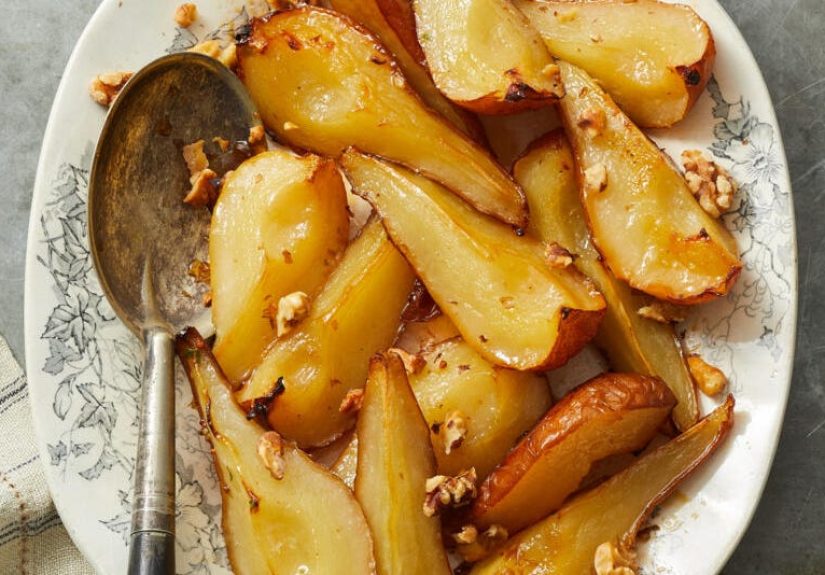
5) Roast until tender and caramel-kissed
Roast 25–35 minutes, depending on pear size and ripeness. Halfway through, baste with the pan juices.
They’re done when a knife slides in easily but the pears still hold their shape.
6) Reduce the pan sauce (optional, highly recommended)
If you want a thicker drizzle: transfer the pears to a plate, then pour pan juices into a small saucepan and simmer 2–4 minutes
until glossy. Congratulationsyou just made a restaurant-style sauce with almost no effort.
Roasting Time & Temperature Guide
Most oven roasted pears land happily between 375°F and 450°F. Higher heat gives more browning; lower heat is gentler and more forgiving.
| Oven Temp | Typical Time | Best For |
|---|---|---|
| 375°F | 25–40 min | Stuffed pears, slow-tender texture, less browning |
| 400°F | 25–35 min | Balanced caramelization + tenderness (our favorite) |
| 450°F | 15–25 min | Quick roast, more color, watch closely |
Flavor Variations (Same Method, Different Mood)
Cinnamon-Honey Classic
Stick with honey, cinnamon, vanilla, and lemon. Add chopped walnuts at the end for crunch.
This is the “everybody likes it” version.
Maple-Vanilla Brunch Pears
Use maple syrup instead of honey. Skip brown sugar. Serve with Greek yogurt and granola.
It tastes like breakfast, but it behaves suspiciously like dessert.
Red Wine & Spice (Dinner-party energy)
Swap the pan liquid for a splash of red wine. Add orange zest, a cinnamon stick, and a pinch of cloves.
Reduce the pan sauce for a dramatic, jewel-toned drizzle.
Pomegranate Glaze Style
Replace the pan liquid with pomegranate juice and add a strip of orange peel. Roast, then reduce into a tangy-sweet syrup.
Perfect with mascarpone or vanilla ice cream.
Savory Roast Pears (Salad’s best friend)
Skip honey and brown sugar. Use olive oil or butter, rosemary or thyme, salt, and black pepper.
Roast until tender, then add to salads with bitter greens, blue cheese, and toasted nuts.
How to Serve Roasted Pears
As dessert
- Ice cream + sauce: vanilla or salted caramel ice cream under warm pears is undefeated.
- Ricotta or mascarpone: creamy, tangy, and instantly “chef-y.”
- Cookie crunch: crumble amaretti, shortbread, or toasted granola on top.
As breakfast or snack
- Greek yogurt + roasted pears + nuts + a pinch of cinnamon
- Oatmeal topper (add the pan sauceyes, do it)
- Pancake/waffle upgrade: sliced roasted pears instead of syrup overload
As a savory side
- Pair with pork chops or roasted chicken (especially with rosemary/thyme)
- Add to a cheese board: roasted pears + blue cheese + toasted almonds
- Toss into a warm salad with endive/arugula and a sharp vinaigrette
Make-Ahead, Storage, and Reheating
- Make ahead: roast up to 2 days in advance; store pears and sauce separately if possible.
- Refrigerate: airtight container.
- Reheat: 300°F oven for 10–12 minutes, or microwave gently (short bursts) to avoid turning them mushy.
- Leftover magic: chop and fold into oatmeal, yogurt bowls, or even grilled cheese with sharp cheddar.
Common Mistakes (and How to Avoid Them)
1) Using pears that are too ripe
Overripe pears can collapse. Choose firm-ripe fruit and roast until just tender.
2) Forgetting salt
A small pinch makes sweetness taste more pear-like and less one-note.
3) Dry roasting with no pan liquid
A splash of water/juice/wine helps create a sauce and prevents burnt sugar.
4) Overbaking
Check early. Pears go from “perfectly tender” to “pear jam” quicker than you’d expect.
FAQ: Roasted Pears Recipe Questions
Do I need to peel the pears?
Not required. The skin softens in the oven and helps the pear keep its shape. Peel if you want a super-silky texture.
Can I roast whole pears?
Yeswhole pears look dramatic. Core from the bottom if you want to keep stems.
Whole pears usually take longer (often 35–60 minutes depending on size and firmness).
How do I know when roasted pears are done?
A knife should slide in easily with gentle resistance. They should still hold their shape when lifted.
What sweetener is besthoney, maple, or sugar?
Honey caramelizes beautifully; maple adds a woodsy vanilla note; brown sugar adds molasses depth.
Choose the vibe you wantor mix and match.
Extra: Real-Life Roasted Pear Experiences (The Fun Part)
The first time I made roasted pears, I treated the pears like applesmeaning I assumed they’d behave predictably.
Pears do not share that worldview. Apples are the reliable friend who shows up early with snacks. Pears are the artistic roommate
who says, “I’ll be ready when I’m ready,” then ripens all at once on a Tuesday at 2:17 a.m.
Here’s what I learned after many batches (and a few dramatic kitchen monologues). First: the firm-ripe window is everything.
Once I roasted pears that were too firm because I was impatient. Forty minutes later, I had beautifully scented… pear rocks.
Delicious pear rocks, sure, but still rocks. Another time I used pears that were too ripe because I was overconfident.
They turned into a soft puddle that looked like it needed a nap. Tasted great over ice cream, but presentation-wise it was “modern art in beige.”
Now I do the “neck check” like I’m inspecting fruit on a reality show. A gentle give near the stem? You’re going to Hollywood.
No give? You’re going to the countertop for a few days to think about what you’ve done. Too much give? Congratulations,
you’re headed for smoothies, pear sauce, or being stirred into oatmeal where nobody will judge you.
Second: the pan sauce is the difference between “nice baked fruit” and “why is this so good?” One holiday, I roasted pears with honey,
cinnamon, and a splash of white wine. I forgot about them for five minutes while greeting guests (classic mistake).
When I came back, the edges had caramelized more deeplyand the pan juices had reduced into a sticky syrup that tasted like spiced pear caramel.
Everyone asked what my “secret” was. My secret was mild chaos and an oven timer I ignored.
Third: roasted pears are the ultimate hosting trick because they scale easily and make you look like you tried harder than you did.
If I’m feeding a crowd, I roast a big tray at 400°F and set up a “pear bar”: yogurt, whipped cream, toasted nuts, granola,
chocolate shavings, and maybe a fancy cheese for the brave. People build their own bowls and feel like they’re at a boutique brunch spot.
Meanwhile I’m standing there pretending it was my plan all along, not a last-minute rescue dessert.
My favorite weeknight move is the brunch version: maple + vanilla + a pinch of salt, roasted until glossy, then piled onto Greek yogurt
with granola. It hits that perfect middle ground where you feel virtuous (fruit! protein!) and also thrilled (it tastes like dessert!).
And if you have leftovers, chop them into oatmeal the next morning. The pears basically do the sweetening for you,
which means your brown sugar can take a day off.
Finally: don’t be afraid to go savory. The first time I roasted pears with rosemary and black pepper, I was skepticallike,
“Is this going to taste like a candle?” It did not. It tasted like a fancy salad at a place with cloth napkins.
Roasted pear wedges with blue cheese, toasted walnuts, and a sharp vinaigrette is a combination that makes people pause mid-bite,
then immediately ask you to text them the recipe. That’s the roasted pear effect: simple, dramatic, and just smug enough to be fun.
Conclusion
The best roasted pears aren’t complicatedthey’re just well-chosen pears, the right heat, and a glaze that balances sweetness with a pinch of salt.
Once you’ve nailed the basic method, you can swing the flavor any direction: cinnamon-honey comfort, maple brunch energy,
wine-and-spice dinner-party drama, or savory pears that upgrade salads and cheese boards. Keep a few firm pears on hand,
and you’re never more than one roasting pan away from something that tastes like you had your life together all along.