Table of Contents >> Show >> Hide
- What Is Bone Meal, Really?
- When Does Bone Meal Make Sense?
- Always Start With a Soil Test
- How to Use Bone Meal Fertilizer Step by Step
- Common Questions About Bone Meal
- Pros and Cons of Bone Meal at a Glance
- Practical Tips to Get the Most from Bone Meal
- Real-World Experiences With Bone Meal in the Garden
- Final Thoughts
If you’ve hung around any seasoned gardener for more than five minutes, you’ve probably heard the phrase, “Just add a little bone meal.” It sounds a bit witchy, a bit old-school, and a lot like something your grandparent swore by when their roses were the size of dinner plates.
But what exactly is bone meal fertilizer, when does it actually help your plants, and when is it just an expensive habit that makes your dog way too interested in the flower beds? Let’s unpack the myths, the science, and the practical tips so you can decide if bone meal deserves a spot in your garden shed.
This guide pulls together advice from gardening experts, university extension services, and organic-gardening pros to answer the most common questions about bone meal and show you how to use it wiselyFamily Handyman style: practical, no-nonsense, and with just enough humor to keep you awake.
What Is Bone Meal, Really?
Bone meal is exactly what it sounds like: animal bones (usually from cattle) that have been steamed or pressure-cooked to remove fat and pathogens, then dried and ground into a fine powder or small granules. It’s classified as an organic fertilizer and is widely used in gardens to boost phosphorus and calcium levels in the soil.
A typical bone meal fertilizer has an NPK ratio around 3-15-0that’s 3% nitrogen, 15% phosphorus, and virtually no potassium. Some products lean more toward 0-12-0 or 2-14-0, but the common thread is that big middle number: phosphorus. That’s the nutrient responsible for strong roots, flower formation, and fruiting.
Along with phosphorus, bone meal usually contains a good dose of calcium, which supports strong cell walls, root development, and helps reduce issues like blossom end rot in the long term. Some formulations contain a trace amount of nitrogen, but bone meal is not a complete, all-purpose fertilizer. Think of it as a specialty booster, not a one-bottle solution.
One more key trait: bone meal is a slow-release fertilizer. It doesn’t dump all its nutrients into the soil at once. Instead, it breaks down gradually over several months, feeding your plants as soil microbes work on it and as long as your soil is slightly acidic to neutral (below about pH 7). In alkaline soil, the phosphorus can get locked up and become much less available.
When Does Bone Meal Make Sense?
If your gardening philosophy is “if a little is good, a lot must be AMAZING,” bone meal is your reminder that more is not always better. There are specific times when this product shines and plenty of times when you can skip it.
Great scenarios for bone meal
- Planting bulbs: Tulips, daffodils, alliums, lilies, and other flowering bulbs love ample phosphorus. A spoonful of bone meal in each planting hole, mixed into the backfill soil, can help bulbs establish strong root systems and produce more robust blooms in future seasons.
- Feeding roses: Many rose growers swear by bone meal at planting time or early in the season. The extra phosphorus and calcium support both root growth and flowering, especially in beds where the soil is a bit lean.
- Fruit and vegetable crops that flower heavily: Tomatoes, peppers, squash, and other fruiting crops need phosphorus to support blossom and fruit production. Bone meal is a useful part of the nutrient strategy if your soil test shows low phosphorus.
- Root crops: Carrots, beets, onions, parsnips, and similar crops also benefit from adequate phosphorus for root development.
- New perennial beds: When you’re establishing long-lived perennials, a slow, steady phosphorus source in the root zone can help them settle in for the long term.
When bone meal is not a good fit
- Your soil already has plenty of phosphorus: Many garden soilsespecially in long-cultivated areas or lawns that have seen lots of fertilizer over the yearsare already high or very high in phosphorus. Adding more can cause nutrient imbalances, runoff issues, and zero benefit to plants.
- Your soil is alkaline: In soils with a pH above 7 (common in arid regions and where lots of lime has been applied), the phosphorus in bone meal may become chemically tied up, so plants can’t access it efficiently.
- You’re growing in commercial potting mix: Quality potting mixes often come pre-charged with nutrients. Adding bone meal “just because” can throw things out of balance and isn’t usually necessary for short-term container plants.
- You’re dealing with an emergency nutrient problem: Bone meal works slowly. It’s not a quick fix if a crop is crashing in the middle of the season.
The bottom line: bone meal is most useful when you have a documented phosphorus deficiency in slightly acidic to neutral soil and you’re growing crops that care a lot about strong roots and abundant flowers.
Always Start With a Soil Test
Before you start sprinkling bone meal around like gardening confetti, get a soil test. University extension services and private labs can tell you your soil pH and nutrient levels, including phosphorus.
Many test reports categorize phosphorus as low, medium, high, or very high and may even give specific recommendations like “apply X pounds of bone meal per 100 square feet.” If your report says phosphorus is already high, you can confidently skip the bone meal and focus on nitrogen, organic matter, or pH adjustment instead.
A soil test every 2–3 years is usually enough for home gardens. For new raised beds, recently amended soils, or high-value crops, testing more often is a smart move.
How to Use Bone Meal Fertilizer Step by Step
1. Check pH and phosphorus levels
Review your soil test or use a reliable kit to check:
- pH: Aim for slightly acidic to neutral (6.0–7.0) for best bone-meal performance.
- Phosphorus: Only use bone meal if your soil test shows low or medium phosphorus.
2. Typical application rates
Always follow the label on your specific product, but common guidelines look like this:
- Garden beds: About 5–10 pounds of bone meal per 100 square feet, worked into the top 3–6 inches of soil.
- Individual planting holes (bulbs or transplants): Around 1–2 tablespoons per hole, mixed thoroughly with the backfill soil instead of dumped directly on roots.
- Containers: A teaspoon or two per gallon of potting mix at planting, if needed, again mixed into the soil rather than layered on top.
Do not think, “If 10 pounds is good, 20 pounds must be better.” Excess phosphorus can interfere with other nutrients like iron and zinc and may increase the risk of nutrient runoff into waterways.
3. Work it into the soil
Bone meal shouldn’t just sit on the surface. To make it effective and to reduce the temptation for pets and wildlife to dig it up:
- Sprinkle the recommended amount over the area.
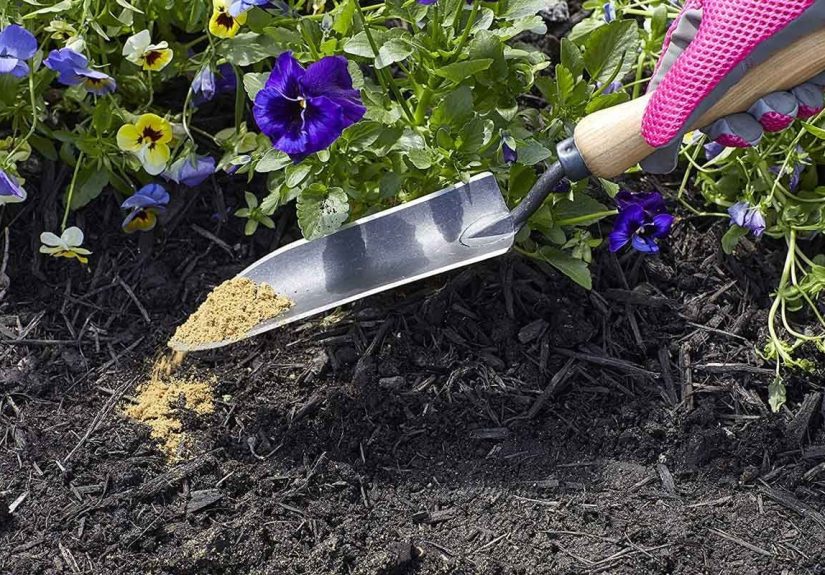
- Use a rake, hoe, or trowel to mix it into the top few inches of soil.
- Avoid damaging existing roots when working around established plants.
In planting holes, mix bone meal thoroughly with the soil before you set the plant or bulb in place.
4. Water thoroughly
After application, water the area deeply. This helps settle the soil, starts the interaction between soil microbes and the bone meal, and reduces dust. Because bone meal releases nutrients slowly, you won’t see an overnight changebut it will begin quietly feeding your plants over the coming months.
5. How often to apply
Because it’s a slow-release product, bone meal is typically applied:
- Once per growing season for most perennials and garden beds, or
- Every 2–4 months in long growing seasons where soil tests support continued phosphorus use.
Bulbs usually only need bone meal at planting time or occasionally when you’re rejuvenating beds.
Common Questions About Bone Meal
Is bone meal safe for pets?
This might be the number-one practical question. Dogs, in particular, find bone meal absolutely irresistible. Unfortunately, eating large amounts can cause digestive upset, blockages, or pancreatitis, especially if the product is mixed with other ingredients.
To keep pets safe:
- Store bone meal in a secure, closed containerideally off the ground.
- Always mix it into the soil instead of leaving it on the surface.
- Keep pets out of newly amended beds until the scent has dissipated and the soil is watered in.
Modern bone meal products are processed to reduce disease risks, and the risk to humans from properly handled garden bone meal is extremely low. Still, avoid breathing dust, wear gloves if you have sensitive skin, and wash hands after usebasic smart-gardener habits.
Is bone meal dangerous for humans?
In the context of home gardening, the risk is considered minimal when products are sourced from reputable manufacturers and used according to instructions. Concerns you may hear about prions (the agents behind “mad cow disease”) relate more to animal feed regulations than bagged garden fertilizers, which are typically highly processed and regulated.
The more realistic concern in the garden is dust inhalation and potential trace contaminants in low-quality products. Choose a reputable brand, avoid creating clouds of powder, and treat it with the same respect you would any powdered amendment.
Will bone meal fix blossom end rot on tomatoes?
Not immediately. Blossom end rot is closely tied to inconsistent watering and how calcium moves in the plant, not just how much calcium is in the soil. Bone meal does provide calcium, but because it’s slow release, it’s more of a long-term soil-health tool than an emergency cure.
To tackle blossom end rot:
- Keep soil moisture consistent (no big swings from soggy to bone dry).
- Avoid over-fertilizing with high-nitrogen products, which can push leafy growth at the expense of fruit development.
- Use calcium and phosphorus inputs like bone meal as part of your overall soil plan, not as a last-minute rescue.
Can I just sprinkle bone meal on the soil surface?
You can, but you shouldn’t stop there. For bone meal to be effective and to reduce pet and wildlife interest, you need to work it into the soil. If sprinkling is easier, do that first and then lightly rake or hoe the surface, followed by a good watering.
Is bone meal vegan or cruelty-free?
No. Bone meal is an animal by-product. If you’re trying to keep your garden inputs plant-based, you’ll want to opt for alternatives like rock phosphate for phosphorus, kelp meal, alfalfa meal, or high-quality compost and green manures.
Can I overuse bone meal?
Absolutely. Because phosphorus doesn’t readily leach from soil, repeated applications over the years can build levels too high. Excess phosphorus can interfere with uptake of other nutrients and contribute to water-quality issues if eroded soil reaches streams or ponds.
This is another reason that soil testing is your best friend. When in doubt, skip the “just in case” application and rely on compost and balanced organic fertilizers instead.
Pros and Cons of Bone Meal at a Glance
Benefits of bone meal for plants
- Excellent phosphorus source: Supports root growth, flowering, and fruiting in plants that need it.
- Slow-release and long-lasting: One application can feed for several months.
- Adds calcium: Helps build strong cell walls and supports root and fruit health.
- Organic input: Fits well in many organic gardening systems when used responsibly.
- Easy to apply: Simple to measure, mix, and store with a long shelf life.
Drawbacks and limitations
- Not suitable for all soils: Ineffective in high-pH (alkaline) soils and unnecessary in phosphorus-rich soils.
- Attractive to animals: The smell can bring in curious pets and wildlife if not incorporated well.
- Slow to act: Not useful as a quick fix for mid-season nutrient crises.
- Not vegan: Derived from animal bones, so it doesn’t match every gardener’s ethics.
- Potential to over-apply: Long-term buildup of phosphorus can create more problems than it solves.
Practical Tips to Get the Most from Bone Meal
- Combine with compost: Compost improves soil structure and biology, while bone meal adds targeted phosphorus and calcium. Together, they create a more supportive environment for roots.
- Avoid stacking phosphorus sources: If you’re already using high-phosphorus blends or manure that’s rich in P, go easy or skip the bone meal.
- Label your beds: Keep notes on where and when you applied bone meal so you’re not doubling up year after year.
- Think long term: Use bone meal as part of a multi-year soil-building plan, not as a magical powder for instant blooms.
Real-World Experiences With Bone Meal in the Garden
Textbooks are great, but gardens have opinions of their own. Here’s what bone meal looks like in real life when gardeners put it to work.
The bulb bed glow-up
Imagine a front yard with daffodils that “used to be amazing” but now mostly produce leaves and a handful of half-hearted blooms. The homeowner runs a soil test and finds the phosphorus level on the low side and the pH hovering around 6.4prime conditions for bone meal.
That fall, they lift and divide overcrowded bulbs, add a tablespoon of bone meal mixed into each planting hole, and topdress the bed with compost. The next spring isn’t a fireworks show yet, but there’s a noticeable improvement: more flower stalks, stronger stems, and fewer clumps that only give foliage. Year two looks even better as the slow-release phosphorus continues to support the bulbs’ underground work.
The raised-bed veggie experiment
In another yard, a gardener builds new raised beds, fills them with a generic “garden soil” mix, and launches into tomatoes, peppers, and squash. The plants look lush but blooms are sparse, and fruit set is underwhelming.
After a soil test, they discover that the mix is rich in organic matter but a bit short on phosphorus. The following spring, they apply bone meal at 5 pounds per 100 square feet, lightly fork it in, and then plant. This time, vegetative growth is still strong, but the number of flowers and fruits noticeably increases, especially on tomatoes and peppers. The gardener doesn’t use bone meal every yearjust when the soil test indicates it’s useful.
The container gardener who overdid it
Containers are where bone meal can go sideways. A balcony gardener reads online that bone meal is great for tomatoes and adds generous handfuls into large pots already filled with a bagged mix labeled “tomato & vegetable blend.”
The plants grow, but some show signs of nutrient imbalance later in the seasonpurpling leaves that suggest other nutrient issues, and overall production that’s just “meh.” In this case, the potting mix already contained enough phosphorus, and repeated bone meal additions didn’t have anywhere to go. The next year, the gardener dials back to a balanced organic fertilizer and skips the bone meal entirely, with better results.
The curious dog and the flower bed
Finally, the pet story. A gardener applies bone meal to a new perennial bed, sprinkles it on top, and doesn’t bother to mix it in. Their dog, a dedicated sniffer, spends the next hour enthusiastically excavating the bed like it’s hiding buried treasure. The scene ends with a very messy garden, a guilty-looking dog, and a hasty call to the vet for advice.
The lesson: if you have pets, treat bone meal like a tempting snack that must be hidden. Mix it thoroughly into the soil, water well, and keep animals away from freshly amended areas until everything’s settled.
Across these experiences, one pattern stands out: bone meal works best when it’s based on real soil needs, applied thoughtfully, and combined with good basic gardening practicesright plant, right place, consistent watering, and regular organic matter.
Final Thoughts
Bone meal for plants isn’t gardening magic, but it can be a genuinely helpful tool. Used in the right soil, for the right crops, at the right time, it supports stronger roots, better blooms, and more reliable harvests. Used everywhere, “just in case,” it can waste money, attract pets, and quietly overload your soil with phosphorus.
If you take one thing away, let it be this: test your soil first, then decide whether bone meal fits your garden’s actual needs. When the numbers say phosphorus is low and your plants are heavy bloomers or root growers, bone meal earns a place in the cart. If not, save your cash for compost, mulch, or a good hand tool.
Gardening is full of traditions, but the best ones are those that still make sense when you look at the science. Bone meal is one of those traditionsvaluable when used thoughtfully, optional when it’s not.