Table of Contents >> Show >> Hide
- Why Kalamata Olive Bread Works So Well in a Bread Machine
- Ingredients for Bread Machine Kalamata Olive Bread
- How to Make Kalamata Olive Bread in a Bread Machine
- Recipe Card: Bread Machine Kalamata Olive Bread
- Tips for the Best Bread Machine Olive Bread
- Common Problems and Easy Fixes
- Flavor Variations
- Best Ways to Serve Kalamata Olive Bread
- How to Store and Freeze Olive Bread
- Nutrition and Ingredient Notes
- Make-Ahead Ideas
- Experience Notes: What I Learned Making Bread Machine Kalamata Olive Bread
- Conclusion
Some breads politely sit beside dinner. Kalamata olive bread walks into the room wearing sunglasses, carrying a cheese board, and asking where the good olive oil is. This bread machine Kalamata olive bread recipe is savory, fragrant, and wonderfully low-effort, which is exactly what a bread machine does best: it lets you enjoy homemade bread without turning your kitchen into a flour-covered crime scene.
The beauty of this loaf is its balance. Bread flour gives it chew, olive oil adds tenderness, dried herbs bring Mediterranean personality, and chopped Kalamata olives deliver that salty, briny punch that makes every slice interesting. It is the kind of bread that tastes impressive enough for guests but easy enough for a Tuesday when your biggest culinary ambition is pressing “Start.”
This guide gives you a complete recipe, bread machine timing tips, troubleshooting advice, serving ideas, storage instructions, and practical experience-based notes so your loaf comes out soft inside, lightly crusty outside, and packed with olive flavor in all the right places.
Why Kalamata Olive Bread Works So Well in a Bread Machine
Bread machines are excellent for enriched, savory loaves because they handle the mixing, kneading, rising, and baking in one pan. For olive bread, this is especially helpful because olives add moisture and salt, two things that can make hand-kneaded dough a little unpredictable. The machine keeps the process steady, while you simply watch for the dough texture during kneading and add the olives at the right moment.
Kalamata olives are ideal because they have a deep, fruity, wine-like flavor that stands up to bread dough. Mild black olives can disappear into the loaf, but Kalamatas proudly announce themselves. Think of them as the lead singer of the bread band. The flour, yeast, oil, and herbs are the backup vocals, and everyone sounds better together.
Ingredients for Bread Machine Kalamata Olive Bread
This recipe makes one 1 1/2-pound loaf, which is the most common bread machine size. Always check your bread machine manual if your model has a different loaf capacity.
Main Ingredients
- 1 cup warm water about 80°F to 90°F for most bread machines
- 2 tablespoons olive brine from the Kalamata olive jar
- 2 tablespoons extra-virgin olive oil
- 1 tablespoon honey or sugar
- 3 cups bread flour
- 1 teaspoon salt
- 1 teaspoon dried oregano
- 1/2 teaspoon dried basil
- 1/4 teaspoon garlic powder
- 1 1/2 teaspoons bread machine yeast or instant yeast
- 3/4 cup pitted Kalamata olives, well-drained and roughly chopped
Optional Add-Ins
- 1/4 cup crumbled feta for a richer Mediterranean loaf
- 1 tablespoon chopped fresh rosemary for a fragrant bakery-style flavor
- 1 teaspoon lemon zest for brightness
- 1/4 cup grated Parmesan for a more savory crust
- 1 tablespoon toasted pine nuts for texture
Keep optional add-ins modest. Bread machines are hardworking little appliances, but they are not magic bottomless mixing bowls. Too many wet or heavy ingredients can weigh down the dough and make the loaf dense.
How to Make Kalamata Olive Bread in a Bread Machine
Step 1: Add the Wet Ingredients
Add the warm water, olive brine, olive oil, and honey or sugar to the bread machine pan. Most modern bread machines recommend adding liquids first, but follow your manufacturer’s instructions if your machine uses a different order.
The olive brine is small but mighty. It gives the loaf a gentle savory background and helps connect the bread flavor to the olives. Do not overdo it, though. Olive brine is salty, and too much can slow yeast activity or make the loaf taste like it took a swim in the Mediterranean.
Step 2: Add the Dry Ingredients
Spoon the bread flour over the liquid so it forms an even layer. Add the salt, oregano, basil, and garlic powder around the edges of the flour. Make a small well in the center of the flour and add the yeast there, keeping it away from the liquid and salt until the machine begins mixing.
Bread flour is the best choice for this recipe because it has more protein than all-purpose flour, which helps create a stronger gluten structure. That structure matters when you are adding chopped olives, because the dough needs enough strength to rise while carrying those delicious little flavor bombs.
Step 3: Choose the Right Bread Machine Setting
Select the Basic, White Bread, or French Bread cycle. Choose a medium crust if your machine offers crust settings. A light crust can work if your machine tends to run hot, while a dark crust may be too intense because olive pieces near the surface can brown quickly.
Avoid the rapid cycle for this recipe unless your machine manual specifically supports savory add-in loaves on that setting. Olive bread benefits from a steady rise, and rushing yeast is like rushing a cat: technically possible, but nobody enjoys the results.
Step 4: Check the Dough Ball
About 5 to 10 minutes into kneading, open the lid and check the dough. It should form a soft, smooth ball that clears the sides of the pan. It should feel slightly tacky, not wet and sticky. If it looks dry and crumbly, add water 1 teaspoon at a time. If it looks too wet and smears along the pan, add bread flour 1 tablespoon at a time.
This quick check is one of the biggest secrets to successful bread machine baking. Flour brands, room humidity, olive moisture, and even measuring style can change the dough. A 30-second peek can save a three-hour loaf.
Step 5: Add the Kalamata Olives at the Beep
Add the chopped Kalamata olives when your bread machine signals for fruit, nuts, or add-ins. If your machine does not have an add-in beep, add the olives during the final 5 minutes of the kneading stage. Adding them too early can crush them into the dough and turn the loaf slightly purple-gray. Still edible? Absolutely. Pretty? Let’s call it “rustic.”
Before adding the olives, drain them well and pat them dry with a paper towel. Wet olives release extra liquid into the dough, which may cause a collapsed top or gummy crumb. A little moisture is fine; a tiny olive lagoon is not.
Step 6: Cool Before Slicing
When the cycle ends, remove the pan carefully and turn the loaf onto a wire rack. Let it cool for at least 45 minutes before slicing. This is the hardest part of the recipe because the bread smells incredible, but slicing too soon can make the crumb gummy.
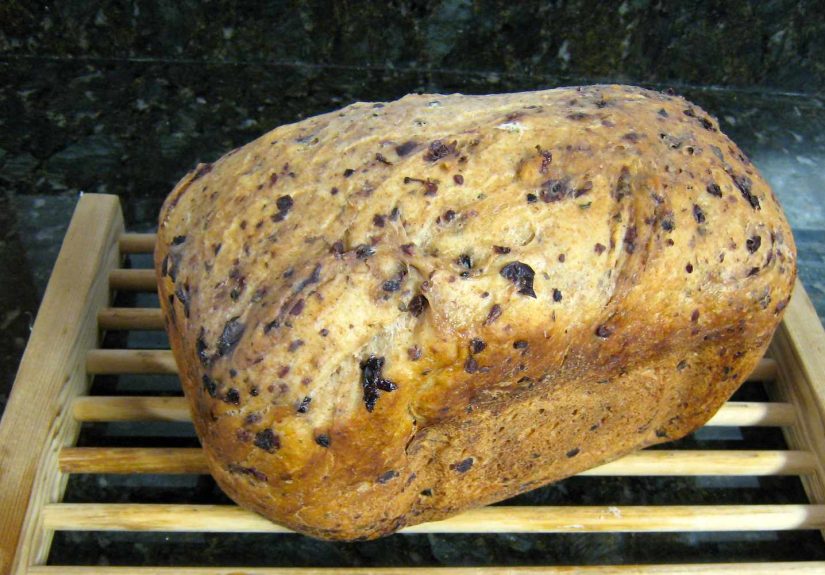
Once cooled, use a serrated bread knife and gentle pressure. The loaf should have a tender interior, a savory aroma, and little pockets of Kalamata olive throughout.
Recipe Card: Bread Machine Kalamata Olive Bread
Prep Time, Cook Time, and Yield
- Prep time: 10 minutes
- Bread machine time: 3 to 3 1/2 hours, depending on model
- Total time: About 3 hours 30 minutes
- Yield: One 1 1/2-pound loaf
Ingredients
- 1 cup warm water
- 2 tablespoons Kalamata olive brine
- 2 tablespoons extra-virgin olive oil
- 1 tablespoon honey or sugar
- 3 cups bread flour
- 1 teaspoon salt
- 1 teaspoon dried oregano
- 1/2 teaspoon dried basil
- 1/4 teaspoon garlic powder
- 1 1/2 teaspoons bread machine yeast or instant yeast
- 3/4 cup pitted Kalamata olives, drained, patted dry, and chopped
Instructions
- Add water, olive brine, olive oil, and honey or sugar to the bread machine pan.
- Add bread flour, covering the liquid completely.
- Add salt, oregano, basil, and garlic powder around the edges of the flour.
- Make a small well in the flour and add the yeast.
- Select the Basic, White Bread, or French Bread cycle and choose medium crust.
- After 5 to 10 minutes of kneading, check the dough. Adjust with small amounts of water or flour if needed.
- Add chopped Kalamata olives at the add-in beep or during the final 5 minutes of kneading.
- When baking is complete, remove the loaf from the pan and cool on a wire rack for at least 45 minutes before slicing.
Tips for the Best Bread Machine Olive Bread
Use Bread Flour for Better Texture
All-purpose flour can work in a pinch, but bread flour gives this loaf a better chew and a stronger rise. Because olives interrupt the dough structure, bread flour helps keep the loaf from becoming heavy.
Do Not Add Too Much Salt
Kalamata olives and olive brine already bring salt to the recipe. That is why this loaf uses only 1 teaspoon of added salt. If your olives are extremely salty, rinse them lightly and pat them dry before chopping.
Chop, Do Not Mince
Roughly chopped olives give you beautiful pockets of flavor. Finely minced olives can blend into the dough and make the loaf look muddy. You want olive pieces, not olive camouflage.
Let the Bread Cool Fully
Warm bread is tempting, but olive bread needs a little time to set. Cooling helps the crumb firm up and makes slicing much easier. If you want warm bread, slice it after cooling and then toast it lightly.
Common Problems and Easy Fixes
The Loaf Is Too Dense
A dense loaf usually means the dough was too dry, the yeast was old, or too many olives were added. Check the dough ball during kneading and make sure your yeast is fresh. Store yeast in the refrigerator or freezer for better shelf life.
The Top Collapsed
A collapsed top often comes from too much liquid, too much yeast, or very wet add-ins. Drain and dry the olives thoroughly. If the problem repeats, reduce the water by 1 tablespoon next time.
The Bread Tastes Too Salty
Use less olive brine or rinse the olives before chopping. Different olive brands vary widely in saltiness. The first loaf teaches you what your favorite jar of olives wants to do. Apparently, olives have opinions.
The Olives Sank to the Bottom
Add them later in the kneading cycle and make sure they are not too wet. You can also toss the chopped olives with 1 teaspoon of flour before adding them to help distribute them more evenly.
Flavor Variations
Rosemary Kalamata Olive Bread
Add 1 tablespoon chopped fresh rosemary or 1 teaspoon dried rosemary. Rosemary gives the loaf a piney, aromatic flavor that pairs beautifully with roasted chicken, tomato soup, and olive oil dipping sauce.
Feta Kalamata Olive Bread
Add 1/4 cup crumbled feta at the add-in beep with the olives. Feta adds tang and richness, but use it sparingly because it adds moisture and salt.
Sun-Dried Tomato Olive Bread
Add 2 tablespoons finely chopped oil-packed sun-dried tomatoes, well-drained. This creates a colorful loaf with a pizza-adjacent personality. It is excellent toasted with mozzarella.
Whole Wheat Kalamata Olive Bread
Replace 1 cup of bread flour with 1 cup of whole wheat flour. Add 1 extra tablespoon of water if the dough looks dry. Whole wheat flour absorbs more liquid and creates a heartier loaf.
Best Ways to Serve Kalamata Olive Bread
This bread is almost too flavorful to be called a side dish. Serve it warm with olive oil and balsamic vinegar, or use it as the foundation for sandwiches that taste like they came from a café with exposed brick walls and suspiciously tiny chairs.
- Serve with hummus, whipped feta, or roasted red pepper dip.
- Use for grilled cheese with provolone, mozzarella, or goat cheese.
- Pair with tomato soup, minestrone, or lentil soup.
- Make Mediterranean toast with cream cheese, cucumber, tomato, and herbs.
- Cube it for savory croutons or panzanella salad.
- Toast slices and top with scrambled eggs for a salty breakfast upgrade.
How to Store and Freeze Olive Bread
Store cooled Kalamata olive bread in an airtight bag or container at room temperature for up to 2 days. Because homemade bread does not contain the same preservatives as store-bought bread, it is best enjoyed fresh.
For longer storage, slice the loaf and freeze it in a freezer-safe bag for up to 2 months. Place parchment paper between slices if you want to remove one slice at a time. Toast frozen slices directly from the freezer, or thaw them at room temperature.
Avoid refrigerating the bread if possible. Refrigeration can make bread stale faster by drying out the crumb. The freezer is a much better option for keeping texture and flavor intact.
Nutrition and Ingredient Notes
This bread is naturally savory and satisfying, but it is not a low-sodium food because Kalamata olives and olive brine contain salt. If you are watching sodium, use fewer olives, rinse them before chopping, skip the brine, and reduce added salt only after considering how the recipe behaves. Salt is not just for flavor; it also helps control yeast activity and strengthens dough structure.
Olive oil adds tenderness and a subtle fruity flavor. Extra-virgin olive oil is recommended because its taste comes through in simple bread recipes. Honey or sugar gives the yeast a small boost and helps the crust brown nicely, but the bread will not taste sweet.
Make-Ahead Ideas
If your bread machine has a delay timer, use caution with this recipe. Because olives are moist and salty, it is better to bake the loaf right after loading the machine rather than letting ingredients sit for hours. If you want fresh bread in the morning, measure the dry ingredients the night before and keep the wet ingredients ready separately. In the morning, load the pan and start the cycle.
You can also use the dough cycle instead of baking in the machine. After the dough cycle ends, shape the dough into a round or oval loaf, place it on a parchment-lined baking sheet, let it rise until puffy, and bake at 375°F until golden brown and cooked through. This method gives you a more artisan-style crust while still letting the bread machine do the kneading.
Experience Notes: What I Learned Making Bread Machine Kalamata Olive Bread
The first thing you learn when making bread machine Kalamata olive bread is that olives are not shy. Even a modest amount can change the dough’s moisture, salt level, color, and aroma. That is not a problem; it is part of the charm. But it does mean this recipe rewards a little attention during the first knead. The dough ball check is not optional unless you enjoy suspense as a cooking method.
One practical experience is that chopped olives behave better than sliced olives. Pre-sliced olives are convenient, but they are often wetter and thinner, so they can smear into the dough. Whole pitted Kalamata olives, drained and chopped by hand, give a better texture. The pieces stay visible, the flavor comes in delicious bursts, and the loaf looks more homemade in the best possible way.
Another lesson is that olive brine should be treated like seasoning, not like water. A tablespoon or two adds depth, but too much can overpower the bread. The best loaf usually has enough brine to whisper “Mediterranean bakery” without shouting “pickle jar.” If your olives are especially salty, reduce the brine or skip it and use plain water instead.
Freshness also matters. Bread machine yeast that has been sitting in a cabinet since the era of flip phones may not rise well. If your loaf comes out short and heavy, check the yeast before blaming the bread machine. A reliable yeast, properly stored, makes a dramatic difference.
The add-in timing may be the biggest make-or-break detail. Adding olives too early can break them down, streak the dough, and create a denser loaf. Adding them at the beep keeps the pieces intact. If your machine does not beep, watch the kneading cycle once and write down the timing. Bread machines are wonderfully convenient, but they have personalities. Some are gentle kneaders. Some approach dough like they are training for a wrestling tournament.
Serving this bread is where the recipe really earns repeat status. Fresh slices are excellent with butter, but toasted slices are even better. Toasting sharpens the olive flavor, crisps the edges, and makes the loaf perfect for dips, soups, and sandwiches. A slice with cream cheese and sliced tomato makes a quick breakfast. A grilled cheese with mozzarella turns into something dangerously close to restaurant food. Cubed and baked, the bread becomes incredible croutons for Greek salad.
One final experience: this loaf disappears faster than plain white bread. People who say they are “just having one small slice” will return with the quiet confidence of someone who has reconsidered. For that reason, slicing and freezing half the loaf is a smart move if you want future-you to enjoy it. Future-you deserves good bread too.
Conclusion
A great bread machine Kalamata olive bread recipe should be flavorful, reliable, and simple enough to make without clearing your entire afternoon. This loaf checks all those boxes. With bread flour for structure, olive oil for tenderness, herbs for aroma, and Kalamata olives for bold Mediterranean flavor, it turns basic pantry ingredients into a bakery-style bread that feels special without being fussy.
The key is balance: drain the olives, keep the salt under control, check the dough ball, and add the olives at the right time. Do that, and your bread machine will reward you with a savory loaf that is perfect for soups, sandwiches, appetizers, toast, and late-night “just one more slice” moments.
Note: This article was written for web publication in standard American English and synthesizes practical bread machine baking principles, olive bread methods, and recipe-development best practices from reputable U.S. cooking and baking resources.